Archive | Vegetarian RSS feed for this section

Party Snacks: Garlic Scape and Garbanzo Spread

6 Jul

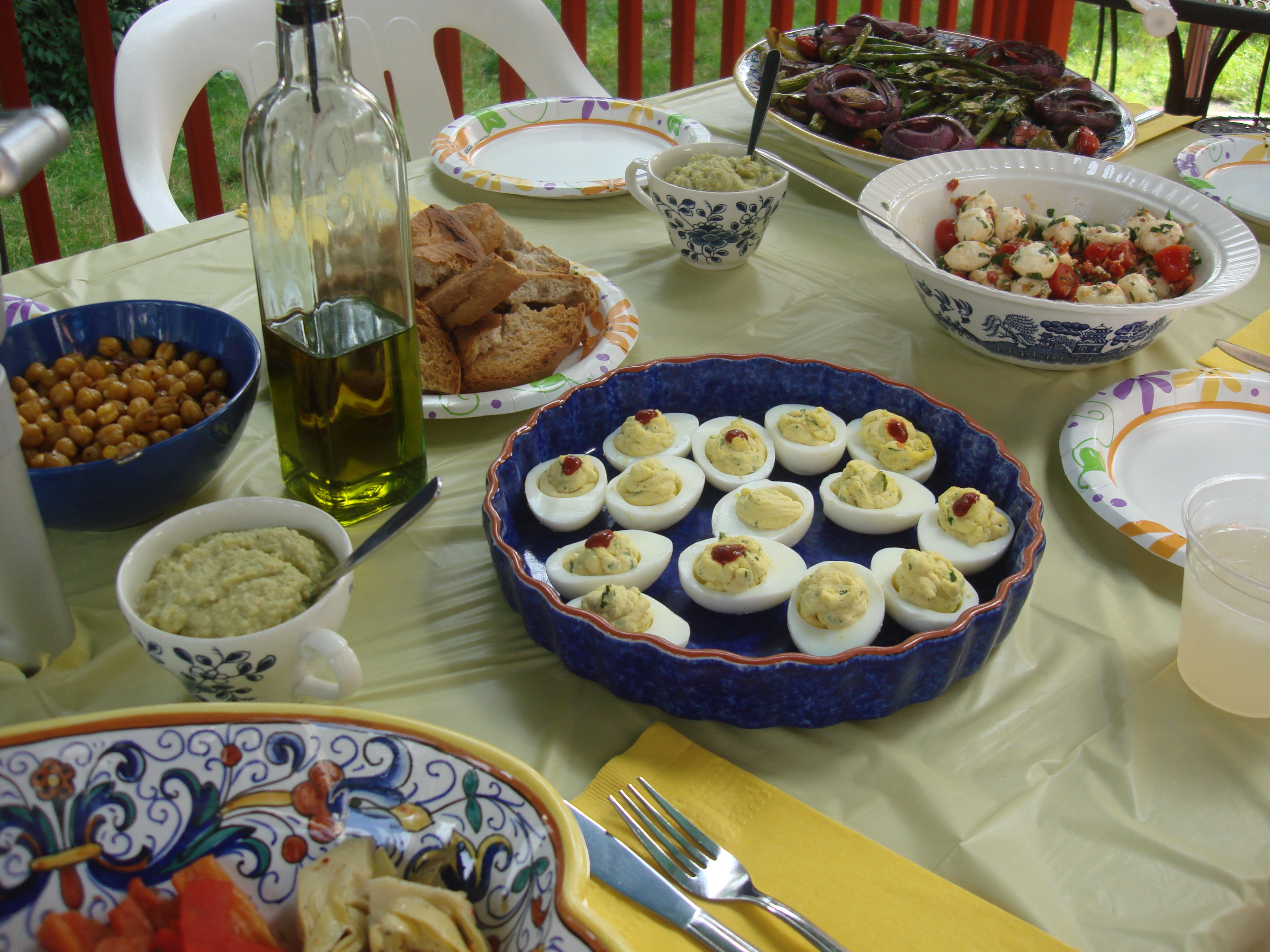
This is the last of the recipes I used to make a recent Mediterranean Summer Buffet of appetizers and party snacks.

But I am only half as maniacal about DIY as you think I am — I also opened jars:  of artichoke hearts and roasted red peppers and I purchased good mixed olives which I arranged on a platter for grazing. My dad grilled asparagus, eggplant, red and green peppers and hunks of red onions a couple of hours ahead of time with a brushing of olive oil and we arranged those on a platter, finished with flaky sea salt for delicious crunch. Some crunchy bread toasts and we were good to go! You could also use a hummus and cubes of feta to round things off.

So try this spread if you’ve still got garlic scapes that need using. It has my favorite chick peas as well and the lemon gives it a very attractive bright flavor. Almost no prep required!

Enjoy the party!

A Gorgeous Summer Table

Garlic scape and chick pea dip

1.5 Cups chick peas (or 2 15.5 oz cans chick peas, rinsed and drained)

2 garlic scapes, topped and tailed

1 Tbs extra virgin olive oil (plus extra if desired/for garnish)

2 Tbs plain yogurt

¼ Cup lemon juice and zest of one lemon

1 Tbs chopped parsley (plus extra for garnish)

1 tsp cumin

¼ tsp salt (may not be necessary if using canned beans)

Place all ingredients in food processor and blend until reaching desired smoothness. You may add more olive oil if necessary or garnish with a drizzle of oil and sprinkle with parsley.

Look out for more party buffet ideas in future!

Marinated Mini-Mozzarella Balls (Summer Buffet Dish)

4 Jul

Southern Italy has had a great influence on the population of the South Shore of Long Island. That means there are a number of stores here which make their own mozzarella. It is heavenly stuff; soft, milky, barely salted, and, if you get to Fairway, AS Pork Store or Uncle Giuseppe’s at the right time, it will still be warm.

No, it isn’t mozzarella di bufalá, the rich Italian water buffalo cheese that makes insalata caprese that much more delicious, but which is only available imported (that I know of). This is strictly cow’s milk – but what it lacks in texture and complexity, it makes up for in freshness and simple comfort.

And, you can always dress it up. Small mozzarella balls in their liquid can be purchased and made more interesting in a flash when drained and dolloped with your preferred pesto. Or you can try something a bit more adventurous and a lot more impressive (but still easy as all get-out).

Pay an extra dollar or much more a pound for pre-marinated ciliegi or try this! My version is fast and easy and has a lot going on, certainly worth the extra five minutes it takes to prep. It also looks quite beautiful. Summer buffets really light up with bright and colorful presentation ( I mean, I love potato salad, macaroni salad and cole slaw, but the range of colors often leaves a lot to be desired!)

If you can only find prepackaged mozzarella balls, use them! No sense denying yourself these great flavors just because you can’t get the fresh stuff. It will be fun and beautiful just the same!


Perfect for a summer buffet

Marinated Mozzarella Balls (spicy)

1 lb fresh mini-mozzarella balls, drained (about 2 cups). Sometimes called ciliegi meaning “cherry”

¼ Cup extra virgin olive oil

2 Tbs finely chopped sundried tomatoes in oil, drained a bit

1 Tbs each fresh parsley, oregano, basil (or your choice of Italian herbs)

1/2 cup grape/cherry tomatoes, halved or quartered

1/8 tsp hot red pepper flakes (if desired)

1 Tbs fresh squeezed lemon juice

Salt to taste (only if mozzarella balls are unsalted)

In a bowl, add olive oil to mozzarella balls and stir to coat. Add all other ingredients and mix thoroughly. Marinate, covered, at room temperature for at least one hour before serving. I find that the texture of the fresh mozzarella toughens over time, so for softest texture, don’t prepare more than two hours ahead. It still makes good leftovers though!

Party Snacks: Devilishly Good Stuffed/Deviled Eggs

3 Jul

One of the keys to a good summer dinner party is to have plenty of cold (make ahead) dishes that will delight your guests, give them a chance to ease into the party and buy you time to serve drinks and get the grilled stuff on the table.

This is the first of several posts that will help you set up a beautiful and tasty cold appetizer table (with wonderful leftovers).

Deviled eggs may sound like a throwback to the days of dubious casseroles, mystery meat and hallucinogenically-colored gelatin dishes with — oh God — marshmallows, but please reconsider. Stuffed eggs have an illustrious history, have been popular since Ancient Roman days (at least according to www.devilledeggs.com) and were served in 13th century Andalusia, Spain.

So, we’re talking — not bad 70s potluck fare — but classic tapas of the highest order. That they are finger food only adds to their charm; I believe hands-on food brings guests closer and requires less fuss in setting the table.

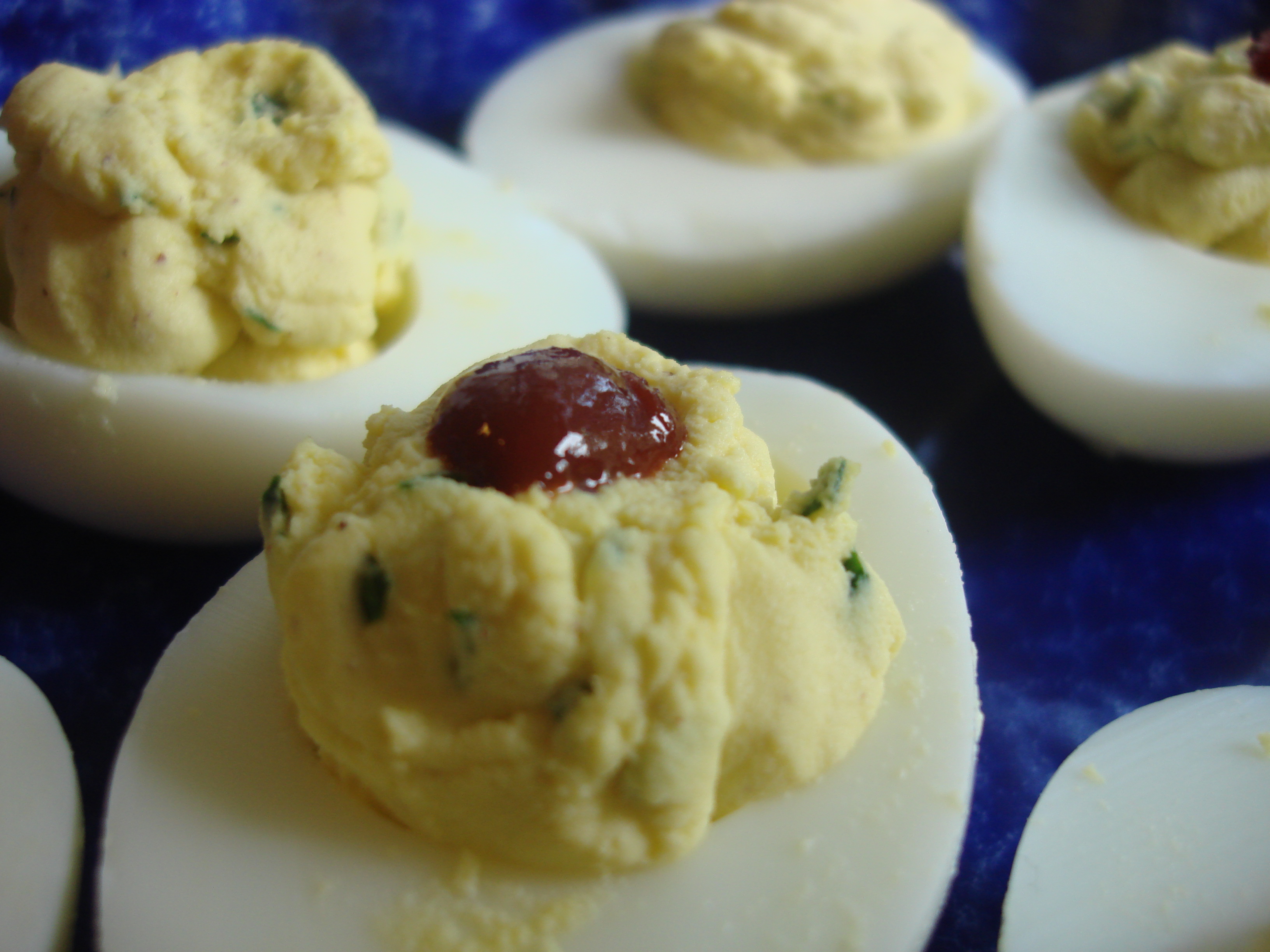
My stuffed eggs are very simple to make and always disappear very quickly from the buffet table. Rather than incorporate hot pepper into the creamy center, I like to add a dab of sriracha hot pepper sauce to the top of half the stuffed eggs (so those who don’t like spice can enjoy them also).

Top up these tapas with hot sauce….

Devilishly Good Stuffed Eggs (makes 12-14 servings)

6-7 fresh eggs

3 Tbs prepared mayonnaise

1-2 Tbs nonfat plain yogurt

2 tsp prepared mustard

1 tsp minced parsley leaves

Salt to taste (not usually necessary because of the mayo and mustard)

Sriracha, if desired, or several pinches of ground cayenne pepper

Perfect hard-boiled eggs. Place eggs in saucepan with cold water to cover. Bring to a boil,  and boil for 5 minutes. Remove from heat and cover  for ten minutes. Drain and place in ice water until cool.

When eggs are cool, peel and slice in half. Pop out yolks into a large bowl, placing whites on a serving tray. To the bowl add mayo, yogurt, mustard and parsley and mash into a creamy paste. Place in a ziplock bag, jamming into one corner. Snip off the corner point and squeeze into the holes of the egg whites (as if you were icing a cake; my son enjoys helping with this). Apply one dab of sriracha to each egg if desired or garnish with pinches of cayenne.

Serve with dry white wine, dry rosé (from Long Island!) or a dry sparkler.

Sofrito for freezing (Puerto Rican mirepoix)

30 Jun

The green and lush fragrance of culantro is one of my favorite rainy day smells. In the kitchen garden I kept at my late grandmother’s house in Mayagüez, Puerto Rico, I had a vigorous crop and whenever it rained, the drops activated the fragrance, the scent pervaded the house, and I got hungry!

Without culantro (which we call recao), Puerto Rican food just isn’t as vibrant; it can’t taste quite like abuela’s. It is integral to sofrito, the starter to so many recipes, including beans, soups, stews and rice dishes. It is the equivalent of the French mirepoix, that combination of sauteed/roasted onions, carrots and celery that is the base for so many Gallic dishes.

Recao – culantro

Unfortunately, culantro is not as well known in the U.S. and doesn’t grow super-well in my planting zone, although I have had some small successes over the years (Thanks to Vic Muñoz for her growing tips). So I hit the local Latin supermarket on occasion and buy some pre-cut leaves from Costa Rica. Because once cut, recao loses its potency quickly, I use twice as much as I would if I had just gone out back and snipped some. And because it is sold by quantities much bigger than I need for a single dish, whenever I do buy it, I make enough sofrito to freeze.

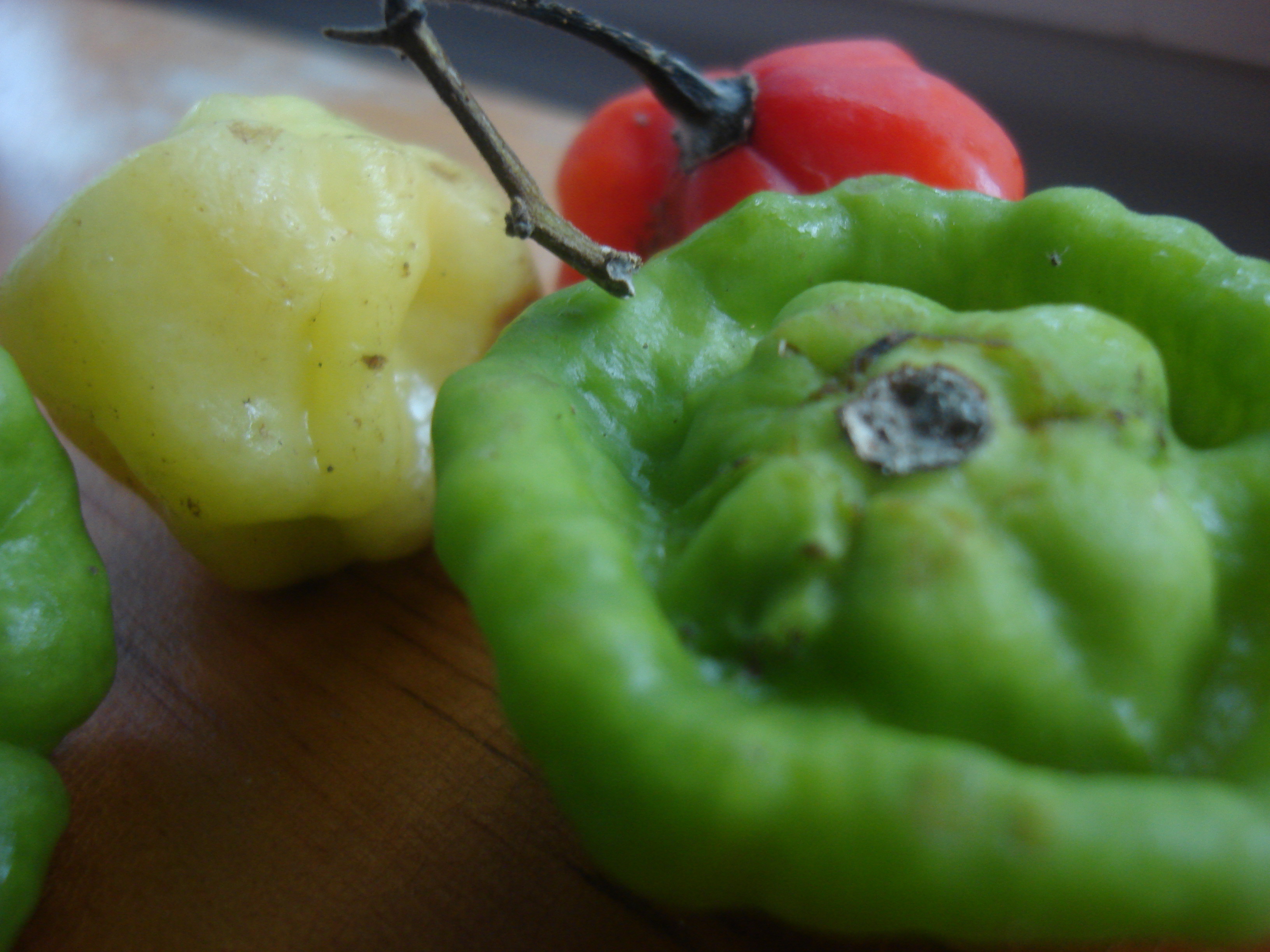
The same goes for ají dulce, the non-spicy small pepper that looks like a habanero, but isn’t at all spicy. I buy a bunch at once — along with the recao — and make sofrito to freeze. You have to be careful and taste it before adding it to the sofrito, because sometimes the store makes a mistake and labels the hot ones as sweet ones, or, I’ve been told, ají dulce planted too closely to ají bravo (angry, aggressive) will take on the spiciness. I can actually smell the heat when cutting habaneros (also called scotch bonnets); the volatility  is no joke.

Ají dulce – the sweet sibling to the hottie habanero

The following recipe is for those who have access to these products. If you don’t have a Latin market nearby, investigate the Asian/Indian markets, as they too use these ingredients.

Continue reading

Aglio olio variations

28 Jun

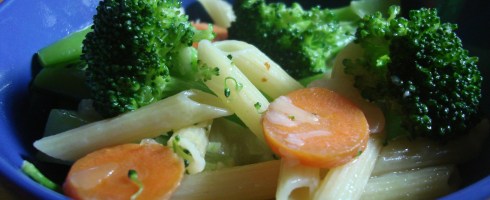
Now that Leandro loves aglio, olio e peperoncino, I am milking the situation. I am adding all sorts of vegetables in the pasta water 3-4 minutes before taking off the boil and draining. Then I drench all of it in the ali-oli and spice! Leandro will now try anything if it is part of aglio-olio, so our carrot consumption is way, way up.

Fitting carrots into our repertoire

Aglio-olio veggie variations (serves 2)

½ lb pasta of your choice (with vegetables, penne or other short and fun pasta – wagon wheels, fiore, farfalle, fusilli –   are  a good choice)

1-2 Cups Mix and Match Veggies 1: roughly chopped broccoli florets/peeled sliced carrots/ peas – in pods or frozen or fresh/cauliflower florets/chopped asparagus spears/shelled edamame (basically, whatever vegetables you like or think your kid might try and that need just a bit of softening to be edible and appealing)

2 Tbsp extra virgin olive oil

1/2 Cup Mix and Match Veggies 2 (onion, peeled and chopped; or diced peppers: green, red, yellow, orange; mushrooms, chopped)

3 cloves garlic, minced

1/8 to ¼ tsp hot red pepper flakes

1/4 cup grated grana padano or parmigiano reggiano

Boil the pasta according to package instructions, making sure to salt the water well. Add Mix and Match Veggies 1 to the pasta water 3-4 minutes before the pasta is fully cooked. Drain and reserve in a separate bowl or the colander. In the same pot that you cooked the pasta, add the olive oil, lowering heat to medium. When the olive oil is loose and fragrant, add mix and match veggies 2, garlic and red pepper flakes (to taste) and stir around until the garlic is golden (not brown). Add the pasta and vegetables back to the pot and mix well, adding grated cheese. Serve!

No-cook Cannellini and Garlic Scape Dip (fast and seasonal)

26 Jun

Garlic scapes are the gorgeous twisty tops of garlic plants as they begin to mature in late spring. They need to be removed from the plant so they don’t take growing power away from the bulbs still developing underground.

They are so good to look at that I actually stick them in vases and use as centerpieces when they are in season, but of course I pull them right out of their decorative function whenever I need garlic flavor, which is what garlic scapes give you. You top and tail them to remove the crown and any woodiness at the bottom of the stem, slice and voila! fresh tasting garlic. When I have had overabundance, I have diced and frozen them to good effect.

This is a recipe that Caroline Fanning, head grower at Restoration Farm, suggested I play around with, as the farm had just such an abundance this year. I added the oil and thyme; You can really experiment with whichever herbs you like. Basil, oregano, rosemary, parsley, savory, and sage all complement the nuttiness of cannellini beans.

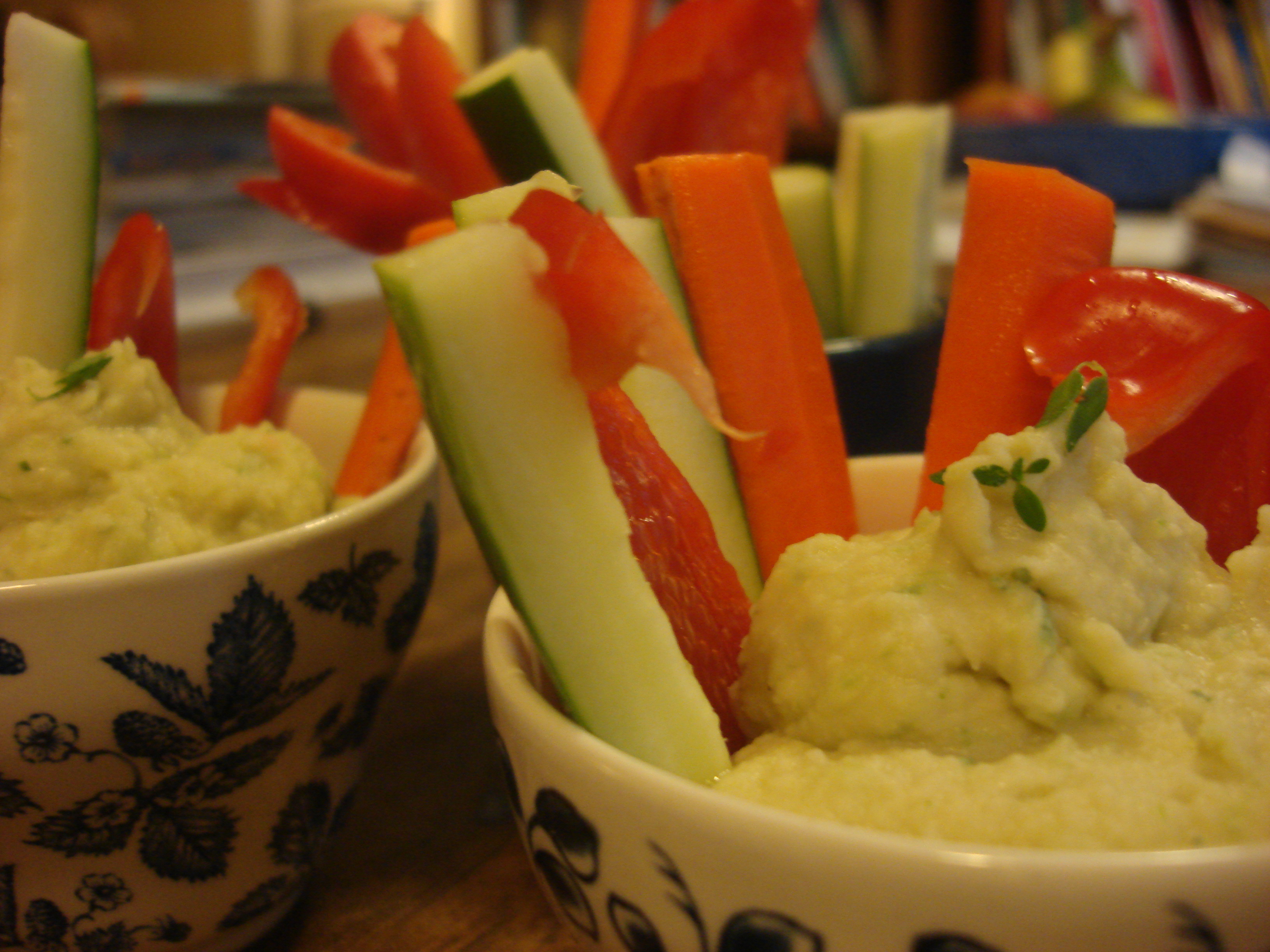
You can use this as dip or spread on sandwiches or wraps, to add flavor and creaminess to other ingredients. Great party dip! I served them as an appetizer, using teacups for individual servings of dip with cut vegetable dippers stuck right in!

No-cook Cannellini and Garlic Scape Dip

4-5 garlic scapes, crown removed and stem trimmed of any woodiness at the bottom

2 15.5 oz cans cannellini (white) beans, rinsed and drained

1 generous Tbs extra virgin olive oil

2 tsp dried thyme (4 tsp fresh)

Place all ingredients in food processor and blend until smooth. Serve with baguette toasts, crackers or fresh vegetable sticks.

What Produce to Buy Organic (and Chicken Update)

21 Jun

If, like me, you are concerned about chemicals in  food, but don’t have the cash to buy all organic, you need to look at the Environmental Working Group’s Shopper’s Guide to Pesticides in Produce (http://www.ewg.org/foodnews/summary/). The 2011 guide has just been posted. It includes a short list of the Dirty Dozen most pesticide laden produce (so you should buy them organic) and The Clean 15 (15 fruits and vegetables that are conventionally grown yet low in pesticides). You can print out a small version to carry in your wallet!

If you don’t have the time to click on the link: Top three dirty products: 3) strawberries 2) celery and 1) apples!

http://www.ewg.org/foodnews/summary/

And on chickens: Tomorrow is processing day for the first round of Trisha’s pastured chicken project at Restoration Farm. Dan and his merry band of volunteers and assistants were busy with the tractors, clearing space for the processing, while Trisha went over each step she’ll take in the processing of more than 30 birds. Very exciting stuff; I will try to witness some of it tomorrow, but will draw the line at having Leandro there, at least this time! I want to watch the process, not have to mind him!

Shout out to the folks from Whole Foods who had a team building thing at the farm today and in the process cleared out the weeds that were choking the asparagus beds!

Meanwhile, just to show you how nicely we farm people clean up, I include a picture of Trisha and Lesly, purtied up for the gorgeous potluck on Sunday.

Trisha (left) and Lesly

Jam On! Fresh Strawberry Rhubarb Jam (no gelatin, no pectin, no sweat!)

21 Jun

Being part of a farm makes you really work with the seasons!

Take rhubarb. I’ve never actually cooked rhubarb before, as much as I love strawberry rhubarb pie (Briermere Farm in Riverhead makes the best I’ve had!). This vegetable is not part of my Caribbean repertory and, to be honest, I have been a little intimidated by it.

Silly me! It is simple! Continue reading

Blueberry-lingonberry muffins (or mix and match berries and jam)

14 Jun

A favorite for tea, lunchbox or thoughtful treat for neighbors, caregivers and friends

Nothing makes people happier than a fresh baked treat, except a fresh-baked treat that isn’t too sinful and comes in small enough portions to make sense rather than create guilt.

Such are these blueberry-lingonberry mini-muffins that I adapted from a Stonyfield Farms strawberry muffin recipe. This recipe I first started doing with my beloved niece, The Incomparable Sofía, when she was just little (she is now a gorgeous and grown-up six-and-three-quarter-years-old). Whenever she comes home for a visit, we bake them up too. I miss her goofy little concentrated self and her beautiful long fingers in the kitchen. It is now Leandro’s favorite thing to bake. It is slightly more complicated than my banana bread or banana muffins; just make sure to lay out all your ingredients, measuring spoons and cups, and bowls before calling the kids to the work table and you can easily do it with a three-year-old maniac (or two!)

We prefer blueberries to strawberries (although to be honest, blueberries do lend a greenish tinge to the final product that is a bit weird, though no one ever, ever complains) as I think they have a punchier flavor when baked. I’ve done it with mixed berries, but early on some kids objected to the seed bits in blackberries and raspberries, so I fell out of the habit of using them.

The real key to good berry flavor, though, I learned from Cook’s Illustrated magazine, which suggests adding berry jam. Blueberry jam might be the obvious choice for blueberry muffins, but as a non-jam eater, I just used what I had in the fridge the first time out, which happened to be lingonberry (shout-out to Sofía’s mom, Annika from Sweden; you’ll find it at IKEA) and we liked the tart sweetness so much, we’ve stuck with it. If you are not familiar with them, think red currant or a softer, gentler version of cranberries.

I prefer mini-muffins, because they allow me to divide and share them more easily and because you can feel good about popping just one or two. Leandro’s caregivers really appreciate getting a batch, and it makes a perfect element to a good fika (Swedish coffee break hang out session – coffee klatch to New Yorkers!).

Blueberry-lingonberry/Any-berry muffins (makes 48 mini-muffins or 12 standard)

1 Cup all purpose flour

1 Cup whole wheat flour

½ Cup sugar (white or light brown)

1.5 tsp baking soda

2 eggs

1 Cup plain yogurt (I use nonfat, lowfat is also fine)

¼ Cup butter (unsalted preferred, but salted is okay) melted and cooled

1 tsp vanilla

1 Cup chopped/mashed blueberries or berries of your choice (frozen are very convenient. Thaw first)

1-2 Heaping Tbs berry jam (I use lingonberry, but use whatever red/blue/purple berry jam you’ve got)

Preheat oven to 375°F. Grease your muffin tins ahead (especially if baking with children – Be prepared!)

In a large bowl, mix together dry ingredients.

In another bowl mix the eggs, yogurt, melted butter and vanilla (if your butter is still very hot, you may get crusty bits when it comes in contact with the cold yogurt. Just break them up as you mix and don’t worry).

Fold berries into the dry mixture. Fold wet mixture into the dry mixture. Swirl in the jam. Spoon batter into greased muffin tins, filling about 2/3 up. Bake for 12 minutes (mini-muffins) or 20-25 minutes (standard size). Cool for a minute, then remove from tins and let cool completely on wire racks (if you’ve got; otherwise any cool, clean surface will do). These keep well tightly covered in the fridge for a week.


Ensalada de Lentejas (Lentil Salad, Spanish-style)

11 Jun

The hot, hazy and humid summer weather typical of Long Island has started early this year, but that doesn’t mean I am giving up my lentils. I like the taste, the price and the fact that, unlike many of the other legumes, they don’t need pre-soaking.

Nutritionally these tiny almost-beans, almost-peas are giants. According to the Mayo Clinic’s Katherine Zeratsky, R.D., L.D., “…lentils are high in protein and fiber and low in fat, which makes them a healthy substitute for meat. They’re also packed with folate, iron, phosphorus, potassium and fiber.” So hip-rah, hip-rah! You should always, always, always have lentils in your pantry.

In winter I make hearty lentil soup, but hot weather calls for something cooler and lighter. I use a recipe — inspired once again by Penelope Casas’ The Foods and Wines of Spain. Have it as a main course with boiled potatoes or rice, or pair it with grilled sausages (from andouille to kielbasa..lentils love a good sausage partner). Lentils also marry well with grilled fish steaks; you can use the lentils as a bed, perhaps accompanied with polenta. This serves four as a side dish; you may want to double it for a BBQ accompaniment or main course.

Lentil Salad

½ lb uncooked pardina lentils (smaller and cuter than your average lentil, but you are free to substitute*)

1 onion, peeled. Cut in half, leaving one half whole and mincing the other half

1 clove

1 bay leaf

1 carrot scraped or peeled (scraping helps maintain a brighter color)

3 cloves garlic, peeled and smashed

1/8 tsp salt (a fat pinch)

Freshly ground pepper

¼ cup good olive oil

1.5 Tbs red wine vinegar

1 clove garlic, minced

 2 Tbs drained and minced roasted red pepper from a jar, plus 1 Tbs chopped for garnish

Rinse and pick through lentils and place in a large pot with enough cold water to cover. Stick the clove in the onion half (reserve the minced onion), then add to pot with bay leaf, carrot, smashed garlic, salt and pepper. Bring to a boil, cover and lower heat to a simmer and cook for 20-25 minutes, until just tender (longer if using regular green lentils). Drain and rinse well in cold water. Remove onion (and any clove that has fallen out), bay leaf and garlic. Dice carrot and place in serving bowl with lentils. Add olive oil, vinegar, reserved mined onion, chopped garlic and minced red pepper and mix gently (you don’t want the lentils to fall apart). Let rest for at least a half hour and serve, topped with reserved red pepper as garnish.

*Green lentils are great for salads because they keep their texture. Brown can get mushy and red lentils fall apart when cooked too long, If you choose them as substitutes, start checking the texture after 15 minutes of simmering.