Archive | Uncategorized RSS feed for this section

Asian Stir Fry Sauce (this time with vegetables and your choice of noodles or rice)

27 Jul

One of my favorite prepared sauces comes from Sang Lee Farms in Cutchogue, on the North Fork of Long Island http://sangleefarms.com/. Their Asian Stir-Fry Sauce is all organic and adds incredible Asian pop to stir fry dishes, without the annoying cloying sweetness and goopiness of other seasonings in a bottle.

However, I run out of it pretty fast, so I am in the process of trying to recreate it at home. I haven’t quite got it, but this version is very yummy and does the job pretty damn well. When I hit exactly the combination I want, I will make larger batches, but for now, the amount in this recipe will season a couple of pounds of vegetables – enough for two to four people, depending on what you serve it with.

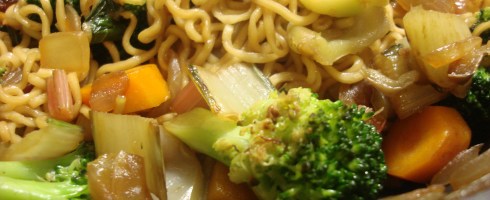
We used soba noodles (Leandro’s request, cause the curly noodles and Japanese writing on the package caught his eye and he absolutely loved them). We also had enough left over to drizzle over some cold chicken wraps I made the next day (and which will be the next post, haha!).

Do you make your own stir fry sauce? Please add your ideas in comments in this post!

Soba noodles make a worthy (and fun) accompaniment to stir fry veggies

Asian Stir-Fry Sauce

¼ Cup soy sauce or tamari (preferably low-sodium)

½ tsp crushed garlic

Scant ¼ tsp sesame oil

¼ tsp grated ginger

½ tsp lemon juice

Mix ingredients together and refrigerate overnight if possible.

When you are ready to cook the dish, begin preparing a cup or two of white rice or a package of soba noodles or other pasta of your choice, following package instructions.

Vegetables

2-2.5 lbs mixed stir-fry vegetables, cut into ¾ inch pieces (we used onions, carrots, some leftover chard stems and a beautiful purple pepper, all from Restoration Farm, plus broccoli from the supermarket)

Generous ½ tsp sugar

Heat the  vegetable oil in a 12 inch skillet with a heavy bottom, until just rippling and just beginning to smoke. Add vegetables and sprinkle the sugar over, coat with the oil and cook, stirring frequently, for about eight minutes, looking for caramelization on the vegetables. Lower the temperature to medium if you get a lot of sticking.

Push vegetables to the side and add a tablespoon of the stir-fry sauce , stir to heat, then mix with the vegetables. Add two to three more tablespoons as desired, being wary of making it too salty.

Serve over rice, noodles or pasta.

Asparagus, Tomato and Hummus Wraps

25 Jul

I love asparagus and red pepper and especially love them with hummus. The following recipe is an easy wrap that tastes delicious and feels virtuous going down. It is easy to assemble, quite portable and looks very nice when you serve it (or eat it with shameless gusto in front of your admiring colleagues at the lunch table). The slightly charred tomatoes really give it a depth of flavor you will like, especially in this season when they are abundant and ultra-sweet.

But first: a confession.

Ready to roll

It has been a very, very long time since I made my own hummus.

When I lived in Puerto Rico and there wasn’t any readily available, I made my very own, very yummy hummus using (expensive) tahini from the health food store. Today, I have to admit, I buy the Sabra stuff from Costco in big tubs; it’s my In Case of Emergency Break Glass (or plastic seal) lifesaver for surprise guests or a snack for watching the news before dinner with my folks. One day I will go back to making my own (and of course I will tell you all about it and look forward to any recipes you would like to share), but for right now, Sabra is a shortcut I feel pretty comfortable with.

In this recipe, I give the ingredients to make four or five wraps, but you may want to double the vegetables so that you can have some as an appetizer and make the wraps for next day fare.


Wrap and go

Asparagus Wraps

1/2 lb asparagus spears, bottoms snapped off and set aside for stock/another day

1 red pepper, top and seeds removed, sliced long

1 Tbs extra virgin olive oil, plus a smear of olive oil for the skillet (only if sauteing the peppers_

½ pint small tomatoes (grape, cherry, Sungold), halved

1-2 Tbs hummus per wrap (about 1 Cup)

4-5 wrappers of your choice (tortillas for example)

If roasting the asparagus and red pepper, preheat oven to 400°F. Coat vegetables in olive oil and roast 20 minutes, turning once or twice, until fairly tender. You may also simmer the asparagus for five minutes in water instead and follow skillet instructions for red pepper.

In a skillet, warm each wrap until soft and pliable and keep warm on a plate, covered (may also be heated in microwave, following package instructions).

In the same skillet, warm a bit of olive oil on medium to cook the red pepper (if you haven’t already roasted it) until tender. Add the roasted vegetables and the raw tomato halves to the skillet and cook on high about three minutes, until the tomatoes look slightly charred and softened, shaking the pan frequently. Go back to the wraps, smear one half of each with a tablespoon or two of hummus. On the half that has the hummus, place a few vegetables. Roll up and serve, or pack up for an excellent work lunch or beach snack.


White Sangría Two Ways (Pimm’s or Limoncello aka: Limon-hello!)

22 Jul

The weather here in the Northeast has been so hot that TV reporters all over the country are frying eggs and heating pizza in the sun. That’s amusing enough for the evening news, but in my house we prefer to do something with more practical applications.

That would be…experimenting with white sangría!

What could be more refreshing after a day of debilitating heat than fruit, wine and a bit of fizz? Sangría usually takes brandy, but I didn’t have any so I broke out a couple of specialty bottles and we (Maryanne, Ashley and I, mostly Ashley) played around with them until we reached a happy, effervescent and refreshing place, safe from the suffocating claws of the heat wave.

Try these two recipes on for size. Pimm’s is a caramelly British alcoholic beverage that makes me think of big hats and horse races. Limoncello is a sweet-tart Italian elixir I first met when I lived in Rovereto, at the foot of the Italian Alps.

Note: we did not add ginger ale or sugar, except to the rims of the glasses as we found the drinks sweet enough as is, but feel free to add as desired!

Refreshing and ever so pretty!

White Sangría, Two Ways (Pimm’s or Limoncello)

First, cut up fruit as follows:
1 apple, chopped into small pieces
1 peach, chopped
1 orange, chopped
1/2 lemon, chopped and with peel removed

 Place fruit in pitcher.  Then add the ingredients for ONE of the following:

 Ingredients (Pimm’s version):

3 ½ cups dry white wine (pinot grigio, sauvignon blanc, vinho verde, verdejo)
2 tablespoons Pimm’s
1 orange, sliced into thin pieces for the garnish                                                                                                                                                                                                                               Splash seltzer/ginger ale (optional)
½ cup sugar (enough to coat the edges of serving glasses)

Ingredients (Limoncello version):
3 ½ cups dry white wine
2 tablespoons Limoncello (Limon- “hello!” after a few glasses)!
1 lemon, sliced into thin pieces for the garnish                                                                                                                                                                                                                              Splash seltzer/ginger ale (optional)

Stir and pour over ice.

For the Pimm’s sangria: lay the sugar in a plate, dampen the rims of the glasses and dip in the sugar to coat. Garnish serving glasses with a slice of orange
For the Limoncello sangria:  Garnish serving glasses with a slice of lemon

De-Friended by a Vegetarian!?! (plus: new poll on your food choices!)

19 Jul

A vegetarian recently de-friended me on Facebook. She was unhappy with my posts on the pastured chickens at Restoration Farm and found them too painful, so she apologized (sort of) and pulled the plug.

I wasn’t particularly offended — to each his/her own — but it got me thinking about the food choices my readers make. So out of curiosity, I put together this quick poll. Please let me know what you will and won’t eat. I welcome comments on why as well!

I, in case you haven’t noticed, am an omnivore, but I try to limit my meat, fish and poultry consumption to organic/sustainably harvested products.

Sofrito for freezing (Puerto Rican mirepoix)

30 Jun

The green and lush fragrance of culantro is one of my favorite rainy day smells. In the kitchen garden I kept at my late grandmother’s house in Mayagüez, Puerto Rico, I had a vigorous crop and whenever it rained, the drops activated the fragrance, the scent pervaded the house, and I got hungry!

Without culantro (which we call recao), Puerto Rican food just isn’t as vibrant; it can’t taste quite like abuela’s. It is integral to sofrito, the starter to so many recipes, including beans, soups, stews and rice dishes. It is the equivalent of the French mirepoix, that combination of sauteed/roasted onions, carrots and celery that is the base for so many Gallic dishes.

Recao – culantro

Unfortunately, culantro is not as well known in the U.S. and doesn’t grow super-well in my planting zone, although I have had some small successes over the years (Thanks to Vic Muñoz for her growing tips). So I hit the local Latin supermarket on occasion and buy some pre-cut leaves from Costa Rica. Because once cut, recao loses its potency quickly, I use twice as much as I would if I had just gone out back and snipped some. And because it is sold by quantities much bigger than I need for a single dish, whenever I do buy it, I make enough sofrito to freeze.

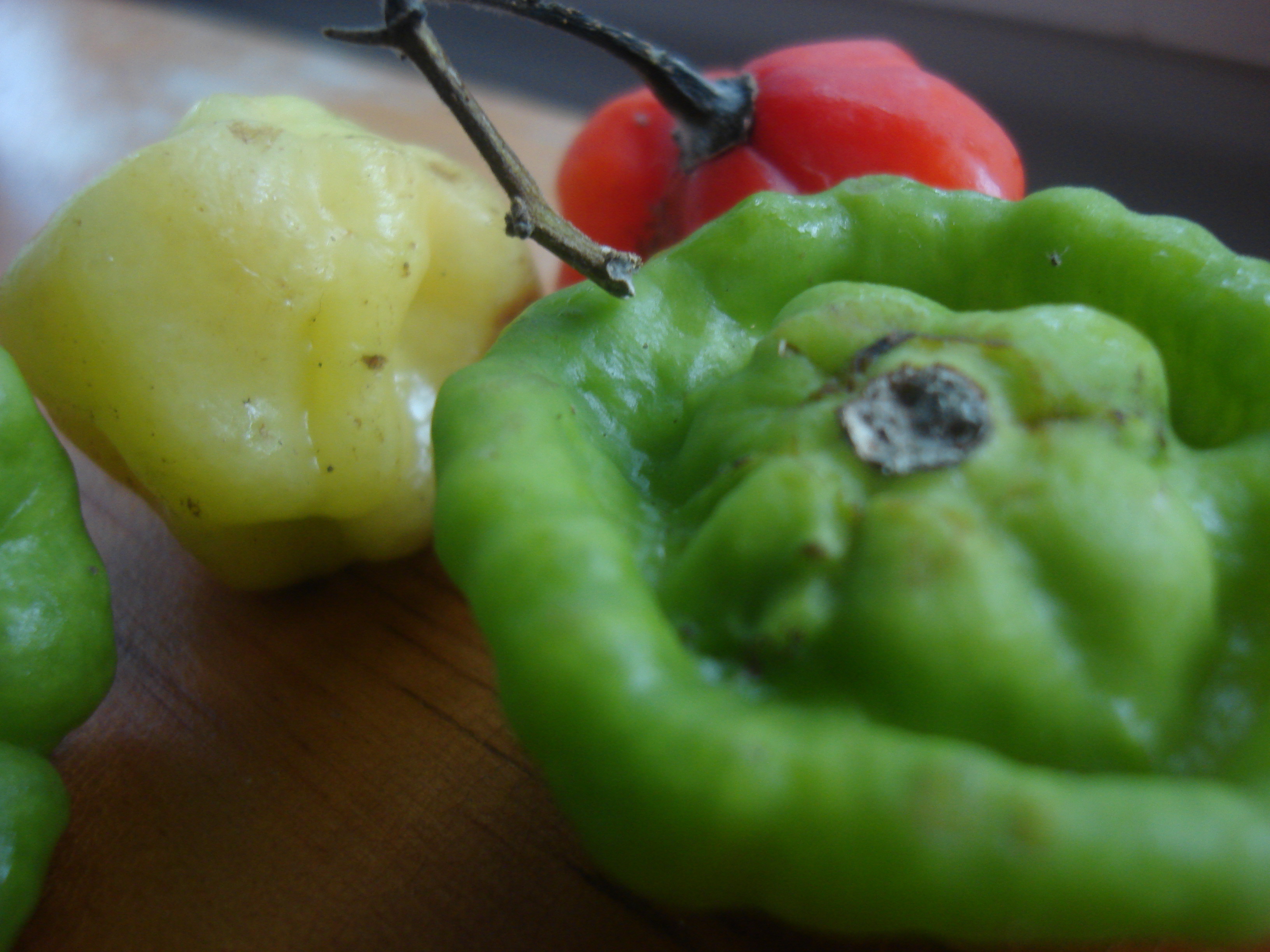
The same goes for ají dulce, the non-spicy small pepper that looks like a habanero, but isn’t at all spicy. I buy a bunch at once — along with the recao — and make sofrito to freeze. You have to be careful and taste it before adding it to the sofrito, because sometimes the store makes a mistake and labels the hot ones as sweet ones, or, I’ve been told, ají dulce planted too closely to ají bravo (angry, aggressive) will take on the spiciness. I can actually smell the heat when cutting habaneros (also called scotch bonnets); the volatility  is no joke.

Ají dulce – the sweet sibling to the hottie habanero

The following recipe is for those who have access to these products. If you don’t have a Latin market nearby, investigate the Asian/Indian markets, as they too use these ingredients.

Continue reading

Spag bog? Spag bol? Spaghetti Bolognese!

22 Jun

My dear Kate over in England thought I had made a spelling error when we were chatting via Facebook and I wrote “spag bog” as I was cooking this dish this week. I thought the same when she wrote “spag bol”. Turns out we are both correct in our not-quite-right-ness. According to The Times (UK), it has been called both bog and bol in England since the 1970s when Spaghetti Bolognese arrived in that country. The Times opines that the Brits were afraid to attempt to spell or pronounce it, so they shortened it to something more manageable for the English-speaking tongue.

Spag bog by any name would be a great pasta sauce. Basically a ground beef (mince, if we are sticking to U.K. parlance) and tomato sauce, there are probably almost as many versions as there are folks who make it. Marcella Hazan, a fantastic cookbook writer and teacher of Italian cookery, does a classic version that involves milk and suggests 5-6 hours of simmering. I used to make her version, when I was young and childless and didn’t need any sleep, but these days? Well, as you’ll see, this recipe is pared down to basics. Continue reading

What Produce to Buy Organic (and Chicken Update)

21 Jun

If, like me, you are concerned about chemicals in  food, but don’t have the cash to buy all organic, you need to look at the Environmental Working Group’s Shopper’s Guide to Pesticides in Produce (http://www.ewg.org/foodnews/summary/). The 2011 guide has just been posted. It includes a short list of the Dirty Dozen most pesticide laden produce (so you should buy them organic) and The Clean 15 (15 fruits and vegetables that are conventionally grown yet low in pesticides). You can print out a small version to carry in your wallet!

If you don’t have the time to click on the link: Top three dirty products: 3) strawberries 2) celery and 1) apples!

http://www.ewg.org/foodnews/summary/

And on chickens: Tomorrow is processing day for the first round of Trisha’s pastured chicken project at Restoration Farm. Dan and his merry band of volunteers and assistants were busy with the tractors, clearing space for the processing, while Trisha went over each step she’ll take in the processing of more than 30 birds. Very exciting stuff; I will try to witness some of it tomorrow, but will draw the line at having Leandro there, at least this time! I want to watch the process, not have to mind him!

Shout out to the folks from Whole Foods who had a team building thing at the farm today and in the process cleared out the weeds that were choking the asparagus beds!

Meanwhile, just to show you how nicely we farm people clean up, I include a picture of Trisha and Lesly, purtied up for the gorgeous potluck on Sunday.

Trisha (left) and Lesly

Black Bean Variation (Frijoles Negros con pimientos morrones y chorizo)

19 Jun

As much as I like my basic five-minute black bean recipe, (https://hotcheapeasy.wordpress.com/2010/11/24/five-minute-black-beans/)I do get bored with it occasionally and I also actually sometimes have more than five minutes (this prep takes maybe ten minutes).

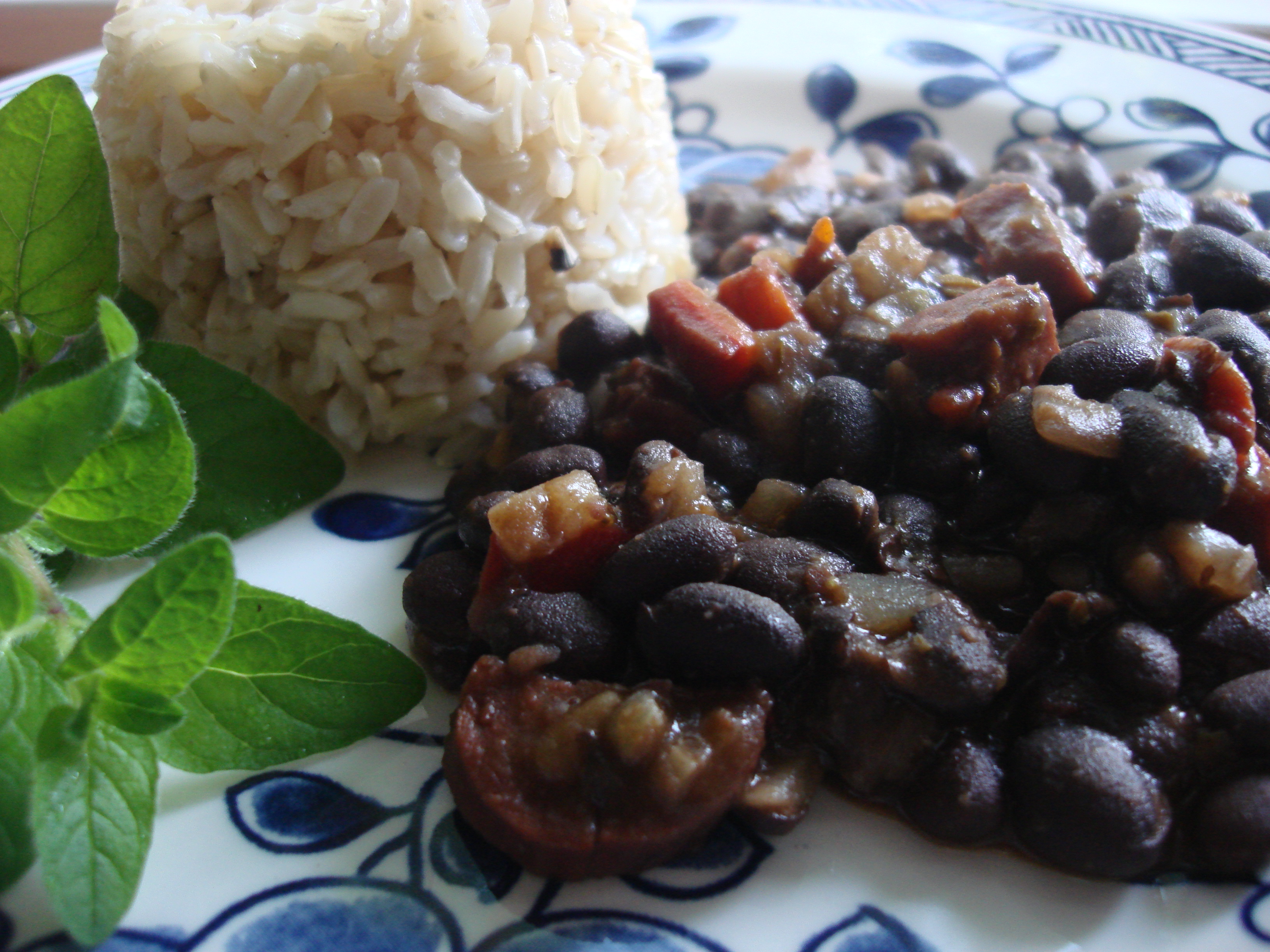
On this occasion of boredom and time to spare, I had some chorizo and roasted red pepper doing nothing but getting old in my fridge, so I broke out of my box. The result was much, much better than I anticipated; the addition of chorizo added a silky umami sort of mouthfeel that was actually a bit like gravy. So give it a try; my son and I enjoyed the added spiciness and actually had it with rice one day and on tortilla chips topped with Monterey Jack cheese and lightly broiled the next day.

Black bean variation (with chorizo, roasted red pepper and oregano)

1.5 Tbs olive oil

1 medium onion, peeled and chopped

3 cloves garlic, peeled and chopped

3oz Spanish-style dry chorizo sausage, peeled and diced

1 Tbs roasted red pepper from a jar, drained and diced

1 29oz can black beans, drained and rinsed

2 tsp dry oregano

Heat olive oil in a heavy-bottomed saucepan until fragrant. Add onion, stir to coat and lower heat to medium. Cook for five minutes. Add garlic, cook one minute. Add chorizo and cook until it starts to release color. Add red pepper, stir to coat. Cook an additional minute. Add beans, oregano and ½ cup water (more if you want more liquid for rice; about that or less for future quesadilla filling or nacho topping). Bring to a boil, reduce to a simmer and cook 15-20 minutes.

I Want Your Stories!

13 Jun

I am working on a piece about the current generation of gardeners (specifically for edibles: fruit and veg) and I would love to hear your stories. When did you begin to garden? Why did you start? Why do you do you continue to do it? Is this your first try? Please comment here and let me know whether you mind being contacted about your gardening stories for possible publication…

Thanks! Natalia


¿Que qué? ¡Quesadillas! (Camp stove friendly)

9 Jun

Finger food supreme

One day I will be an eater of sandwiches.

But for now aside from the odd grilled cheese, I am not a sandwich girl. Just don’t like all the bread, the sliced deli meats, cold salads inside…I just don’t get it. Unless of course it is a pressed Cuban sandwich, con todos los poderes, de Elegguá pa’bajo…you know, like real bread, toasted, mad quantities of stuff, greased up…I can do that. In Miami. Or San Juan de Puerto Rico (ah, Kasalta). Occasionally.

But not being a sandwich person in this American life is to miss out on a lot of convenience and portability. So, I have discovered the quesadilla. Take whatever you’ve got in the fridge, spread it over half of a tortilla toasting in a skillet, sprinkle melty cheese, fold it, flip it, and allí está…a sandwich worth eating. Slice it like a pizza and you can dip it into hot sauce too.

It worked very well on our camping trip. Leftover black beans, some Monterrey Jack and sriracha and go, baby, go. Other things I have stuffed into quesadillas include pollo guisado; cheddar cheese and tomato slices; leftover sliced steak; roasted vegetables; sundried tomato and smoked mozzarella…all awesome and all done in no time, sealed with a kiss of cheese. You can slip avocado in the middle where it won’t get hot to give a lovely creaminess (plus health benefits, I am sure, but who cares?)

Quesadillas (with your choice of stuffing)

1 package of large soft tortillas (flour or corn)

a spritz of cooking oil on a good iron skillet or nonstick

1-2 cups filling (LEFTOVERS! cooked beans, cooked veg, stewed meat, sliced cooked meat)

couple of fistfuls shredded meltable cheese

1-2 Tbs herbs/hot red pepper flakes/salsa – it’s up to you to make the matches

Heat the skillet and the oil to medium. Lay a tortilla on it. Cover half with filling (Not too thick! Maybe 1/4 inch – you don’t want a mess). Sprinkle cheese (especially around the edge to make a seal). Fold the empty tortilla half over. Allow to cook a minute, then flip with fingers if you are daring, or a spatula. Turn a few times until a bit crispy and transfer to a plate. Start again with another tortilla. You can slice into wedges and serve with whatever condiments go with your filling.