Archive | Spanish RSS feed for this section

Fast track Spanish-style tortilla (camping friendly, no potatoes)

22 Jul

I love me some camp stove scrambled eggs, but it is not hard to step up the game a bit and make something fancier and more satisfying, even in the minimalist camp kitchen. The following recipe makes for rocking outdoor breakfast/brunch eggs: a cross between an omelette and a tortilla.

This is where you learn that it doesn’t have to have potatoes to be a tortilla…this one celebrates the zucchini season, but amps up the wow factor with a bit of spicy chorizo. It does justice to that big appetite that the outdoor life gives you, but cuts cooking and prep time in half.

(Love that fresh local flavor: my eggs come from Makinajian Poultry Farm in Huntington. It is hard to mess up eggs when they are that good)

Take your omelette to a new level....

Shortcut tortilla for camping

6 eggs, lightly beaten

1 Tbs extra virgin olive oil

½ medium onion, peeled and diced

½ medium zucchini, diced

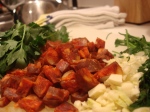
3-4 oz Spanish (hot, dry) chorizo, peeled and diced

Salt and pepper to taste

Set aside the lightly-beaten eggs in a large bowl.

Heat half the olive oil until fragrant in an 8 or 9 inch skillet, then add onion and zucchini and sauté until tender. Remove from heat and stir vegetables into the egg mixture.

Wipe skillet (leaving a bit of grease) and add chorizo, cooking at medium until it begins releasing its oil. Then add to egg mixture and allow to rest five minutes. In the meantime, wipe the skillet and add remaining oil. Heat the oil on medium high until fragrant and add egg mixture, seasoning with a bit of salt and pepper.

Once the bottom of the egg mixture begins to set, shake pan to loosen and lower heat to medium. Cover and cook five minutes or until the whole egg mixture looks mostly set. Uncover and place a flat plate on top of the egg mixture and carefully turn skillet over so tortilla comes out. Slide tortilla back into the skillet and cook the other side till set. You may flip it several times until completely set.

Flip finished tortilla out of pan and onto plate. Allow to cool somewhat before cutting into wedges and serving.

Party Snacks: Devilishly Good Stuffed/Deviled Eggs

3 Jul

One of the keys to a good summer dinner party is to have plenty of cold (make ahead) dishes that will delight your guests, give them a chance to ease into the party and buy you time to serve drinks and get the grilled stuff on the table.

This is the first of several posts that will help you set up a beautiful and tasty cold appetizer table (with wonderful leftovers).

Deviled eggs may sound like a throwback to the days of dubious casseroles, mystery meat and hallucinogenically-colored gelatin dishes with — oh God — marshmallows, but please reconsider. Stuffed eggs have an illustrious history, have been popular since Ancient Roman days (at least according to www.devilledeggs.com) and were served in 13th century Andalusia, Spain.

So, we’re talking — not bad 70s potluck fare — but classic tapas of the highest order. That they are finger food only adds to their charm; I believe hands-on food brings guests closer and requires less fuss in setting the table.

My stuffed eggs are very simple to make and always disappear very quickly from the buffet table. Rather than incorporate hot pepper into the creamy center, I like to add a dab of sriracha hot pepper sauce to the top of half the stuffed eggs (so those who don’t like spice can enjoy them also).

Top up these tapas with hot sauce….

Devilishly Good Stuffed Eggs (makes 12-14 servings)

6-7 fresh eggs

3 Tbs prepared mayonnaise

1-2 Tbs nonfat plain yogurt

2 tsp prepared mustard

1 tsp minced parsley leaves

Salt to taste (not usually necessary because of the mayo and mustard)

Sriracha, if desired, or several pinches of ground cayenne pepper

Perfect hard-boiled eggs. Place eggs in saucepan with cold water to cover. Bring to a boil,  and boil for 5 minutes. Remove from heat and cover  for ten minutes. Drain and place in ice water until cool.

When eggs are cool, peel and slice in half. Pop out yolks into a large bowl, placing whites on a serving tray. To the bowl add mayo, yogurt, mustard and parsley and mash into a creamy paste. Place in a ziplock bag, jamming into one corner. Snip off the corner point and squeeze into the holes of the egg whites (as if you were icing a cake; my son enjoys helping with this). Apply one dab of sriracha to each egg if desired or garnish with pinches of cayenne.

Serve with dry white wine, dry rosé (from Long Island!) or a dry sparkler.

Sofrito for freezing (Puerto Rican mirepoix)

30 Jun

The green and lush fragrance of culantro is one of my favorite rainy day smells. In the kitchen garden I kept at my late grandmother’s house in Mayagüez, Puerto Rico, I had a vigorous crop and whenever it rained, the drops activated the fragrance, the scent pervaded the house, and I got hungry!

Without culantro (which we call recao), Puerto Rican food just isn’t as vibrant; it can’t taste quite like abuela’s. It is integral to sofrito, the starter to so many recipes, including beans, soups, stews and rice dishes. It is the equivalent of the French mirepoix, that combination of sauteed/roasted onions, carrots and celery that is the base for so many Gallic dishes.

Recao – culantro

Unfortunately, culantro is not as well known in the U.S. and doesn’t grow super-well in my planting zone, although I have had some small successes over the years (Thanks to Vic Muñoz for her growing tips). So I hit the local Latin supermarket on occasion and buy some pre-cut leaves from Costa Rica. Because once cut, recao loses its potency quickly, I use twice as much as I would if I had just gone out back and snipped some. And because it is sold by quantities much bigger than I need for a single dish, whenever I do buy it, I make enough sofrito to freeze.

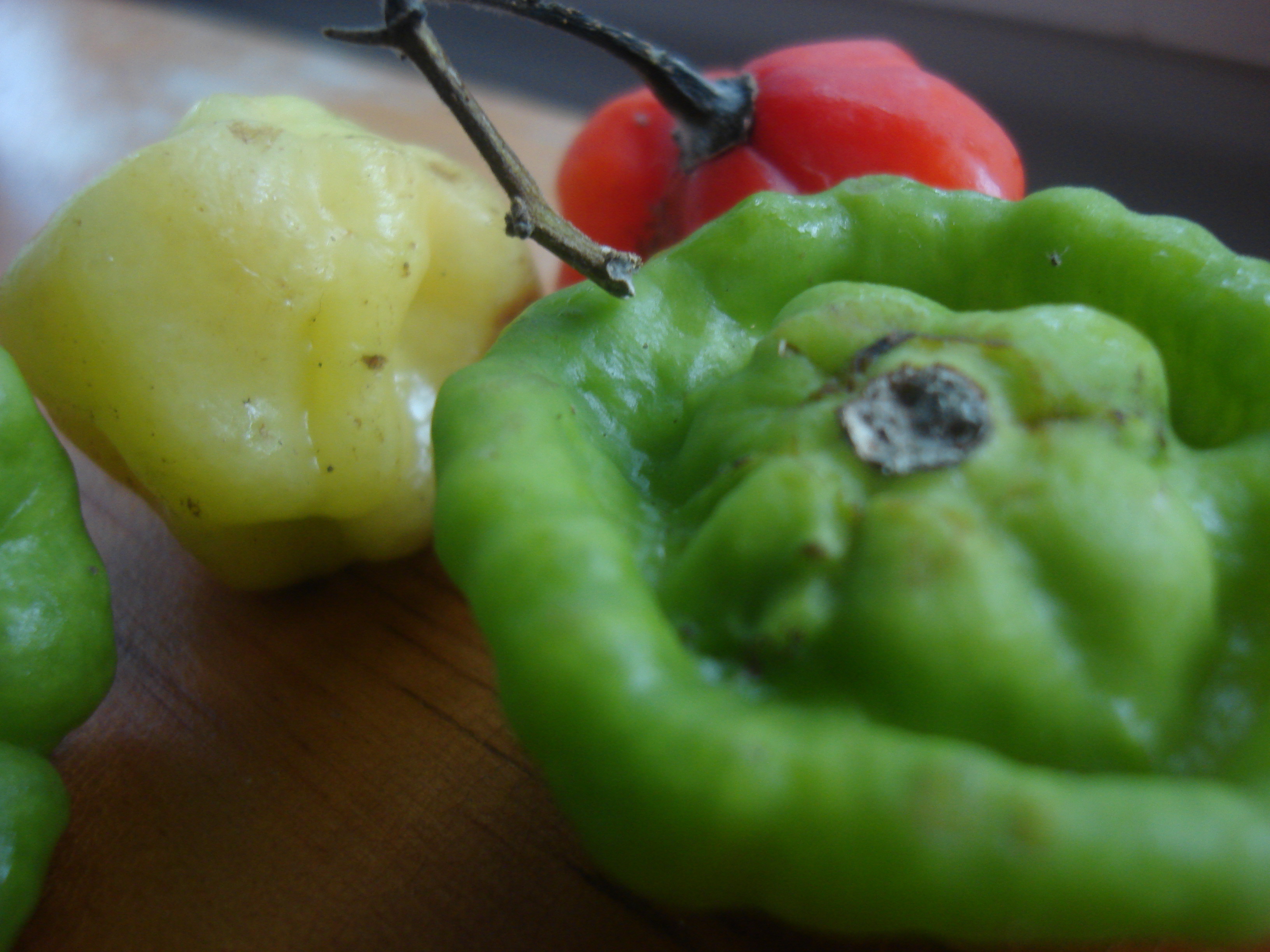
The same goes for ají dulce, the non-spicy small pepper that looks like a habanero, but isn’t at all spicy. I buy a bunch at once — along with the recao — and make sofrito to freeze. You have to be careful and taste it before adding it to the sofrito, because sometimes the store makes a mistake and labels the hot ones as sweet ones, or, I’ve been told, ají dulce planted too closely to ají bravo (angry, aggressive) will take on the spiciness. I can actually smell the heat when cutting habaneros (also called scotch bonnets); the volatility  is no joke.

Ají dulce – the sweet sibling to the hottie habanero

The following recipe is for those who have access to these products. If you don’t have a Latin market nearby, investigate the Asian/Indian markets, as they too use these ingredients.

Continue reading

Asopao de pollo (Soupy Chicken and Rice) with Pastured Bird!

23 Jun

Sooooo, I managed to get to Restoration Farm in time to see the very tail end of the first processing (meaning when the birds are killed, plucked and eviscerated, lest I be accused of euphemism).

I did NOT take Leandro; I wanted to see things for myself and not have to focus on keeping him out of trouble. More on his reaction to the chicken in a moment.

First I want to say that the atmosphere at this first round of chicken processing was so calm and cooperative and lovely. The team of Trisha, Lucille, Steve, Brian, Denis, Dan and Caroline was tired, but elated, but not  giddy or punchy, after seven hours of chicken guts under the trees. Dan and Caroline’s two kids were there; two-year-old Ada was calm as could be in the face of all the activity.

My first bird

The chickens — all 35 made it to processing! – weighed in between 4. 16 and 6.65 lbs. As a note, these are not certified organic birds (that’s a whole ‘nother process), but they have been raised according to organic practices – from their feed to their pasture; they just don’t have the stamp.

I also forgot my bloody camera! I wanted to shoot myself (since I couldn’t shoot pictures). So you will have to wait and see whether someone is able to send me photos; then again, perhaps you don’t care to see the goings on. Anyhoo, it was clean and well-organized.

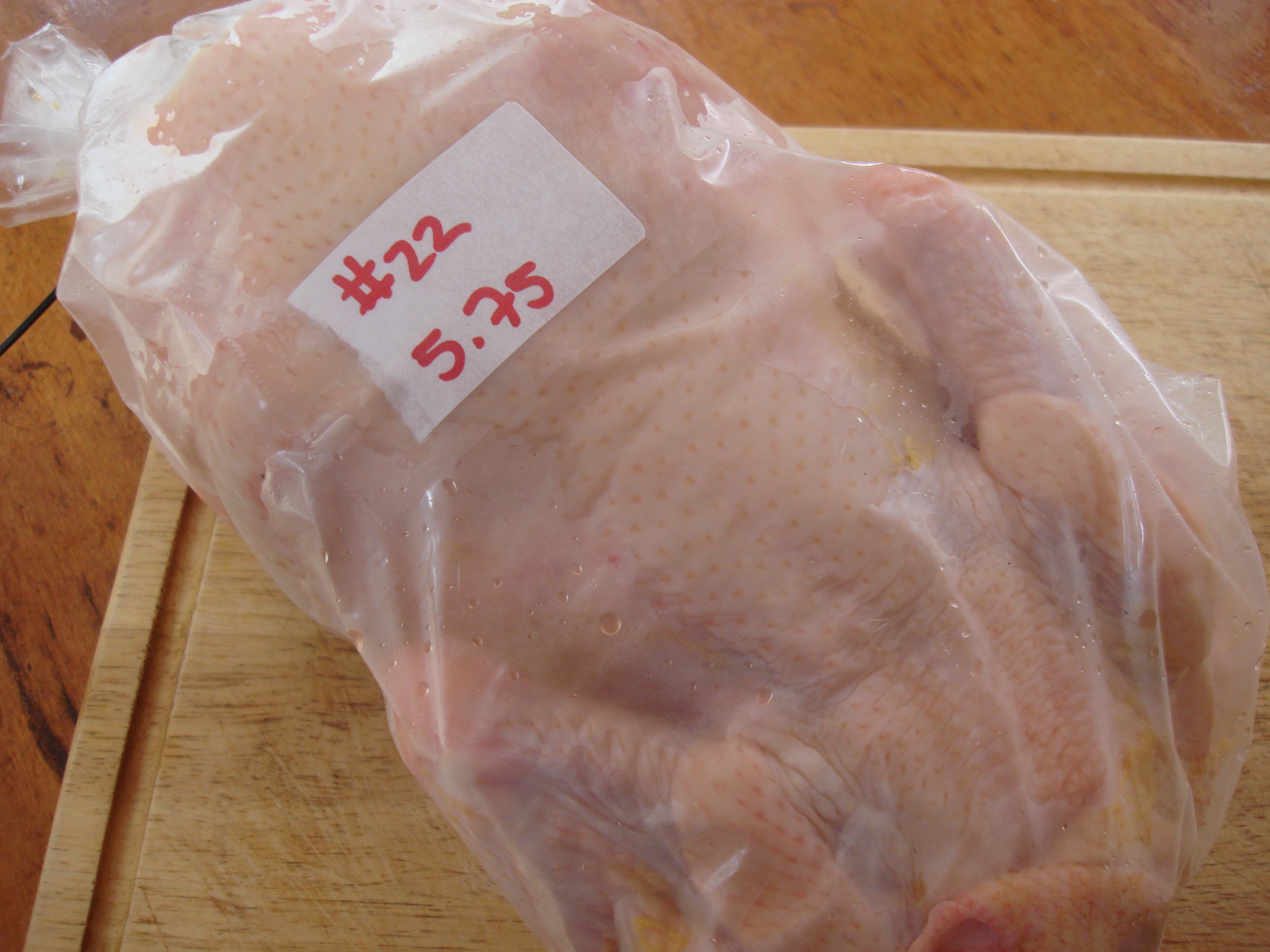
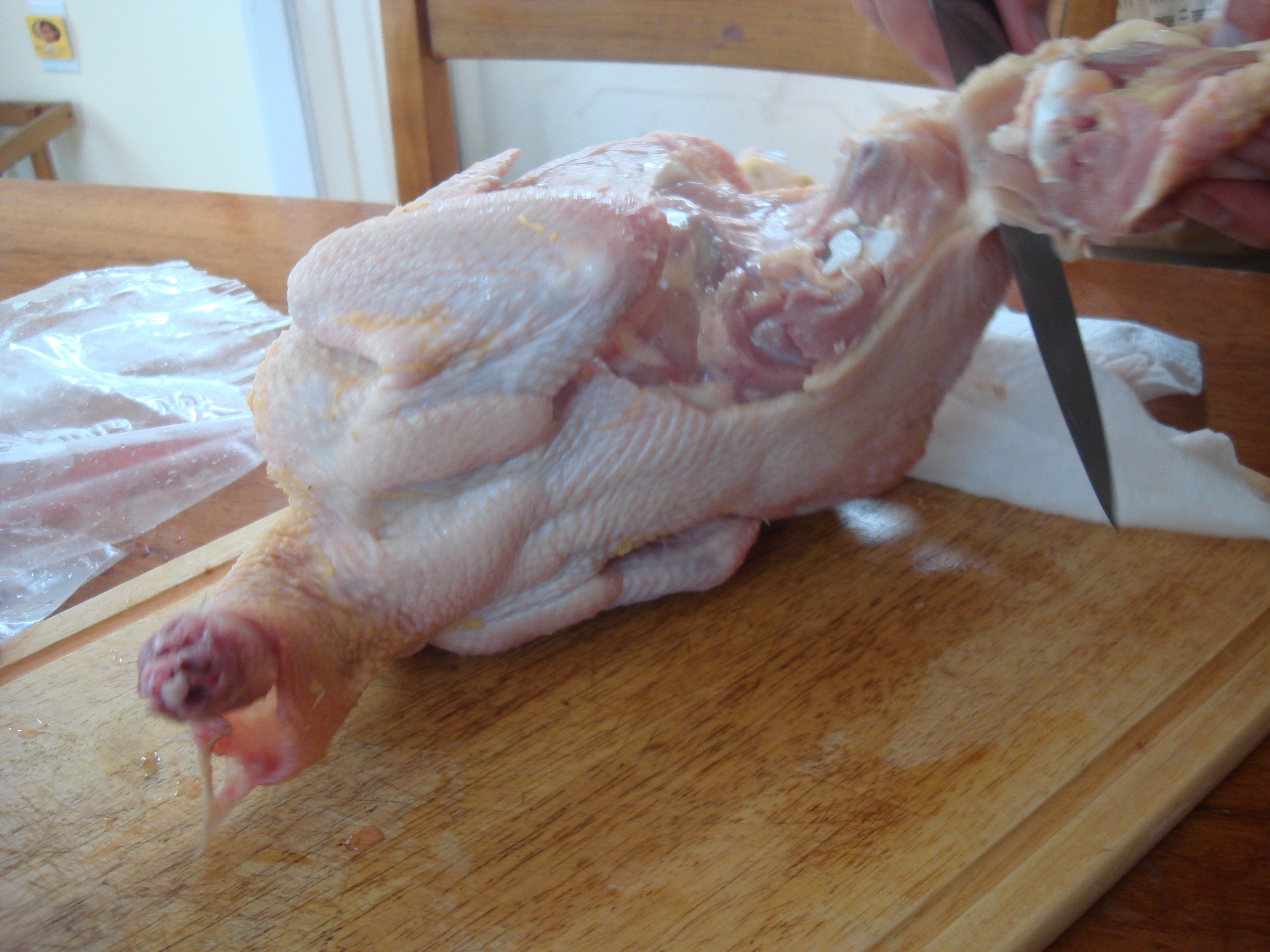
So I brought home bird #22, weighing 5.75 lbs. I picked up the necessary ingredients for asopao from the Compare (Latino) supermarket in Farmingdale on the way home. My dad, Pedro, roused himself from the NYTimes crossword puzzle to separate the bird (we saved the breasts for another meal cause this bird was so big!) and I went to work while Leandro was still across the street at a playdate. It was beautiful to work with. So clean.

Asopao isn’t really Hot, Cheap & Easy, except for the hot, sweaty work if you want to do it right (and I did). Perhaps I will invent a shortcut version one day, but not with this special bird. And really, my mom and dad were taken back to the days of my great-aunts cooking all day long…I really got it right. The chicken gave so much real flavor; it is certainly not as tender as factory-farmed, but it is really good. In the next few posts I’ll talk about some of the more unusual ingredients here and what to do if you can’t find them.

Leandro sat down to eat and said, “These are the little chickens that got big?”

and I said “Yes, Trisha and everyone killed them today so we could eat.”

“Oh. You went to see?” he said, and I said yes.

He stuck a big bite in his mouth and said, “Delicious.”

I forgot to tell him not to speak with his mouth full.

Asopao de Pollo (Soupy Chicken and Rice) Serves 6-8

Dedicated to my tía-abuelas

A – Three pounds chicken (may be whole chicken or, if you have a big bird, reserve the breasts for another meal. MUST HAVE BONES!!! Should have neck, heart and liver as well) cleaned and separated into drumsticks, thighs, wings (separated and tips cut off and reserved for stock), backbone, etc.

B – ADOBO (pound all ingredients in B in a mortar and pestle into a smooth paste)

  1. 3 cloves garlic, peeled
  2. 2 black peppercorns
  3. 1 tsp dry oregano
  4. 2.5 tsp salt
  5. 1 pinch (1/8 tsp) turmeric or sweet paprika (Turmeric stains, so beware!)
  6. 1.5 tsp olive oil
  7. ½ tsp vinegar

C – 2 Cups white rice (less if you want soupier soup.Sometimes the rice takes over.)

D – 9 Cups water and 1 Tbs salt

E – SOFRITO 1

  1. 3 Tbs olive oil
  2. 3 oz ham steak or jamón para cocinar, diced
  3. 1 oz bacon, chopped rustically
  4. 1 green cooking pepper (cubanelle or Italian pepper), diced
  5. 1 large onion, peeled and diced
  6. 6 culantro leaves (recao), minced
  7. 4 sweet small peppers called ají dulce in Hispanic markets (do NOT purchase Jamaican ají or scotch bonnet! They look the same but the Jamaican/scotch bonnet are HABANEROS, deadly hot and inappropriate for this dish!) seeded and minced
  8. ½ Cup cilantro leaves, minced
  9. 2 Tbs vegetable oil (seasoned with achiote, for the more expert criollo cook)

F – SOFRITO 2

  1. 1 Tbs capers, drained indifferently
  2. 1 tomato, seeded and diced
  3. 1  8 oz can Spanish-style tomato sauce
  4. 4 oz roasted red pepper, drained indifferently and diced
  5. 10 pimiento stuffed green olives
  6. 4 oz Spanish dry, cured chorizo sausage

G – ½ Cup light red wine

H –  OPTIONAL – in Puerto Rico we decorate and cool off the soup by topping with a can of petit pois or asparagus. Today’s foodies are not so hip to those particular vegetables in their mushy canned form. I leave it up to you.

Instructions

  1. Separate chicken parts into two large bowls. The back bone, neck, wingtips, liver, heart, and kidneys go in one for the stock. The meatier drumsticks, wings, thighs, and breasts (if using) go in the other. I remove most of the skin and cut off much of the fat. Season all pieces with the ingredients in B. (Adobo).
  2. Soak the rice in abundant water while doing the rest of the prep and cooking.
  3. Place the ingredients in D in a large (6 qt) saucepan. Add the stock chicken pieces, cover, bring to a boil at medium high, boil for 15 minutes, then reduce heat and simmer for an additional 30 minutes, covered.
  4. In an even larger pot, place all the ingredients in E (Sofrito 1), and sauté at medium high until vegetables begin to wilt. Add all the ingredients in F (Sofrito 2) and continue stirring until combined and beginning to stick. Add wine and scrape bottom of pot. Add the meaty chicken pieces and cook at medium, turning frequently to coat well. Cover and cook for 30 minutes on medium low.
  5. When the stock and chicken sofrito are ready, drain stock into chicken. From the stock, reserve the back and wings and get as much meat off them as you can, adding to the soup, discarding the bones. You may add heart and liver to the soup as well.
  6. Bring to a boil.
  7. Drain the rice, stir into the soup, cover and bring to a boil. Reduce heat and cook, covered until rice is cooked (start checking in 10-15 minutes). Serve with roasted red pepper, peas or asparagus garnish. If the rice takes over, just add water.

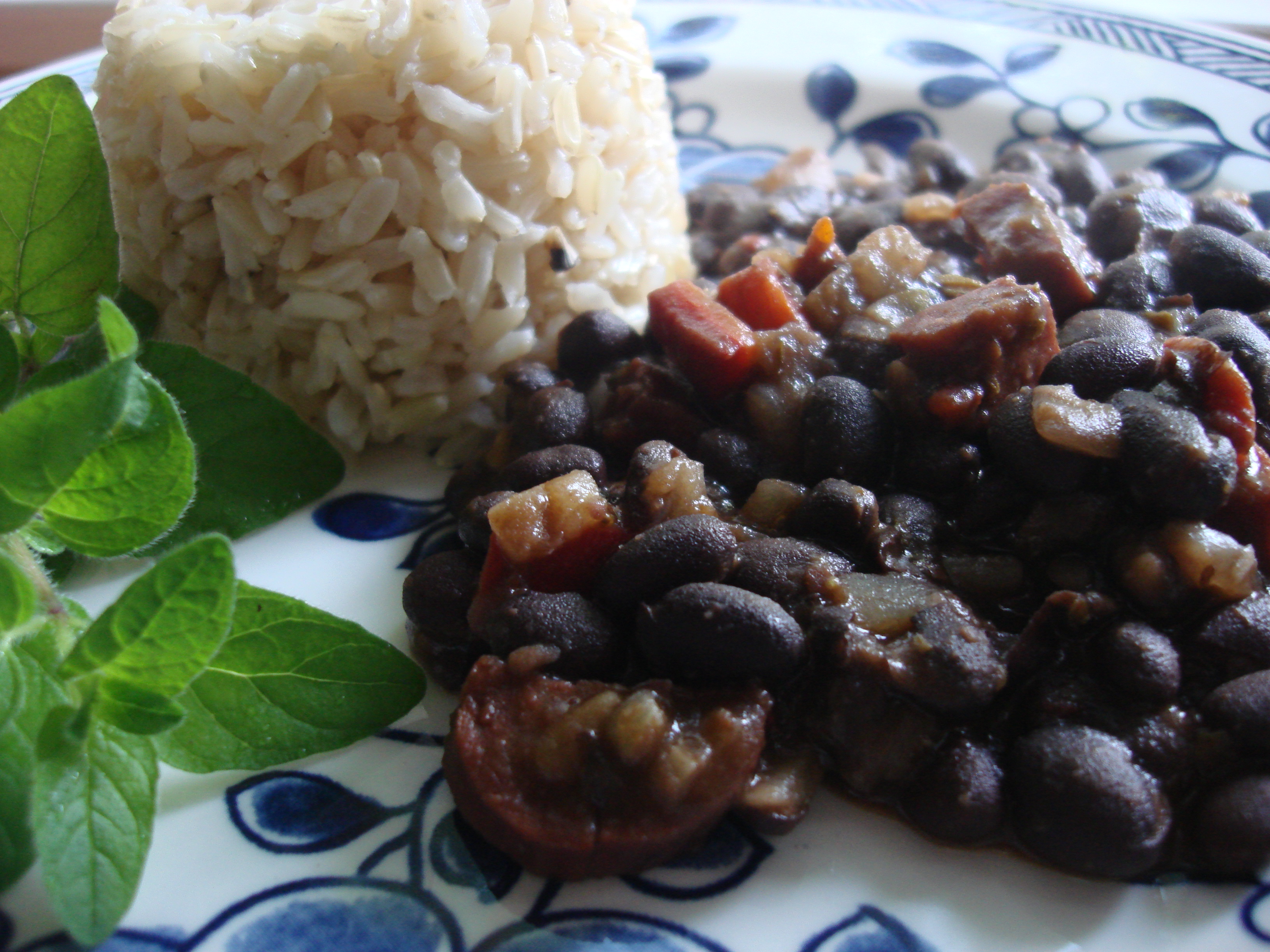
Black Bean Variation (Frijoles Negros con pimientos morrones y chorizo)

19 Jun

As much as I like my basic five-minute black bean recipe, (https://hotcheapeasy.wordpress.com/2010/11/24/five-minute-black-beans/)I do get bored with it occasionally and I also actually sometimes have more than five minutes (this prep takes maybe ten minutes).

On this occasion of boredom and time to spare, I had some chorizo and roasted red pepper doing nothing but getting old in my fridge, so I broke out of my box. The result was much, much better than I anticipated; the addition of chorizo added a silky umami sort of mouthfeel that was actually a bit like gravy. So give it a try; my son and I enjoyed the added spiciness and actually had it with rice one day and on tortilla chips topped with Monterey Jack cheese and lightly broiled the next day.

Black bean variation (with chorizo, roasted red pepper and oregano)

1.5 Tbs olive oil

1 medium onion, peeled and chopped

3 cloves garlic, peeled and chopped

3oz Spanish-style dry chorizo sausage, peeled and diced

1 Tbs roasted red pepper from a jar, drained and diced

1 29oz can black beans, drained and rinsed

2 tsp dry oregano

Heat olive oil in a heavy-bottomed saucepan until fragrant. Add onion, stir to coat and lower heat to medium. Cook for five minutes. Add garlic, cook one minute. Add chorizo and cook until it starts to release color. Add red pepper, stir to coat. Cook an additional minute. Add beans, oregano and ½ cup water (more if you want more liquid for rice; about that or less for future quesadilla filling or nacho topping). Bring to a boil, reduce to a simmer and cook 15-20 minutes.

One Week to Our First Pastured Chicken: Final Selection of Recipe Has Begun!

15 Jun

Leandro's first homegrown peapod

Just before this week’s visit to Restoration Farm, we went out into our yard where Leandro picked the very first pea pod from a plant he himself started from seed! We were very pleased, even though the peas weren’t so tasty raw. This was a random variety from a garden show craft, so we have high hopes for the others we planted – Burpees Garden Sweet (organic). His eyes reflected the magic of a seed transforming into food.

Trish and one of her flock

Then at Restoration Farm, we visited that other transformation into food; Trisha tells us that the pastured chickens are a week away from our cooking pots. They will be seven weeks and one day, and — we hope — about five pounds. She had initially planned to go to eight weeks, but due to the window of opportunity for processing and the fact that they are getting slower and heavier and more prone to disease, she figures next week is it!

Ignorance is bliss


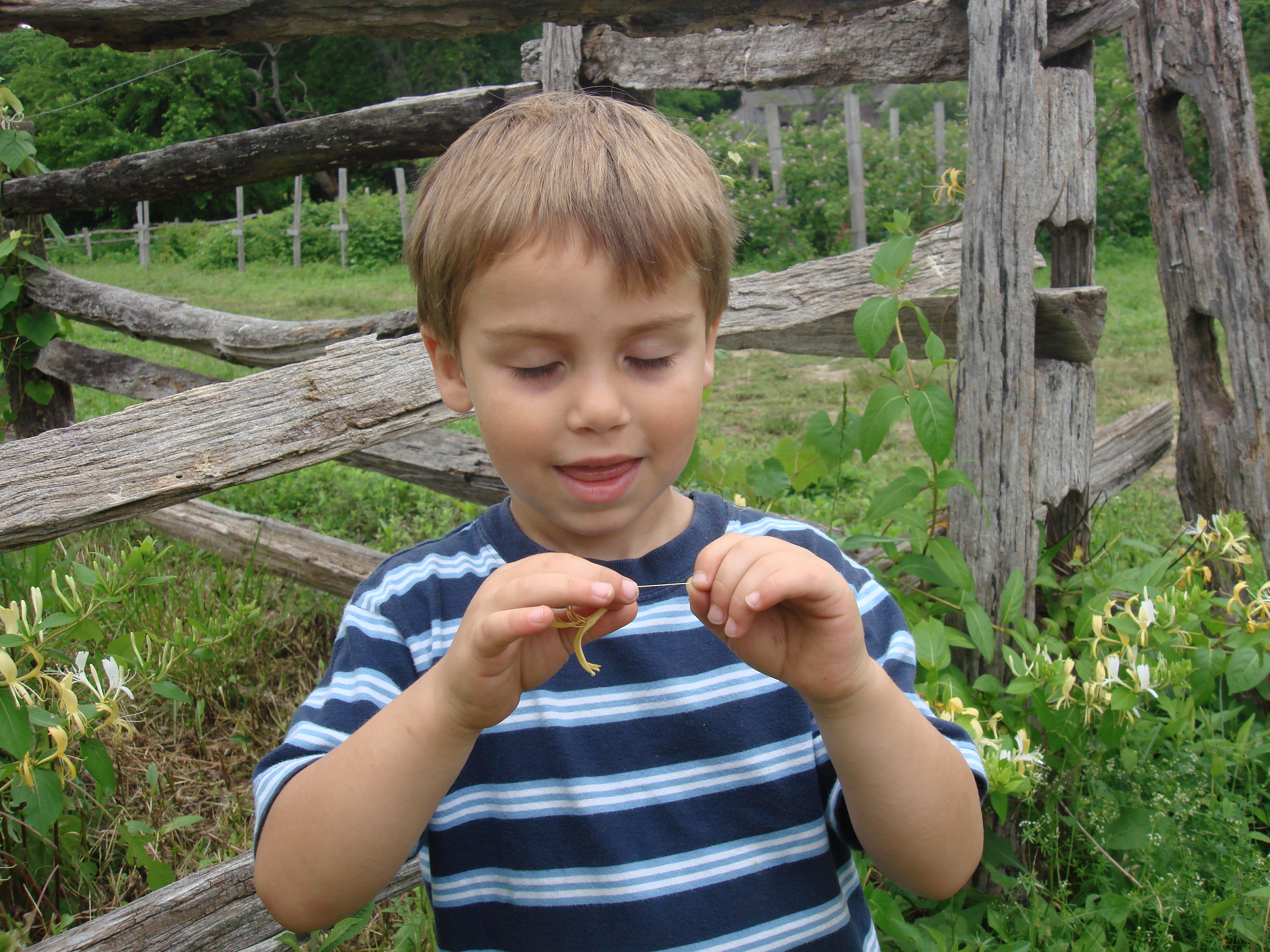
Leandro still finds the chickens stinky (and really, they are pretty pungent at this point) and was more interested in drawing sweet beads of nectar out of the honeysuckle blossoms that are exhaling seductive breaths of fragrance all over the farm these days. He learned the art of drawing out the style from Farmer Steve and then taught me! Delicious.

Honeysuckle gives it up for Leandro

So now I am planning what to do with my first bird. As I expect it to be less fatty and moist than a factory bird or even an organic chicken from a large facility, I am thinking about dishes that will help contain the moisture and make the most of the added flavor that a slightly more muscular bird will have. I also want to do something that is already in Leandro’s growing list of delectable foods, so as not to risk some refusal. And then there is the desire to honor my Caribbean forebears who lived off the land (some still do, at least in part).

So… I’ve got two ideal candidates from the criollo* canon: arroz con pollo: chicken and rice,or asopao de pollo: soupy chicken and rice. Feel free to share your thoughts and opinions on which one it should be!

*Criollo or Creole refers to the generations of colonialists actually born in the colonized place. In the case of Puerto Rico, the Spanish were the first Europeans to settle. They remained Spaniards, but their offspring born on the island (in many cases, half European and half native) were known as criollos – not quite European, but not quite native, either. Criollo cooking (like Creole in New Orleans, for example), reflects the meeting of different worlds of cooking ingredients and techniques.

Ensalada de Lentejas (Lentil Salad, Spanish-style)

11 Jun

The hot, hazy and humid summer weather typical of Long Island has started early this year, but that doesn’t mean I am giving up my lentils. I like the taste, the price and the fact that, unlike many of the other legumes, they don’t need pre-soaking.

Nutritionally these tiny almost-beans, almost-peas are giants. According to the Mayo Clinic’s Katherine Zeratsky, R.D., L.D., “…lentils are high in protein and fiber and low in fat, which makes them a healthy substitute for meat. They’re also packed with folate, iron, phosphorus, potassium and fiber.” So hip-rah, hip-rah! You should always, always, always have lentils in your pantry.

In winter I make hearty lentil soup, but hot weather calls for something cooler and lighter. I use a recipe — inspired once again by Penelope Casas’ The Foods and Wines of Spain. Have it as a main course with boiled potatoes or rice, or pair it with grilled sausages (from andouille to kielbasa..lentils love a good sausage partner). Lentils also marry well with grilled fish steaks; you can use the lentils as a bed, perhaps accompanied with polenta. This serves four as a side dish; you may want to double it for a BBQ accompaniment or main course.

Lentil Salad

½ lb uncooked pardina lentils (smaller and cuter than your average lentil, but you are free to substitute*)

1 onion, peeled. Cut in half, leaving one half whole and mincing the other half

1 clove

1 bay leaf

1 carrot scraped or peeled (scraping helps maintain a brighter color)

3 cloves garlic, peeled and smashed

1/8 tsp salt (a fat pinch)

Freshly ground pepper

¼ cup good olive oil

1.5 Tbs red wine vinegar

1 clove garlic, minced

 2 Tbs drained and minced roasted red pepper from a jar, plus 1 Tbs chopped for garnish

Rinse and pick through lentils and place in a large pot with enough cold water to cover. Stick the clove in the onion half (reserve the minced onion), then add to pot with bay leaf, carrot, smashed garlic, salt and pepper. Bring to a boil, cover and lower heat to a simmer and cook for 20-25 minutes, until just tender (longer if using regular green lentils). Drain and rinse well in cold water. Remove onion (and any clove that has fallen out), bay leaf and garlic. Dice carrot and place in serving bowl with lentils. Add olive oil, vinegar, reserved mined onion, chopped garlic and minced red pepper and mix gently (you don’t want the lentils to fall apart). Let rest for at least a half hour and serve, topped with reserved red pepper as garnish.

*Green lentils are great for salads because they keep their texture. Brown can get mushy and red lentils fall apart when cooked too long, If you choose them as substitutes, start checking the texture after 15 minutes of simmering.

Party Snacks: Tortilla Torcal, a Spanish egg frittata with chorizo and ham

21 Dec

Today I lived my owned sour grapes fable. You remember: the Aesop story about the fox who can’t reach a bunch of grapes that are taunting him from a high vine. In the end, the fox gives up and consoles himself by saying, “Those grapes were probably sour anyway.”

Well, the tortilla flipper is probably overrated anyway.

Like the fox, I won’t find out whether this wondrous invention is as tasty as it looked on the online pages of a Spanish product vendor. It looks like two skillets hinged together that make flipping a classic Spanish tortilla (savory stovetop egg pie) easy. Like, you won’t burn your forearms as you upturn the eight not-quite-cooked eggs onto a plate and then slide the tortilla back into the skillet and you won’t make a goeey, cementy, eggy mess as the uncooked bits goop out of the skillet…

Nah, what would be the fun of that? Why take a muscle-y, down and dirty, daredevil sacrifice for the sake of food and turn it into a clinical, tidy, bloodless, soul-less operation?

Never. Not even if I could spare $50 to purchase another piece of kitchen equipment I have no room for.

So, screw the tortilla flipper. Or unscrew it. Or unhinge it. Forget it.

The tortilla itself, however, is a worthwhile enterprise. This is a case where the “easy” in “Hot, Cheap & Easy” is relative. A relative lie, actually. Making a Spanish tortilla takes time, patience, some strength and a set of stones. However, when you make a good one, your guests will lavish you with praise, something I am quite fond of.

And since I can make it the night before an event, it’s handy and portable.

The classic tortilla española is potato and egg, but this one, inspired by Penelope Casas’ recipe for Tortilla Torcal in her book Tapas makes it a mightier, spicier dish that really dresses up a tapas night.

Tortilla con chorizo y petit pois

1/2 cup olive oil

3 medium potatoes, peeled and cubed

8-10 eggs

1/4 tsp salt (optional, reduce or leave out if the ham is very salty)

1 small onion, chopped fine

1/4 lb. spicy Spanish-style chorizo sausage, peeled and diced

1/4 Cup ham steak or other cured/fully cooked ham, diced

1/4 Cup frozen peas, cooked


Heat the oil in a skillet and add potatoes, lower heat and cook potatoes slowly, turning frequently. When they start to brown, they are more than done. In a large bowl, beat the eggs lightly with the salt. Drain the potatoes, reserving the oil. Add the potatoes to the egg mixture and mix just barely (this gets the temperatures even).

Heat one tablespoon of oil to the skillet and sauté the onion until tender. Add the chorizo and the ham and cook just until the chorizo begins to release its oil (it will get bitter if allowed to cook more). Add the peas and cook for another few minutes. Stir very gently into the eggs and let sit for at least five minutes. Meanwhile, make sure your skillet (9” or 10” made of a material that is not too heavy!) is really clean, then heat two more tablespoons of oil and pour in the egg mixture. When you see the egg begin to cook on the edges, lower heat to medium low and cover. Allow to cook for ten minutes, until the center is thickened.

This is where it gets challenging. Get a plate that will fit smoothly to the edges of the skillet. The plate should be flat-surfaced, with no changes in levels. Take the skillet to the sink, put the plate on top and, with your hand firmly on the plate, turn the skillet over so the tortilla turns onto the plate (this is where the goo can scald your forearm, if you are unlucky or not careful). Then slide the tortilla back into the skillet, wet side down. Put back on heat and cover, continuing to cook until done (another five minutes or so). In the meantime, wash and dry the plate. When the tortilla is done, flip it back onto the plate and behold its golden loveliness.  

Allow to cool (I actually refrigerate overnight after it cools, wrapping in foil or plastic wrap or both). Serve at room temperature, or warm; it’s good at any temperature. I usually cut into squares for a tapas party and stick the squares with toothpicks to get people started.

 NB: Penelope Casas and other Spaniards prefer their tortillas a bit juicy inside. I find that Americans are too concerned about salmonella for that (and probably rightly so), so I cook it through. If you know your egg source, you should be fine cooking it rare!

Also, I really, truly thought the tortilla flipper was cool, but I think I am way cooler for doing it Old School. Sour grapes? You make the call.