Archive | Spanish RSS feed for this section

We Make You Look Good: Mussels Vinaigrette, Spanish-Style Tapas, Party Snacks

24 Jul

Some things are worth repeating.

Full disclosure: I have posted a close relative of this recipe before. That was a long time ago, the early days of this blog, and  this is slightly tweaked, plus the photos are new (since I made it again for a visit from my sister-in-law and niece).

Mussels Vinaigrette (make ahead!)

They are still the best damn mussels I have ever had and you should know about them, because they are also extremely easy to prepare and can be made the night before any big affair. (Washing out the shells takes a bit of time, but it is satisfying and mindless work that can be done while sipping a glass of something and chatting companionably with whomever is around).

Served cold and slurped right from the shell, they are a stupendous appetizer in looks and flavor. Want to impress? These are your bad boys.

Mejillones a la Vinagreta (Mussels Vinaigrette). Make Ahead!

(serves 4-6 as an appetizer. For more guests, double the mussels, but just half again of everything else)

1/2 cup olive oil

3 Tbsp red wine vinegar

heaping Tbs small capers

2 Tbsp minced red onion

1 Tbs minced roasted red peppers (you can also use jarred pimientos, the sweet kind)

1 Tbs minced parsley

pinch of salt and a grinding of black pepper

2 lbs mussels in their shells

1 slice lemon

Whisk the oil and vinegar together, then add the capers, onion, peppers, parsley, salt and pepper. Put the mix into a large freezer bag (if you need this dish to be portable)

Boil one cup of water in a big pot with the lemon slice. Add the mussels and bring to a boil, covered. Pluck out the mussels when they open (waiting until the meat separates completely from the shell into a little sausage shape and then pulling out immediately) and put in a separate bowl to cool. Discard any mussels that do not open after ten minutes. Remove the mussel meat and put into plastic bag with the seasonings and refrigerate.

Save half the mussels shells and clean well (this is the tedious part; make sure you have good music on). Put in a plastic bag and refrigerate.

To serve the next day, arrange shells on an attractive and large platter and put one mussel in each. Spoon the remaining seasoning over each.

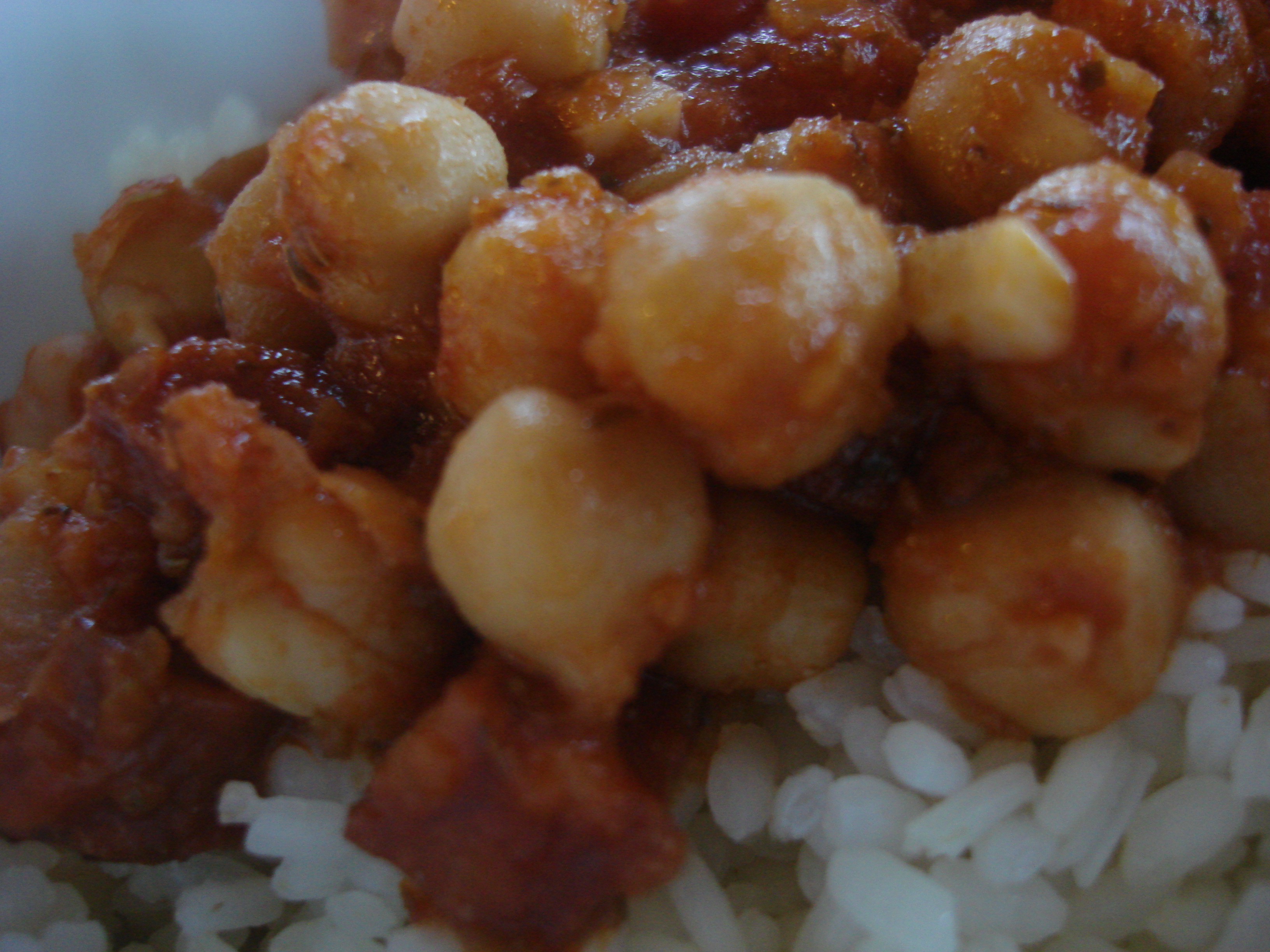
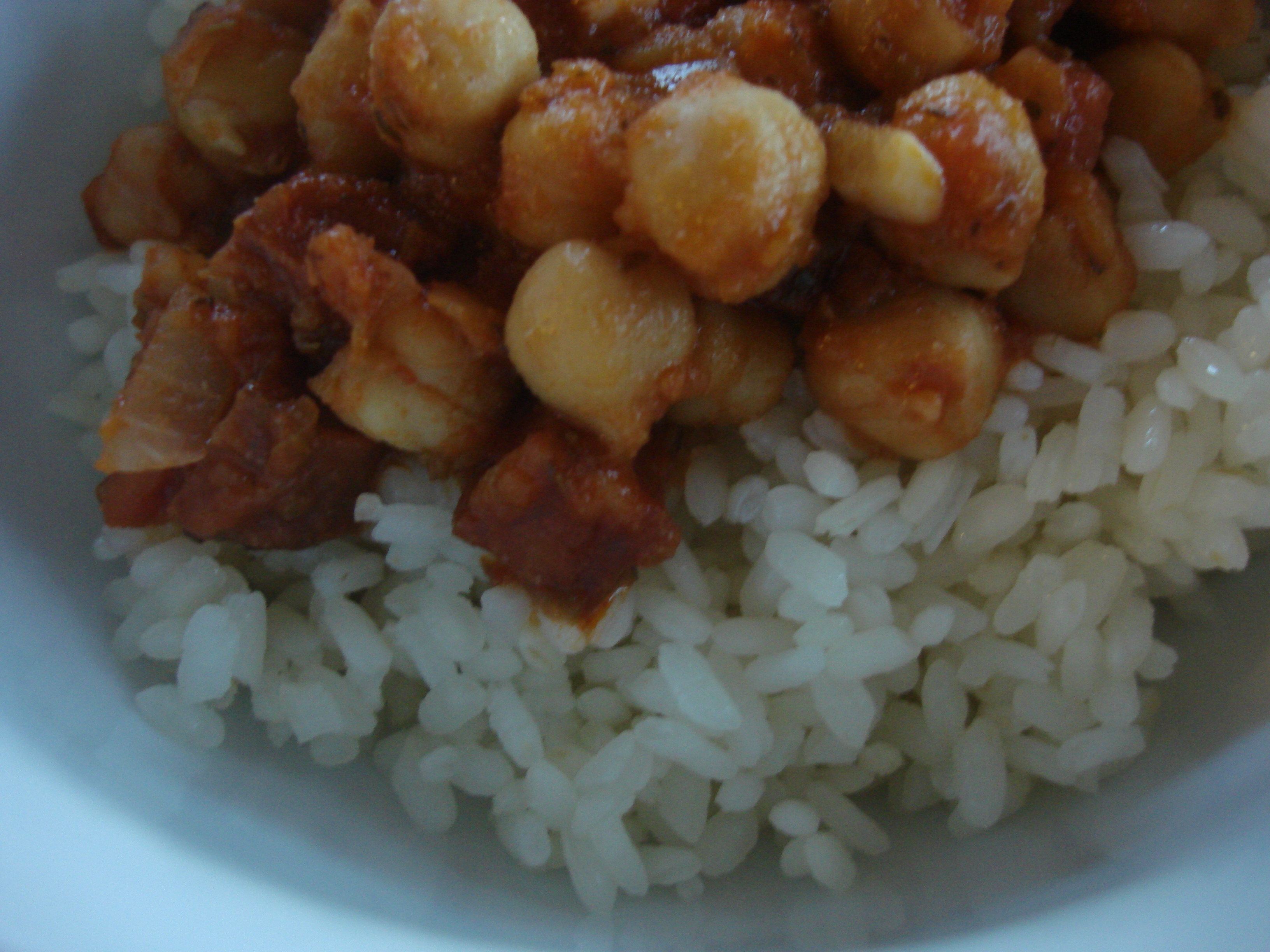
Garbanzos con chorizo (Chick peas and chorizo – the last of the hearty winter meals?)

1 May

Spring is definitely here – rain, fresh green smells, vegetable garden popping up all lively and bright, lily of the valley spreading lush fragrance low to the ground, lilacs towering above and spreading their own heady perfume, birds and bees doing their spring dances, kids going mental.

But there is still a chill in the air, especially at night, and there is certainly time for one or two more heavy comfort meals.

One of my favorite is Garbanzos con chorizo – chick peas or ceci with Spanish hot sausage. I don’t make it that often, because the little guy won’t eat garbanzos (yet), but after the crazed month or two I’ve just put behind me, I deserved to slather on some favorites.

Here it is – simple as pie and tasty as all get out.

Garbanzos con chorizo 

2 Tbs extra virgin olive oil

1 medium onion, peeled and chopped

2-3 cloves garlic, minced

3-4 Tbs sofrito, if using prepared, 3-4 ice cubes worth if using homemade frozen (see Sofrito for Freezing) or follow the recipe below for making fresh sofrito to order*

3-4 oz Spanish-style spicy chorizo sausage (you may substitute hot dry Italian sausage, or one of those hot supermarket brands that comes fully cooked), peeled and chopped into 1/4” pieces.

2 Tbs tomato paste

15 oz can diced tomato

1 Tbs cumin

1 Tbs dried oregano

¼-1/2 tsp salt (to taste)

1 pint soaked garbanzos (or 2 15 oz cans, rinsed and drained)

Heat oil in a large saucepan at medium-high until fragrant. Stir in onions to coat, then lower heat and sauté, about five minutes. Add garlic and sofrito and cook until fragrant. Add chorizo and heat until it begins to release its oil, then immediately add tomato, cumin, oregano, salt to taste and garbanzos. Cook at a lively simmer for 20 minutes and serve over rice.

*Here is a quick sofrito recipe that will work for this dish if you are actually making it to order. If using this sofrito recipe, do not use additional onion. The garlic stays the same.

SOFRITO

  1. 3 Tbs olive oil
  2. 3 oz ham steak or jamón para cocinar, diced (optional in this dish)
  3. 1 oz bacon, chopped rustically (optional in this dish)
  4. 1 green cooking pepper (cubanelle or Italian pepper), diced
  5. 1 large onion, peeled and diced
  6. 6 culantro leaves (recao), minced
  7. 4 sweet small peppers called ají dulce in Hispanic markets (do NOT purchase Jamaican ají or scotch bonnet! They look the same but the Jamaican/scotch bonnet are HABANEROS, deadly hot and inappropriate for this dish!) seeded and minced
  8. ½ Cup cilantro leaves, minced

Heat olive oil in whichever sauce pan you are making your dish in. Add ham and bacon, if using; cook until done (bacon can be crisp) then add other ingredients and saute until soft and fragrant.

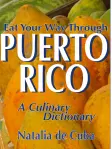
Eat Your Way Through Puerto Rico: A Culinary Dictionary – BUY IT, SHARE IT!

29 Apr

And finally, almost 13 years after I started working on it, my culinary dictionary is available!! I am so excited (Thanks Carlos Matos of Forsa Editores for getting on board with me and guiding me through this new adventure!) to finally, after years of writing for newspapers and magazines to actually have my own book out, with my name on it (the cover you see here is not quite the actual image, but you get the idea). It feels really, really, great.

Eat Your Way Through Puerto Rico: A Culinary Dictionary is my contribution to the foodie word world.

(Update: Eat Your Way is now available on iTunes too!)

What is does is take the words and phrases we use in Puerto Rico for produce, local dishes, meats, fish and seafood, as well as how we get a table at a restaurant or get our steak cooked to order, and translates them into English and back again. The fruits, vegetables and herbs have the botanical names included for easier identification. One day I’ll get the fish and other meat animals labeled too.

Who it is for is folks traveling in Puerto Rico who would like to understand and taste the local foods, but would like to know what it is they are trying.  It is also for people like me who are of Puerto Rican background but were born in the States (or elsewhere) and need some help learning about, making or describing our heritage foods. You will notice that in addition to straight word to word translation, some of the more interesting or unusual or typical dishes and ingredients get a little story to go with: find out about yuca and poison; where okra got its name; why sweet potato and yams are not actually the same thing; how breadfruit caused the Mutiny on the Bounty.

It is also for linguistic and food geeks (and I say that with all the pride and affection of a dedicated linguistic and food geek, because that is what I am) who just want to know. That’s where many of you come in. This is not a project that is finished, but one that I have laid the groundwork of. I hope, as we move forward, to get a lot of feedback from users and readers who agree, disagree or have other words and phrases to add to the lexicon. So feel free to comment here about what you think. I will be setting up a Facebook page in the near future to open the channels for more feedback!

So far Eat Your Way Through Puerto Rico is available on Amazon (for just $4.99 – How could you not!?!) as a Kindle book and will be coming soon to the iTunes store and print.

Soon Hot, Cheap & Easy will be back to my regularly scheduled programming – recipes from the front lines of parenting – but for now, please check out the book and let me know what you think!

Natalia

Pastelón de amarillos/plátano maduro (Puerto Rican lasagne, with ripe plantains!)

2 Apr

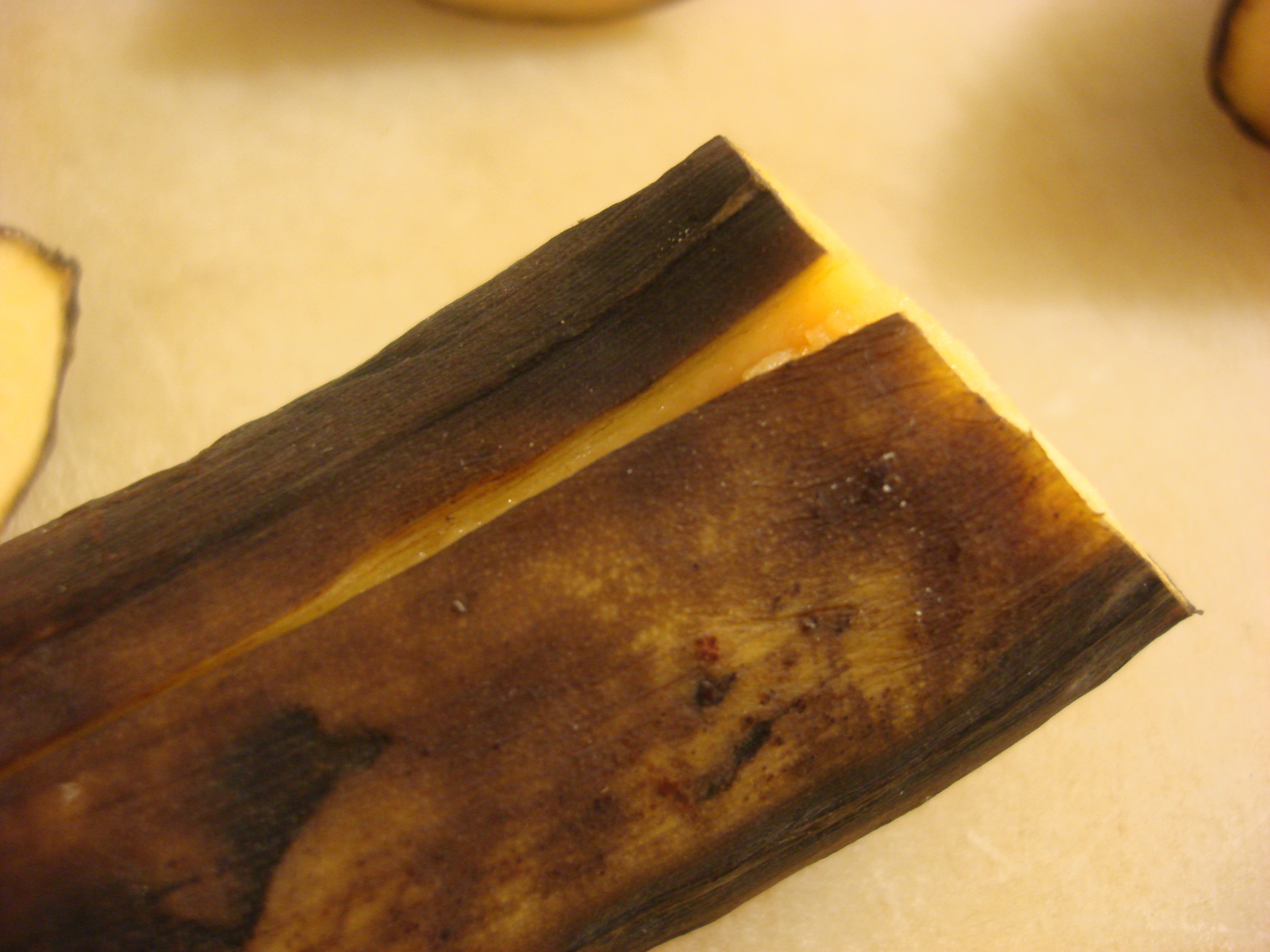
I have been ripening this recipe for weeks. No kidding.

I bought a bunch of plantains on sale (15 for $2) at a Caribbean grocery store three weeks ago, made tostones with some and then let the last 6 get black on my counter. Black, I tell you. Not just mottled yellow, but black and withered, while my son looked on with occasional science experiment interest, sort of a Peter Greenaway film of disintegration but not quite as exquisitely grotesque and not with the speedy convenience of time-lapse photography.

I find already ripened amarillos (yellow plantains)  in my regular white-people supermarket (I hate saying non-ethnic, because white people are ethnic too!), but Latin supermarkets are your safest bet.

Pastelón is the Puerto Rican answer to lasagne – or maybe shepherd’s pie – but sweeter, spicier, meatier – all around naughtier. If you love a dish that has balance while being excessive, this is the meal for you!

I had the Seasoned Ground Beef frozen in a pint container and so it was fast and easy — just added a couple of tablespoons of tomato paste while it simmered and piled everything together. Just so you know, Leandro took the top off and only ate the meaty insides; the sweet vs. meat thing is not for everyone. But it is definitely FOR ME.

Continue reading

Puerto Rican Rice and Beans (Arroz con habichuelas)

26 Feb

I didn’t mean to make arroz con habichuelas last week, but when I dashed into a Latin supermarket for something else, I was stopped dead by the presence of something that looked pretty close to Puerto Rican pumpkin (or calabaza, as we call it). The Fates intervened with my dinner plans.
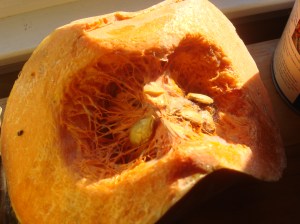
Native to the Americas, pumpkin (Cucurbita pepo) has been an integral part of diets in this part of the world for thousands of years. The flesh and the seeds are used for many purposes. (in Mexico the crushed seeds are used to coat meats as you might use breadcrumbs). It is also one-third of the famed Three Sisters agricultural practice. Corn stalks make a trellis for beans, while pumpkin enjoys the shade underneath. Each plant supplies a nutrient to the soil that the other one needs, so the soil stays naturally healthy and fertile, while the produce provides invaluable nutrition to people. It just makes sense.

I have published this recipe before, but this time I include more substitutions if you don’t have a nearby source for Latin style ingredients. Check your “International foods” aisle for prepared sofrito – Goya has a wide reach and its sofrito is used by Caribbean Latin cooks all over, so you are in good company with this shortcut.

The new substitution of cooked ham steak for the salt pork reflects what I’ve been doing since I can’t find the kind of cooking pork I like. It is neat and tidy, fairly cheap, adds good flavor, and the extra can be frozen for another day (the cooked ham steaks are super-easy to chop fine or mince when frozen).

If you don’t find calabaza (and in fact the one that made me whip up this pot of beans was a Jamaican style and not quite what I like, but perfectly serviceable), acorn squash is my favorite substitute.

Note: With the leftovers I make quesadillas or nachos…yum. Also goes great with rotisserie chicken!

Don’t be put off by the number of ingredients; once you do the prep, you are almost done.

Ingredients

  1. 1lb calabaza caribeña (Caribbean pumpkin) OR 1 lb. acorn squash, washed, cut in half, seeds removed and cut into big chunks (you can cut the rind off before boiling or peel it off after). It should be boiled for 15 minutes, or until tender. Set aside and reserve ½ cup cooking liquid.
  2. ½ lb salt pork, diced (don’t discard the hard rind, just score the fat as best you can). You can also use ham steak – readily available in the supermarket (4 oz cooked ham is a worthy substitute)

3. SOFRITO

(sofrito is the roux, the mirepoix, the basic saute seasoning of Puerto Rican cooking and is very difficult to reconstruct in the mainland U.S., which is why Goya makes a fortune selling it in jars. So if you can get most of the ingredients for sofrito at the local bodega/supermarket, then do this! –actually, quadruple or quintuple it and freeze it in ice cube trays for use later. Otherwise, buy commercial sofrito and use a couple of heaping tablespoons)
½ onion, minced (about ¾ Cup)

3 cloves garlic, minced

1 cubanelle (long green Italian cooking) pepper, seeded and diced

Five or six ajíes (non-spicy green peppers that look exactly like scotch bonnets/habaneros, but are not at all spicy! Taste them! They are hard to find but Latin supermarkets often have them), seeded and diced. Use another cubanelle – the redder the better — if you can’t get these.)

Five or six hojas de recao – culantro leaves- chopped. (Not to be confused with cilantro, these look like dandelion leaves without the curvy sides. They are hard to get, usually come from Costa Rica and their potency disappears quickly after cutting. I actually grow my own in the summer, which takes forever and yields very little in my part of the world. If you find them, use them as soon as you get them home! If you can’t find them, buy the sofrito WITH culantro)
3 Tbs tomato paste or Latin style tomato sauce/salsa de tomate (optional)

1 Tbs dried oregano (2 Tbs fresh)

2 Tbs chopped fresh cilantro (optional)

  1. two 15-oz cans pink beans (habichuelas rosadas), rinsed and drained

DIRECTIONS

While you are boiling the calabaza, heat the pork in a heavy pot. Cook it through and remove the scored rind. Leave the diced meat. Add a bit of olive oil, if necessary, then sauté the sofrito ingredients until tender, adding optional tomato at the end. Add beans. Add cooked calabaza and the reserved liquid. Cook for 15 minutes and serve on white or brown rice.

Alubias con Chorizo (Cannellini with Hot Spanish Sausage)

19 Feb

When I first moved to Puerto Rico as a grown-up and got a job in San Juan, I lived several weeks with my godparents (from Confirmation, if you’re Catholic) in Ocean Park, in their art-filled, book-lined, sun-drenched house on the beach. When I found an apartment, I didn’t go far; for the next six years — más o menos — I lived around the corner, five houses away, and I spent almost as many dinnertimes there as in my own little house.

Carmen and I assembled lots of meals together, inventing pasta dishes, reviving old family recipes, experimenting with local ingredients from the farmer’s market, trying out exotic ingredients from whatever new specialty shop opened nearby and talking, talking, talking, to a soundtrack of the classical music station (Schumann, Schubert, Bach, come to mind) or old boleros from a more refined past (Trío Los Panchos, Rafael Hernández).

Those are some of my favorite memories from that time. So it’s always a pleasure to visit Carmen and Efrén when we are back in Puerto Rico — now I bring my son! — and, of course, get back into the kitchen. Over the holidays, Leandro, my parents and I stayed a few delicious days with them in Ocean Park (my parents and they have been friends for about 50 years now!), including visits from Carmen’s best friend, the noted playwright and director, Myrna Casas, and Baby Llenza, another notable chef!

Carmen made this as part of one lovely dinner and I couldn’t wait to try it myself. She recently sent me the recipe via email. It really is better with giant Spanish-style alubias in a jar, but cannellini from a can are a very tasty substitute if that’s what you have on hand. Just cook gently so they don’t fall apart!

Carmen’s Alubias con Chorizo

2-3 Tbs olive oil

1 medium onion, chopped fine

3 (or more!) cloves garlic, minced

15 oz can crushed tomatoes, drained (reserve liquid) or 1 ripe tomato, chopped or 2 Tbs tomato paste (you can add a handful of chopped grape tomatoes, if you’ve got, to freshen the flavor)

4 oz spicy Spanish chorizo (the hard, continental kind, similar to Italian hot dry sausage), peeled and chopped

19 oz jar of alubias from Viter – do NOT drain (or, 28 oz can of cannellini beans, drained and rinsed)

Heat the oil in a pot until fragrant. Add onions and garlic, reduce to medium and soften. Add tomato and cook down a few minutes. Add chorizo and sauté briefly, just until it is releasing its oil. Add beans and cook until flavors incorporate (canned cannellini will soften very quickly, so do not overcook!). Use reserved tomato water, or just water, for a more liquid pot of beans.

According to Carmen, the Spanish eat this with sautéed Swiss Chard. In Puerto Rico, we accompany it with rice.

Lentil Soup/Sopa de Lentejas (with vegetarian/vegan option); Snuggly, Spicy Winter Soup

22 Jan

If you do not have a bag of dried lentils in your larder at all times, you’ve got some explaining to do. These little cuties are about $.80 a pound, keep for a year, are full of good stuff for you and don’t need to be pre-soaked. They are fast, convenient, filling and ever so tasty. How could you not?

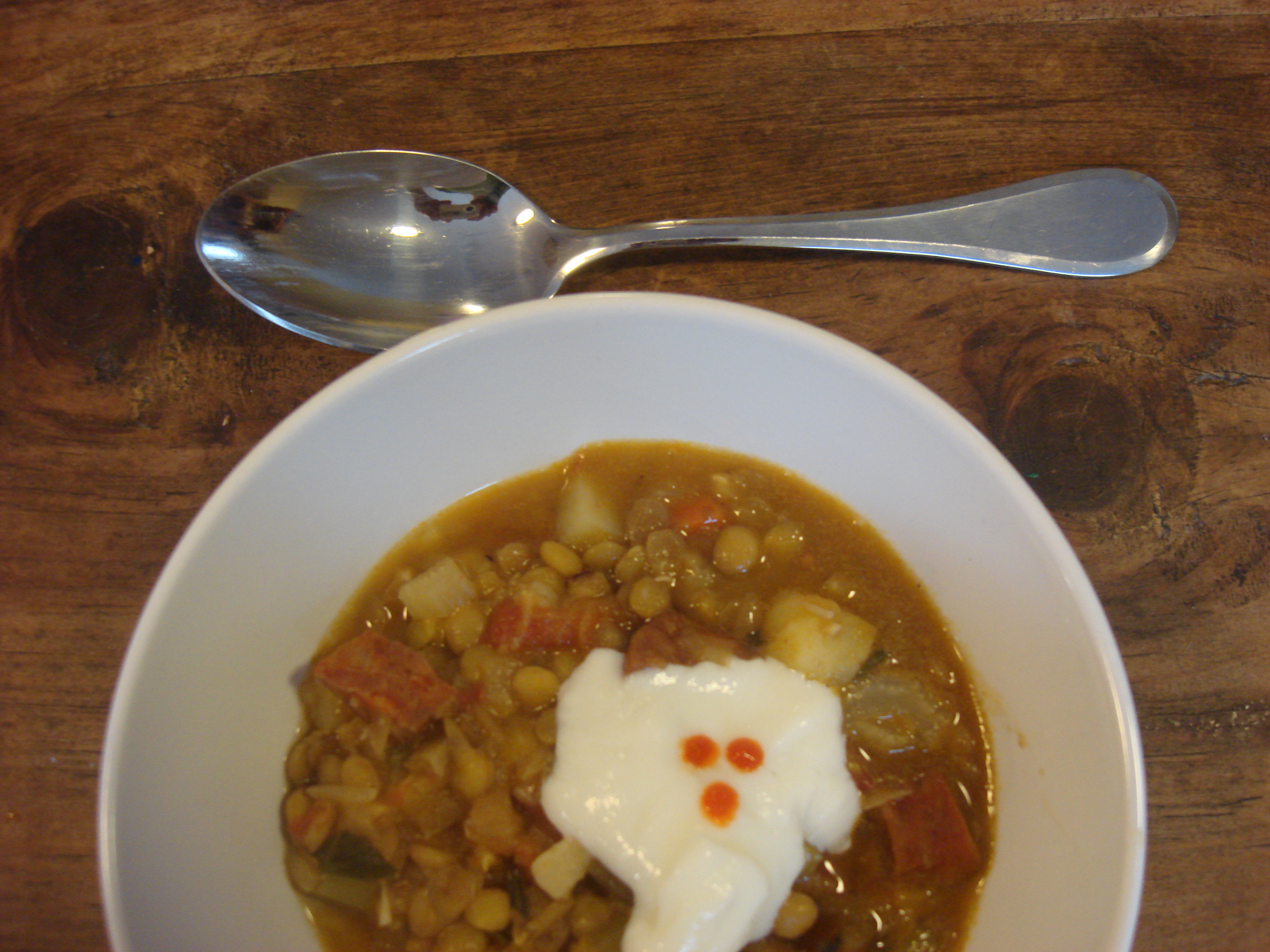
Lentil Soup has got to be the best comfort food ever. It is rich and hearty and slurpy and — this version at least – just a bit spicy. You can use whatever scraps you’ve got around. You can give it a Middle Eastern flavor or Italian flair by varying the spices. Use a different type of sausage – like kielbasa – and some sage or rosemary for a more Eastern European style. Use no sausage at all and a dash of liquid aminos or veggie steak sauce and some red hot pepper flakes or chipotle for a vegetarian/vegan version. It will keep in the fridge for several days and packs up really nicely for an office lunch that will make you feel loved and valued.

This is a slightly modified version of a previous lentil soup recipe…I make this all the time and I vary it to my mood. This time I included celery and just added a teaspoon of oregano; the vegetable stock I used (Nature’s Promise Organic, from Stop and Shop) really punched up the flavor so much that it didn’t need much added seasoning.

A dollop of plain nonfat yogurt or sour cream or creme fraiche makes it creamy!


Lentil Soup (Sopa de lentejas)

2-3 Tbs olive oil

1 baseball size onion, chopped

3 cloves garlic, peeled and chopped

2 medium carrots, peeled and sliced or diced to fingernail size (approx 1 Cup)

2 stalks celery, chopped

(1/2 cup chard stems, chopped – optional – I just happened to have some left over from a previous chard leaf dish)

3-4 oz chorizo (Spanish dry hot sausage), peeled and sliced into 1/4-1/2 inch rounds (I use Palacios Hot; vegetarians can omit it entirely and add liquid aminos, steak sauce or snoky chipotle to taste)

1 medium potato, peeled (if you like) and chopped into 1.2 inch cubes (approx. 1 Cup)

1 Cup (8 oz) dry lentils, rinsed, picked through and drained

4 – 8 Cups chicken or vegetable broth (you may use water as well)

15 oz can diced tomatoes (optional)

1 tsp each – ground cumin, turmeric and oregano OR 1 tsp each – oregano and marjoram OR Tbs dry Italian herbs

Heat oil until it runs quickly and is fragrant. Add onions and stir to coat. After a minute, reduce heat to low. After five minutes start adding, garlic, then carrots, celery and optional chard, then chorizo. When chorizo begins to release its color,  stir in lentils, potatoes, broth/water and tomatoes, if using. Bring to boil, reduce heat to low and simmer, covered for 20 minutes or until lentils and vegetables are tender, adding water a cup at a time, if desired. Add spices at the end and salt to taste.

Serve as soup with crusty bread, or over rice. Finish with a dollop of plain yogurt, sour cream or creme fraiche!

Tostones: Puerto Rican French Fries – Made of Plantains!

8 Dec
If you have ever eyed those oversized, overthick, green banana-looking things in the supermarket and wondered what people do with them, this is your great revelatory moment.

Pre-soaking in salted, garlicky water

Those things are plantains – Musa paradisiaca – a kind of banana we in the Caribbean use to make all manner of delicious, stodgy things, preferably plunged into hot fat and heavily salted. Plantains originated in SouthEast Asia or the Near East or thereabouts and came over with colonialism. They flourish in the tropics and are now integral to the Caribbean culinary canon.

Fry and smash

Tostones – called patacones in other parts of Latin America – are disks that – much like French fries – are sliced and fried twice -once to cook through and the second time to crisp. As the holidays approach and I feel more and more festive, I am saying “Calories be damned, I need some of those!” So I’ve been making tostones for dinner. Yes, the whole meal. And we are all loving it.

Assembly line: note beautiful Pipo Grajales-made tostonera in background

My son dips them in ketchup, my favorite Dominican restaurant serves them with a garlic mojo sauce, and Puerto Ricans like them dipped in mayo-ketchup, a quick stir of mayonnaise and ketchup (that Kraft actually markets on the island!). These days I just sprinkle salt on them; some folk like garlic salt or powdered garlic. Years ago my friend, Chef Patricia Wilson pioneered serving them topped with sour cream and caviar at noted Old San Juan restaurant Amadeus…with a flute of dry sparkling they dress up real nice. You can dip them in hot soup too…mmmmm.

So give tostones a try; the first soak in water is critical; the second one less so, but it doesn’t really add much time to the procedure and it does add flavor and texture, so why not?

 Tostones (Fried green plantains, serves four as a meal, 6-8 as a side)

(Note: you will need two boards or two plates to smush the disks between rounds in the frying pan)

5 green plantains*

3 cloves garlic, peeled and smashed

4 Cups water

2 tsp salt

¾ – 1 Cup vegetable oil (for frying, enough oil to be about ½ inch deep in your chosen frying pot or pan)

Preparing the plantains:  Slice both tips off. With a knife, make lengthwise slits through the peel on two sides. Try not to pierce the flesh too much. Peel the thick skin off.

Stir garlic, water and salt in a bowl. Slice the plantains into ½ inch chunks, on the bias, and place slices in bowl of salted water. Soak for 15 minutes to one hour. Drain on paper towel.

Heat the oil in a heavy pot or pan.  When the oil is shimmering, add as many plantain slices as will fit comfortably. Fry until golden (really golden – not just beige) turning with tongs.

This is where you begin to make an assembly line. Be ready with a couple of plates covered in paper towels for absorbing oil.

Remove and lay the first set on paper towels and place the next round in the hot oil. While the second set is frying, take the first set (the one you’ve already fried) and squash fairly flat in a tostonera, if you’ve got, or between two plates. Dip in the salted water and lay back on the paper towels. You may have another raw set to go (it depends on the size of your fry pot).  Follow the same pattern until all plantain disks are pre-fried until golden, squashed flat, and dipped. Then start returning plantain disks for the final fry to crisp them up. Remove when beginning to brown and lay on clean paper towels until cool enough to eat.

*Look for firm, green, thick skins. As they yellow, they become sweeter and have other uses…

Classic Spanish-Caribbean Black Beans (Frijoles Negros) and Perfect White Rice

4 Dec

I have a four-year-old boy, so you know that toilet humor reigns supreme around here. I don’t particularly like all the burp and fart and poop talk, but I am a pragmatic woman; I try to make my reality work for me and try not to dwell on the way things “should” be.

So, what passes for classic poetry in my house starts out, “Beans, beans, good for your heart…” and you probably know the rest. I have no problem getting Leandro to eat beans several times a week; what preschooler could resist the lure of stinking out family and friends with such jackhammer potency? It goes much the same for asparagus; I reeled him in with the promise of sulphurous-smelling pee and now it’s one of his favorite (of very few) vegetables.

This is perhaps not the most appetizing of ways to introduce a recipe, but I’ll take my chances that you are interested enough in making fast, easy and healthy black beans that taste just as good as whatever you get in your local Cuban joint to overlook the other factors. Or, if you are a boy of any age, perhaps it is just the intro you need to start incorporating more beans into your diet!

(Note: the more often you eat beans, the better your body processes them, so some of the gassy part dissipates over time. And the low-fat, fiber, protein benefits are incredible. They are also cheap, especially if you soak your own*).

Classic Latin Black Beans (Frijoles Negros)

1 Tbs olive oil

1 medium onion, chopped

½ red or green bell or cubanelle – Italian long sweet – pepper (about ¼ Cup), diced

3 cloves garlic, minced

28 oz can black beans, rinsed and drained (4 Cups if using dried*)

½ Cup water (you can add more as needed)

1-2 stock cubes (vegetarian vegetable is fine; I use Knorr chicken)

1 Tbs dry oregano (or 1.5 fresh)

1 tbs cider vinegar (optional)

Heat olive oil in a heavy soup pot at medium high until fragrant. Add onion and peppers and stir to coat. Lower heat and cook until softened, about five minutes. Add garlic, stir to coat and cook another minute. Add remaining ingredients. Bring to a boil, then cover and lower heat to simmer, about 15 minutes. Serve with white rice (recipe below).

*Soaking dried beans: Rinse a pound of beans (from a store that seems to move a lot of dried beans – one of the problems is that if the beans are old, they will never soften up nicely), soak them in two quarts water overnight. Change the water in the morning and in the evening rinse and change water. Simmer them for two hours and holy legumes, Batman: 1.5 quarts of beans to play with.And talk about cheap: a pound of dried beans costs about the same as a 15.5 oz can of them and you choose how much sodium you want with it.


Perfect White Rice (you can halve this recipe if you are not big into carbs)

1 Tbs olive oil

2 Cups long-grain white rice (Sello Rojo, Goya or other Latin brand preferred)

4 Cups water

½ tsp salt

Place olive oil in a medium pot (with a tight lid). Begin heating to high while adding the rice. Stir to coat, Add water and salt. Stir once, then bring to a boil. Lower heat to medium and allow water to evaporate until it goes below the surface of the rice and there are a couple of holes in the surface. Turn rice over once with a big spoon. Cover and cook on low another ten minutes. Fluff with a fork and serve.

Party Snacks: Endives, Smoked Salmon, and Capers (Endivias con Salmón)

22 Nov

My parents usher in every holiday season with a Tapas & Tertulia evening for some of their closest, most worldly-wise, food-loving friends from a number of Spanish-speaking countries. Tapas are the little dishes that the Spanish nosh on while drinking small glasses of beer or wine. A tertulia is a convivial gathering – of intellect or music or literature or other sociable human tricks.This evening is one I always look forward to; the conversation is wide-ranging and stimulating, the laughter hearty and the appreciation of food is foremost.

I helped my folks by making some of the mainstays of the tapas/buffet table – tortilla española, tortilla Torcal (with chorizo and ham), yuca en escabeche.

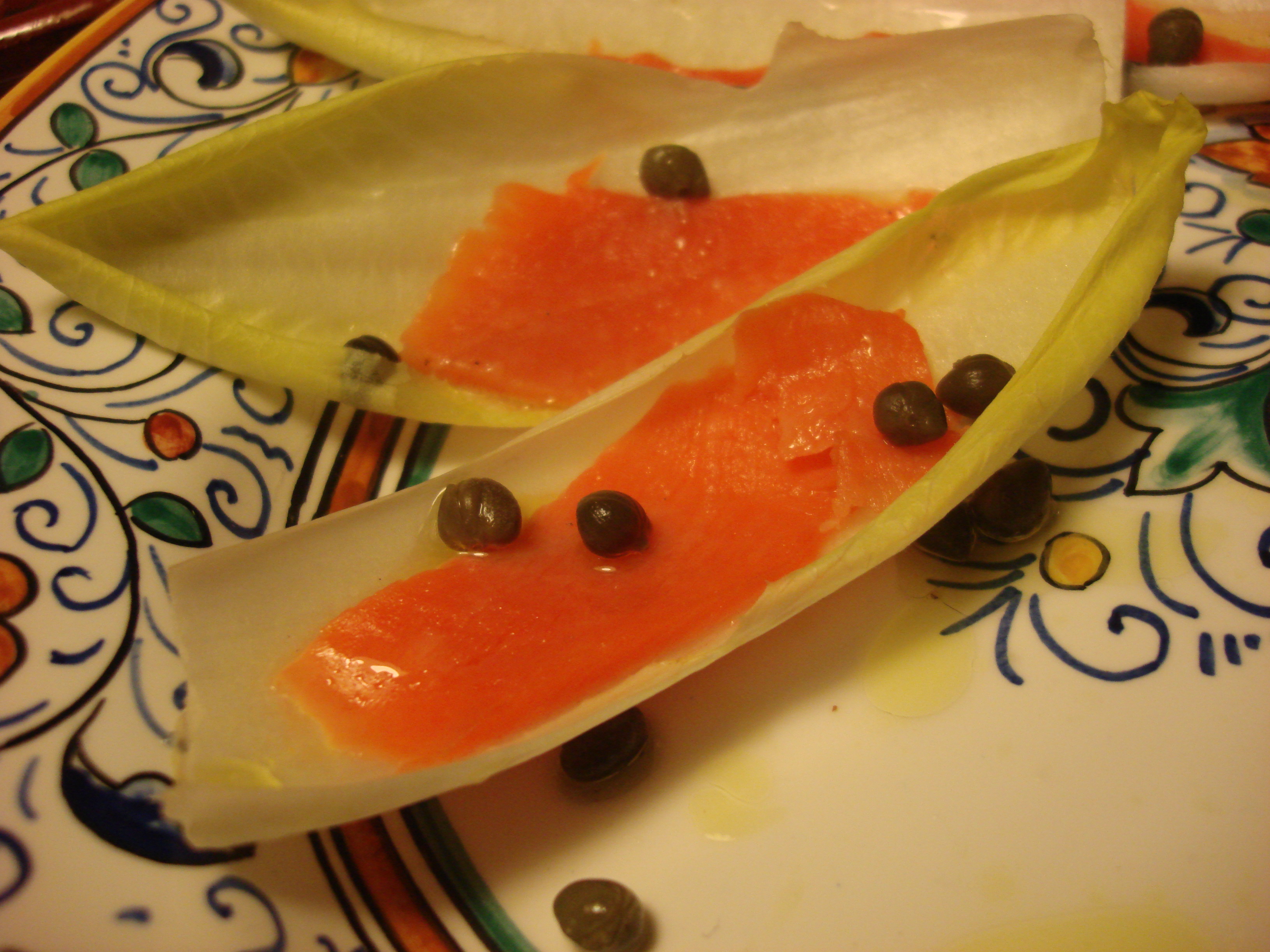
While searching for something new for the cold course, I found this in Tapas: The Little Dishes of Spain, by Penelope Casas, a hero of Spanish cuisine in America and a longtime inspiration around here. The endive makes a handy tray for the salmon, while salmon is made mild by the lemon dressing. One of my adaptations was to add capers, a natural for this combination, both as flavor and visual punctuation. Very pretty, very fresh, very handy, very, very fast and easy!

Please look at the photo and know that endive can mean any of several members of the Compositae family of chicories: escarole, chicory itself and radicchio, for example. Belgian endive (Chicorium intybus) is the one you want here. It looks like a tightly closed tulip; you cut off the bottom and take off the scoop-shaped petals, one by one.

Smoked Salmon and Endive Scoops (Endívias con salmón)

4 oz smoked salmon, sliced into strips

12 Belgian endive leaves, clean and unblemished

3 Tbs extra virgin olive oil

1.5-2 Tbs fresh lemon juice

Salt

Freshly ground pepper (white, if you’ve got)

Approximately 50 small capers, drained

Lay a piece of salmon on each of the endive leaves. In a small bowl, whisk the oil, lemon juice, salt and pepper and pour over the filled endive leaves. Scatter capers over each scoop (3-4 per scoop). Serve immediately or keep chilled (for no more than an hour as they can start to dry out).