Archive | Puerto Rican RSS feed for this section

Back-to-School Freezer Fillers 3: Pollo Guisado (Stewed Chicken)

9 Sep

Pollo Guisado is one of those abuela (grandmother) dishes that Puerto Ricans and other Spanish-Caribbean folks grow up on. It is uncomplicated, but rich in flavor.

Yes, there is both wine and beer in it; that is not an error in the recipe! This is a modified and milder version of the classic Pollo Guisado which I have posted before (which uses  flavorful chicken thighs rather than mild breast, and twice the beer). Very kid-friendly, it is best served with rice. It looks and tastes impressive, but is a cinch to make and is mostly hands-off.

Continue reading

Kendra’s Grilled Lamb Chops and Sauteed Calabaza Pumpkin, and other tasty stuff from Puerto Rico

7 Aug

(This recipe has been corrected to reflect Kendra’s input!)

I have mentioned that I was recently in Puerto Rico at the venerable Caribe Hilton to speak on a panel (for the Triennial Convention of the American Federation of School Administrators). It was a pleasure and an honor to speak with such dedicated professionals! And everything went very well; I learned a great deal and made many interesting acquaintances.

The view from Kendra and Raúl’s in Isla Verde

I was not able to take my son and it was the strangest, and not very pleasant sensation to be so far away. In the annals of never-happy, it is an awful irony that I complain and complain that I never have a moment to myself, and then when I finally do, I am bereft. I can’t stand myself sometimes.

El Jibarito…there was quite a line at 2 p.m., but it moved FAST

But, I recovered my senses. And of course, I ate.
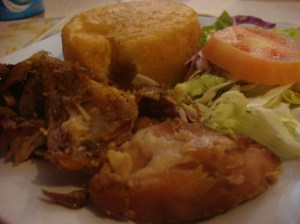
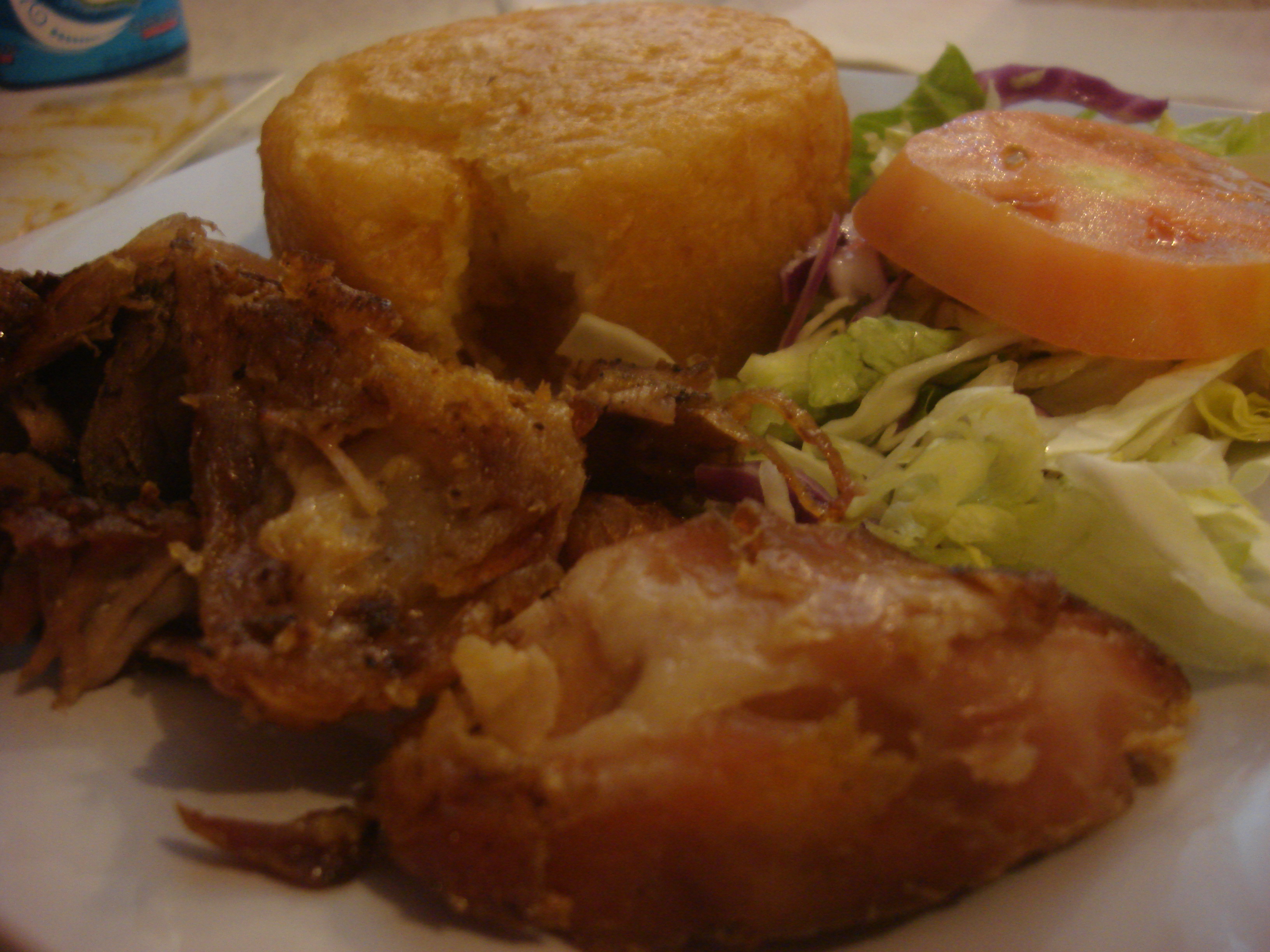
Pernil with mofongo de yuca and the sad, sad, salad that is a Puerto Rican criollo restaurant inevitability…

In Old San Juan, El Jibarito on Calle Sol can be counted on for good old-fashioned comida criollo. I had pernil (roast pork) and mofongo de yuca (yuca with garlic and oil, mashed and fried). I had drinks with José Luis, my beloved Colombian friend whose got the loveliest clothing boutique in Condado (Ambar) . I visited with Emilio, of Oof Restaurants for a long overdue catch-up. Had a leaisurely coffee and tea with the inimitable Chef Norma Llop, who runs much of the gastronomy end of PR Tourism. And had a long visit with my godmother, Carmen Palacios de Ramírez, with a glimpse of godfather Efrén deep in writing a book…yes, I got around a lot in just a few days!
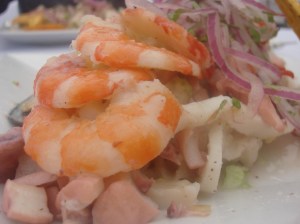
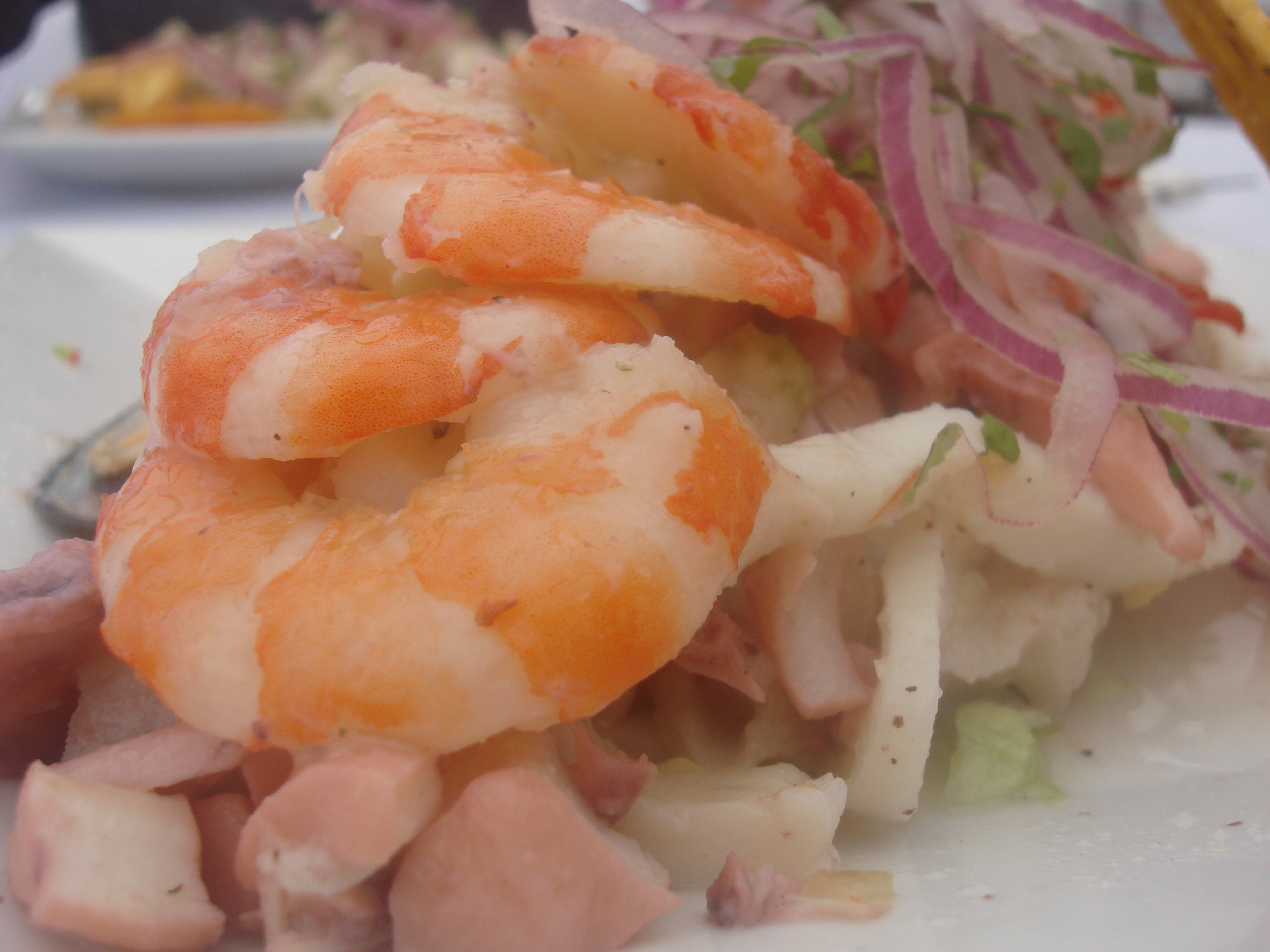
Ceviche

With dear friends David and Sean, I had very good ceviche at Perurrican over most stimulating conversation.

Location, location, location – Perurrican in Condado

And then Kendra, who was for years my partner in mischief all over the Caribbean, my soccer buddy on the Puerto Rico National Team, and is still an all around lioness of a friend, not only made a delicious meal for me in the home she shares with her fabulous partner, Raúl, but showed me how it was done. Before we’d had too much wine to get the recipe down in writing! (Are you listening Adri? It can be done!)
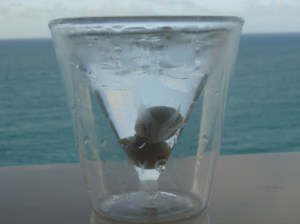
The view from Kendra and Raúl’s at 5 p.m.

It was a wonderful trip!

CHOPS!
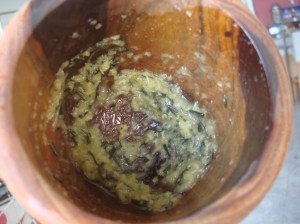
The monster mash: adobo

The grill

The results!

Kendra’s Grilled Lamb Chops

2 lbs lamb chops, rinsed and patted dry

Adobo

4 cloves garlic

1-2 sprigs rosemary – just the leaves

¾ tsp salt per pound

Grating of pepper

PLUS extra virgin olive oil, to be added teaspoon by teaspoon

After prepping the lamb chops, place all adobo ingredients except oil in a mortar and pestle and grind down to a rough paste, adding oil a half teaspoon at a time until you reach a spreadable, but non-greasy texture.

Paint both sides of the chops and refrigerate until about ready to use. Give the chops enough time to return to room temperature before grilling.

Heat your grill until just under its high temperature, then scrape grill clean if necessary. Allow to heat up for a couple of minutes, then start.

Place chops on grill. After 1.5 minutes, turn them over. Cook for another 1.5 minutes, then repeat. Stand them up on their sides on the grill for another minute, checking for the density of the chops to firm up. Remove from grill, place on a platter and tent them with aluminum foil for another five minutes. You may check for doneness with a meat thermometer (140°F will be rare, although many chefs stop at 120°-130°). The chops can rest until you are ready to serve.

Continue Scrolling Down for Calabaza Recipe

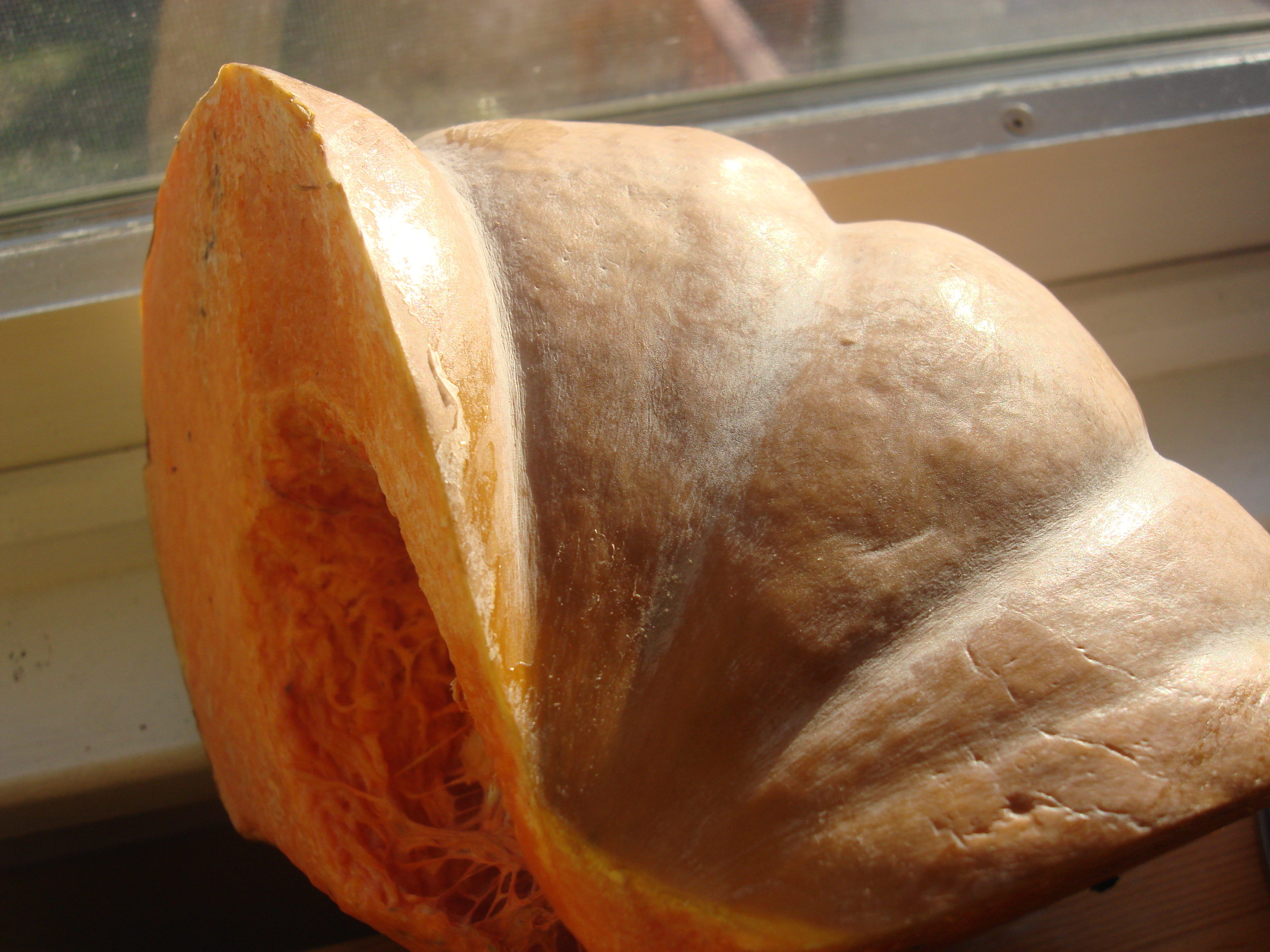
Cutting the calabaza
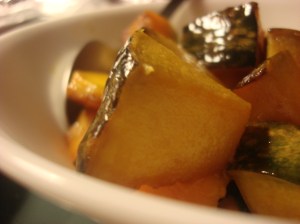
Yum

Sauteed Calabaza (Caribbean Pumpkin)

2lbs calabaza (acorn squash is the nearest substitute)

1 Tbs extra virgin olive oil

1 tsp butter

1 tsp honey

Wash calabaza rind thoroughly. Do not peel. Chop calabaza into 1.5” chunks. Sprinkle sparingly with salt.

Heat oil and butter in a pan at medium high until foaming subsides. Add calabaza, stir to coat and turn down to medium low so you hear a slightly sizzle. Drizzle with honey and cook for a few minutes until beginning to soften, but still resistant to a fork. Turn off burner, cover and leave for at least 5-10 minutes, until a fork passes easily through, and you are ready to serve.

Serenata (a Lenten favorite that is a hot weather favorite too)

2 Jul

Bacalao — if you are not a fan — is an insulting thing to call someone; to the bacalao-averse it is a smelly, salty, fibrous fish; it is yucky and you can’t stomach it or even smell it cooking in the house.

Bacalao — if you are a fan — is the magical, durable, sustaining food of seafarers and coastal folks from far flung places; a protein source that won’t go off without refrigeration; a salty treat that tastes great with rice, in fritters, in any number of ways, the flavor of Lenten Fridays and Christmas buffets.

Bacalao is dried salt cod (called saltfish on many of the Caribbean Islands) and if you don’t like it, you may want to stop reading now.

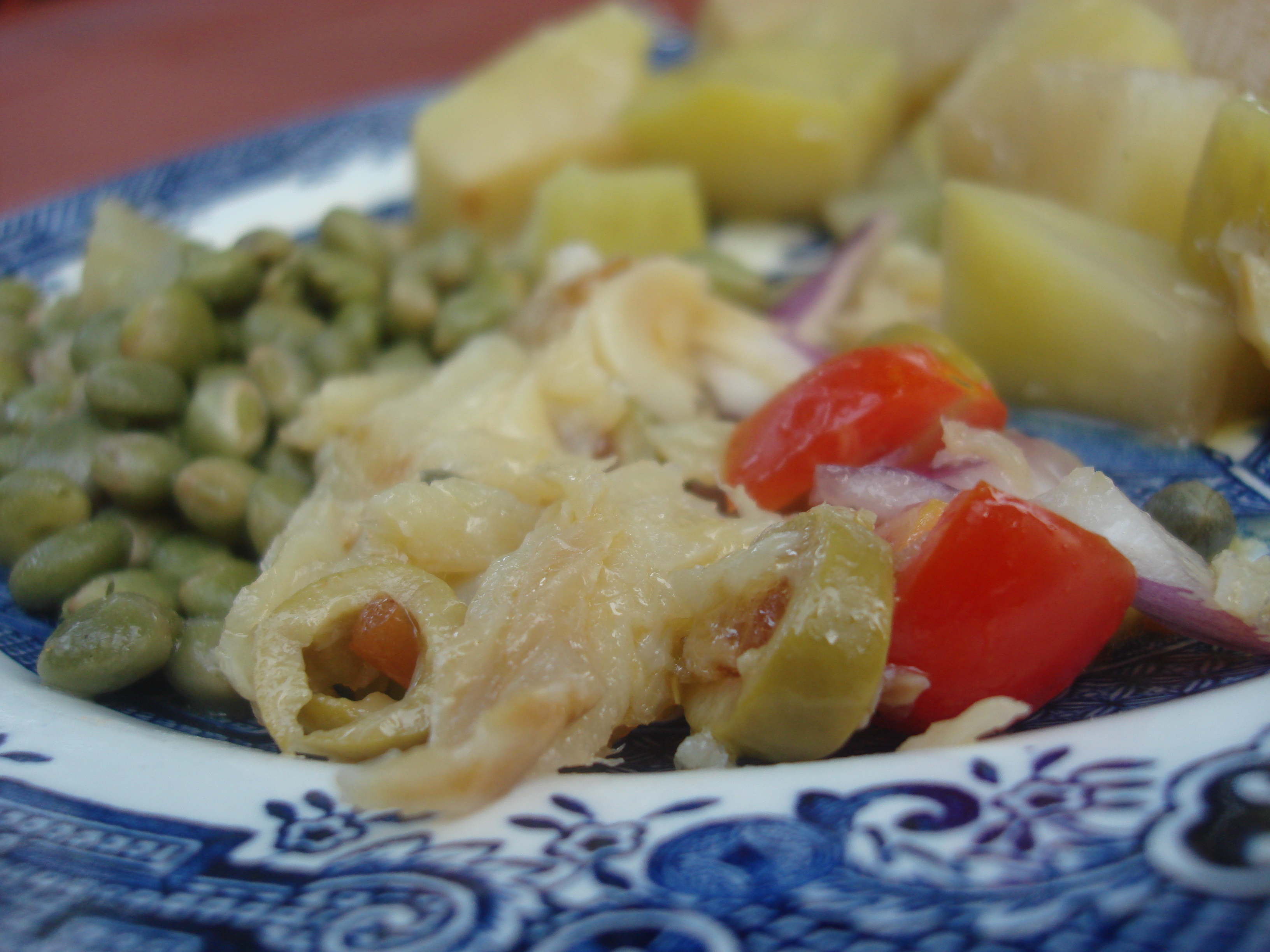
If you do like it, I hope you will try it as serenata, a dish very popular in Puerto Rico, that I am told doesn’t come from Spain, but was developed in the Caribbean. It may have been the dish traditionally served to a successful suitor after he serenaded his intended under the window on a warm, tropical palm-swaying kind of evening.

Then again, maybe not. Since salt cod must be desalinated ahead of time, the intended must have known when her suitor was coming and what her answer would be, well in advance of the event. Hardly a romantic surprise. But I love me an apocryphal story as much as the next person!

If I were waiting for a suitor to turn up in order to eat serenata, it would be a long time before I had it again. But me being me, I don’t wait.

We eat serenata during Lent on Fridays, but I like it any time. It combines a strong salty fish with bland tubers (which we in Puerto Rico call viandas); I like to mush it up all together on my plate with abundant oil for a a dense and salty mashed potato-type of experience.

My dad found a breadfruit somewhere the other day (I suspect he shook someone down for it, but whatever you have to do in New York to get a tropical breadfruit seems justifiable to me. I asked no questions). Breadfruit is one of my absolute favorite things to eat in this whole blessed world. Set the dense creaminess of breadfruit against the power of bacalao and I am in heaven. So I started soaking my fish immediately. Chowing down was like mainlining the memories of so many amazing days and adventures…I felt almost drunk on the event!

Notes: Atlantic cod is on the naughty list of the Monterey Bay Aquarium Seafood Watch (for more info, click here) but I got Alaskan Pollock, which seems to be okay for the moment, although wild-caught Alaskan is the most recommended. I try.

For a delightful read on the fascinating history of cod, get Cod: A biography of the fish that changed the world, by one of my favorite food researchers and writers, Mark Kurlansky!

Full disclosure: My son will not touch bacalao, hates the smell and — every time he smells a funky smell somewhere, he calls it bacalao. He’ll grow into it.

For a variation on Bacalao a la vizcaina (with tomato sauce), click here

Serenata (desalination begins the night before or morning before cooking. The rest of the prep is only 15 minutes)

  1. Bacalao: 1lb. dried salt cod, desalinated and rehydrated according to the following directions: To desalinate: Place cod in abundant cold water in the evening or in the morning. Before going to bed or to work, change the water. Upon waking or returning from work, change the water again. When ready to cook, place bacalao in a pot with abundant water. Bring to a boil. Lower heat to medium, simmer for 3-5 minutes, drain and allow to cool.
  2.  Stodge: 1-2 lbs potatoes/yautía/yuca/breadfruit/malanga (taro) or other tuberous root vegetable. Peeled and boiled until fully cooked through (from 15-30 minutes, depending on density of tuber) and kept warm
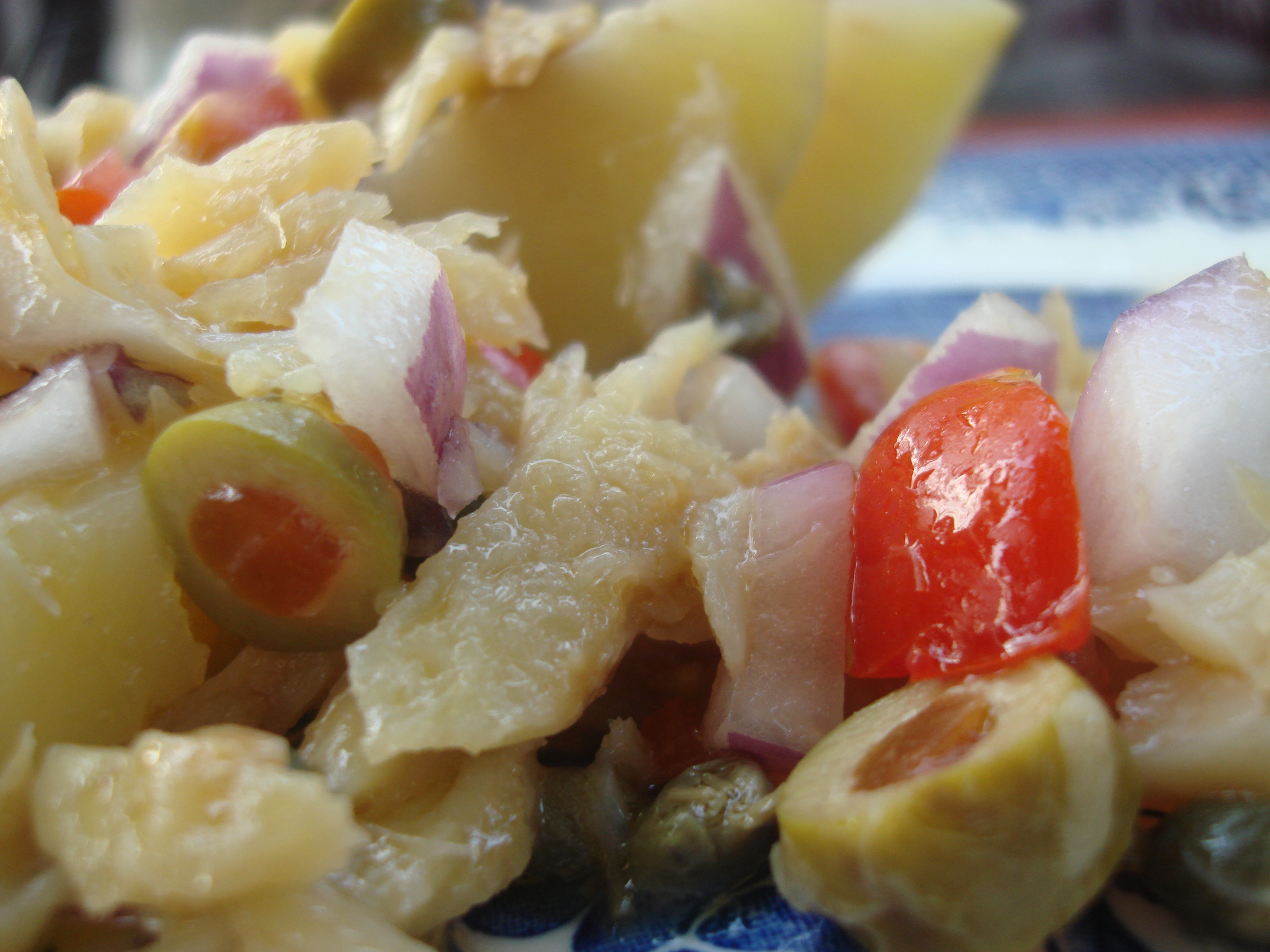
  3. Dressing — 4 Tbs olive oil;1 tsp capers; 10 pimiento-stuffed olives, sliced; ½ cup red onion, chopped; 10 grape tomatoes, quartered (Plus additional olive oil for drizzling and salt to taste).

4. Optional: avocado slices, hard-boiled eggs, peeled and sliced

Flake cooled bacalao in to a bowl. Add all the ingredients in C. Mix well and serve with tubers, additional oil and optional avocado and eggs.

Filete de pescado entomatado (Fish filets in spicy creole sauce!)

4 Jun

In the supermarket the other day, Leandro asked for fish for lunch. This is not in itself odd…everyone in this family is island-born somehow, we all love fish, and he is a huge fan of River Monsters on Animal Planet (which I strongly encourage, because I think Jeremy – the mad fisherman — is quite hot and much better to watch with my son than Diego the animal rescuer – why, why, why do he and his bloody cousin, Dora the Explorer, have to shout everything they say? –  or Phineas and Ferb – who are quite sweet, but not nearly as compelling as flesh and blood Jeremy and his sunburnt, craggy-faced, understated British delivery, rod-wielding self ).

So I picked up some wild caught tilapia to accommodate him, and because I suddenly got a strong craving (antojo) for fish in salsa criolla.

Fortunately, I had all the ingredients in – aside from the fish, it’s a pantry dish, and double fortunately, Leandro loved it, so happy, happy! Triple fortunately, it can be adapted to chicken and shrimp too, so keep that in mind! I’m happy, hope you’re happy too…

I served it with spinach pasta, on the boy’s request…I definitely would have preferred polenta, but who has time for that at 1 p.m. with no lunch ready?

Filete de pescado entomatado (Fish filets in spicy creole sauce)

1 Tbs extra virgin olive oil

1 medium onion, chopped

3 cloves garlic, minced

½ Cup roasted red peppers (yellow or green are fine too!)

Pinch hot red pepper flakes, optional

8 oz can Spanish-style tomato sauce

8-10 pimiento-stuffed green olives, sliced

1 generous tsp capers, drained indifferently

½ -1 lb tilapia filets (or other flat whitefish)

Salt and pepper to taste

Heat olive oil in a large sauce pan at medium high until liquid and fragrant. Add onions, stir to coat, and lower heat to medium. After five minutes, add garlic and peppers and pepper flakes, if desired. Cook an additional 5 minutes, until vegetables are tender, then add tomato sauce, olives and capers and cook at a lively simmer for 10 minutes.

Meanwhile, lightly salt and pepper tilapia filets on both sides. When sauce has cooked until the oil is beginning to separate from the sauce, lay filets on the sauce without filets touching one another.

Cook for about 4 minutes, then turn filets carefully (they will fall apart if you are not careful) and cover with sauce, cooking another 4 minutes or so (check for doneness – opaque flesh – with a fork). The genius of this recipe is that the fish won’t dry out if overcooked!

Serve with rice or atop polenta.

Mojitos: Celebrating, Cuban-style

4 May

There’s been so much good stuff going on in my world over the last two months that I have been too busy to stop to celebrate any of it!

Aside from my culinary dictionary finally being available to the public, I ran some successful events at the community college where I teach, delivered the keynote address at the annual gala of the American Association of Teachers of Spanish and Portuguese Metro NYC chapter, attended the national TESOL (Teaching of English to Speakers of Other Languages) conference in Philadelphia with some of my wonderful colleagues (and without my son for three nights – a monumental event for which I have to thank my parents!), attended the Small Farms Summit here on Long Island, planted a garden in the brand-new raised boxes that my dad and his friend built and…even got a hair cut and color (which alone would be cause for celebration, given how I was feeling about my hair). I have even managed to drop enough weight to be back into all my clothes (I was very cavalier about the figure this winter, but have since reined it in). 

Things have slowed down a bit now, so last weekend it was time to catch my breath with a celebratory cocktail. Or two. At the same time, I realized that the mint was up in the garden. Put these two elements together, and the only logical conclusion was to bust out the rum and make a mojito! Or two.

A mojito is really a Cuban drink — and I have been fortunate enough to have had quite a few of them in Cuba itself, including one memorable evening on the patio of the Hotel Nacional in Havana, listening to Compay Segundo in one of his last live performances, sharing a honking big Churchill-size Cohiba cigar and some Havana Club silver rum in very good company, and feeling almost sheepish about how much fun it was to live like Hemingway for a bit. I believe my divorce papers were getting signed at the time too, in some other country, so you can imagine my satisfaction at spending that moment in fabulous and exotic circumstances far-far away from what’s-his-name.

In my world, mojitos are liquid triumph.

For rum I now use Don Q Cristal from Puerto Rico, my preferred white rum for mixed drinks. You will want a rum with a very clean, crispness. As it turns out, my mint was a bit more toothpaste-spearminty than I usually like, but the result was exceedingly refreshing.

As with any traditional recipe, I expect to hear from many folks saying that this is not at all the way to make an authentic mojito. And as with any traditional recipe, I will answer that there are as many ways to make it as there are bartenders in the world. But of course, I would love to hear your suggestions!

Thanks to Ashley for being my partner in crime on this one, and for taking the notes while I did the mixing. The recipe has quite a bit of editorializing, most (but not all) came from her!

Mojitos

3 tsp sugar

16-20 large mint leaves

2 big, fat Tbs white rum (Don Q Cristal is a personal favorite)

½ Tbs lime

Seltzer/club soda

Muddle (mush up, but don’t pound) sugar and mint in a mortar and pestle or in two glasses (Ashley says: don’t muddle the mint too much or else the mint particles go up your straw. And into your mouth. And then your drink sucks.)

Fill two glasses with ice (highball, lowball, it’s up to you). Divide rum between the two glasses. Pour lime juice over rum and shake a bit to cover. Add sugar-mint muddle, if it wasn’t in the glasses already, and stir gently.

Remember that you are supposed to add club soda/seltzer. Open bottle over sink (because since you forgot about it, you didn’t refrigerate it, so the seltzer is warm and apt to fizz all over). Pour ¼ cup seltzer atop each glass and serve. Salud!

Garbanzos con chorizo (Chick peas and chorizo – the last of the hearty winter meals?)

1 May

Spring is definitely here – rain, fresh green smells, vegetable garden popping up all lively and bright, lily of the valley spreading lush fragrance low to the ground, lilacs towering above and spreading their own heady perfume, birds and bees doing their spring dances, kids going mental.

But there is still a chill in the air, especially at night, and there is certainly time for one or two more heavy comfort meals.

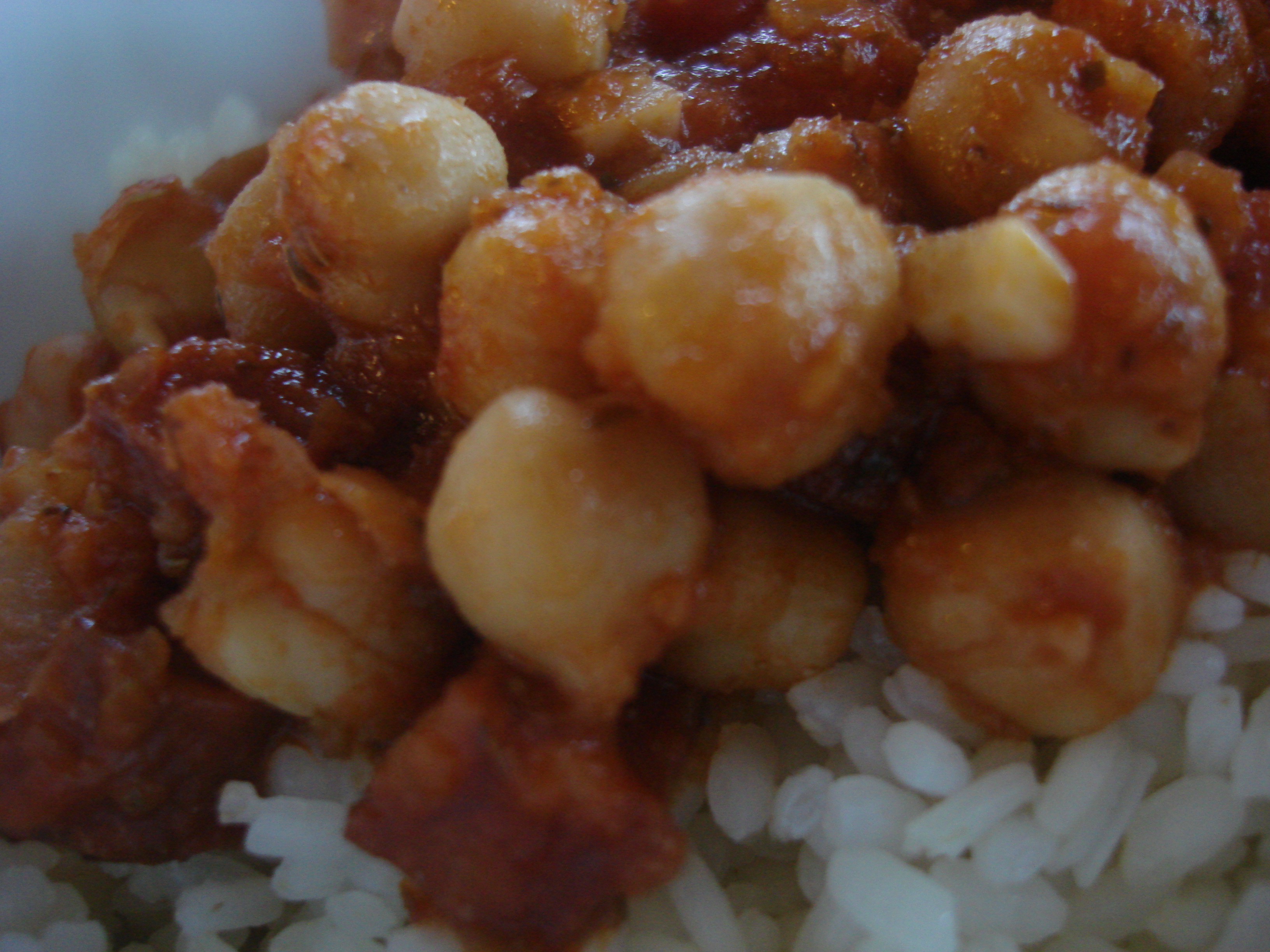
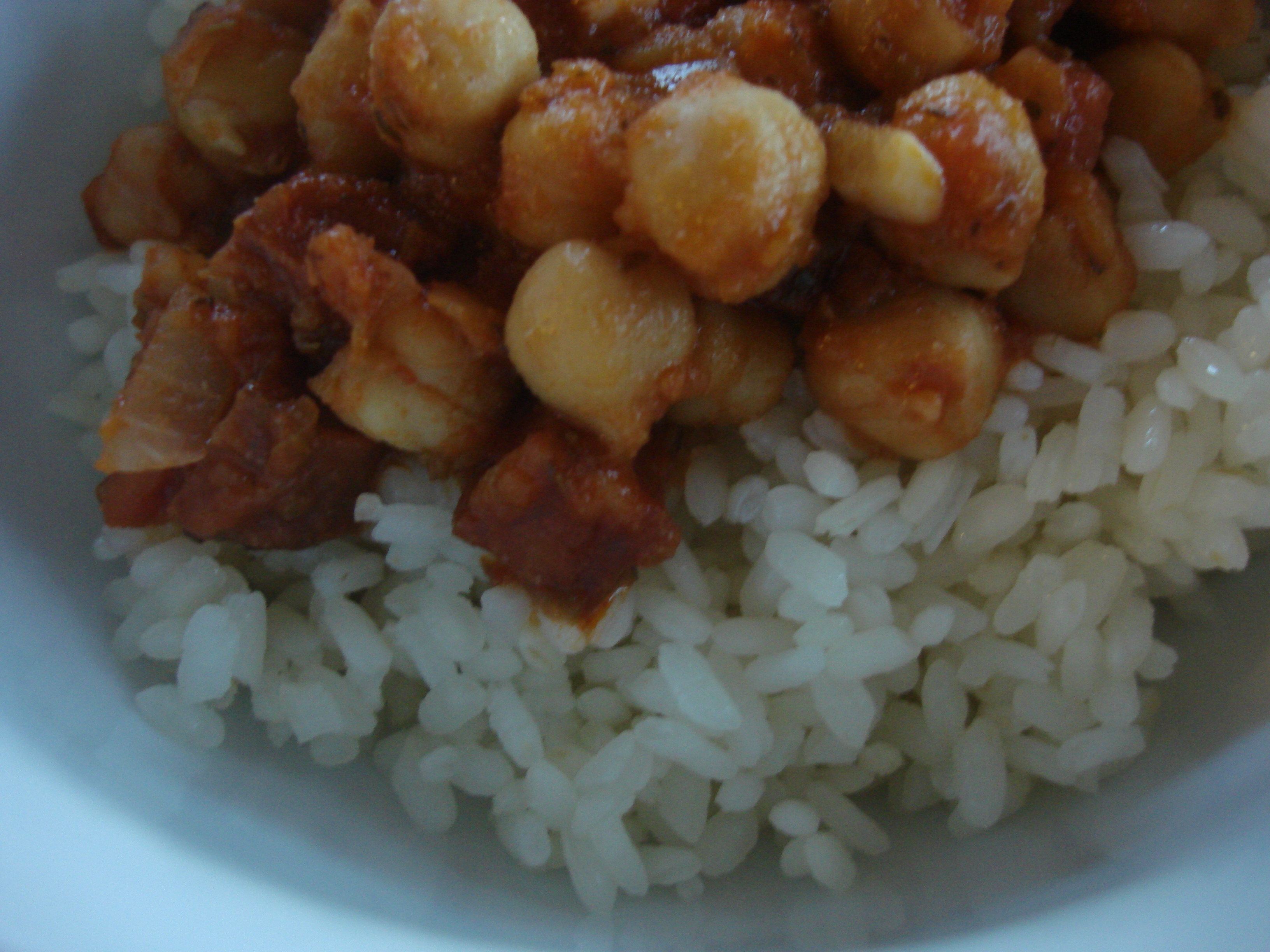
One of my favorite is Garbanzos con chorizo – chick peas or ceci with Spanish hot sausage. I don’t make it that often, because the little guy won’t eat garbanzos (yet), but after the crazed month or two I’ve just put behind me, I deserved to slather on some favorites.

Here it is – simple as pie and tasty as all get out.

Garbanzos con chorizo 

2 Tbs extra virgin olive oil

1 medium onion, peeled and chopped

2-3 cloves garlic, minced

3-4 Tbs sofrito, if using prepared, 3-4 ice cubes worth if using homemade frozen (see Sofrito for Freezing) or follow the recipe below for making fresh sofrito to order*

3-4 oz Spanish-style spicy chorizo sausage (you may substitute hot dry Italian sausage, or one of those hot supermarket brands that comes fully cooked), peeled and chopped into 1/4” pieces.

2 Tbs tomato paste

15 oz can diced tomato

1 Tbs cumin

1 Tbs dried oregano

¼-1/2 tsp salt (to taste)

1 pint soaked garbanzos (or 2 15 oz cans, rinsed and drained)

Heat oil in a large saucepan at medium-high until fragrant. Stir in onions to coat, then lower heat and sauté, about five minutes. Add garlic and sofrito and cook until fragrant. Add chorizo and heat until it begins to release its oil, then immediately add tomato, cumin, oregano, salt to taste and garbanzos. Cook at a lively simmer for 20 minutes and serve over rice.

*Here is a quick sofrito recipe that will work for this dish if you are actually making it to order. If using this sofrito recipe, do not use additional onion. The garlic stays the same.

SOFRITO

  1. 3 Tbs olive oil
  2. 3 oz ham steak or jamón para cocinar, diced (optional in this dish)
  3. 1 oz bacon, chopped rustically (optional in this dish)
  4. 1 green cooking pepper (cubanelle or Italian pepper), diced
  5. 1 large onion, peeled and diced
  6. 6 culantro leaves (recao), minced
  7. 4 sweet small peppers called ají dulce in Hispanic markets (do NOT purchase Jamaican ají or scotch bonnet! They look the same but the Jamaican/scotch bonnet are HABANEROS, deadly hot and inappropriate for this dish!) seeded and minced
  8. ½ Cup cilantro leaves, minced

Heat olive oil in whichever sauce pan you are making your dish in. Add ham and bacon, if using; cook until done (bacon can be crisp) then add other ingredients and saute until soft and fragrant.

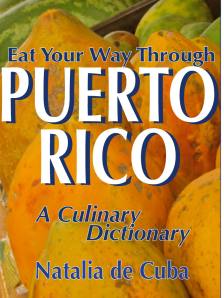
Eat Your Way Through Puerto Rico: A Culinary Dictionary – BUY IT, SHARE IT!

29 Apr

And finally, almost 13 years after I started working on it, my culinary dictionary is available!! I am so excited (Thanks Carlos Matos of Forsa Editores for getting on board with me and guiding me through this new adventure!) to finally, after years of writing for newspapers and magazines to actually have my own book out, with my name on it (the cover you see here is not quite the actual image, but you get the idea). It feels really, really, great.

Eat Your Way Through Puerto Rico: A Culinary Dictionary is my contribution to the foodie word world.

(Update: Eat Your Way is now available on iTunes too!)

What is does is take the words and phrases we use in Puerto Rico for produce, local dishes, meats, fish and seafood, as well as how we get a table at a restaurant or get our steak cooked to order, and translates them into English and back again. The fruits, vegetables and herbs have the botanical names included for easier identification. One day I’ll get the fish and other meat animals labeled too.

Who it is for is folks traveling in Puerto Rico who would like to understand and taste the local foods, but would like to know what it is they are trying.  It is also for people like me who are of Puerto Rican background but were born in the States (or elsewhere) and need some help learning about, making or describing our heritage foods. You will notice that in addition to straight word to word translation, some of the more interesting or unusual or typical dishes and ingredients get a little story to go with: find out about yuca and poison; where okra got its name; why sweet potato and yams are not actually the same thing; how breadfruit caused the Mutiny on the Bounty.

It is also for linguistic and food geeks (and I say that with all the pride and affection of a dedicated linguistic and food geek, because that is what I am) who just want to know. That’s where many of you come in. This is not a project that is finished, but one that I have laid the groundwork of. I hope, as we move forward, to get a lot of feedback from users and readers who agree, disagree or have other words and phrases to add to the lexicon. So feel free to comment here about what you think. I will be setting up a Facebook page in the near future to open the channels for more feedback!

So far Eat Your Way Through Puerto Rico is available on Amazon (for just $4.99 – How could you not!?!) as a Kindle book and will be coming soon to the iTunes store and print.

Soon Hot, Cheap & Easy will be back to my regularly scheduled programming – recipes from the front lines of parenting – but for now, please check out the book and let me know what you think!

Natalia

Pastelón de amarillos/plátano maduro (Puerto Rican lasagne, with ripe plantains!)

2 Apr

I have been ripening this recipe for weeks. No kidding.

I bought a bunch of plantains on sale (15 for $2) at a Caribbean grocery store three weeks ago, made tostones with some and then let the last 6 get black on my counter. Black, I tell you. Not just mottled yellow, but black and withered, while my son looked on with occasional science experiment interest, sort of a Peter Greenaway film of disintegration but not quite as exquisitely grotesque and not with the speedy convenience of time-lapse photography.

I find already ripened amarillos (yellow plantains)  in my regular white-people supermarket (I hate saying non-ethnic, because white people are ethnic too!), but Latin supermarkets are your safest bet.

Pastelón is the Puerto Rican answer to lasagne – or maybe shepherd’s pie – but sweeter, spicier, meatier – all around naughtier. If you love a dish that has balance while being excessive, this is the meal for you!

I had the Seasoned Ground Beef frozen in a pint container and so it was fast and easy — just added a couple of tablespoons of tomato paste while it simmered and piled everything together. Just so you know, Leandro took the top off and only ate the meaty insides; the sweet vs. meat thing is not for everyone. But it is definitely FOR ME.

Continue reading

Mayo-Ketchup Gets a Much-Needed Makeover (with Chipotle!)

4 Mar

“We totally just licked the bowl!”

I had promised my friend Ashley and my son a “tostones-for-dinner” Friday night and, since I had the plaintains I was ready to go. Ashley had decided to learn to make them, so I set her up with the assembly line of garlic and salt water, hot oil, plates covered in paper towel and tostonera (See Tostones! for the how-to of this Caribbean riff on French fries) and got ready to relax with a bit of the fizzy stuff.

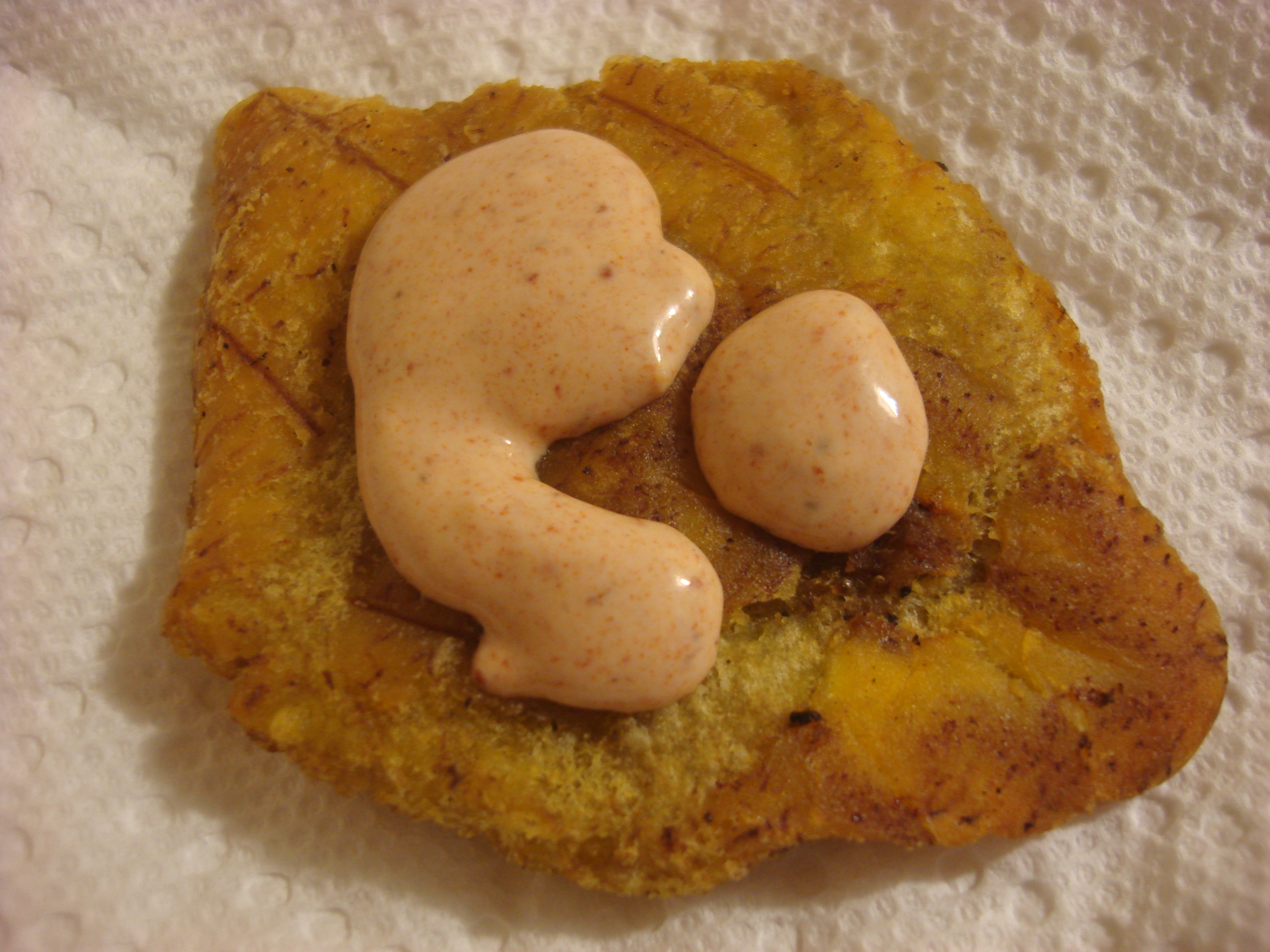
Then I mentioned that Puerto Ricans usually dip tostones in mayo-ketchup – mayonnaise and ketchup stirred together. Without hesitation Ashley said “That sounds like it would be great with chipotle and lime,” and since I had it all in (plus garlic) a new creamy, spicy, lick-the-bowl delicious dip was born. And it was so quick that I still got to drink that glass of fizzy in relative peace….

You. Are. Gonna. Love. This.

Mayo-Chipo-Ketchup

(play around with the proportions to suit your taste)

1 Tbs prepared mayonnaise

1 Tbs plain yogurt (nonfat or lowfat are fine)

1 Tbs ketchup

1 tsp chipotle in adobo (minced)

1 tsp lime juice

1 clove garlic, minced fine

Pinch salt, if desired

Mix all ingredients in a bowl and serve with tostones or other fried, crispy tidbits.

Puerto Rican Rice and Beans (Arroz con habichuelas)

26 Feb

I didn’t mean to make arroz con habichuelas last week, but when I dashed into a Latin supermarket for something else, I was stopped dead by the presence of something that looked pretty close to Puerto Rican pumpkin (or calabaza, as we call it). The Fates intervened with my dinner plans.

Native to the Americas, pumpkin (Cucurbita pepo) has been an integral part of diets in this part of the world for thousands of years. The flesh and the seeds are used for many purposes. (in Mexico the crushed seeds are used to coat meats as you might use breadcrumbs). It is also one-third of the famed Three Sisters agricultural practice. Corn stalks make a trellis for beans, while pumpkin enjoys the shade underneath. Each plant supplies a nutrient to the soil that the other one needs, so the soil stays naturally healthy and fertile, while the produce provides invaluable nutrition to people. It just makes sense.

I have published this recipe before, but this time I include more substitutions if you don’t have a nearby source for Latin style ingredients. Check your “International foods” aisle for prepared sofrito – Goya has a wide reach and its sofrito is used by Caribbean Latin cooks all over, so you are in good company with this shortcut.

The new substitution of cooked ham steak for the salt pork reflects what I’ve been doing since I can’t find the kind of cooking pork I like. It is neat and tidy, fairly cheap, adds good flavor, and the extra can be frozen for another day (the cooked ham steaks are super-easy to chop fine or mince when frozen).

If you don’t find calabaza (and in fact the one that made me whip up this pot of beans was a Jamaican style and not quite what I like, but perfectly serviceable), acorn squash is my favorite substitute.

Note: With the leftovers I make quesadillas or nachos…yum. Also goes great with rotisserie chicken!

Don’t be put off by the number of ingredients; once you do the prep, you are almost done.

Ingredients

  1. 1lb calabaza caribeña (Caribbean pumpkin) OR 1 lb. acorn squash, washed, cut in half, seeds removed and cut into big chunks (you can cut the rind off before boiling or peel it off after). It should be boiled for 15 minutes, or until tender. Set aside and reserve ½ cup cooking liquid.
  2. ½ lb salt pork, diced (don’t discard the hard rind, just score the fat as best you can). You can also use ham steak – readily available in the supermarket (4 oz cooked ham is a worthy substitute)

3. SOFRITO

(sofrito is the roux, the mirepoix, the basic saute seasoning of Puerto Rican cooking and is very difficult to reconstruct in the mainland U.S., which is why Goya makes a fortune selling it in jars. So if you can get most of the ingredients for sofrito at the local bodega/supermarket, then do this! –actually, quadruple or quintuple it and freeze it in ice cube trays for use later. Otherwise, buy commercial sofrito and use a couple of heaping tablespoons)

½ onion, minced (about ¾ Cup)

3 cloves garlic, minced

1 cubanelle (long green Italian cooking) pepper, seeded and diced

Five or six ajíes (non-spicy green peppers that look exactly like scotch bonnets/habaneros, but are not at all spicy! Taste them! They are hard to find but Latin supermarkets often have them), seeded and diced. Use another cubanelle – the redder the better — if you can’t get these.)

Five or six hojas de recao – culantro leaves- chopped. (Not to be confused with cilantro, these look like dandelion leaves without the curvy sides. They are hard to get, usually come from Costa Rica and their potency disappears quickly after cutting. I actually grow my own in the summer, which takes forever and yields very little in my part of the world. If you find them, use them as soon as you get them home! If you can’t find them, buy the sofrito WITH culantro)

3 Tbs tomato paste or Latin style tomato sauce/salsa de tomate (optional)

1 Tbs dried oregano (2 Tbs fresh)

2 Tbs chopped fresh cilantro (optional)

  1. two 15-oz cans pink beans (habichuelas rosadas), rinsed and drained

DIRECTIONS

While you are boiling the calabaza, heat the pork in a heavy pot. Cook it through and remove the scored rind. Leave the diced meat. Add a bit of olive oil, if necessary, then sauté the sofrito ingredients until tender, adding optional tomato at the end. Add beans. Add cooked calabaza and the reserved liquid. Cook for 15 minutes and serve on white or brown rice.