Archive | gardening RSS feed for this section

Spinach or Chard or Kale Pasta – the fastest pasta in my arsenal

15 May

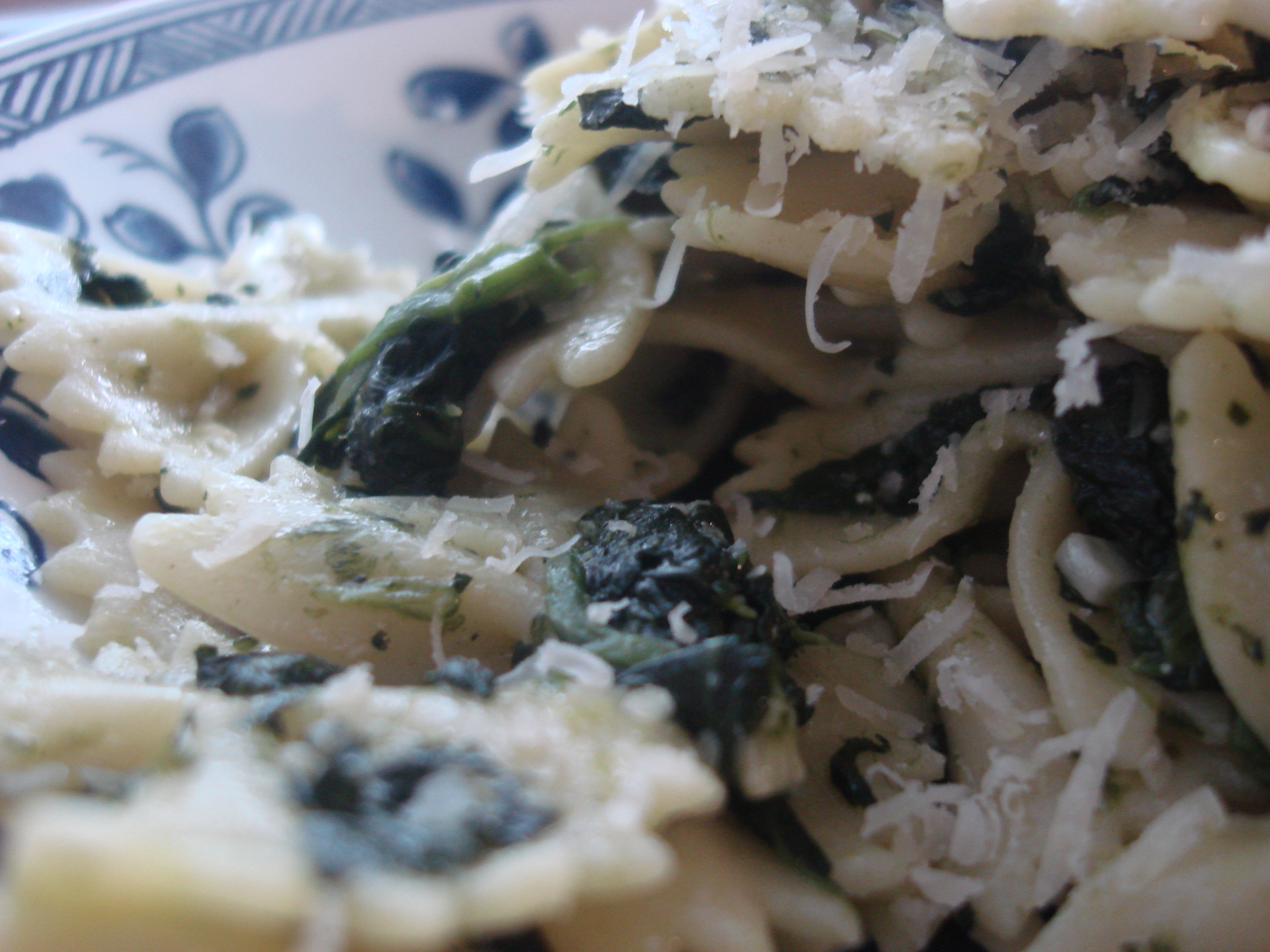
When it is crunch time – 5:30 p.m. and nothing planned for dinner, or 10 p.m. and nothing made for Leandro’s lunchbox, I do not despair. As long as there is a bag, or half bag of frozen spinach or chard or kale in the fridge, a box of pasta and some garlic (and there pretty much always is), I am good to go.

Leafy greens are powerhouses in the veggie world. Kale provides calcium, Vitamins A, C, and K, potassium and folate. Chard has vitamins A and D. Spinach has iron. And best of all, my son, who I started on garlicky, cheesy pureed spinach on pasta as one of his first solids, doesn’t really differentiate among them, so I can vary at will. Start your kids on the good stuff early, I am telling you!

Second best of all? They are all terrific from frozen bags.

And third? You can throw the frozen greens right in with the boiling pasta…ladies and gentleman, this is a one-pot convenience meal par excellence.

I have posted a similar recipe before, with options for freezing the sauce for baby food, but this time I am giving you the bare bones with how to handle each green. You can, of course, also use fresh greens, but our spinach and chard isn’t ready for harvest yet, so I am still using bagged.

Pasta with Dark Leafy Greens

(this can be halved for smaller meals)

1 lb. pasta of your choice (the curly short kind or farfalle/bowties grip the greens best)

1 lb bag frozen chopped spinach, kale, or chard

2-3 Tbs extra virgin olive oil

4 cloves garlic, minced

salt and hot red pepper flakes to taste

abundant grated cheese (Parmigiano Reggiano, Grana Padano) or 1/2 cup crumbled feta

Bring abundant salted water to the boil. Add pasta and, if using kale or chard, add that immediately too. If using spinach, add halfway into the pasta cooking time.

Drain the pasta and vegetables and return the empty pot to the stove at medium heat. Let any residual water boil off, then add olive oil, garlic and optional hot red pepper flakes to the pot. Cook garlic gently until browned, then add pasta, greens and cheese to the pot. Combine thoroughly, salt to taste and serve.

And the garden grows!

11 May

It’s working! It’s working!

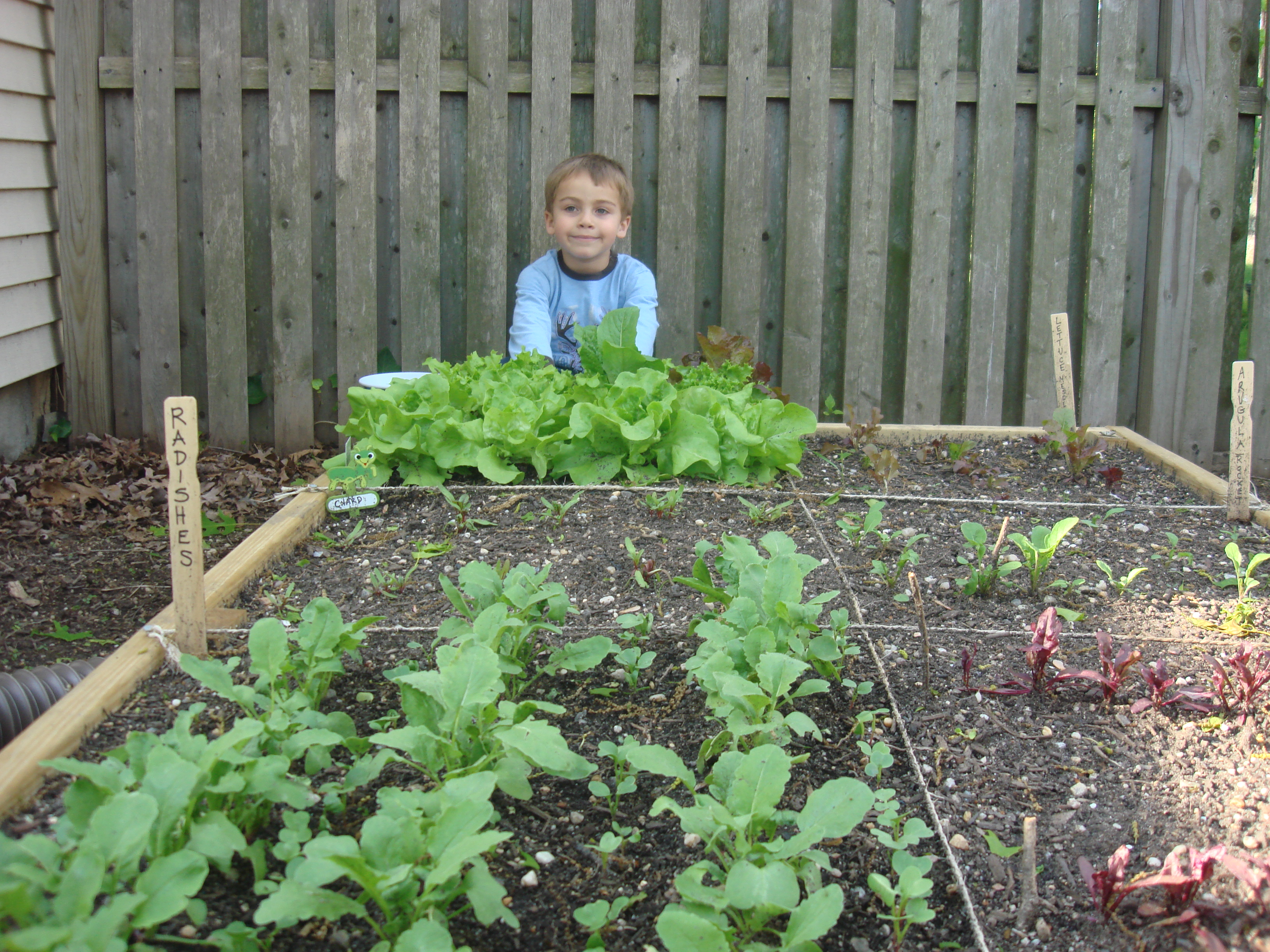
Today we harvested the first leafy things from our new raised beds. I couldn’t be more excited! Leandro and my dad harvested lettuce leaves, and they also thinned the radishes.

Baby, baby…rinse and eat.

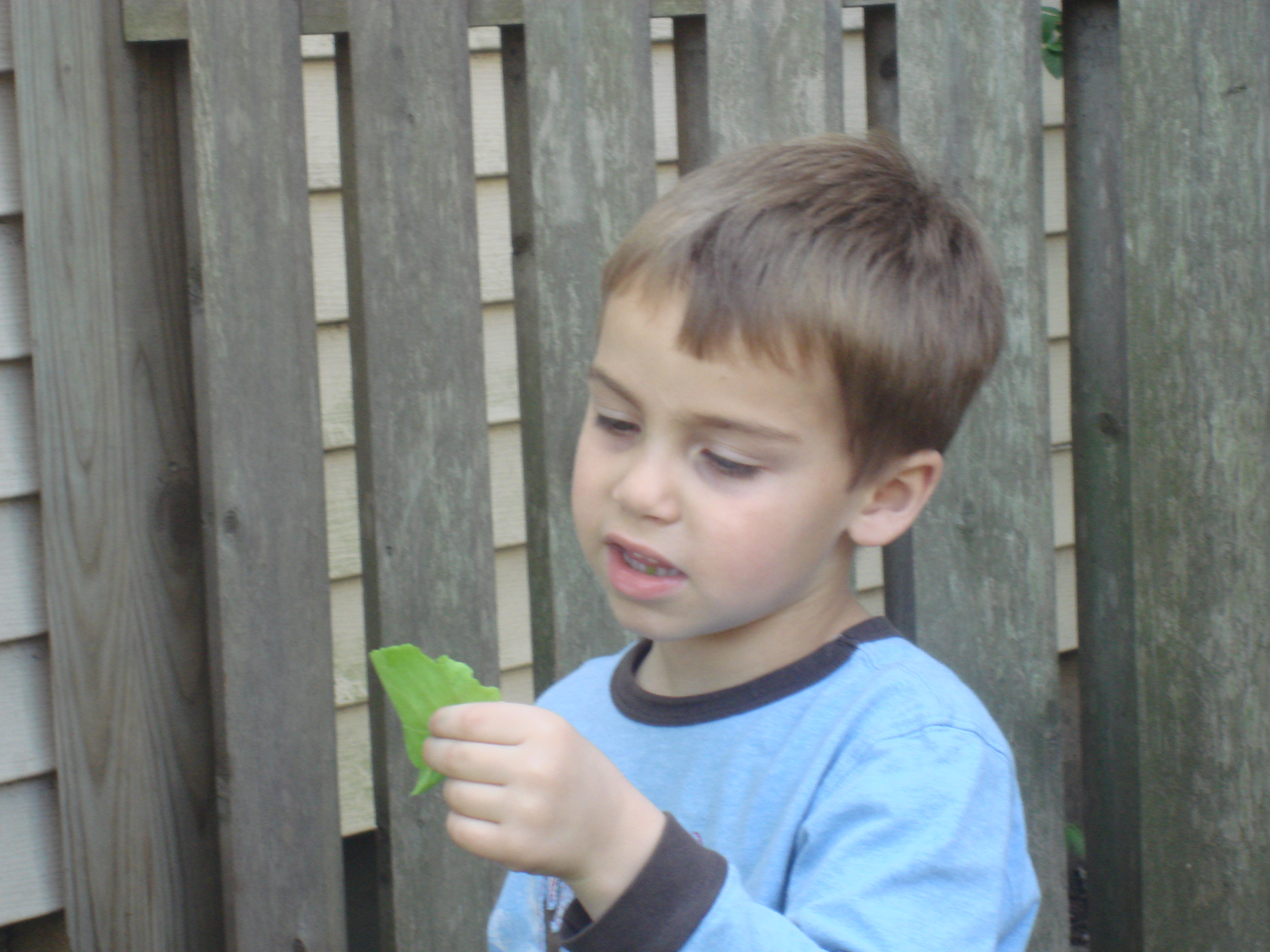
The freshness and flavor were mind-blowing (for the grown-ups, at least. Leandro tasted, and rejected, but nevermind…he will come around eventually…and at least he’ll never embarrass me on a Jamie Oliver program by not knowing his veggies and where they come from….). No recipe, just farm to mouth, and then farm to salad spinner, and a whisper of oil and vinegar.

Here, some quick pictures of our first draw, so you can celebrate with us.

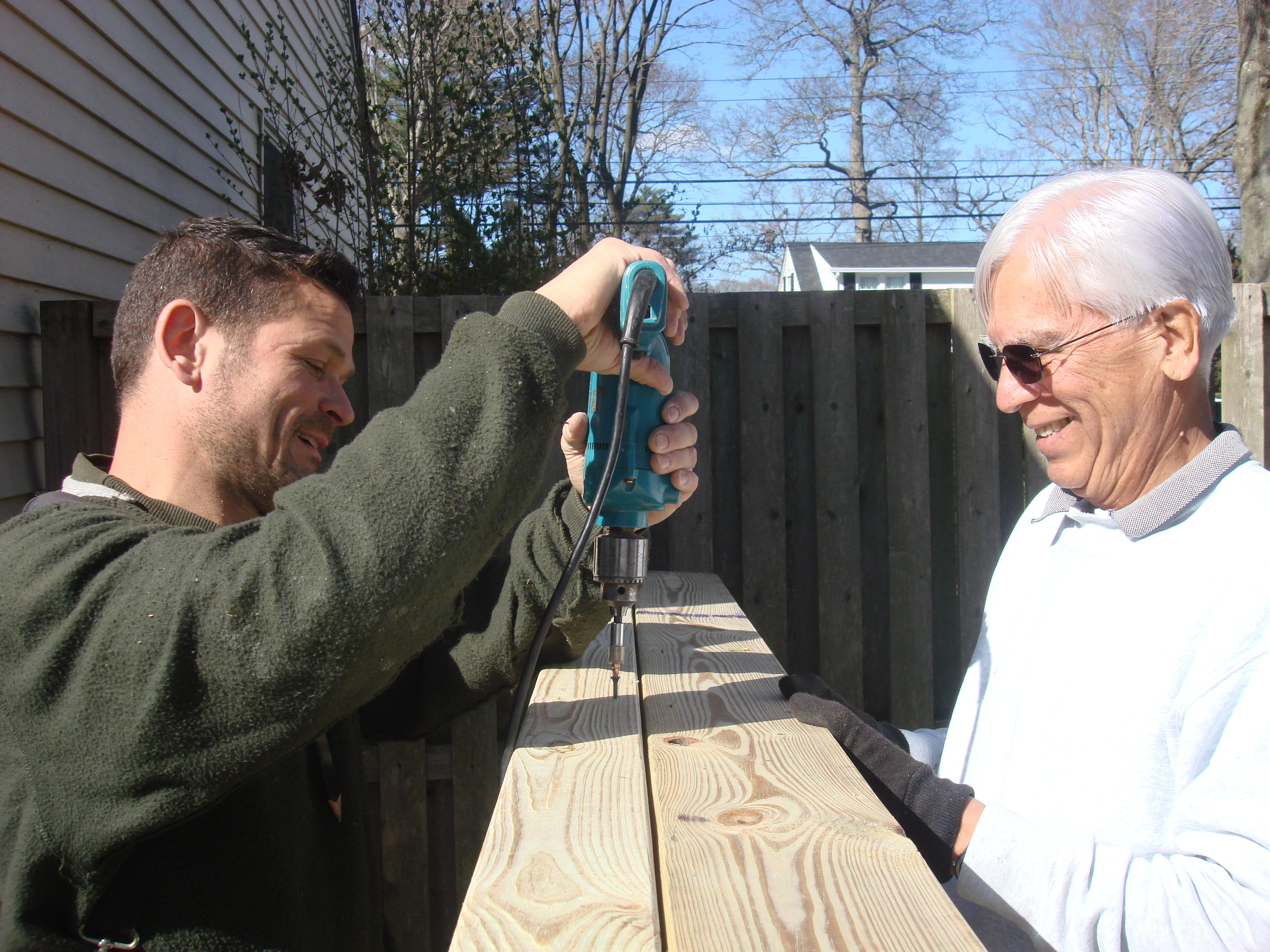
Padushi and grandson, working together

He didn’t like it (spit it out everywhere, in fact), but he tasted it. Willingly. And that is all I ask.

The grandson took out a bit more than we intended, but doesn’t it look nice?

Can These Strawberries Be Saved? Yes!

10 May

‘Tis the season of strawberry temptation. You know, such a good price on 4 fragrant ruby lbs. of strawberries that you don’t even think about the organic vs. conventional argument, or about who is going to eat them all.  You put that clam shell right into the shopping cart and carry on.

And then a few days later, you re-encounter said clam shell, about two pounds lighter in strawberries.  But the ones that are left are looking sad, faded, withered, mushy, maybe even a little gray and mossy in spots. A bit like Lola the Showgirl thirty years on at the Copa.

They seemed like a bargain at the time, but now they threaten to become food waste, a drain on your wallet, a stink in your trash can, those starving children in Ethiopia that your mom used to tell you about, yakkity, yakkity, just wrong.

Relax. There is a way to save them, make them delicious and desirable once again, make yourself feel better about your folly.

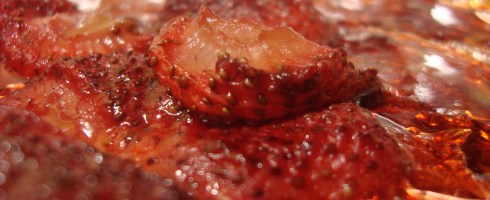
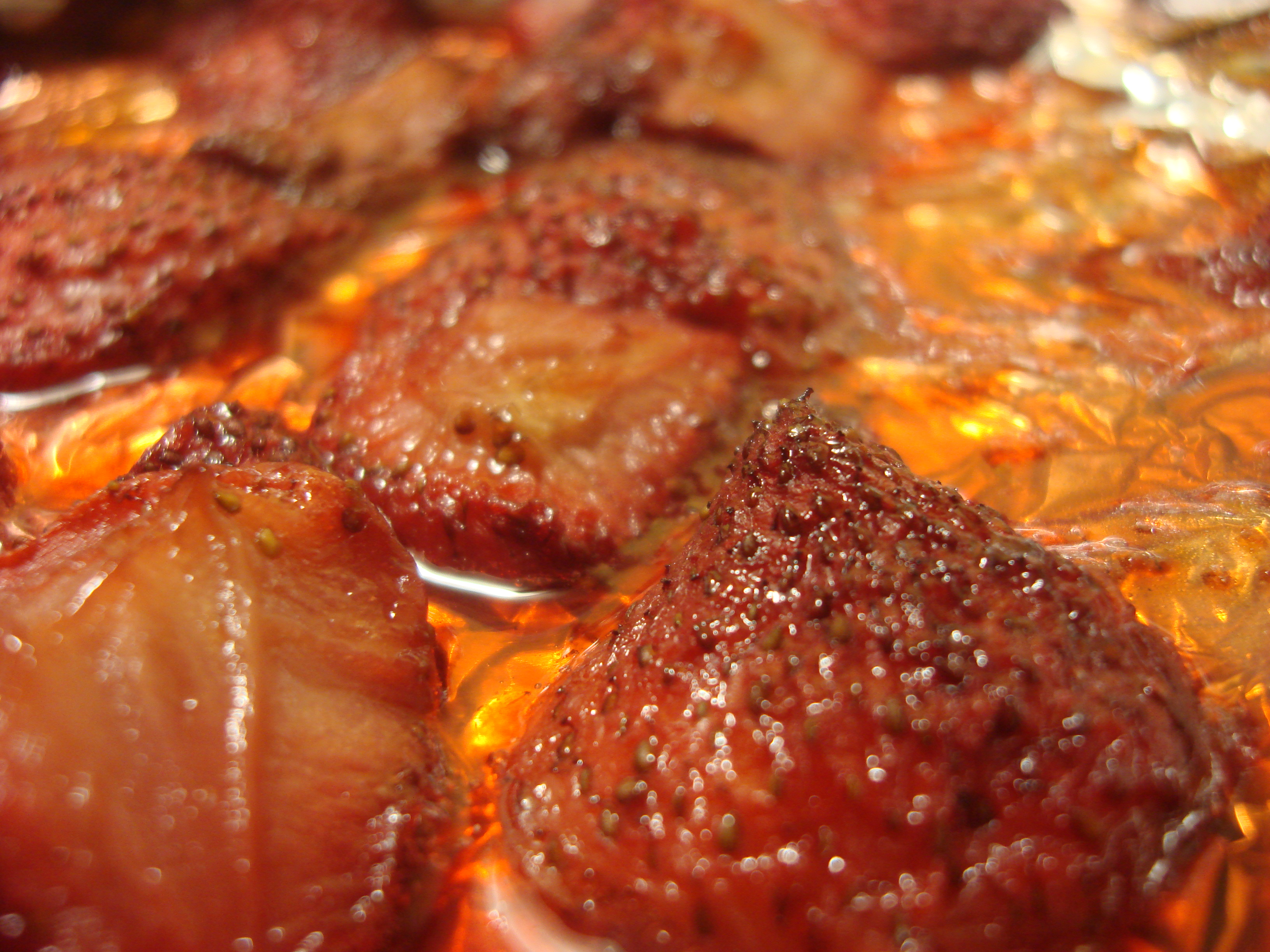
Roasting. Yes, roasting. Toss those aging beauties (do cut out those grey mossy bits, of course, and all the other dubious bits) in sugar and balsamic vinegar (and rosemary if you are so inclined), roast for an hour, and you will end up with some deliciously jammy stuff that you can use on toast, stir into plain yogurt, use to top ice cream or even experiment with to make some sort of chutney or relish for meats.

As the strawberry season is upon us, I know I won’t be the only one to make ridiculous seasonal purchases. Here, at least, is one solution to the retail hangover.

Roasted Strawberries (adapted from The Oregonian)

1 lb strawberries, hulled and cut into 1” pieces if the whole fruits are bigger than that

scant ¼ Cup sugar

2 tsp balsamic vinegar

Preheat oven to 375°F. In a bowl, toss the berries, sugar and vinegar. Spread berries on a rimmed baking sheet and roast for about an hour or until soft and dark. Stir occasionally. Remove from heat and cool before serving. Will keep a couple of days in the fridge.

Mojitos: Celebrating, Cuban-style

4 May

There’s been so much good stuff going on in my world over the last two months that I have been too busy to stop to celebrate any of it!

Aside from my culinary dictionary finally being available to the public, I ran some successful events at the community college where I teach, delivered the keynote address at the annual gala of the American Association of Teachers of Spanish and Portuguese Metro NYC chapter, attended the national TESOL (Teaching of English to Speakers of Other Languages) conference in Philadelphia with some of my wonderful colleagues (and without my son for three nights – a monumental event for which I have to thank my parents!), attended the Small Farms Summit here on Long Island, planted a garden in the brand-new raised boxes that my dad and his friend built and…even got a hair cut and color (which alone would be cause for celebration, given how I was feeling about my hair). I have even managed to drop enough weight to be back into all my clothes (I was very cavalier about the figure this winter, but have since reined it in). 

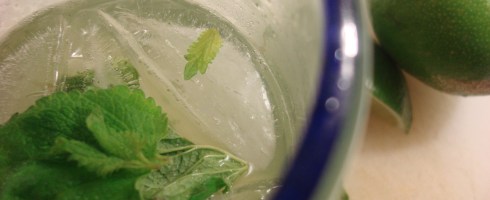
Things have slowed down a bit now, so last weekend it was time to catch my breath with a celebratory cocktail. Or two. At the same time, I realized that the mint was up in the garden. Put these two elements together, and the only logical conclusion was to bust out the rum and make a mojito! Or two.

A mojito is really a Cuban drink — and I have been fortunate enough to have had quite a few of them in Cuba itself, including one memorable evening on the patio of the Hotel Nacional in Havana, listening to Compay Segundo in one of his last live performances, sharing a honking big Churchill-size Cohiba cigar and some Havana Club silver rum in very good company, and feeling almost sheepish about how much fun it was to live like Hemingway for a bit. I believe my divorce papers were getting signed at the time too, in some other country, so you can imagine my satisfaction at spending that moment in fabulous and exotic circumstances far-far away from what’s-his-name.

In my world, mojitos are liquid triumph.

For rum I now use Don Q Cristal from Puerto Rico, my preferred white rum for mixed drinks. You will want a rum with a very clean, crispness. As it turns out, my mint was a bit more toothpaste-spearminty than I usually like, but the result was exceedingly refreshing.

As with any traditional recipe, I expect to hear from many folks saying that this is not at all the way to make an authentic mojito. And as with any traditional recipe, I will answer that there are as many ways to make it as there are bartenders in the world. But of course, I would love to hear your suggestions!

Thanks to Ashley for being my partner in crime on this one, and for taking the notes while I did the mixing. The recipe has quite a bit of editorializing, most (but not all) came from her!

Mojitos

3 tsp sugar

16-20 large mint leaves

2 big, fat Tbs white rum (Don Q Cristal is a personal favorite)

½ Tbs lime

Seltzer/club soda

Muddle (mush up, but don’t pound) sugar and mint in a mortar and pestle or in two glasses (Ashley says: don’t muddle the mint too much or else the mint particles go up your straw. And into your mouth. And then your drink sucks.)

Fill two glasses with ice (highball, lowball, it’s up to you). Divide rum between the two glasses. Pour lime juice over rum and shake a bit to cover. Add sugar-mint muddle, if it wasn’t in the glasses already, and stir gently.

Remember that you are supposed to add club soda/seltzer. Open bottle over sink (because since you forgot about it, you didn’t refrigerate it, so the seltzer is warm and apt to fizz all over). Pour ¼ cup seltzer atop each glass and serve. Salud!

Small Farm Summit 2012

18 Apr

Last weekend I did something totally for myself. (But for you, I will provide relevant informational links below! I will also include random, only loosely related photos, because I can’t stand how dense the text is and I bet you wouldn’t read to the end where the juicy stuff is!)

Tulips from the garden

I attended the Small Farm Summit 2012 at Hofstra University (that’s Hofstra, not Adelphi University, which campus I drove around in error and confusion and dismay followed by self-recrimination and self-flagellation, until  I realized I was only about ten minutes from Hofstra anyway – thank you GPS – and settled back to enjoy driving through how the other half – the folks who work and study at private universities — lives. Wow, that is definitely not the cement block public university horror architecture I am so intimately familiar with in my other life as a lecturer. They’ve got rolling landscapes, trees, stately brick buildings, lush landscaping…but I am meandering around the way things aren’t; let me get back to business).
The Summit was so inspiring – especially for someone like me, who is looking at her son entering kindergarten with some trepidation, not because he is not ready or I am not ready — we are ready. It’s because I’m afraid of what he’s going to eat! School lunches are notoriously unhealthy, and food “choices” are kind of laughable, unless you think that your divine right to tater tots and a bagel every day constitutes freedom of choice for the consumer. Or a five-year-old. Oh yeah, and now that he’s leaving our beloved Greenhouse, nobody’s going to be reheating lovingly homemade foods for H.R.H. Leandro, Prince of My Heart at lunchtime. How am I going make sure he gets healthy hot meals in the dead of winter? Yikes.

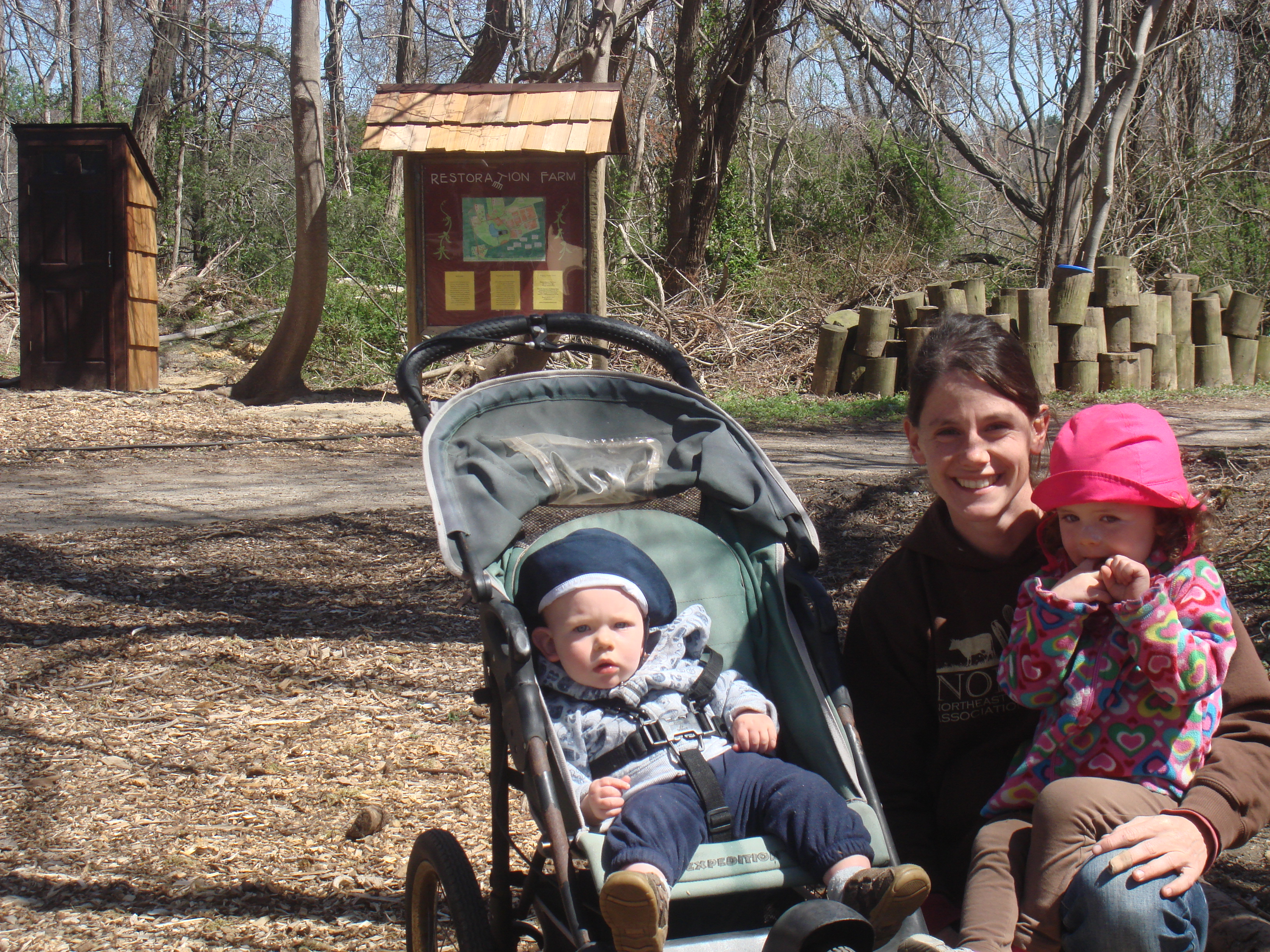
Caroline, Ava and Kobe (my spellings are probably wrong - apologies!!!) at Restoration Farm...behind them are two new features!

To be fair, I have yet to truly investigate the situation — we’ll have to wait until the end of my semester for that. But I want to be armed and ready for action, should the need arise. And really, I just want to be involved with food. It’s not just about my kid. It’s about all of us.

Since I didn’t even take pictures at the event (part of the self-flagellation on my circuitous route to the conference was realizing I forgot my camera) and I can’t seem to pull even a logo off the Small Farm Summit website, I am just going to reference some of the inspiring folks who spoke and provide links to the amazing things they do!
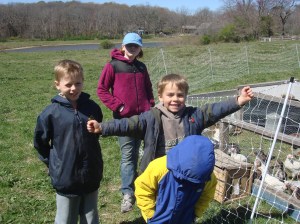
Volunteering at R.F.

Former NBA player and son of sharecroppers, Will Allen and Growing Power are greening Milwaukee with intense urban farming that serves to feed people better, improve soil, reduce the waste stream and teach folks farming skills. Wow.

The Green Bronx Machine   is a high school project by teacher administrator Stephen Ritz, who is a dynamo who took forgotten, abandoned and given-up-on students and, through garden projects, is creating high school graduates with marketable skills earning living wages. See pretty much the same hilarious and moving lecture I did here: TEDx

Chef Ann Cooper The Renegade Lunch Lady has transformed the way many public school districts feed kids: no processed foods, no defrosted foods – just locally sourced, fresh ingredients and simple, kid-friendly good stuff. See how it can be done with the free tools at Lunch Box.
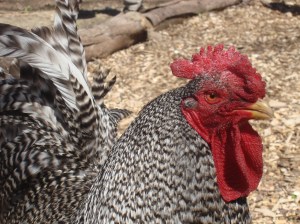
A Restoration Farm resident

For more on greening school food and all things organic (and really really tasty) especially on Long Island,  visit Bhavani Jaroff at  iEat Green LLC

Jan Poppendieck’s book Free For All: Fixing School Food in America (one of many she has written) traces the whys of subsidized school lunches from their inception as a way to use up surplus!!! In her talk she helped make sense of how we got here and where we are going (and it is not necessarily to hell in a handbasket…)

Brooklyn Food Coalition‘s Beatriz Beckford helps schools and families learn to eat better from the grassroots (this is a terrible pun, I know, but sometimes I lack impulse control). They have a conference coming up…click on the link for more information!

Leonore Russell is an educator at Crossroads Farm in Malverne, part of the Nassau County Land Trust. A former Waldorf teacher, she presented a lovely workshop on getting kids into the garden. We’ve been cuddling up with Peter Rabbit books ever since and I have to say, Leandro is very jazzed about doing the watering of the beds by himself.

And Susan Simon, a social worker at the Hicksville School District, gave a terrific little presentation about how she got raised beds into her district. I got so many ideas about incorporating gardening into the curriculum from her!!!

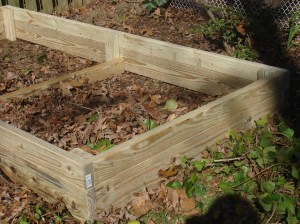
The beds before there was anything but seeds; I owe you pictures of our progess!

I was so exhilarated by the end of my day at the Summit (I had to go home at 2 pm because of other obligations, but the goings-on went on!) that I could barely stand it; I was and am all ready to take on the world…but I must admit to terrible pangs of some unpleasant emotion that accompany my desire to move forward. I can’t quite describe it in a word (mid-life crisis being just too damn pedestrian to want to apply to myself), but it’s that wondering why I didn’t prepare better for the grown-up I was going to be? Why did it take me so long to figure out where I really wanted to be immersed? And the ever-present questions of balancing good sense and responsibility with the desire to launch: can one do both? And…

HOW DO I FIND THE TIME??????????

So, the next day I planted some more vegetables with my dad in our new raised beds — OMG the beets are bursting through! — and resolved to dedicate my summer to gardening a lot and seeing what comes up.

BTW – shout-out to Restoration Farm our CSA, and TWBarritt, a blogging and farming buddy who was ably manning the table and whose blog Culinary Types, is a personal favorite. And to Donna Sinetar who I only saw through a conference hall window, but who presented on chickens after I had to leave!  


Quickie Tomato Spread for Bread Pizzettes or Bruschetta

15 Apr

Yes, you can freeze delicious summer tomatoes and use them for sauce the following April!

I had cored, blanched and frozen (but not peeled) about 1.5 lbs of San Marzano tomatoes (click for more specific how-tos  of what I call “Lazy Preserves”) from Restoration Farm last summer when I just couldn’t figure out what to do with all that lycopene bounty and was — gasp! — almost sick and tired of summer tomatoes.

Last summer's investment in this spring's good eating

They were in the back of my freezer in a freezer bag (suffering a bit of freezer burn, I must admit) and I decided that now was the time to see how they had fared.

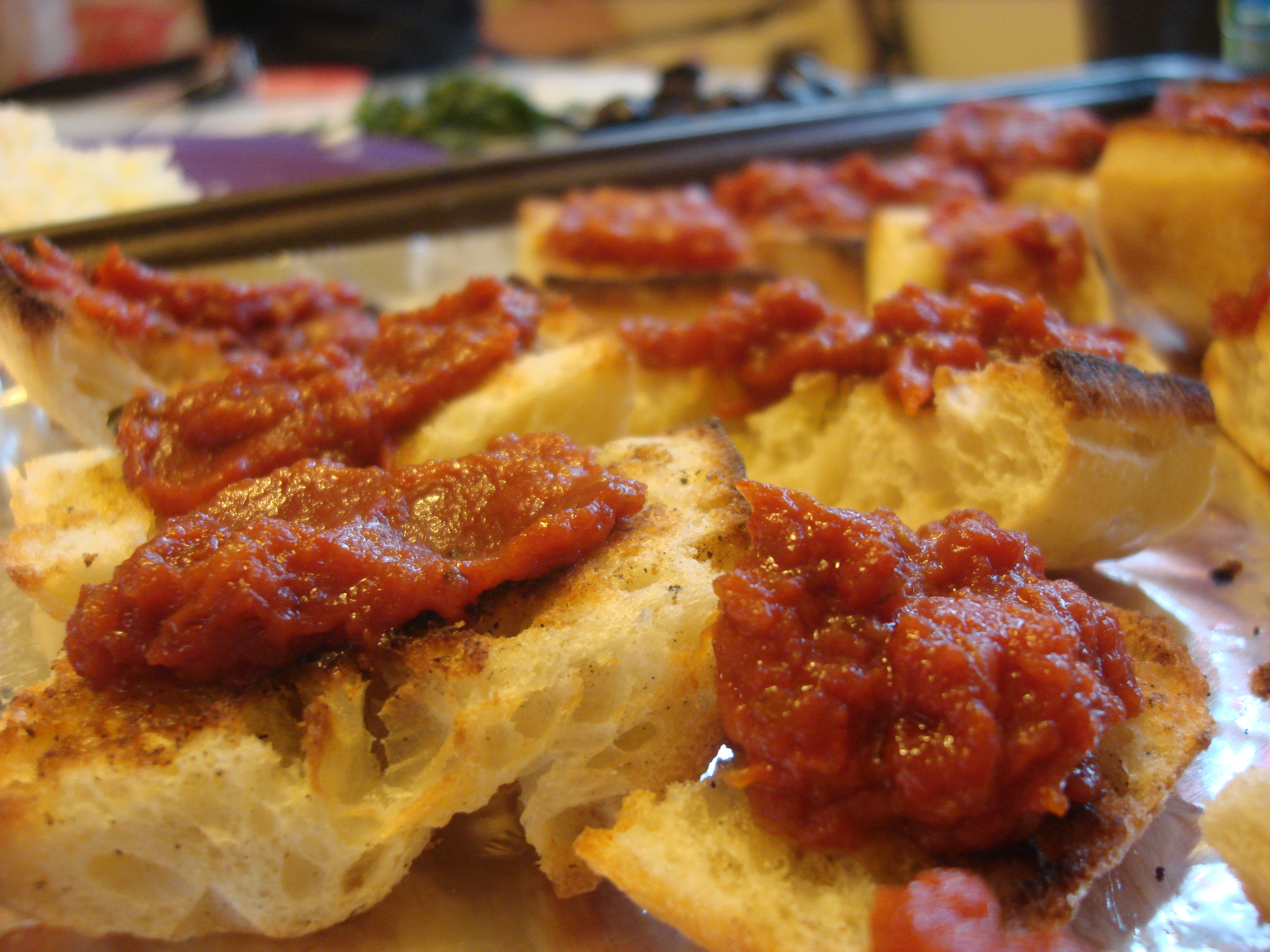
The other day I knocked off some — but not all — the ice crystals that had formed and put them in a soup pot and simmered them down to about a pint that was more paste than liquid, removing the peels as they separated from the flesh. Today I took that pint to a friend’s house and we used it for the base of a bruschetta/pizza toast dish that pleased adults and kids alike. It was dense and sweet with a balance of acidity — in short, everything you want from tomato sauce — and since it was organic and local — there was nothing you don’t want in it (even the freezer burn didn’t matter).

Here is the quickie recipe with tinned tomato substitute:

Tasty Tomato Paste Topping

1 Tbs extra virgin olive oil

4 cloves garlic, peeled and smashed

1 pint homemade tomato paste (or a 28 oz canned of pureed tomatoes)

five large fresh basil leaves

1 Tbs dry red wine (or whatever you have open, really)

Salt to taste

Warm the oil in a saucepan. Add the smashed garlic and cook at medium low turning cloves until they are uniformly golden brown. Remove cloves and discard (or rub the insides on toast for bruschetta), Add tomato paste or puree and basil leaves. Bring to a simmer and add the tablespoon of wine and salt to taste. Simmer until the sauce reaches desired thickness (at least 15 minutes to incorporate flavors). Serve over pasta, or on toasted bread. Top with olives, grated mozzarella or parmigiano reggiano, minced fresh basil, or other pizza-loving ingredients.

Let the (Gardening) Games Begin!!!!!

5 Apr

I have my garden! I have my garden!

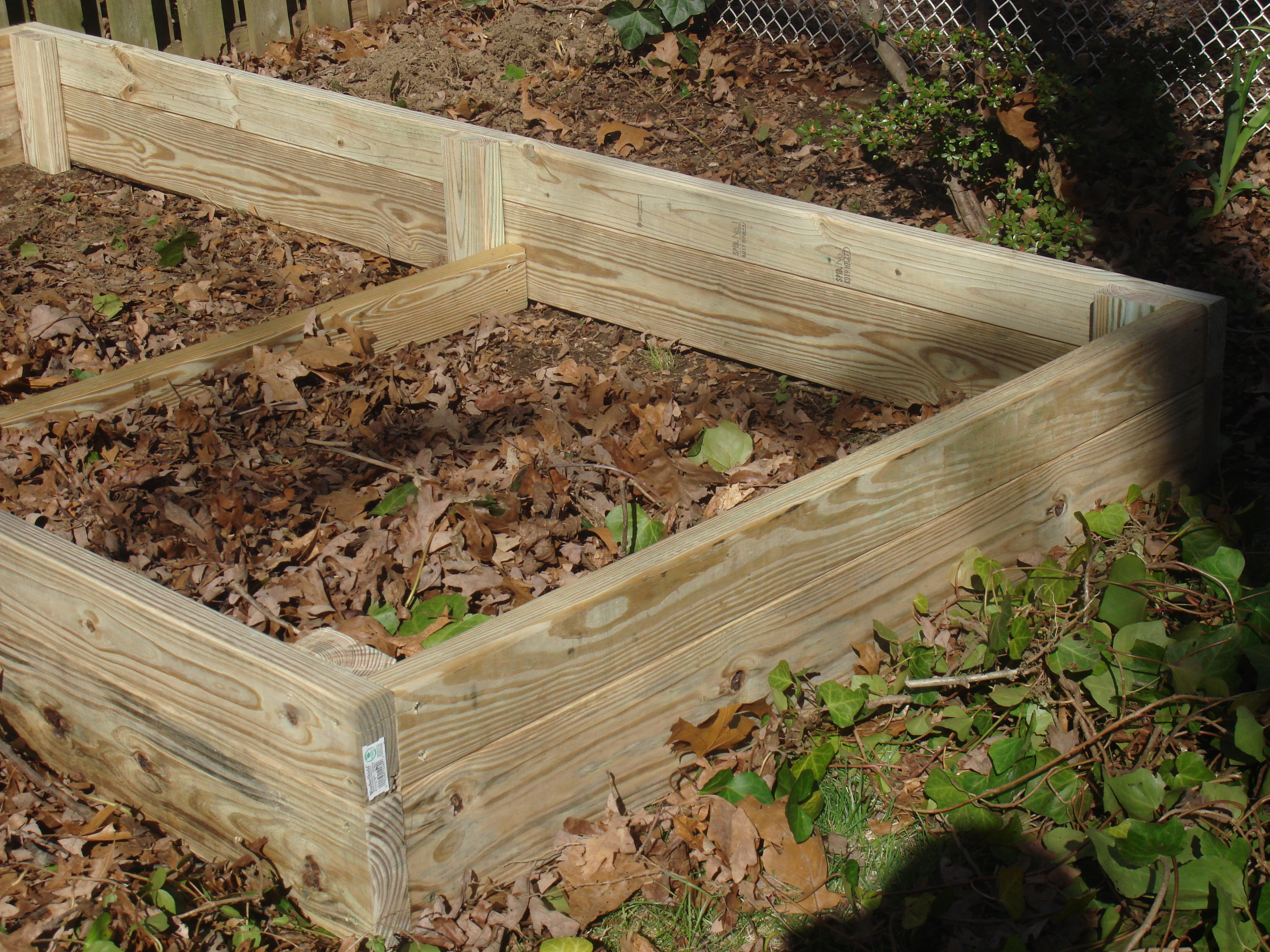
My dad (Pedro) and I have been plotting (haha) to do some raised beds in our yard, now that some of the trees had to come down and there are a few sunny spots. Last year I did some container gardening in those spots as a sort of reconnaissance mission and this week, Pedro and his buddy, Tommy, put together some raised beds from instructions from Organic Gardening magazine (April/May 2012). I can’t find a link to the instructions right now, but visit their Beginner’s Guide to Organic Farming and poke around in there and you’ll find loads of good info to get started.

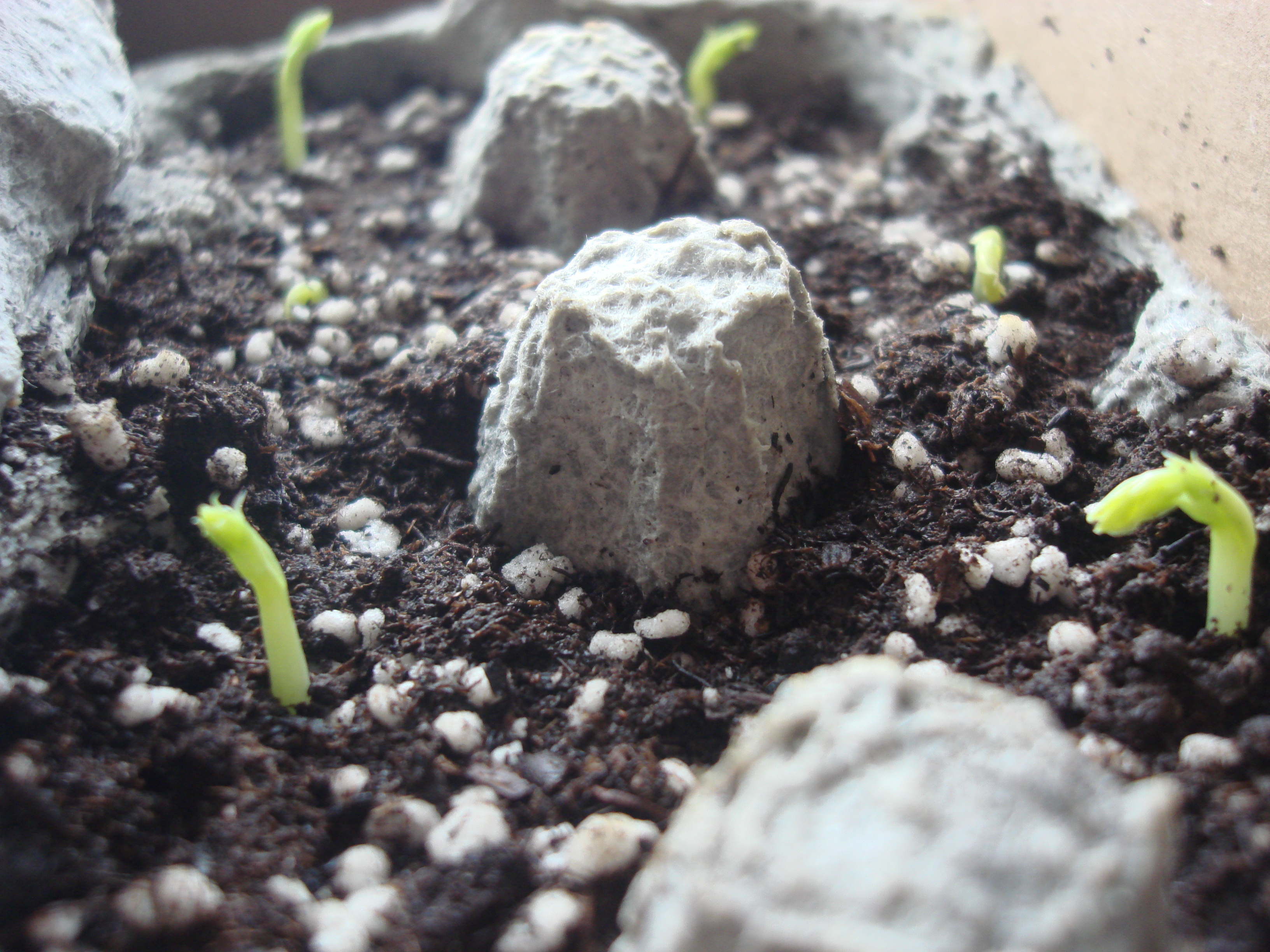
So, we made a garden chart and yesterday in went the pea seedlings (I had started some indoors and some outdoors a couple of weeks ago – you’re not supposed to start peas indoors, but we’ve done it before, with good results, plus it helps Leandro follow their progress more easily). The mesclun lettuce and arugula seeds went in also.

Today we’ll be stopping by a local nursery for more seeds, now that we have a plan: spinach, radish, beets, chard, and eggplant. We’ll be buying organic, as I mistrust the whole Genetically Modified thing and the chemical stuff.

My tomato seedlings (seeds saved from last year’s tomatoes, aren’t I the little homesteader?) are looking well, but will stay indoors for now, as will the ají (sweet cooking pepper from P.R.) from my cousin Josie’s garden in Mayagüez. I’m starting basil from seed too – feeling really productive and busy and probably boring the hell out of you with my laundry list of planting, but so be it. I am excited to finally be embarking on a vegetable gardening adventure!

I am eager to know what you all are planting and planning for the summer months…I don’t really know what I am doing, but Pedro and I have agreed that this will be a year of more learning than producing (nice to have the Restoration Farm back-up, no?). Mind you, we are both demanding of ourselves, so that is perhaps not going to work out and we will agonize over every mistake, insect infestation, browned and spotted leaf or low yield…We’ll have to take good notes!

More helpful links:

What to Plant Now zone charts from Mother Earth News (it only considers the Lower 48 – no Puerto Rico either, sorry!)  How-To-Grow primers from Organic Gardening magazine

Find out your growing zone here.

Happy Planting!

Pasta with Tomatoes, Spinach, Goat Cheese and Black Olives (feeds a crowd!)

22 Mar

The planting season is picking up at Restoration Farm, the C.S.A. that we belong to at the historic Old Bethpage Restoration Village here on Long Island. I say that as if I were right in there, pruning the apple trees and preparing the beds and raising those heritage birds, getting dirty and sweaty in honest, sacred labor on the land.

Uh, well, not exactly.

Farming has always been more theoretical than hands-on in my life. Sure I have come out to volunteer at the farms we have belonged to, but in all honesty, since I’ve had Leandro, it’s been more about picking a couple of pea pods, then taking him to see the pigs or the chickens  or to the bathroom, rush, rush, than it has been about actually doing anything useful in an agricultural sense.

This year will be different, in two ways:

1) We have a little more sun in our yard these days, thanks to some trees that had to come down. Last year we did some experimental container gardening to gauge where we could actually grow vegetables. Now that we’ve established that, we will be putting in some raised beds this year and trying to grow more stuff for ourselves.

2) Leandro is more self-sufficient and mature and I have hopes that our volunteering days at the farm will be less like outings to the zoo and more like real contributions.Call me crazy, but a girl’s gotta dream…..

In the meantime, we attended the season-opening potluck at the farm last Sunday and — while I listened with longing, yearning, and almost dismay as the real farm folks told me with great enthusiasm about everything they’ve been doing in the last few weeks — I tried to keep positive about what is to come for me in the world of growing things! (and we have started peas, tomatoes, peppers and culantro from seed this week).

This was my contribution to the potluck…it seemed to go well for everyone (except my own traitorous offspring who decided he didn’t like the look of it and proceeded to stuff his face with the stuffed shells and the two different baked macaroni and cheese, and the Hardscrabble chicken — anything but my dish, the one I had made thinking he’d love it; thanks for the support, little dude) and I had enough to bring in for my esteemed colleagues. At least one has decided that she doesn’t have to cook this week thanks to this abundant, rich, very easy and super-tasty, creamy dish.

You’ll be able to use this recipe next time you have to feed a bunch of people with stuff you already have on hand!

Pasta with Spinach, Tomatoes, Goat Cheese and Black Olives

1.5 lbs penne or other short pasta

6 Tbs extra virgin olive oil

4 cloves garlic, sliced thin

½ tsp crushed red pepper flakes (more if you want it spicy)

28 oz canned of diced tomatoes (or two Cups fresh)

Coarse salt and freshly ground black pepper

10 oz – 16 oz frozen spinach

20-30 pitted black olives, sliced

½ Cup grated Parmigiano Reggiano or Grana Padano or pecorino

6 oz fresh goat cheese (chévre)

Cook the pasta according to package directions. Reserve ½ cup of pasta water, drain and keep warm.

Meanwhile, heat olive oil in a large skillet. Add the garlic and red pepper and cook at medium low until softened and golden, about 4 minutes. Add the tomatoes, and salt and pepper to taste (if using fresh tomatoes, cook until they begin to soften) and then add spinach, cooking at medium low until the spinach is heated through and incorporated, about 5 minutes. Add olives.

Add the pasta and the grated cheese (and tablespoons of the reserved pasta water if the sauce is too thick) and stir until the pasta is fully coated. Add the goat cheese, mix well (but gently) and serve, with additional grated cheese if desired.

Fruit Fly Problem? I’m Your Venus (Flytrap)

6 Nov

This is a quick celebratory post– I don’t have those annoying little fruit flies anymore!

You know the ones I’m talking about, that gather around ripening (or overripe) fruits and vegetables and are  hard to eliminate.They are at their height in late summer and fall when the harvest is good.

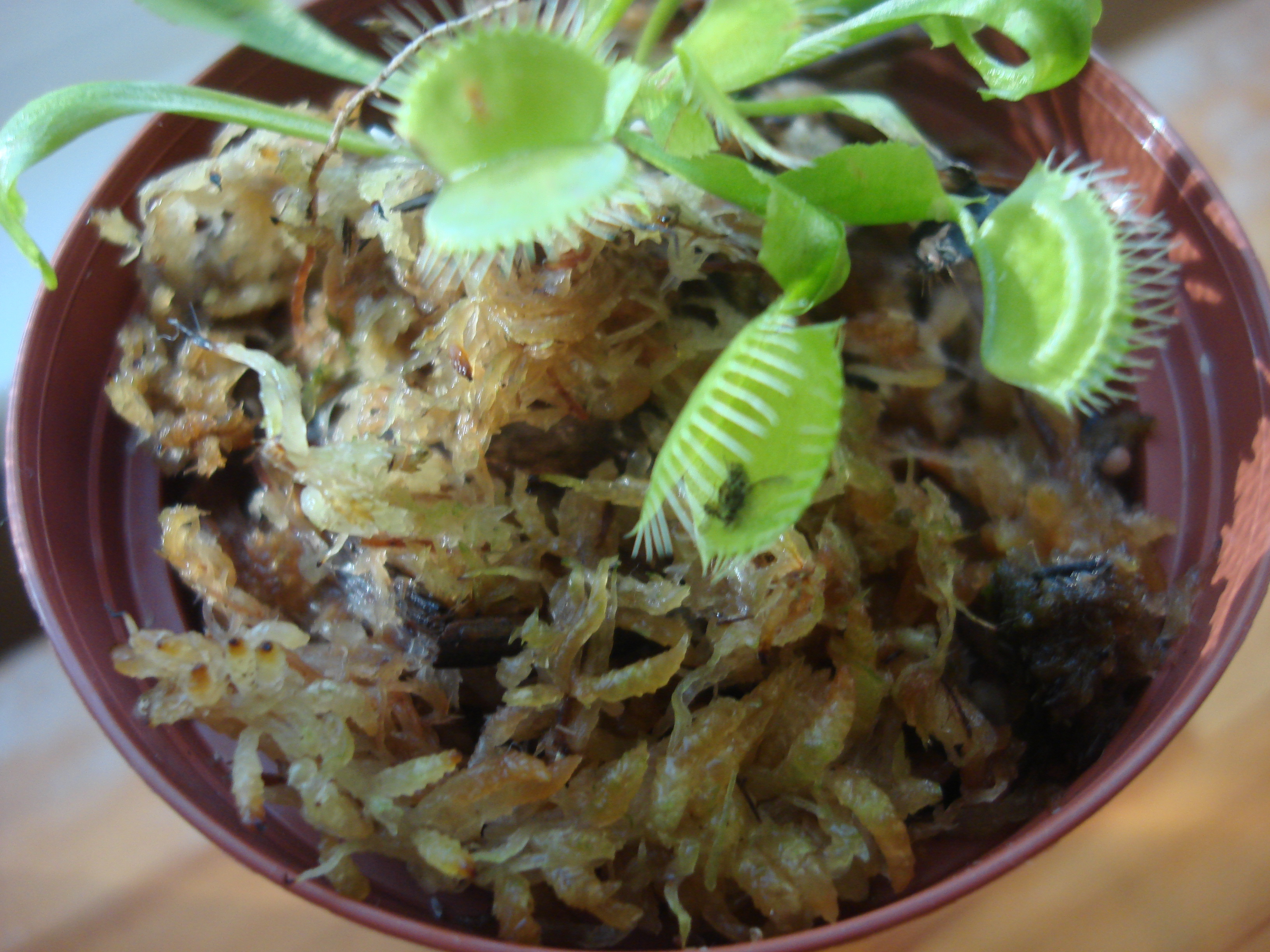
Well thank you Abu, Padushi and Leandro! The grands took the little guy to a local nursery for the Halloween display and came home with a “Little Pot of Horrors” – a Venus Flytrap. It wasn’t our first, but the last one we had was outside and expired due to some sort of neglect or storm and didn’t make a dent in the mosquito problem. This one, however, lit a bulb in my head. I set it by the stove where the buggers were gathering and voila! No chemicals, no additional clean-up and NO FRUIT FLIES.

Notice fruit fly in central flower!

Apparently another low tech way to do it is to stick a paper funnel into a jar baited with cider vinegar, but the Venus Flytrap worked for me and is cute, besides. Of course, tracking and cleaning out the breeding spot is a good idea and prevention (keep very ripe stuff clean and inaccessible) is helpful.

See My Article in Edible East End magazine

26 Oct

As regular readers know, I am a member of Restoration Farm CSA. This month you can read my article about the farm, On Good Land: Restoration Farm, in Edible East End magazine, either by clicking here, or by picking up a copy if you live in Eastern Long Island.

It’s a gorgeous magazine – Edible Communities family of magazines just won a James Beard Award for Publication of The Year 2011  — so I am quite pleased to be a part of what they do. If you do go and have a look, please comment on the article, as I believe that will encourage the publisher to continue recognizing and supporting good food efforts in my overpopulated part of NY!