Tag Archives: cooking

Versatile Blogger Award (II)!!!!

7 Mar

Thanks so much to Farrah at FairyHealthyLife for nominating me for this award! She has an inspiring story of cooking her way to weight loss — to the tune of 160 pounds!!!!!! And her recipes are great, so give her a visit.

The Versatile Blogger Award, is a way to introduce bloggers to each other and to promote quality blogs that the readers might not have discovered otherwise.

Here’s how it works:

If you are nominated, you’ve been awarded the Versatile Blogger award.

– Thank the person who gave you this award. That’s common courtesy.

– Include a link to their blog. That’s also common courtesy.

– Next, select 15 blogs/bloggers that you’ve recently discovered or follow them regularly.

– Nominate those 15 bloggers for the Versatile Blogger Award. (Don’t forget to tell the bloggers you nominated.)

– Finally, tell the person who nominated you 7 things about yourself.

Now here are my nominees! (this is not the first time I receive this award, but these nominees are all new)

Visit them and tell them Natalia at Hot, Cheap & Easy sent you!

While Chasing Kids A Russian mom cooks

 Texana’s Kitchen Yee-hah!…Y’all can pretend to have a Southern-cooking Grandma, too!

Frugal Feeding Inexpensive can actually feel indulgent

2MiniCooks A dietician and a café manager make beautiful blog together

Bakin’and Cabbage Irish in the house!

Live2EatEat2Live Hawai’i How’WOW

Assia’s Kaleidescope Reinventing Reality Bulgarian-style

Sad Man’s Tongue – Rockabilly Bar & Bistro – Prague Ink, pin-up girls, food

From Scratch Club – DIY food collective from Upstate NY

Foodimentary — Food history, all day, every day

All About Lemon – Poetry, Food, Photos, Haiku

Creative Noshing – Adventurous!!!

Cookiemomma’s Blog – Making parenting tasty and fun

Going Dutch – a Filipina transplant makes beautiful family, food and photos

Let’s Spice Things Up in Vegas – Face it, you want to know what this is!

My Seven Things:

1. I will soon be publishing a culinary translation dictionary (digital and print!)

2. Rain on hot pavement is one of my favorite smells.

3. Rain on a zinc roof is one of my favorite sounds.

4. I am not a Sarah Palin fan, but I envy that she can field dress a moose.

5. I once interviewed Raisa Gorbachev, with Mikhail sitting patiently by.

6. The Galapagos are on my bucket list.

7. I don’t actually have a bucket list, but if I did, the Galapagos would be on it.

Back to recipes in the next couple of days and….more prizes…thanks to all my blogger buddies for making me a part of your culinary lives!

Mayo-Ketchup Gets a Much-Needed Makeover (with Chipotle!)

4 Mar

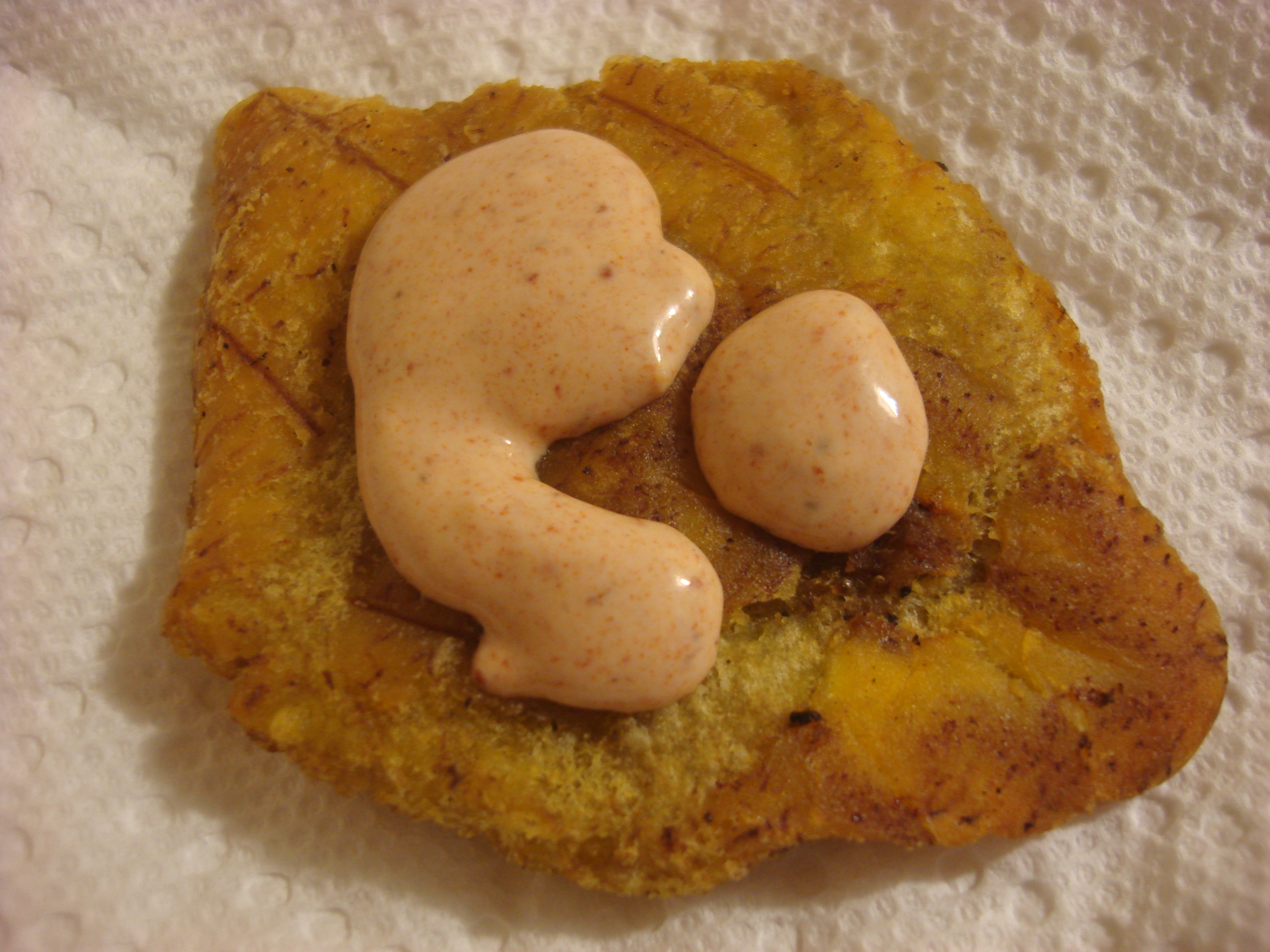
“We totally just licked the bowl!”

I had promised my friend Ashley and my son a “tostones-for-dinner” Friday night and, since I had the plaintains I was ready to go. Ashley had decided to learn to make them, so I set her up with the assembly line of garlic and salt water, hot oil, plates covered in paper towel and tostonera (See Tostones! for the how-to of this Caribbean riff on French fries) and got ready to relax with a bit of the fizzy stuff.

Then I mentioned that Puerto Ricans usually dip tostones in mayo-ketchup – mayonnaise and ketchup stirred together. Without hesitation Ashley said “That sounds like it would be great with chipotle and lime,” and since I had it all in (plus garlic) a new creamy, spicy, lick-the-bowl delicious dip was born. And it was so quick that I still got to drink that glass of fizzy in relative peace….

You. Are. Gonna. Love. This.

Mayo-Chipo-Ketchup

(play around with the proportions to suit your taste)

1 Tbs prepared mayonnaise

1 Tbs plain yogurt (nonfat or lowfat are fine)

1 Tbs ketchup

1 tsp chipotle in adobo (minced)

1 tsp lime juice

1 clove garlic, minced fine

Pinch salt, if desired

Mix all ingredients in a bowl and serve with tostones or other fried, crispy tidbits.

Shrimp and Avocado Salad with Chipotle-Spiked Vinaigrette

29 Feb

I have been very, very busy these days with several projects (a culinary dictionary is one!), so deserved a grown-up meal made by my own loving hands. But it also had to be something not very involved that I could sling together fast, because  just don’t have enough time for everything I’d like to do!

Whether you are doing the Lenten fish on Friday thing or just happen to have some extra cooked shrimp from a buffet table or recipe, or just defrosted some shrimp that you didn’t get a chance to use and want to do something fun with (and that you have absolutely no intentions of sharing with your spoiled little son for whom you do too much anyway and whose leftovers you are sick of picking at instead of making something proper for yourself)….this is a very simple recipe that looks and tastes like a million bucks.

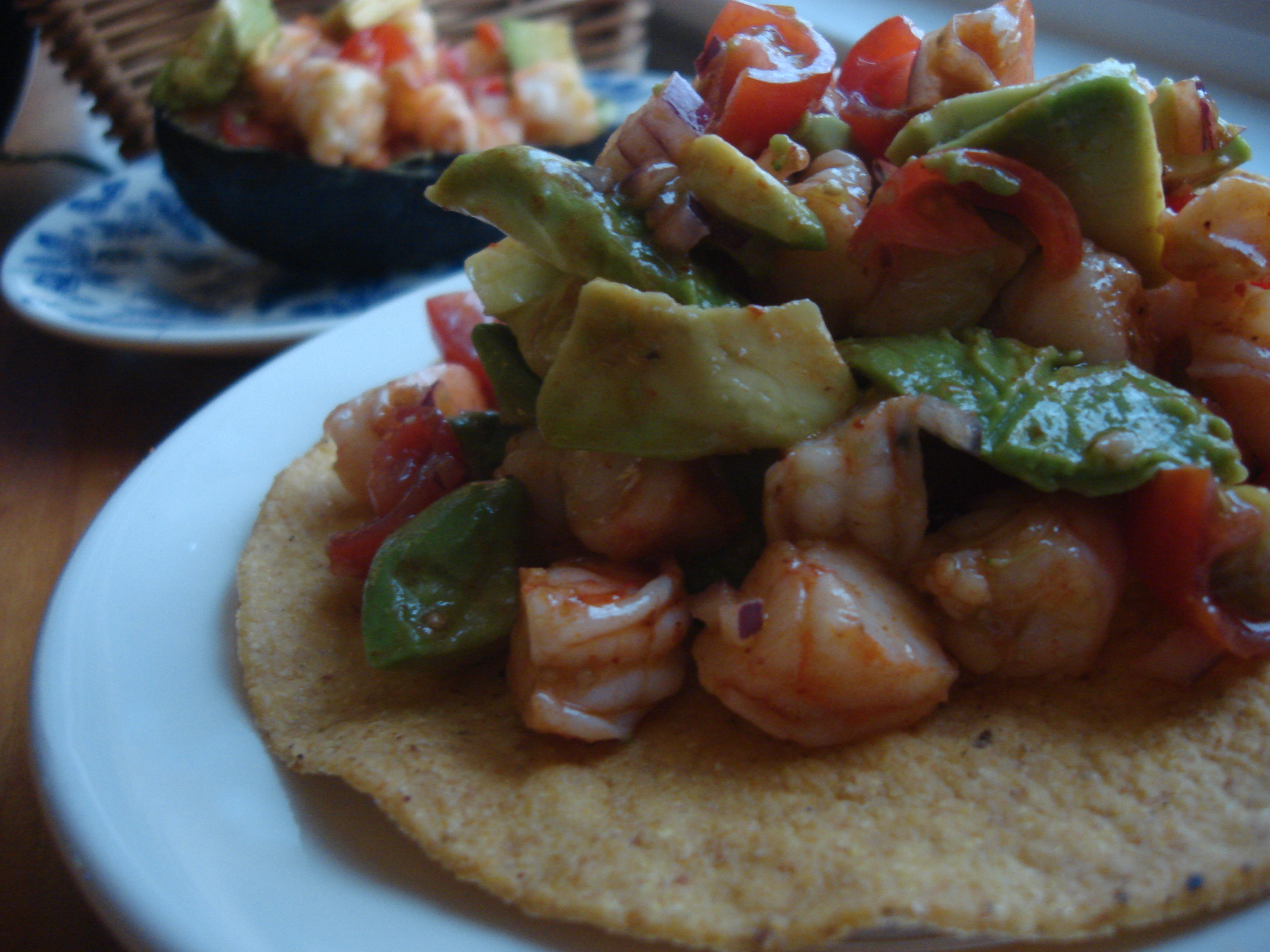
In an avocado shell or on a tostada...this salad looks as good as it tastes!

Shrimp and Avocado Salad Spiked with Chipotle Vinaigrette

(can be double or tripled or more to accommodate a crowd!)

Dressing:

3 Tbs olive oil

1 Tbs fresh lime juice

1 tsp chipotle in adobo – you can use the sauce and skip the peppers themselves, or include peppers, seeded and minced

Pinch salt

Salad

1 Cup cooked shrimp, cut into small chunks

1Tbs red onion, minced

10 grape tomatoes, quartered

1 ripe avocado, sliced in half. Scoop out flesh (discard stone) carefully and cut into small chunks. Reserve shells.

Salt to taste

Extra squeeze of lime to finish

Whisk dressing ingredients in a small bowl until incorporated.

Place shrimp, onion, and tomatoes in a medium bowl. Cover with dressing and stir gently. Then add avocado chunks and stir once again, very gently. Scoop salad into reserved avocado shells (or onto tostadas. Finish with lime and salt and serve.

Puerto Rican Rice and Beans (Arroz con habichuelas)

26 Feb

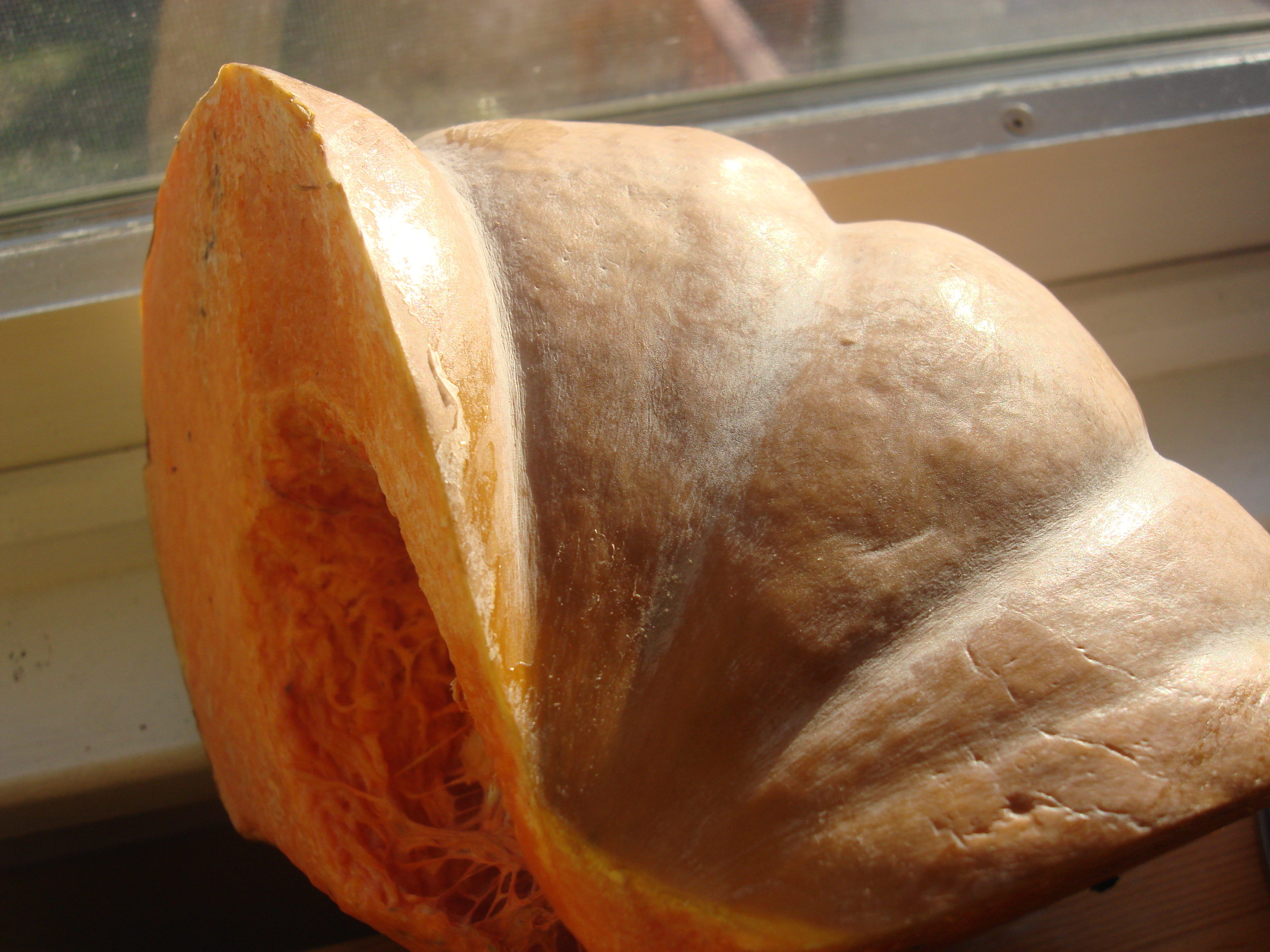
I didn’t mean to make arroz con habichuelas last week, but when I dashed into a Latin supermarket for something else, I was stopped dead by the presence of something that looked pretty close to Puerto Rican pumpkin (or calabaza, as we call it). The Fates intervened with my dinner plans.

Native to the Americas, pumpkin (Cucurbita pepo) has been an integral part of diets in this part of the world for thousands of years. The flesh and the seeds are used for many purposes. (in Mexico the crushed seeds are used to coat meats as you might use breadcrumbs). It is also one-third of the famed Three Sisters agricultural practice. Corn stalks make a trellis for beans, while pumpkin enjoys the shade underneath. Each plant supplies a nutrient to the soil that the other one needs, so the soil stays naturally healthy and fertile, while the produce provides invaluable nutrition to people. It just makes sense.

I have published this recipe before, but this time I include more substitutions if you don’t have a nearby source for Latin style ingredients. Check your “International foods” aisle for prepared sofrito – Goya has a wide reach and its sofrito is used by Caribbean Latin cooks all over, so you are in good company with this shortcut.

The new substitution of cooked ham steak for the salt pork reflects what I’ve been doing since I can’t find the kind of cooking pork I like. It is neat and tidy, fairly cheap, adds good flavor, and the extra can be frozen for another day (the cooked ham steaks are super-easy to chop fine or mince when frozen).

If you don’t find calabaza (and in fact the one that made me whip up this pot of beans was a Jamaican style and not quite what I like, but perfectly serviceable), acorn squash is my favorite substitute.

Note: With the leftovers I make quesadillas or nachos…yum. Also goes great with rotisserie chicken!

Don’t be put off by the number of ingredients; once you do the prep, you are almost done.

Ingredients

  1. 1lb calabaza caribeña (Caribbean pumpkin) OR 1 lb. acorn squash, washed, cut in half, seeds removed and cut into big chunks (you can cut the rind off before boiling or peel it off after). It should be boiled for 15 minutes, or until tender. Set aside and reserve ½ cup cooking liquid.
  2. ½ lb salt pork, diced (don’t discard the hard rind, just score the fat as best you can). You can also use ham steak – readily available in the supermarket (4 oz cooked ham is a worthy substitute)

3. SOFRITO

(sofrito is the roux, the mirepoix, the basic saute seasoning of Puerto Rican cooking and is very difficult to reconstruct in the mainland U.S., which is why Goya makes a fortune selling it in jars. So if you can get most of the ingredients for sofrito at the local bodega/supermarket, then do this! –actually, quadruple or quintuple it and freeze it in ice cube trays for use later. Otherwise, buy commercial sofrito and use a couple of heaping tablespoons)

½ onion, minced (about ¾ Cup)

3 cloves garlic, minced

1 cubanelle (long green Italian cooking) pepper, seeded and diced

Five or six ajíes (non-spicy green peppers that look exactly like scotch bonnets/habaneros, but are not at all spicy! Taste them! They are hard to find but Latin supermarkets often have them), seeded and diced. Use another cubanelle – the redder the better — if you can’t get these.)

Five or six hojas de recao – culantro leaves- chopped. (Not to be confused with cilantro, these look like dandelion leaves without the curvy sides. They are hard to get, usually come from Costa Rica and their potency disappears quickly after cutting. I actually grow my own in the summer, which takes forever and yields very little in my part of the world. If you find them, use them as soon as you get them home! If you can’t find them, buy the sofrito WITH culantro)

3 Tbs tomato paste or Latin style tomato sauce/salsa de tomate (optional)

1 Tbs dried oregano (2 Tbs fresh)

2 Tbs chopped fresh cilantro (optional)

  1. two 15-oz cans pink beans (habichuelas rosadas), rinsed and drained

DIRECTIONS

While you are boiling the calabaza, heat the pork in a heavy pot. Cook it through and remove the scored rind. Leave the diced meat. Add a bit of olive oil, if necessary, then sauté the sofrito ingredients until tender, adding optional tomato at the end. Add beans. Add cooked calabaza and the reserved liquid. Cook for 15 minutes and serve on white or brown rice.

The Chicken Dance (Chicken Cutlets Meunière)

22 Feb

You know we are frequent visitors to my friend, Pam’s, where the kids play while we fuss in the kitchen and try to reassure one another that whatever inadequacies we think we have as parents are not going to cause permanent damage to said children’s psyches or emotionally cripple them or lead to Post-Traumatic Stress Disorder or cause some such long-term catastrophic effect that will require years of therapy and narcotics to overcome.

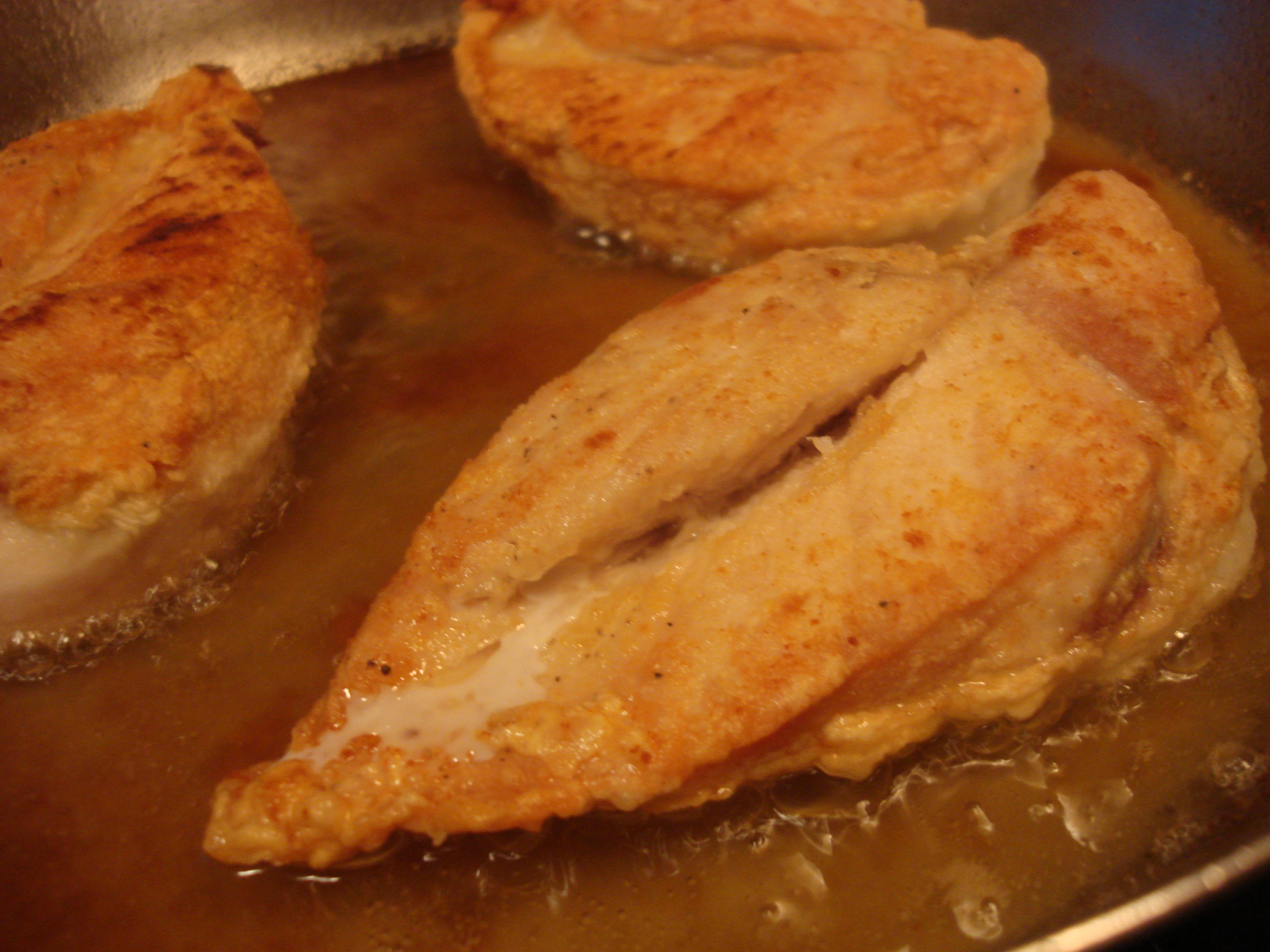
Foreground: chicken breast, background: browned butter

It’s not all about anxiety. We also talk about our new projects and ventures (I’ll be telling you about some of mine in the next couple of weeks!) and brainstorm ideas for one another. Now that the children are getting older, there is more space and time to dream about a different future and it is fantastic to have people cheering from the sidelines. It’s good fun and of course it all happens in the kitchen.

And then we all sit down to dinner.

The kids have recently developed a new way to show appreciation when they like the food. They get up and dance! This, of course, makes me feel like a rock star (Everybody get your hands up!). So far so good, but last week we had two additional children who were staying over at the table with us. Is there any tougher audience than a collection of other people’s kids?

I tried this adaptation of a chicken recipe from The Minimalist (The man behind The Minimalist is one of my food and writing heroes – Mark Bittman). The only thing minimal about this chicken was the effort and the leftovers; the flavors were big and the chicken juicy and sure enough…all five kids got up and danced! Admittedly, this can become annoying when they won’t sit back down or someone looks like they are dangerously close to mooning the table or they start squealing too. But it is flattering and festive and fun and thus, today’s title: The Chicken Dance…corny, but hey, what’s a little corniness amongst friends?

We had rice, asparagus spears (oiled up and roasted in the oven for 15 minutes at 350°), and salad on the side. Triumph on the dance floor!

Chicken Cutlets Meunière

6 boneless, skinless chicken breasts (about three lbs), pounded down to cutlets if you want them to cook more quickly

Salt and black pepper

About ½ cup flour or cornmeal for dredging*

Vegetable oil for frying (Bittman also suggests clarified butter)

2 Tbs butter for browning (optional)

1 Tbs fresh lemon juice

2 Tbs minced parsley

Heat a 12-inch skillet (nonstick if you’ve got) over medium high for two minutes. Meanwhile, sprinkle the chicken breasts with salt and pepper and set up the flour or cornmeal on a plate for the dredging.

Pour the oil into the skillet so it is about 1/8” deep and turn the heat to high. When the oil is hot, coat the chicken thoroughly in the flour or cornmeal you have set up on the plate. Add each to the pan as you dredge. You will probably have to do two rounds.

Cook until the chicken is nicely browned (3-4 minutes on each side if the breasts are pounded thin; 6-7 minutes on each side if they are thick). Lower heat if you are getting scorching!

Meanwhile, melt the optional butter over medium heat until nut brown.

When the cutlets are done, drain on papers towels then transfer to a warm platter, drizzle with lemon, and sprinkle with most of the parsley. At the very last minute, drizzle with browned butter and the last of the parsley.

*For variety, season the flour or cornmeal with your favorite flavors – curry, Italian herbs, herbes de Provence, cayenne pepper – it’s up to you.

Alubias con Chorizo (Cannellini with Hot Spanish Sausage)

19 Feb

When I first moved to Puerto Rico as a grown-up and got a job in San Juan, I lived several weeks with my godparents (from Confirmation, if you’re Catholic) in Ocean Park, in their art-filled, book-lined, sun-drenched house on the beach. When I found an apartment, I didn’t go far; for the next six years — más o menos — I lived around the corner, five houses away, and I spent almost as many dinnertimes there as in my own little house.

Carmen and I assembled lots of meals together, inventing pasta dishes, reviving old family recipes, experimenting with local ingredients from the farmer’s market, trying out exotic ingredients from whatever new specialty shop opened nearby and talking, talking, talking, to a soundtrack of the classical music station (Schumann, Schubert, Bach, come to mind) or old boleros from a more refined past (Trío Los Panchos, Rafael Hernández).

Those are some of my favorite memories from that time. So it’s always a pleasure to visit Carmen and Efrén when we are back in Puerto Rico — now I bring my son! — and, of course, get back into the kitchen. Over the holidays, Leandro, my parents and I stayed a few delicious days with them in Ocean Park (my parents and they have been friends for about 50 years now!), including visits from Carmen’s best friend, the noted playwright and director, Myrna Casas, and Baby Llenza, another notable chef!

Carmen made this as part of one lovely dinner and I couldn’t wait to try it myself. She recently sent me the recipe via email. It really is better with giant Spanish-style alubias in a jar, but cannellini from a can are a very tasty substitute if that’s what you have on hand. Just cook gently so they don’t fall apart!

Carmen’s Alubias con Chorizo

2-3 Tbs olive oil

1 medium onion, chopped fine

3 (or more!) cloves garlic, minced

15 oz can crushed tomatoes, drained (reserve liquid) or 1 ripe tomato, chopped or 2 Tbs tomato paste (you can add a handful of chopped grape tomatoes, if you’ve got, to freshen the flavor)

4 oz spicy Spanish chorizo (the hard, continental kind, similar to Italian hot dry sausage), peeled and chopped

19 oz jar of alubias from Viter – do NOT drain (or, 28 oz can of cannellini beans, drained and rinsed)

Heat the oil in a pot until fragrant. Add onions and garlic, reduce to medium and soften. Add tomato and cook down a few minutes. Add chorizo and sauté briefly, just until it is releasing its oil. Add beans and cook until flavors incorporate (canned cannellini will soften very quickly, so do not overcook!). Use reserved tomato water, or just water, for a more liquid pot of beans.

According to Carmen, the Spanish eat this with sautéed Swiss Chard. In Puerto Rico, we accompany it with rice.

Spaghetti a la Carbonara (or bacon and eggs Italian-style!)

15 Feb

Nowhere does it say that Hot, Cheap & Easy means low-fat, low-carb or low-cholesterol. As it happens, a lot of what I prepare and eat is on the lighter, greener, and grainier side, but I am never averse to bacon and eggs; in fact, sometimes I feel that they are the only possible answer.

Bacon and eggs for dinner? Yeah.

Bacon and eggs and pasta for dinner? Double yeah.

Bacon and eggs and pasta and cheese for dinner? Bring It On.

Thus spaghetti alla carbonara, a dish from Rome that  shows once again, no matter the state of their government, economy or traffic, no one can as consistently make as many people happy with food as effortlessly as the Italians.

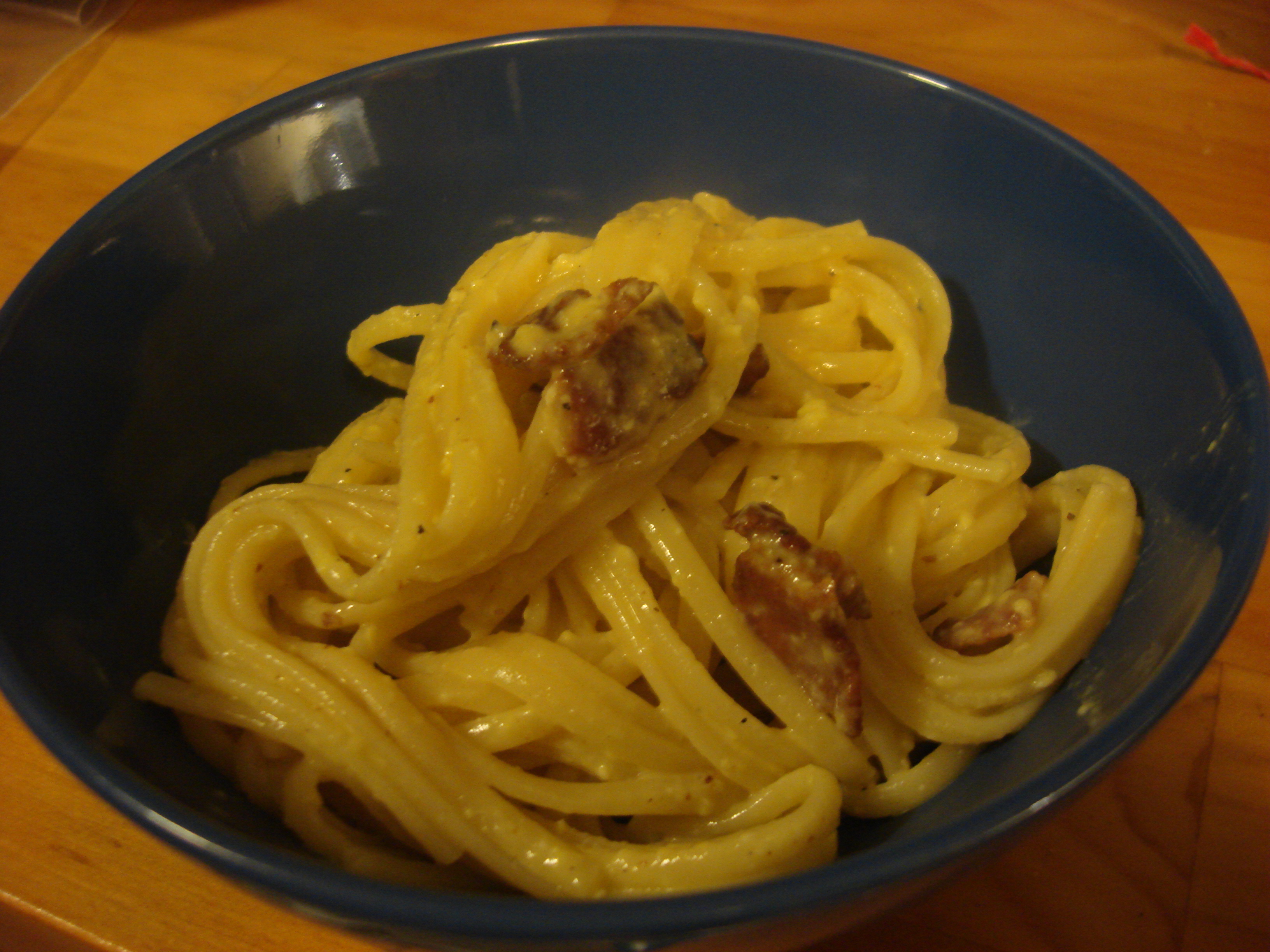
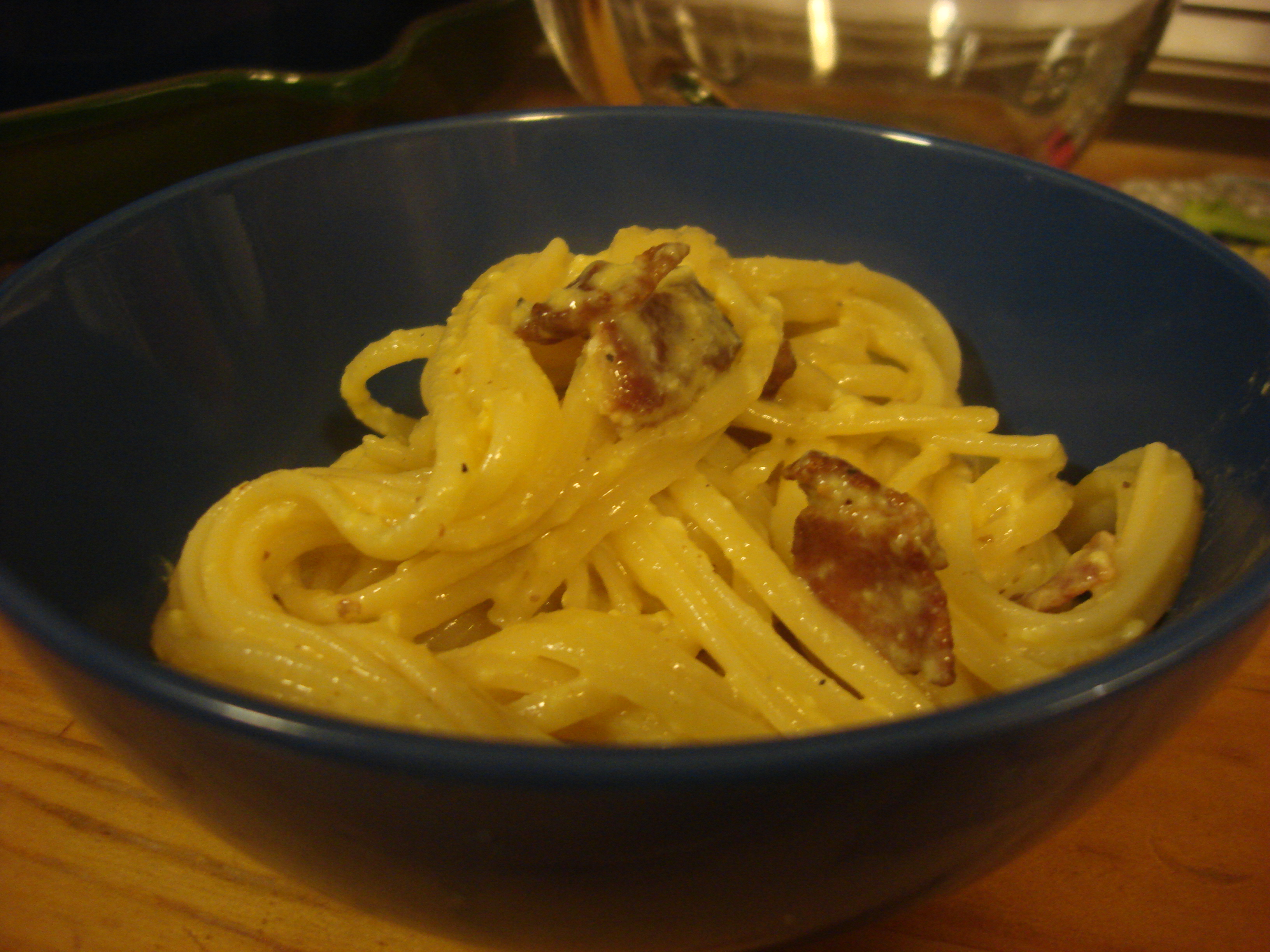
Leandro and I threw this dish together in less than 20 minutes. He is getting very handy with the egg-cracking and beating and whether it was pride in his own handiwork, or just the ineffable joy of bacon grease and cheese, he made short work of two heaping bowls of it. We will be doing this on our next camping trip; I may try to make it a one-pot affair and will keep you posted!

Spaghetti alla Carbonara

1-2 Tbs olive oil

1-2 Tbs butter

4 oz bacon (about four rashers), or pancetta if you’ve got, cut into ¼ inch squares

1 lb spaghetti or other long pasta

4-5 fresh eggs*, well beaten

½ Cup grated Parmigiano Reggiano or Grana Padano or, more typically Roman: Pecorino

Salt and freshly ground pepper to taste

Heat the oil and butter in a skillet; add the bacon and sauté until golden and crisping up. Remove from fat and drain on paper towels.

Cook the pasta according to package directions. Make sure you have the next step completed before that pasta is cooked so the pasta is piping hot when you turn it into the bowl.

While the pasta is cooking, beat the eggs, ¼ Cup of the grated cheese, and pepper in a large serving bowl. As soon as you drain the pasta, turn it into the bowl and toss well. (If you are worried that the egg hasn’t cooked enough, return it to the pasta pot and stir it around over the still warm burner or a low flame for a minute or two). Add the remaining cheese and serve.

*To make sure eggs are fresh, place them in a bowl of water to cover. A very fresh egg will stay completely submerged. A relatively fresh egg will float up on one end, while the other end remains on the bottom. An egg that floats is an egg that is rotten.

Grilled or Roasted Tomato Pasta Dressing (so light! so bright!)

12 Feb

The temperatures here in New York have started to drop some, but so far 2012 is The Winter That Hasn’t Been (I like the present perfect tense here rather than the past tense “wasn’t”, because there is still time for some apocalyptic winter weather to strike).

That means that many of us have been firing up the grill as if it were summer. If you are one of those people, here is a fresh, uplifting recipe that will brighten up the day and feel easy on the digestion.

I made it the other day from tomatoes grilled the night before at our friends’ house during an impromptu and convivial burger night (more on the amazing sauteed onion and mushroom topping soon!).

A glimpse of the salad the same night - with grilled asparagus and sun-dried tomatoes! Heaven.

The tomatoes (Campari’s which I bought out of season because I couldn’t resist the clearance price) had none of the rich acidity and fullness of a summer tomato, but grilling and roasting add some depth of flavor and the garlic and vinegar give a very pleasant tang. So, should you succumb to a good price or simply the need for a tomato that didn’t come out of a tin during the winter months, this recipe will enhance a lackluster product. To my surprise, Leandro really dug this pasta and ate the extra serving I had intended for my own lunch the following day.  I should have been totally pleased and delighted and flattered, but this imperfect Mommy was kind of annoyed. And frightened. If he eats like this at four, how much is he going to eat as a teenager?

Grilled or Roasted Tomato Pasta Dressing

(Special tools: about six BBQ skewers. If using wood, soak the skewers in water for about 20 minutes)

1 lb medium length pasta such as penne or rotini

1 pint small tomatoes: grape, cherry or Campari, preferred

2-3 Tbs extra virgin olive oil

1-2 tsp red wine vinegar

3 cloves garlic, minced

(optional: 1 tsp chopped fresh basil or parsley)

Salt, to taste

Heat grill and skewer tomatoes, leaving ample space between tomatoes. Grill tomatoes for about five minutes, or until beginning to wrinkle and just beginning to brown (or preheat oven to 350° and scatter tomatoes on a baking sheet or foil and cooking for 15 minutes or until beginning to wrinkle and brown)*. Smaller tomatoes will cook faster. Do not char. Chop tomatoes roughly. Do not discard liquid or seeds.

In the meantime, prepare pasta according to package directions. Keep the pasta warm after draining.

While the pasta is boiling and the tomatoes are grilling, whisk olive oil and vinegar together until blended in a large bowl. Add garlic, tomatoes with juices, and still-warm pasta. Add optional herbs, salt to taste and serve with your favorite grated cheese.

*You can grill or roast the tomatoes while firing up the grill or oven for something else, place cooked tomatoes in a tightly sealed container in the fridge, and make the recipe the following day.

Mojo Isleño from Aruba: an island topping for pan-fried or grilled fish

9 Feb

If you can’t spend winter in the Caribbean, you can take your tastebuds on a tropical trip in just minutes and give regular old baked, fried or grilled fish a bit of shine.

I used my grill pan for these, but a skillet is actually easier (to cook and clean!)

This is a simple way to prepare fish, made Caribbean-funky with a mojo (savory dressing, pronounced mo-ho). While mojos can be elaborate and include annatto oil, hot sauce, tomatoes, olives and capers, this is my dad’s everyday lunch version, the way he learned it in Aruba, where he is from. At least that’s where I think he learned it, but I’ve been wrong about these things before.

If you have very ripe plantains, you can fry them up for a sweet accompaniment (but I”ll have to show you how on another day).

Pedro’s Mojo Arubiano

2-3 tablespoons olive oil

1/2 yellow onion, sliced

1/2 green pepper (cubanelle/Italian cooking pepper preferred), sliced

2 cloves garlic, minced

(sprinkle of red hot pepper flakes, optional)

1 -2 tsp white vinegar

In a small saucepan, place all ingredients except vinegar, and heat at medium until everything is fairly wilted. Add vinegar to taste and turn burner off, leaving the sauce to warm and flavors to incorporate while you are preparing the fish.

Simple Stovetop Fish (makes four servings)

1 Tbs vegetable oil

1 egg beaten

1/2 cup flour/breadcrumbs/cornmeal (use what you’ve got, or your preferred mix)

1/4 tsp salt (or to taste)

pepper to taste

4 4oz filets of tilapia (preferably U.S. raised) or other firm fish (oily fish like kingfish go well also)

In a skillet, heat oil at medium high until loose and liquid.

In the meantime, put beaten egg in a bowl that will fit a filet or on a plate. On another plate, mix flour, salt and pepper. Dip fish filets in egg, then in flour/breadcrumb mixture until thoroughly coated. Cook fish, lowering heat to medium, about 4 minutes on each side, or until cooked through (fish should be opaque all through).

Serve filets on individual plates, then top with mojo. Goes well with rice and fried ripe plantains or Latin-style beans.

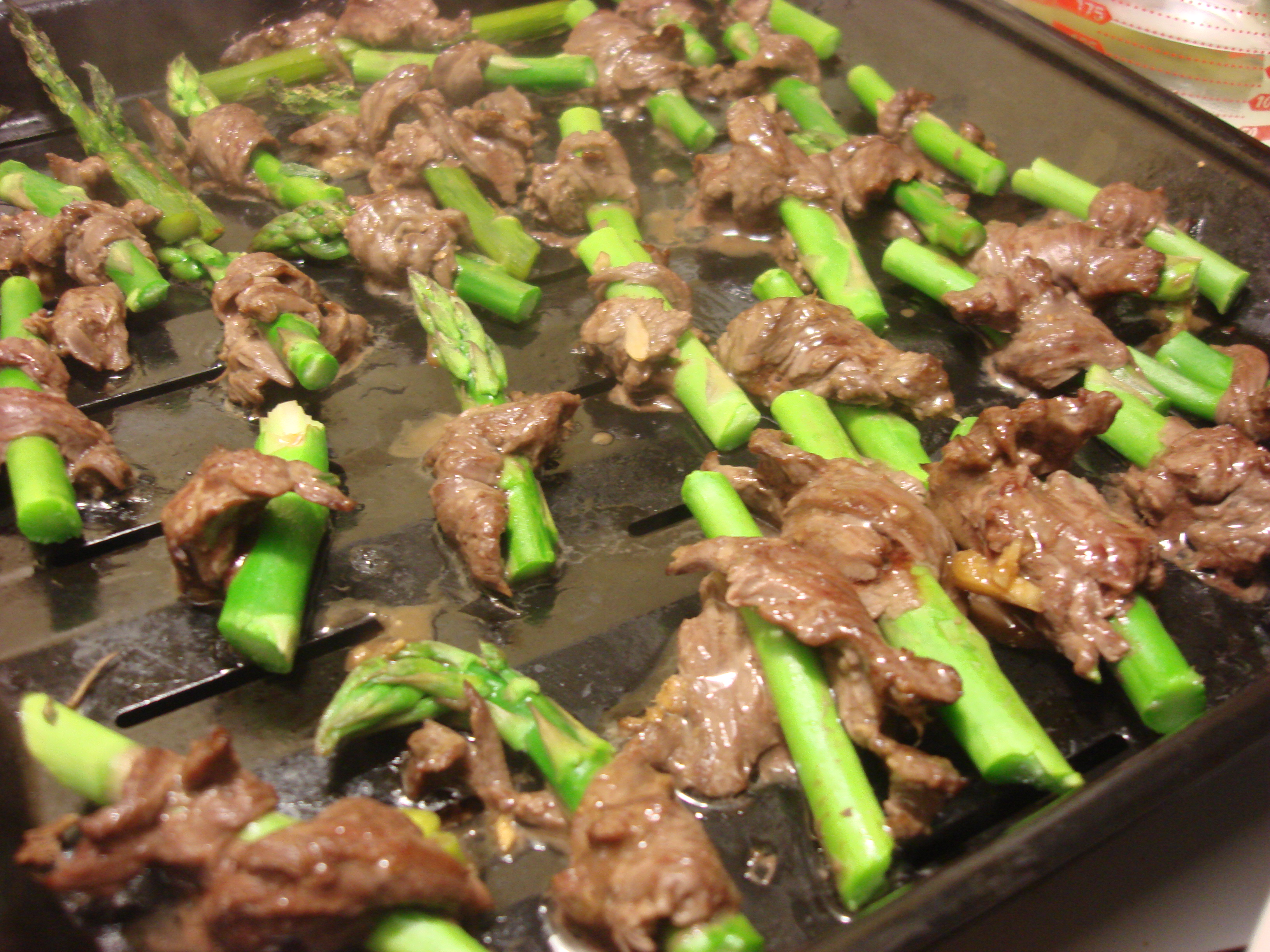
Asian-Inflected Steak and Asparagus Bites

6 Feb

I was looking for organic steak at Fairway Market in Plainview – one of my favorite places to shop for higher-end yet still reasonably-priced staples like Spanish chorizo, olive oils, tomato in cans, organic eggs — but instead found an irresistible deal:  U.S.D.A. prime hanger steak for $6.99 a pound. The prime designation means a higher quality of steak with loads of marbling (yes, fat) and virtuous me didn’t stand a chance against cheapskate bloodthirsty carnivorous me, so I bought 1.5 lbs and started to plan.

My friend Ashley was coming over, so I knew I’d have some support staff for child care AND prep, so I chose to do something I’ve been hankering after for weeks: Asian-flavored steak with asparagus. It is just slightly labor-intensive, but a show-stopper and I really should have given it to you earlier as a Super Bowl option, but better late than never.

We did half the meat that night, after the little guy was down (with a belly full of pizza and a promise of steak the next day). Must confess, once the pretty pictures were taken, we heaped all of the bites haphazardly on a plate, each grabbed a fork, and fell in like starving raptors from the Cretaceous Period.

The rest – two small steaks — I cooked whole the following evening on the broiler at our friend, Pam’s, without the asparagus (Yes, Leandro got his!). They were just as tasty, but almost 24 hours in the marinade did leave them almost too tender. The following recipe can be jiggled; use the greater amount of asparagus if you want to do all of the steak in wraps.

Anyhooo, I will be doing these the next time I entertain. I hope you will too!

Asian steak and asparagus bites

(factor in minimum marinating time of 30 minutes)

3 cloves garlic, minced fine

2 inch of ginger, peeled indifferently, and grated (about 1.5 packed Tbs; add more to taste)

2 tsp sesame oil

2 Tbs rice vinegar

4 Tbs soy sauce

1 – 1.5 lbs hanger steak (or other fairly thin, tender boneless cut)

1 – 2 lbs asparagus spears, washed, woody stems snapped off, and chopped into 2-inch pieces

Mix all ingredients except meat in a plastic freezer bag or a bowl. Add steak, coat thoroughly and then refrigerate for at least 30 minutes and up to 24 hours.

Preheat oven to 350°F.

Reserving marinade, slice marinated steak ACROSS THE GRAIN* into thin slices and then cut the slices into strips suitable for wrapping artfully or not so artfully around asparagus spears. Lay steak and asparagus bites onto an oven rack with a catch dish underneath. Pour remaining marinade over and salt to taste. Cook for 5 minutes on each side (7-8 for well done) and serve.

*Cutting steaks across the grain cuts through the fibers that hold the muscles together and shortens them so the meat can barely hold together, thus, tenderness. This is especially necessary with my favorite muscle-y cuts: skirt steak (churrasco), flank steak and hanger steak. When raw, you will see natural lines across the meat. Slice against them (at a 90° angle, if I have understood Kenji at Food Lab (Serious Eats) correctly).