Archive | farming RSS feed for this section

Lasagna Latina: Tortillas, Beans, and Shredded Chicken

4 Oct

The start of the semester for me and kindergarten for Leandro has me in a tizzy.

One month in, the days seem never-ending and yet never long enough. I am up at 5:30 a.m. every day. Eighteen hours later, I still find myself vertical, eyes open, preparing food, washing dishes, cleaning the bathroom (!), folding clothes, laying out everything for the morning in a semi-headachy fog, wrinkling my nose and wondering, in the words of David Byrne, “How Did I Get Here?”

Scenes from the Farm

So when — oh s**t! — the Restoration Farm End-of-Summer-Potluck came roaring up, I was sort of astonished, and not a little dismayed. Continue reading

Zucchini Fritters, with Manchego, Rosemary, and Thyme

1 Oct

What am I gonna do with this!?! Basta, ya! As enormous bats of zucchini continue to be a big part of our C.S.A. pick-up this summer-into-fall, we start to get desperate for different ways to prepare them. I generally grate them into salads (I dislike raw zucchini, but grated into a salad makes it much more texturally appealing for me!), my dad grills them with just a bit of oil, or we roast them.

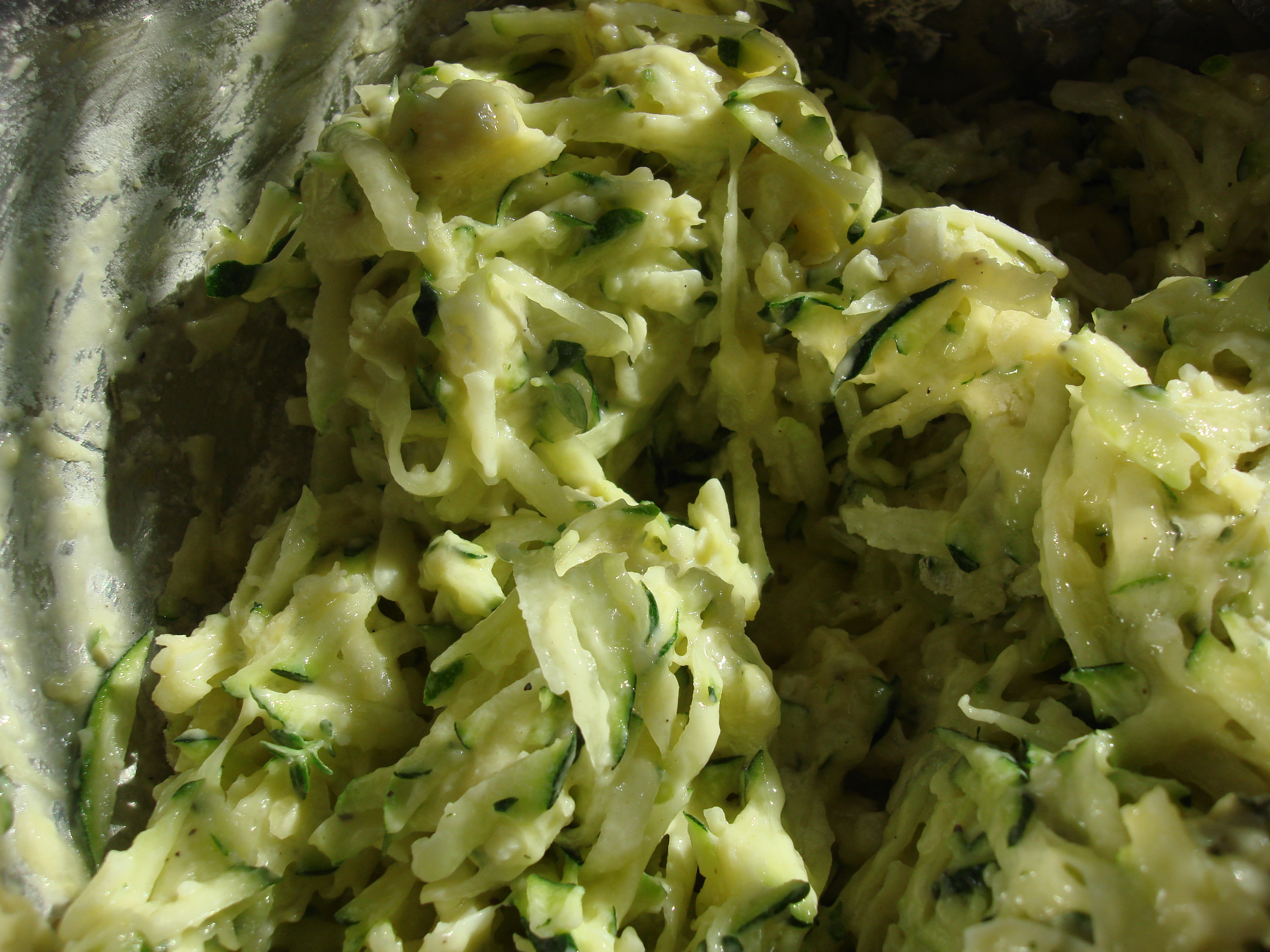
Grated zucchini

As much as I adore absolute simplicity in food — from both a preparation and a consumption standpoint — enough is enough. One does need to mix it up a bit, and try new techniques, too. So it was time to be inspired by a recipe for zucchini fritters I saw recently at Emmy Cooks, and another one for zucchini latkes at Deborah Rivera Pittorino’s chef’s blog, Seasoned Fork (full disclosure – you will find book reviews I have written there; The Big Oyster is my favorite). Both recipes seemed simple enough, a lovely change for us over here, and as they are pan-fried, I thought I was in with a chance at getting Leandro to try veggies this way. Continue reading

Roasted Green Beans (Salvaging and Sweetening When Less than Farm Fresh)

27 Sep

We’ve had piles of green beans this season, both from Restoration Farm and from our own little beds. This means that sometimes they stay in the fridge longer than we meant them too.

Then, when the season is over, we’ll probably buy from the supermarket (ssshhhhhh – not particularly seasonally virtuous, but I am working on it) and they won’t have that snappy-sweet farm freshness that we have become used to in late summer. But now I have a new way to make them taste much, much better. Continue reading

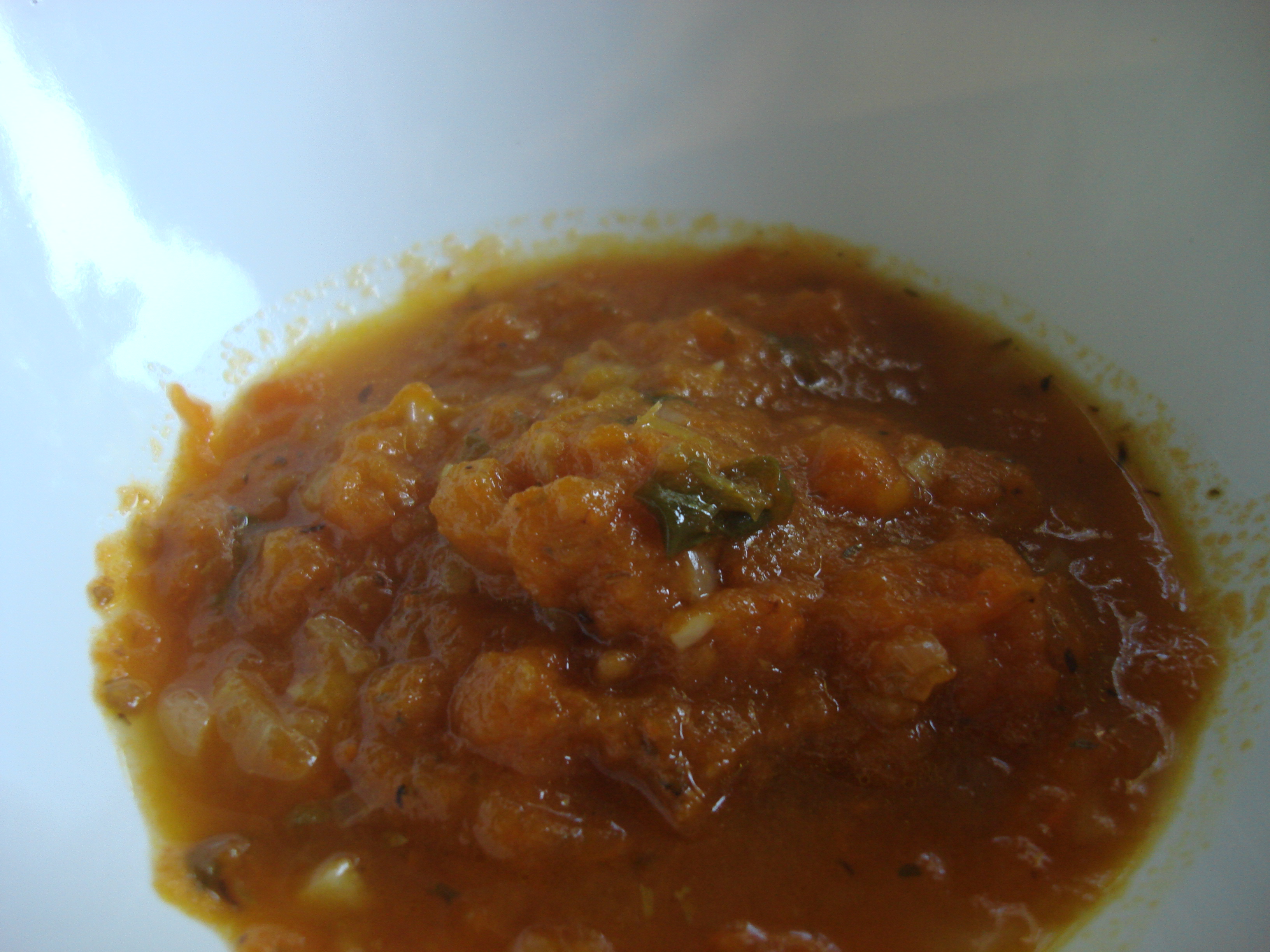
Green Tomato and Tomatillo Bisque (Life-Goes-On-Lessons from the Garden)

4 Sep

I got my first inkling of disaster from the Blogosphere.

The fabulous Karen of Backroad Journal chronicled her battle with late blight in a recent post about her tomatoes. I gasped. In my myopic focus on avoiding the blossom end rot that plagued my tomatoes last year – a result of uneven watering while we were gallivanting about the island keeping the boy on the hop and too busy/tired to cause trouble — I had neglected to consider the possibility of late blight. After all, wasn’t that all done with in the catastrophic 2009 season? (It should have been done with after the Irish Potato Famine of 1845, but apparently not). Continue reading

Everything Must Go! How to make a mad-mixed pasta sauce to eat now/freeze for later)

22 Aug

We are drowning in abundance. It happens every August if you garden or belong to a CSA; there are so many tomatoes, so many peppers, so much zucchini….it all gets lost in the fridge faster than you can cook it!

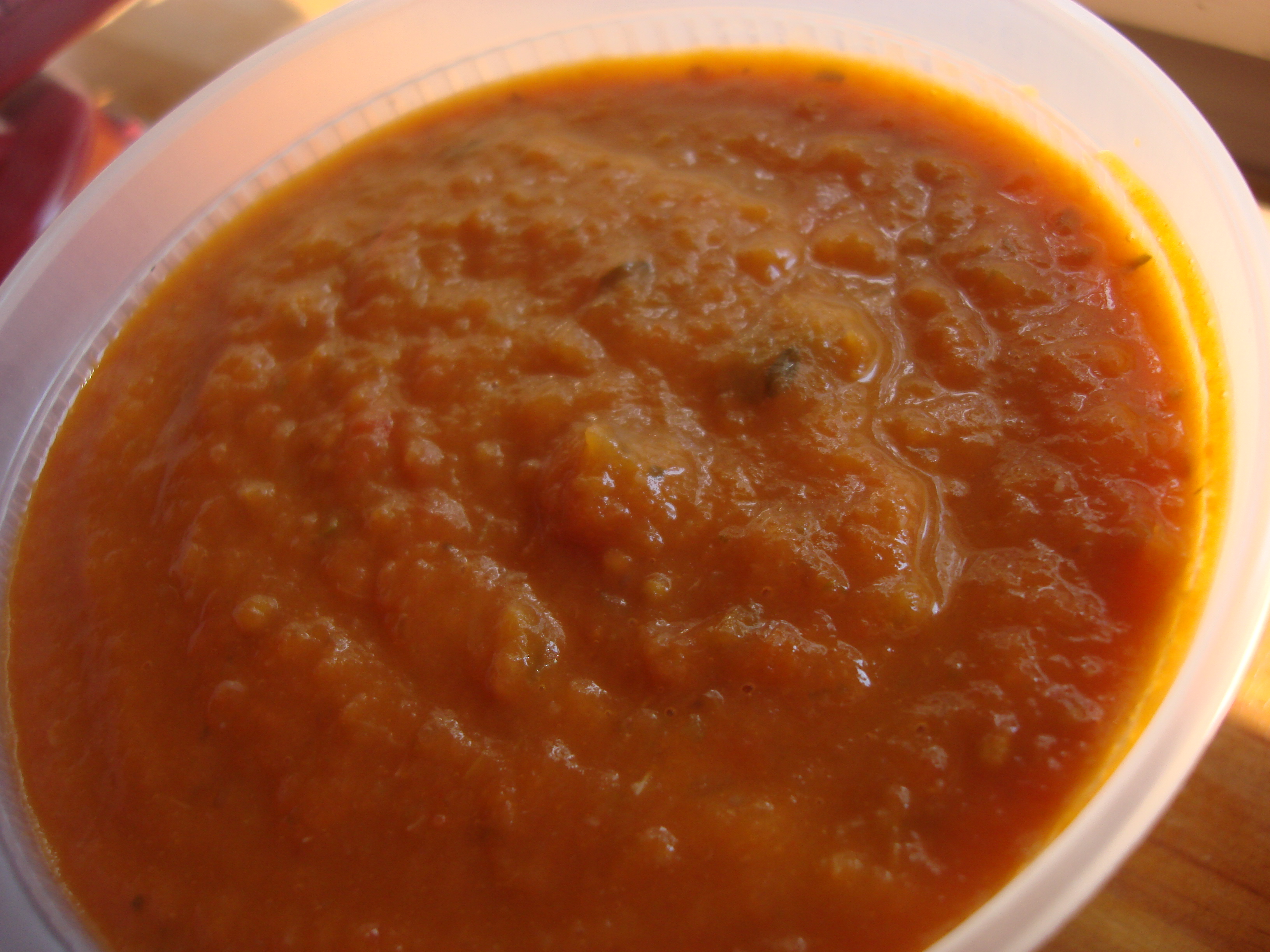
So, with pick-up coming the next day and a fridge full of last week’s haul getting ugly, I took as much as I could and cooked it down into sauce – some for now and some for the freezer, in small containers that will make a fast meal when school starts and dinner needs to be now and lunch needs to be ready the night before. I have freezer-packing panic!

Blanche! (Tennessee Williams moment)

Here is an Everything Must Get Used Before Our Next Pick-Up tomato sauce recipe. I used SunGolds, cherries, paste tomatoes, slicers, heirlooms, anything that had been sitting all week getting sad.

How-to for blanching tomatoes follows the recipe….

Everything Must Go Pasta Sauce

3 Tbs extra virgin olive oil

1 Cup onion, chopped

6 cloves garlic, chopped

1 red bell pepper, chopped

2 green peppers, chopped

3 carrots, chopped

3 stalks celery, chopped

(Optional bits and bobs: half a zucchini, a bit of eggplant – bung in anything that will cook down soft and not mess up the overall color too much — chopped small).

6 lbs tomatoes (paste tomatoes preferred, but I used an incredible mix), cored, blanched and peeled*

1 Tbs dried oregano and thyme (2 Tbs if using fresh)

¼ Cup red wine

½ tsp salt (or to taste)

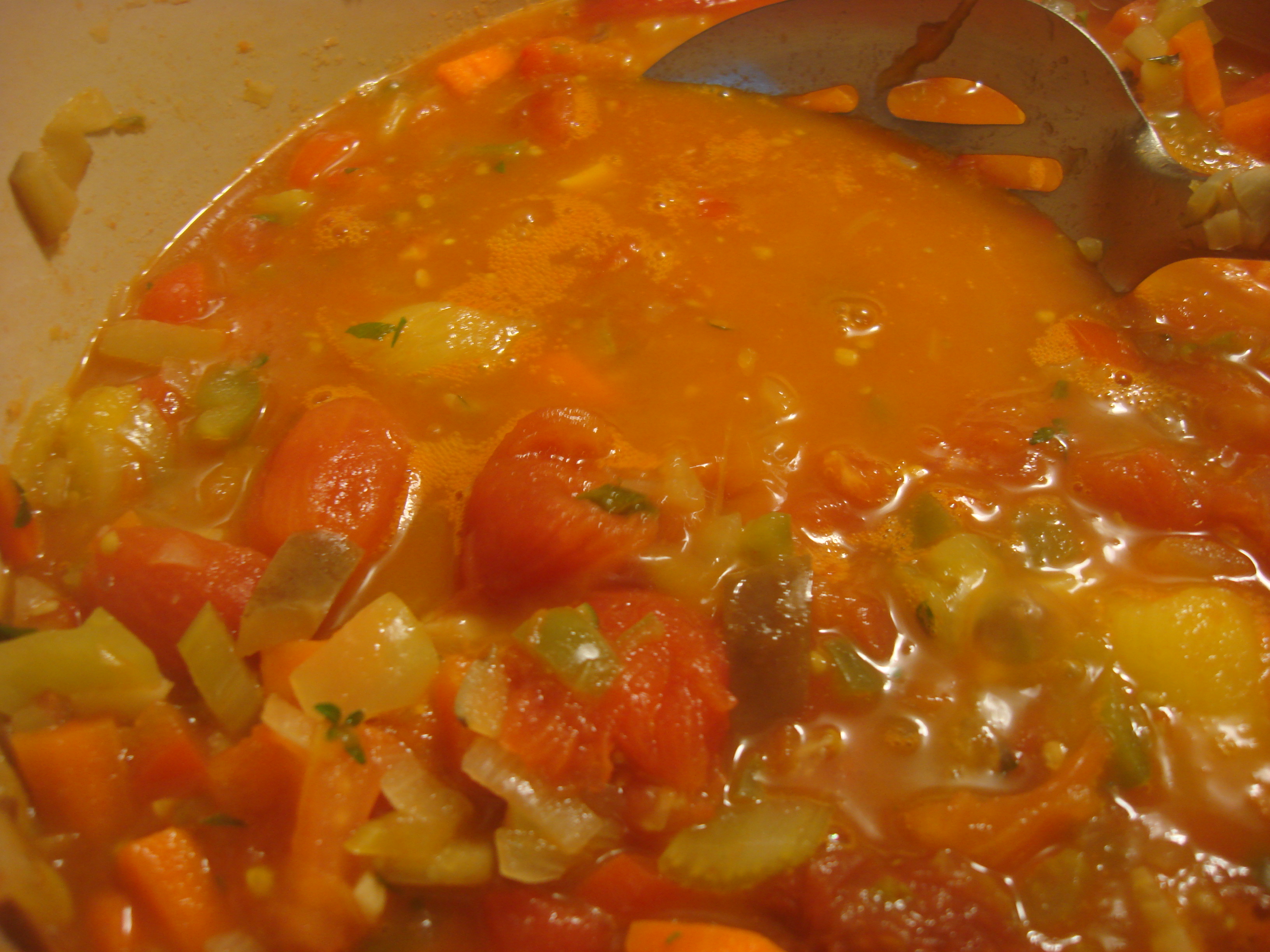
Heat olive oil in a heavy-bottomed soup pot at medium high until liquid and fragrant. Lower heat to medium and add the following vegetables one at a time, stirring to coat before adding the next: onions, garlic, peppers, carrots, celery. Cook at medium (or lower if you have time) until vegetables are soft and translucent, at least five minutes. Add tomatoes and bring to a boil. Add herbs and wine and lower to a lively simmer. Cook down for at least 30 minutes, stirring occasionally. The more you cook it, the smoother it will get, but also the more dense. Add water 1/4 Cup at a time as desired.

(Optional step: Using an immersion blender, liquefy the sauce to desired smoothness)

Correct seasoning and serve over pasta/freeze for later! Will keep three months in the freezer.

To blanch, keep reading!

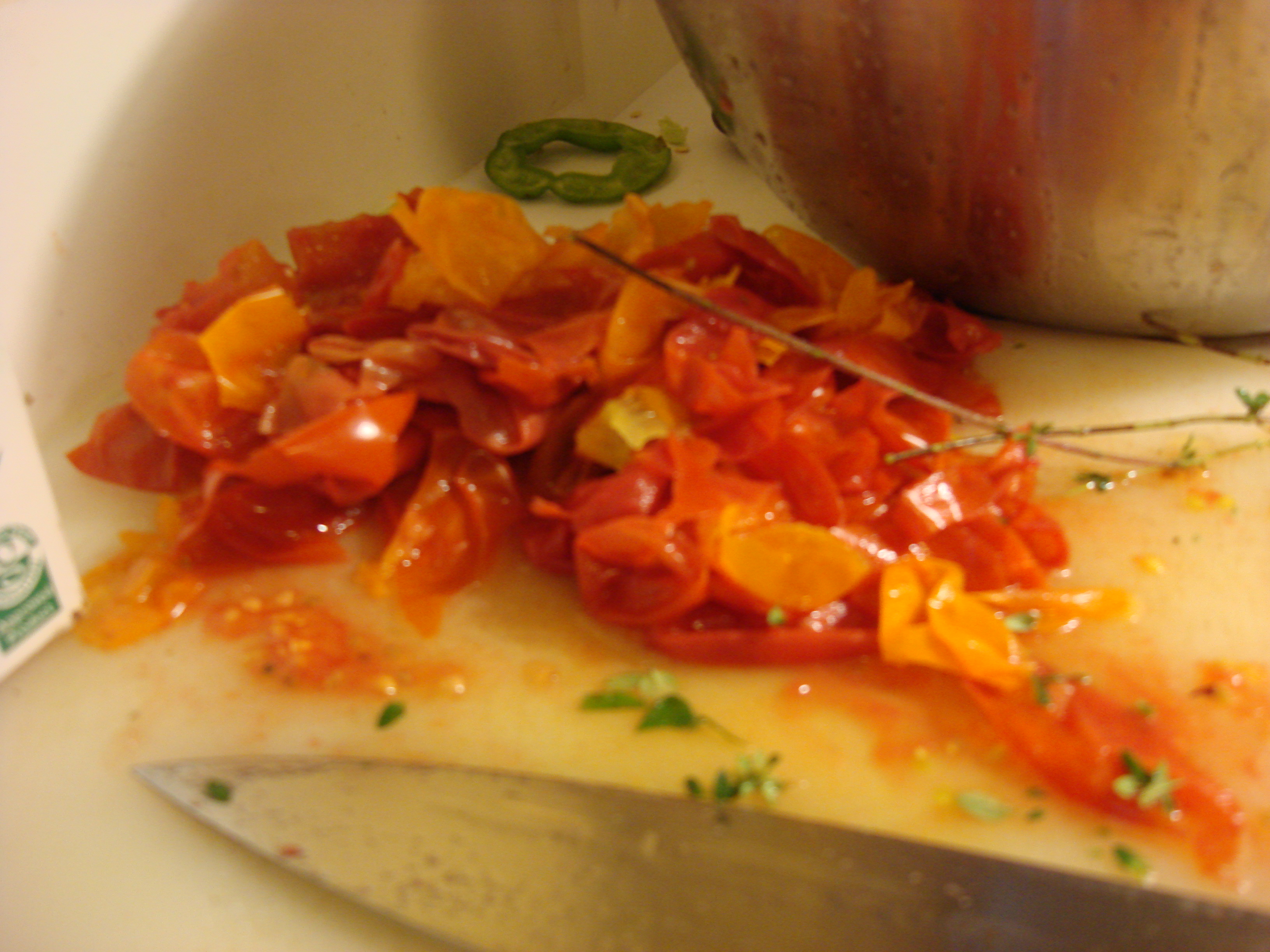
A pile of peels

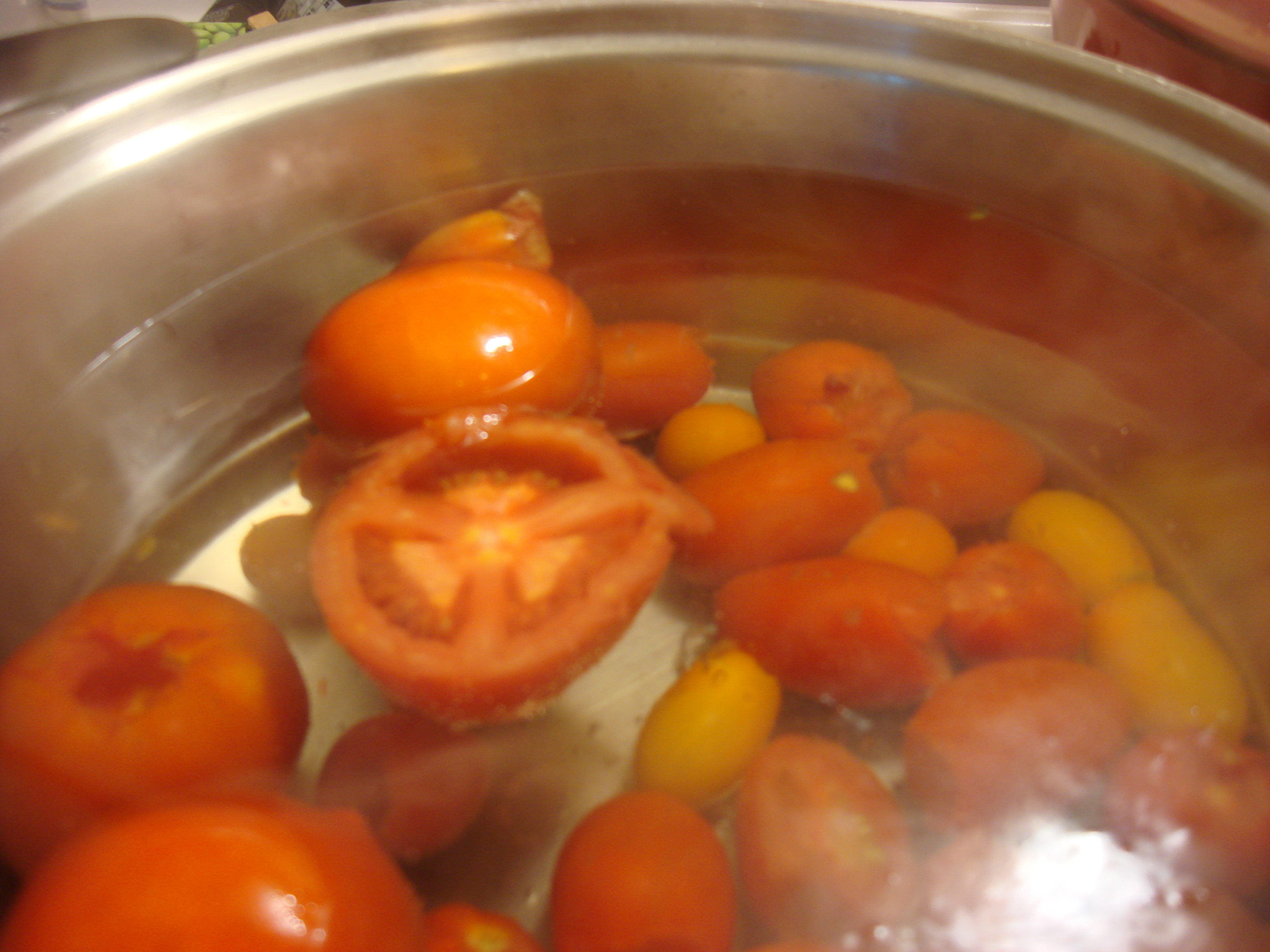
*To blanch and peel tomatoes: Bring two quarts of water to a boil. Meanwhile, core the tomatoes (take out the stem and white core with a paring knife) and prepare a large bowl of ice water. When the water boils, drop tomatoes in. In two minutes (or less) you will see the skin begin to peel back or split. Remove each tomato as this happens and drop in ice water. When tomatoes have cooled,  take them out of the ice water and peel (the skin should come off easily). They are then ready to cook down, or freeze in freezer bags for later use (later can be as long as next spring! and you don’t have to peel them if you are freezing for later use).

A Sustainable Wedding (and the recipe for Maple Mint Tea)

17 Aug

There is something profoundly sensible about a sustainable wedding celebration. After all, the idea that this unit of two (or in this case, three!) is meant to be self-sustaining, sustain each other, create a balanced environment where each member thrives…well, the symbolism is fairly obvious.

So when my dear friend Hatti, my classmate in my first year of college at The New School for Social Research in NYC (yes, I was always this bloody liberal and lefty, those of you who are familiar with the institution) and the first vegetarian-by-choice I had ever met, and Chris Moratz, inventor and climber and ceramics wonder, decided to get married, a sustainable wedding was in the works. We’re talking no waste, totally local, even the music was self-generated. It was glorious.

Stone Church

They live with Hatti’s daughter, Emma, in Gardiner, NY, near New Paltz, where the climbing is outstanding and the local agriculture is strong.
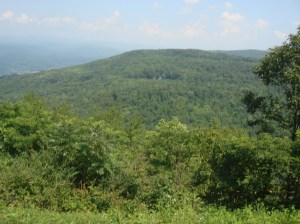
The view from the churchyard

Chris is German, so while the couple had married in a civil ceremony last year, they didn’t do the church wedding and the celebration until later, something done by many cultures around the world. They spent this past year doing all the house projects that needed doing in order to host the party at home.

The Stone Church up in the mountains in Cragsmoor was the ceremony site (Leandro and I were so very pleased with ourselves – not only did we get there without help from the GPS – Cragsmoor’s zipcode couldn’t be found! What is this? Brigadoon? — but we actually got there on time!)

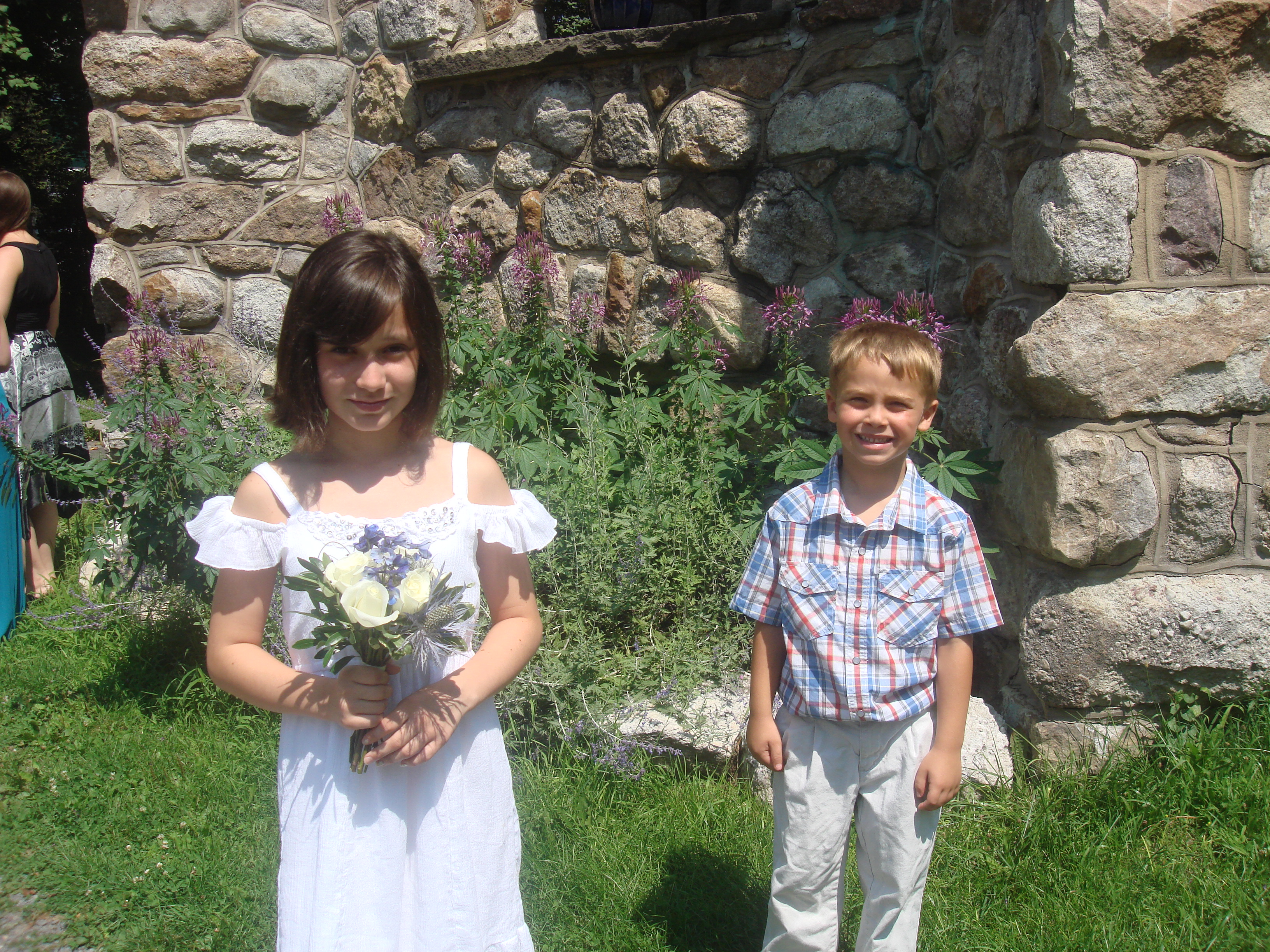
Emma and Leandro

Yes, they really rode miles and miles home!

The party followed, later in the afternoon, once the happy couple had bicycled their way home (in 90 degree heat, mind you….I suppose it is zero emissions, but sweet Jesus, I couldn’t sustain that!).

The Party set up

The yard was quilted in tables and chairs and the odd tent, with local flowers in jam jars on every one. Folks arrived, many bringing local beers and wines, or food they had made at home. The buffet table was a massive spread of chicken and sausage from Old Ford Farm, vegetable and egg dishes from local farms (Oh My God, the coleslaw from Evolutionary Organics in New Paltz – coleslaw? yes, coleslaw – I had to pile my plate with it a couple of times, I kid you not). I don’t have too many of my own photos, because I was in charge of getting pictures onto Hatti’s camera while they mingled!

Lemon Raspberry Wedding Cake by Jennifer Vehaba

The lemon raspberry wedding cake was made by the caterer, Jennifer Vehaba, with ingredients from Wild Hive Farm, Clinton Corners, and again, Old Ford Farm, and it was just gorgeous all around.

It seems that every other person in their families and among their friends is some sort of a musician, so the jams sprang up all over the yard…

A note on the waste stream…all the plates and glasses were real, there was just one bag of trash at the end (and there were something like 150 people eating and drinking all night!), there was a bin for recyclables and another for food waste that the chickens would dispatch with.
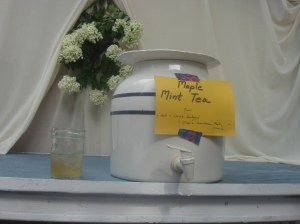
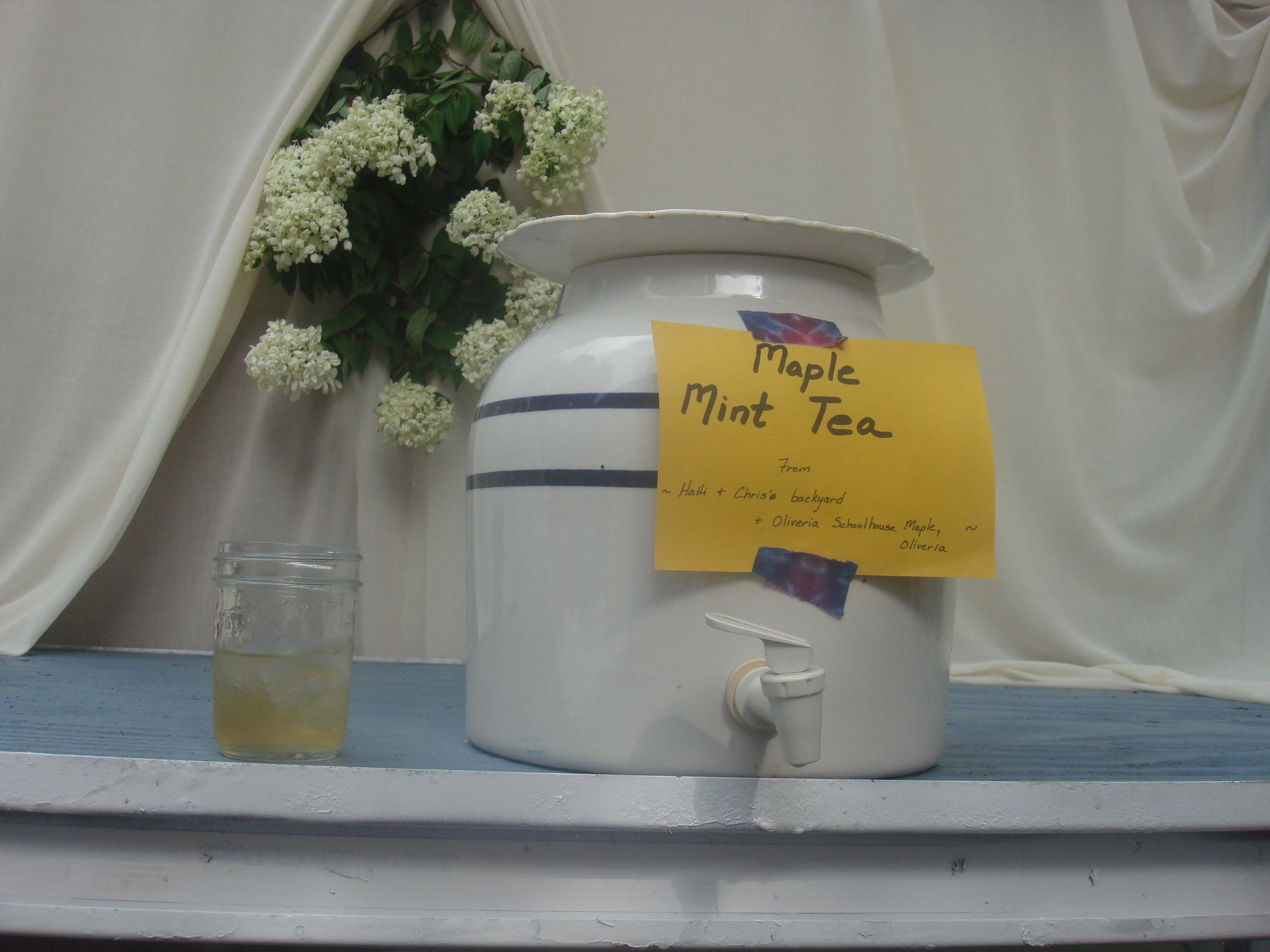
The tea kept well overnight outside in this container!

The one recipe I came away with was for the astonishingly refreshing maple mint tea that Hatti and Chris invented. I must have drunk a gallon of it on my own, so I got the recipe and here it is, first as Hatti told me and then slightly more formalized.

“When I make the maple mint tea; I dry the leaves from the garden and then I make tea with boiling water and let it cool and I put in about a cup of maple syrup per gallon.”

Maple Mint Tea (remember that inspiration for drinking sangría out of jam jars? This was it)

Maple Mint Tea (Hatti Langsford and Chris Moratz)

1 Gallon peppermint/mint tea

1 Cup maple syrup

When the tea has cooled, add maple syrup. Mix well. Serve chilled over ice, and garnish with mint leaves, if you are so inclined.

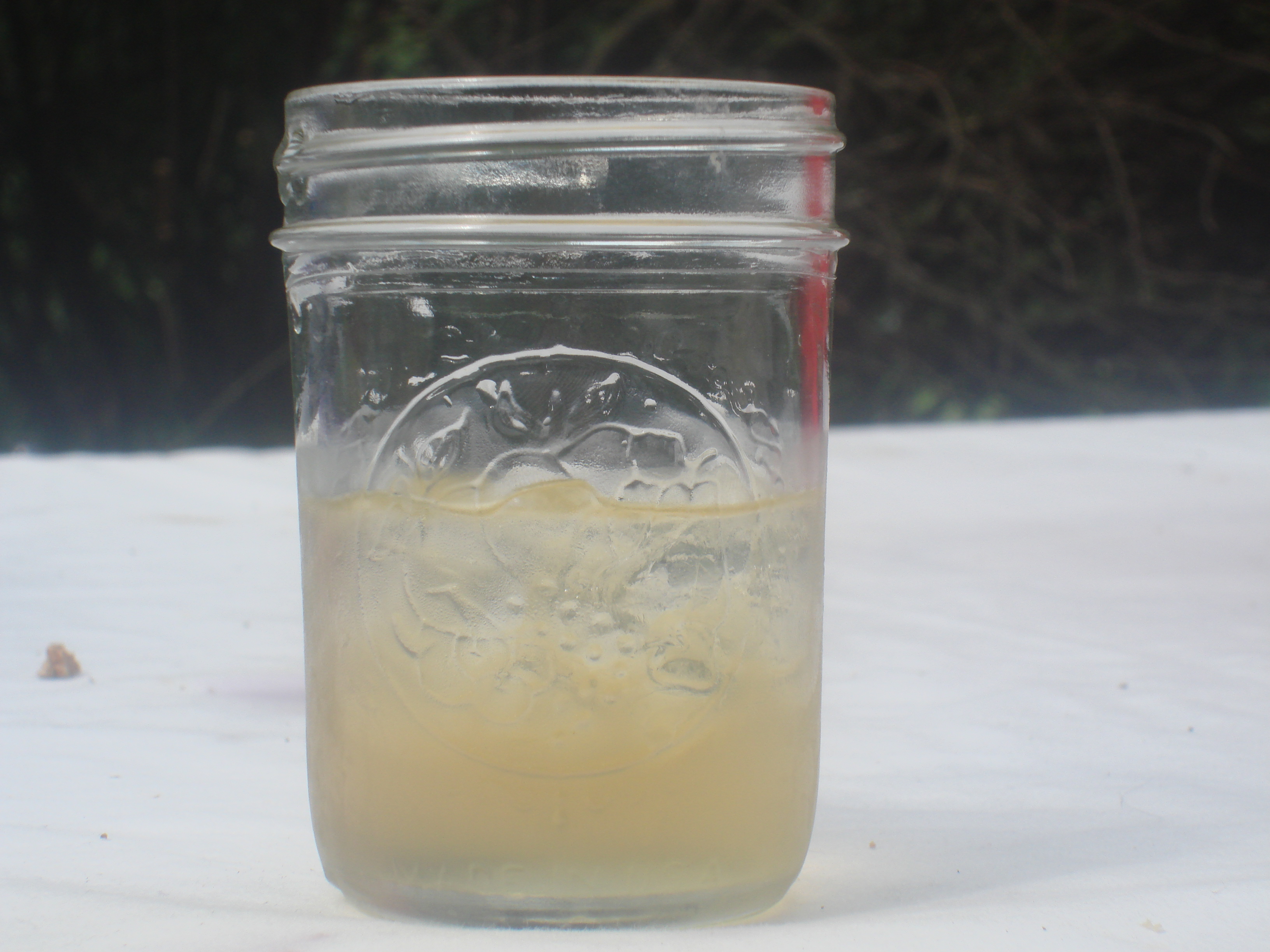
Hatti and Chris’ tea was still delicious the next day, after spending a very warm day and night outside in a beverage cooler, so it’s safe to say that a smaller household amount will keep in the fridge a day or two. If it lasts that long!

Golden Tomato Pasta Sauce (freezeable! or make from frozen tomatoes…)

30 Jul

“Tis the season for the tomatoes to overwhelm. In fact, last year we were so overwhelmed that I had tomatoes in the freezer all winter. The texture isn’t as good as in the middle of summer, but the incomparable bright, fresh flavor is still there.

Yes, these icebergs are actually frozen golden tomatoes (yellow seems a bit more prosaic here). The freezer burn was minimal and the flavor was great!

So this is a terrific simple sauce that you can make from frozen or fresh. Instructions for blanching appear at the end!

Golden Tomato Sauce

Golden Tomato Pasta Sauce

¼ Cup extra virgin olive oil

1 Cup shallots, chopped

¼ tsp hot red pepper flakes

1 Tbs oregano (less if oregano is not your favorite; this is a pretty generous amount)

Pinch sugar

5 lbs golden tomatoes, cored, blanched and peeled*

10-20 basil leaves, chopped

Heat olive oil at medium-high in a heavy-bottomed soup pot until liquid and fragrant. Add shallots, stir to coat and lower heat to medium low. Cook, stirring occasionally, until shallots are soft and translucent. Stir in hot red pepper flakes, oregano and pinch sugar and cook one minute. Add tomatoes, bring to boil then lower to a lazy simmer and cook for an hour or until fat begins to separate from tomatoes and you have reaced desired consistency. Add basil leaves and cook for an additional five minutes. Serve over pasta, as pizza sauce or on bruschetta, or freeze in quart containers for another day.

*To blanch and peel tomatoes, set a big pot of water to boil. In the meantime, core the tomatoes and fill a big bowl with ice water. When the water is boiling, drop tomatoes in so they fit comfortably. They blanch in under a minute, generally. As soon as you see the peel start separating from the flesh, pull them out and drop into the ice water. You can leave the peel on if you are going to freeze them (in gallon freezer bags is fine) or peel once they have cooled to use immediately.

Have You Seen the Peterson Farm Bros New Video?

4 Jul

More MooTV than MTV, this riff on the pop hit “I’m Sexy and I Know It” is great entertainment for the farm-to-table set. Don’t miss it…Leandro and I have been watching it nonstop for a couple of days now and we just love these boys. Leandro is singing it in the bath right now, even as I write!

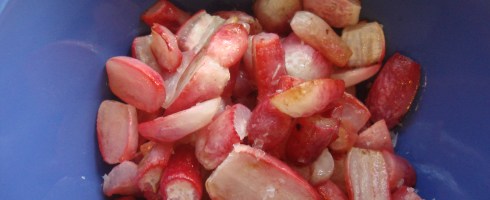
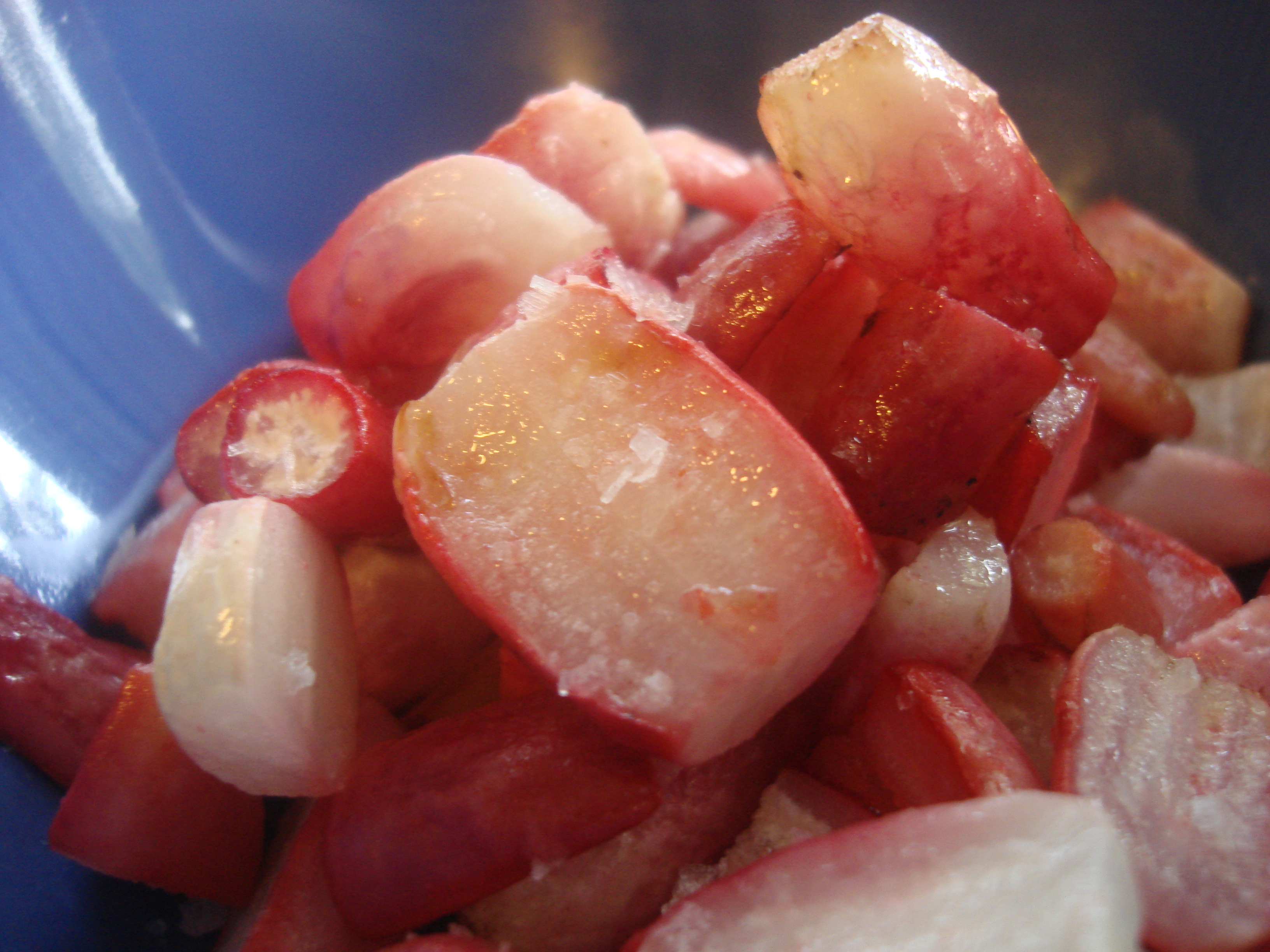
Radish Revelation x 2: Roasted Roots and Sauteed Greens

30 May

We are eating from the garden! We are eating from the garden!

I cannot tell you how pleased we are with the French Breakfast radishes. No, we are not eating them for breakfast. No, we do not have any desire to suddenly become French (although a pied a terre in Paris or a cottage in the South of France would be very nice, thank you).

But the French Breakfast radishes? This little piggy said “Oui, oui, oui!” all the way home.

They are the easiest thing ever to plant and grow, don’t mind being crowded, move fast (like less than four weeks to edibility) and  are easy for a preschooler with no patience and limited fine motor skills to harvest.

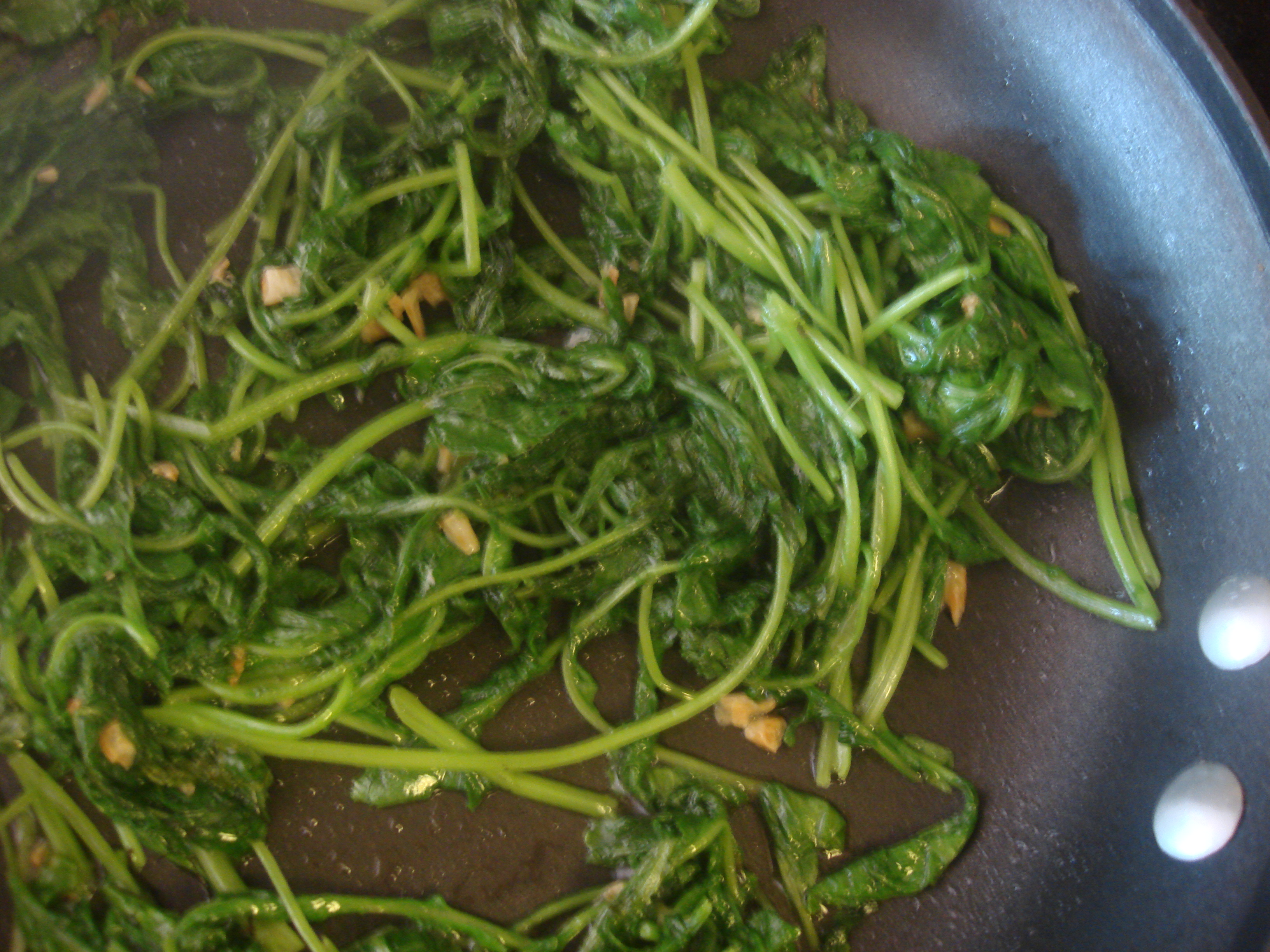
Because we are pulling them out of the ground, and not out of a little plastic pouch, we also get the radish greens, so today’s blog is a double feature. You can use the whole thing (well, I do cut off the stringy rooty bit)!

However, because we pull them out of the ground, they are very, very dirty. In fact, I just found out that rather than harvest lettuce from the garden, my dad has still been buying clamshells of mixed greens from the store, “because I don’t feel like cleaning all that dirt….”

Seriously.

Let me just move on from that one and say, if you are willing to deal with the dirt (you may want to hose them down over the garden bed so you don’t lose all that good soil), the freshness of these radishes is amazing. And the sweetness that comes out in roasting is astonishing. The greens are great too, in the way that all leafy greens are great (to me). Saute with garlic and love them up. So here are your two recipes for the the same veg. Rock on!

(Full disclosure: my darling son – who planted, watered, thinned and harvested these with his own hammy little hands –  tried a bite of the roasted ones and spit them out. Whatever. More for me.)

Roasted Radishes

20-30 radish bulbs, topped and tailed (radish greens can be reserved and used for salad or sautéed with oil and garlic), and sliced in half

1 Tbs extra virgin olive oil

1 Tbs salted butter (or 1 Tbs unsalted butter and a sprinkle of salt)

1 -2 tsp fresh lemon juice

Preheat oven to 450°F.

Place radishes on a rimmed baking dish (lined with foil if you prefer). Smother with remaining ingredients and roast for 15-20 minutes or until browning at the edges. Sprinkle with additional salt, if desired. Serve.

Sauteed Radish Greens

1 -2 Tbs extra virgin olive oil

Three cloves garlic, minced

Radish greens from 20-30 young radishes, thoroughly rinsed and dried, stems removed, if desired

Salt to taste

Heat olive oil in sauté pan at medium high until liquid and fragrant. Add garlic, lower heat and cook for one minute or longer – until lightly golden. Add radish greens and stir to coat. Cook at medium heat until bright green and wilted. Serve on its own, or as an addition to a sandwich.

Duck Egg Frittata with Asparagus (Hen’s Eggs Can Also be Used!)

18 May

We spend our Mother’s Days in the North Fork of Long Island (where I expect I’ll end up living one day), Abu, Padushi, Leandro, and me. We had another beautiful time this year, eating and drinking and having fun with friends.

The Long Island Sound was our back yard!

And of course on the way home we picked up some farm fresh goodness to keep savoring the visit.

In season now: ASPARAGUS, so we got some from Sang Lee. Really, when asparagus is in season in the North Fork, it is worth the drive just for that, even if you don’t have anyone to visit!

Sang Lee asparagus

And we stopped for eggs at Ty Llwyd. Our friend Dave had four duck eggs available too, and since my last experience with them was so memorable, I took them all.

Unwashed eggs don’t require refrigeration – for a few days anyway….and these were definitely unwashed! (I rinse before cracking though…)

With ingredients this good, you don’t have to do much. In fact, the more you do, the more you get in the way sometimes (a lesson I never seem to have learned, some might say, but they can just hush up, because it’s my blog post and I’ll fry if I want to). However, if you would like to try a Hollandaise, click to visit my fellow blogger Mad Dog’s step by step instructions!)

So I went for something pretty simple and non-fussy, but with style. This frittata shows off the flavors of Spring, looks rustic-wonderful, and doesn’t take much doing. Sort of the kind of thing that Leandro should learn to do when he’s old enough to bring me breakfast in bed for Mother’s Day!

Gorgeous!

Duck Egg Frittata

2 Tbs extra virgin olive oil

½ onion, chopped (red preferred)

Approximately 10 asparagus spears, trimmed, and sliced thin on the bias (may be precooked; I used leftover roasted, which were lovely)

4 duck eggs (6-8 hen’s eggs if you want to substitute!)

¼ Cup grated Parmigiano Reggiano or other good grating cheese

Pinch of salt

Heat oil in a small to medium ovenproof skillet at medium until loose and fragrant. Add onions, stir to coat and sauté for five minutes or more – until tender and browned. If using uncooked asparagus, add it one minute after the onions. If using cooked, add after the onions are tender and browned, then cook an additional minute. Either way, reserve a couple of the tops for garnish.

Meanwhile, in a separate bowl whisk eggs, cheese, and salt together to mix thoroughly. Pour eggs over vegetables in pan and mix thoroughly. Preheat the broiler to high/450°F.

Using a flexible spatula, turn the egg mixture away from the sides of the skillet as the egg solidifies, allowing the uncooked egg to run to the bottom of the pan. Continue this until egg mixture is well set – 5-10 minutes, depending on the thickness of the frittata (depth of skillet) and the stove top heat. Don’t rush this. You can stick a knife in the center to measure progress. 

Use the spatula to get under the frittata occasionally and make sure it doesn’t stick to the bottom. Shaking gently every so often can also help.

As the top is almost set, stick the reserved asparagus tops into the surface so they look pretty!

When egg is set, put the whole skillet under the broiler for 3-5 minutes (longer if you frittata is thick) until the top is browned.

Let sit for five minutes, then serve.