Tag Archives: cooking

Freeze! The Lazy (or clever) Cook’s Guide to Preserving Tomatoes

5 Sep

This was the year I would start preserving and canning…at least that’s what I swore when I laid down the money for a canning pot and associated equipment at Walmart a couple of months ago (Walmart being the new Woolworth’s; it is where you will find a lot of the old-fashioned domestic arts type of stuff that Woolworth’s used to carry back in the day).

Well, canning with heat didn’t happen, or at least hasn’t happened yet and doesn’t look like happening any time soon. But I have still been making an effort to preserve some of the flavors of summer for the colder months in a less time-consuming and sweaty way. Regular visitors will remember a creole tomato sauce I made and froze for later, for example https://hotcheapeasy.wordpress.com/2011/08/27/fresh-tomato-sauce-criollo-style/.
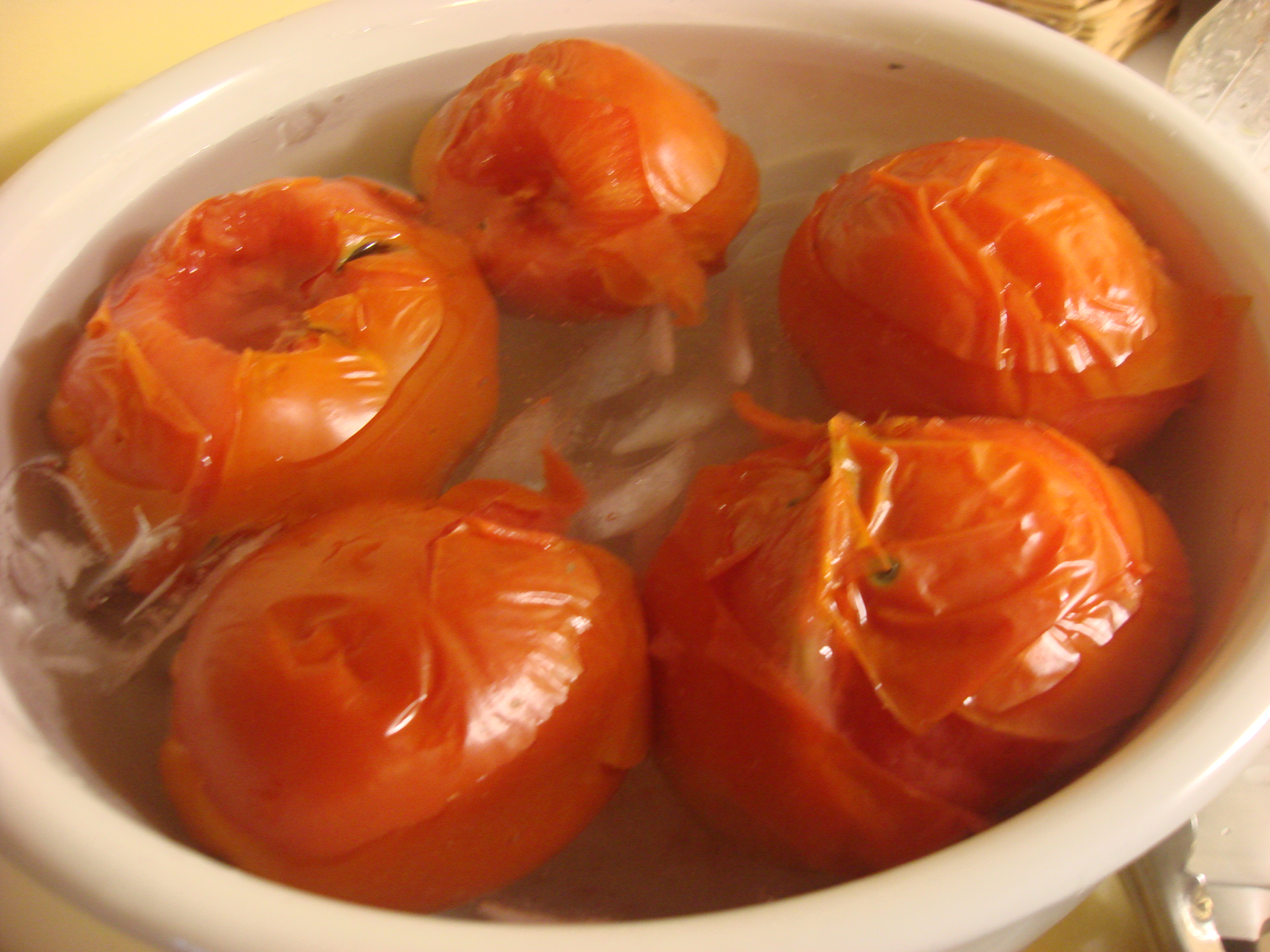
But at this time of year, with all the vegetables we have and the time to work with them running short due to school, I had to shorten even the shortcuts. So I blanched and froze sauce tomatoes for later.

All you have to do is

1) take your farm fresh, ripe tomatoes, wash and core the stem area (you don’t have to go all the way down; just take a cone out),

2) throw them in boiling water for a minute (until they start to split)– 30 seconds for smaller tomatoes — and then

3) plunge them in ice water for about five minutes for large tomatoes and a couple of minutes for small.

Et voila! Freezer-ready tomatoes. Some people peel them at that point; I sometimes do and sometimes don’t. You will have to do it when you thaw them later, as the skins get chewy in the freezer. Some people don’t even blanch them, but I do like to set the flavor and freshness and I think blanching does that pretty well. Anyway, once they are cool, all you have to do is

4) put them in a freezer bag (quartering them is optional), squeeze out the air, seal and label them. Stick them in the freezer and they will keep 6-8 months and will be suitable for sauces and soups (not salads, as the texture will get mushy over time.
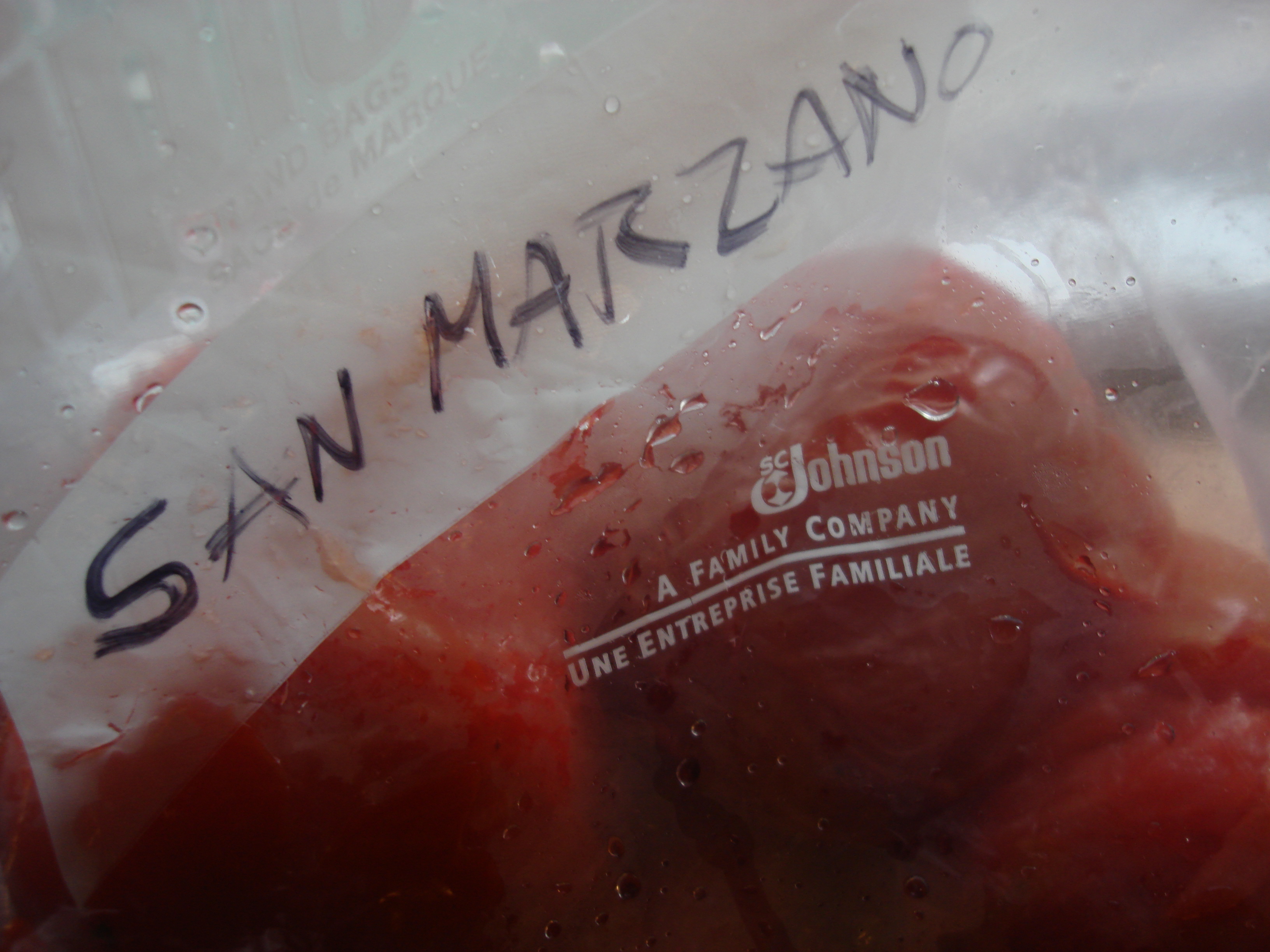
Right now I have a few pounds of San Marzanos, a pound of plum tomatoes and about four pounds of whatever yellow tomatoes it is that I am getting from the farm. I am going to be soooooo, sooooo, sooooo happy to make fresh sauce or minestrone with them in the dark days of February when my arms are about to fall off from shoveling snow!

Recommended tomatoes are Roma, Brandywine and plums, as they make great sauce!

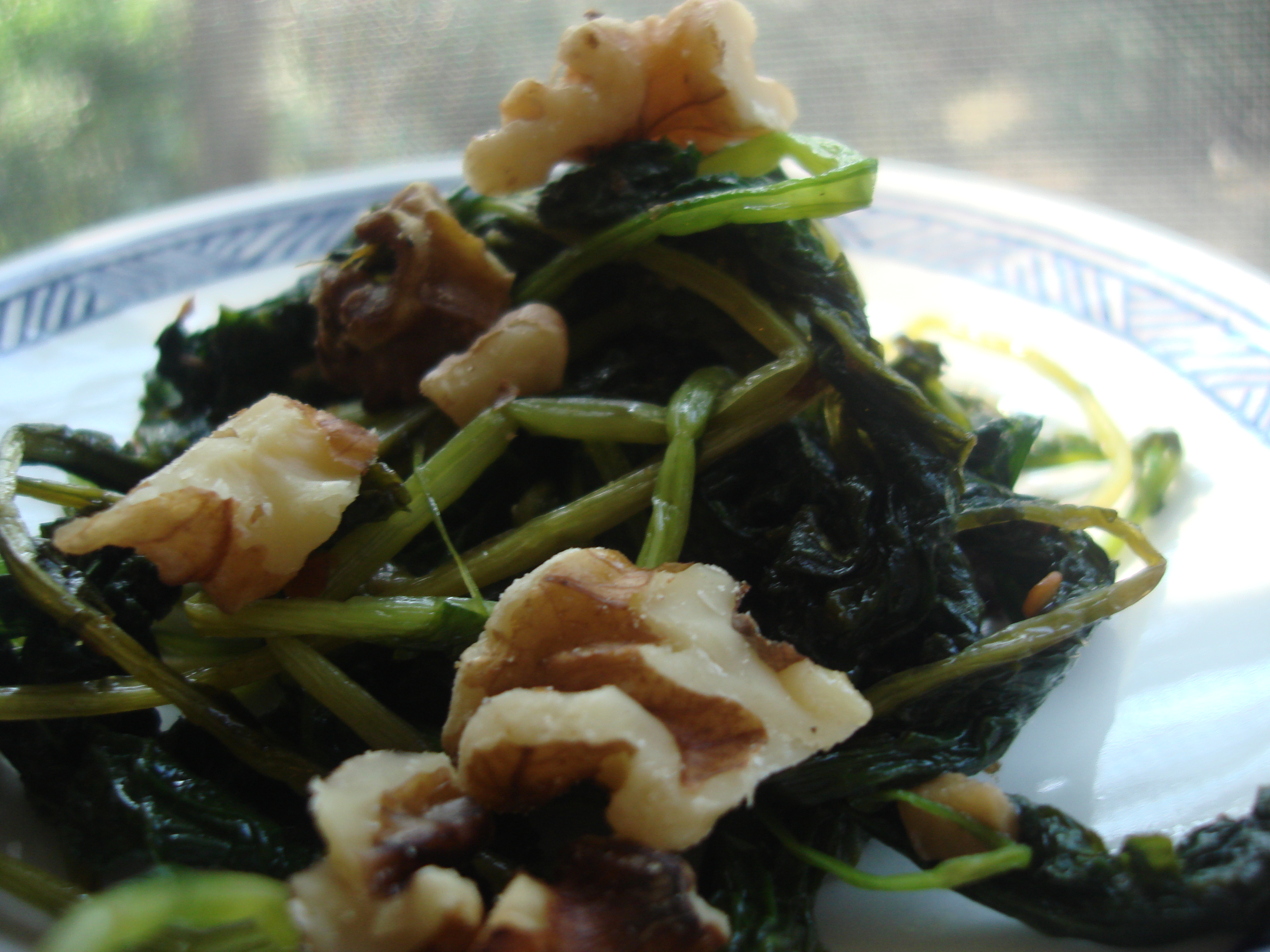
Broccoli Rabe with Toasted Walnuts and Raisins (Spicy option!)

4 Sep

There is a certain complication to being a food writer. People assume you know a whole lot more about food than you actually do or that you have a recipe file in your head with complete access to what-to-do with every ingredient in nano-seconds.

So some unusual vegetable comes up at CSA distribution and folks want to know what to do with it, like, right now, as I am trying to divide 3/4 lb of string beans in my head and talk to Allison and keep track of my four-year-old fireball, who has to go potty. Now.

Uh…em…of course: I don’t effen know! Rachael and Martha and Alton have legions of minions to make them look all-knowing. Me? Nada…

So this time it was Steve (known as Farmer Steve around here) who got me with the broccoli rabe while a handful of other CSA members cocked an ear. Bus-ted.

I haven’t cooked with this stuff in a while (and not regularly since I lived in Italy back in the days of the Empire) and gave my stock answer: “When in doubt, saute in garlic” and went home to investigate.

So I found a few recipes, including the following one that I adapted from Giada De Laurentiis (who is a dead ringer for my dear friend Gabrielle Paese – there, I’ve said it publicly). Giada uses pine nuts, but, in addition to having a staff, she has a budget and I don’t, so I use walnuts — a less expensive alternative.

Interesting thing I learned from my investigations is that the “broccoli rabe” we get at Restoration Farm is more like “rapini” because it’s all leaves and none of those little heads. Either way, we’re talking about a bitter, zesty green that my friend, Marianne, finds too chewy, but that I actually love for that reason. The fun of this recipe is that the raisins the raisins provide sweet bursts.

So this one’s for you, Farmer Steve!

Broccoli Rabe with Walnuts and Raisins

IMPORTANT – this is a recipe for a small amount of broccoli rabe, which, like so many leafy greens, cooks down to nothing in no time. My recommendation? Triple or quadruple this recipe in order to have a nice fat side serving for four people – only increasing the oil, garlic and red pepper by two.

1 bunch broccoli rabe (about 12-14 oz) cleaned and stems trimmed

2 Tbs extra virgin olive oil

3 cloves garlic, minced

Pinch (1/8 tsp) hot red pepper flakes

1/4 Cup raisins

Salt to taste

1/4 cup roasted walnuts*, broken up

Have a bowl of ice water ready And be ready to reserve ½ cup of the cooking liquid. Place broccoli rabe in a pot of boiling water for 2-3 minutes until bright green and slightly wilted. Reserve ½ cup cooking liquid. Drain and put greens in ice bath to stop cooking.

Meanwhile, in a large sauté pan, heat olive oil until fragrant and liquid and add garlic. Cook for 1 minute and add pinch of pepper flakes. Add broccoli rabe and stir to coat. Add raisin and reserved cooking liquid and cook at medium until broccoli is fairly tender and raisins are plumped up (5-10 minutes), stirring occasionally. Add salt to taste and walnuts and serve.

*To toast walnuts, simply toss them into a hot pan and stir until they are fragrant and warm, but not burned. Cool while you prepare the rest of the dish.


Rosemary and Lemon Roasted Chicken (love it hot or cold)

1 Sep

Things in the kitchen are speeding up for me as I return to teaching, Leandro returns to daycare, and the summer harvest continues to be really bountiful. Ironically, almost everyone I know who would usually help me prepare/eat all this food has been away, including Allison, with whom my family splits our farm share.

So I’ve been going nuts trying to cook or preserve it all while also gearing up for the new semester. Yeah, I am overwhelmed.

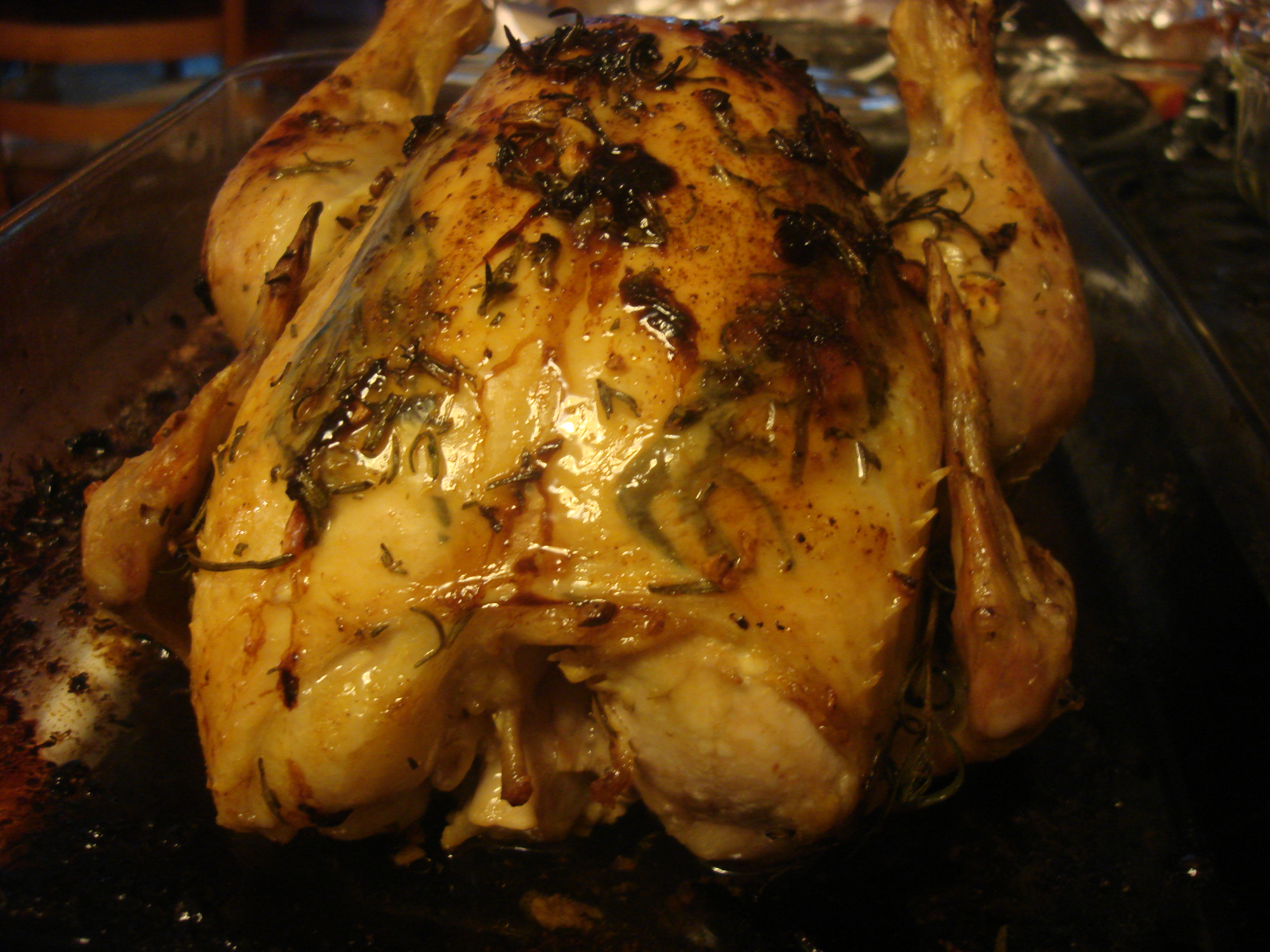
But, I am also compelled to share recipes and this one is a goodie – a simple yet sophisticated roast chicken (I am very fond of roast chicken) that comes out subtle and juicy and really showed off the fine qualities of the pastured chickens Trisha Hardgrove has been producing at Restoration Farm. The texture and grain of these birds is far superior to anything I’ve had from a supermarket or specialty store (including expensive organic or “natural” birds). They even look cleaner and healthier that a commercial bird when plucked and when I am cutting into them.

Since I believe in packing the oven whenever possible, I made Slow-Roasted Cherry Tiny Tomatoes https://hotcheapeasy.wordpress.com/2011/08/03/slow-roasted-grape-tomatoes-for-pasta-bruschetta-or-sandwiches/at the same time. This dish would also be very fine with string beans (now at distribution at our CSA) or roasted summer squash (abundant right now).

I made this ahead of Hurricane Irene and brought the chicken and tomatoes over to the kind neighbors who had us sleep over their house on the night the storm hit (I got spooked by the banging on the roof). It made a terrific cold lunch when the power was out. Hot or cold, roast chicken brings comfort.

Rosemary and Lemon Roasted Chicken

1 roasting chicken (4-5 lbs), giblets removed

Olive oil for rubbing

4 cloves garlic, minced into a tsp coarse salt

Juice of two juicy lemons (Meyer lemons are recommended, but if you haven’t got, be prepared to add ½ tsp sugar or a tsp of orange juice to the rub), squeezed lemons reserved

¼ Cup coarsely chopped fresh rosemary leaves (may add another ¼ Cup fresh, or supplement with a smaller amount of dried rosemary) plus 8 rosemary sprigs

¼ tsp cayenne pepper

Coarse salt

Preheat oven to 375°F and place rack in the center. Rinse and dry the chicken with paper towels, trimming and discarding extra fat.

Place chicken breast side down on roasting pan (you may also use roasting rack to good effect) and rub the oil and half the garlic onto the skin. Pour half the lemon juice on the back (along with sugar or orange juice), as well as half the chopped rosemary and half the cayenne.

Turn the chicken over and gently separate the skin from the breast, leaving skin on. Insert on rosemary sprig on each side. Then repeat the rub with more oil and the remaining garlic, lemon juice, rosemary and cayenne. Sprinkle on additional coarse salt to taste.

Tuck a rosemary sprig under each wing and the remaining four sprigs in the cavity with the squeezed-out lemons.

Bake the chicken, breast side up, basting once or twice, until an instant-read thermometer inserted in the thickest part of the thigh (without touching bone) registers 170°F (1 to 1.5 hours).

Before serving, let the chicken rest, covered loosely with aluminum foil, for 20 minutes.

(This recipe was inspired by”Kathy’s Rosemary-Roasted Chicken” in Food To Live By, by Myra Goodman –the Earthbound Farm lady!)

Two-fer Tuesday: Chickpea and Tahini II and Balsamic Dressing for Tomatoes

30 Aug


Sometimes it just takes a little change to make a big difference in flavor. Here are two quickie recipes — one a salad and one a dressing for those crazy seasonal tomatoes that you no longer know what to do with  — that are variations on stuff I do regularly, but with a new ingredient that updates it, keeps it from getting stale.

In the chickpea and tahini salad, I add ginger and soy sauce to my basic tahini dressing for a slightly Asian flavor. For the dressing, I use balsamic vinegar instead of red wine vinegar as well as a dash of agave nectar; a little sweetness harmonizes with sweet seasonal tomatoes, but also mellows out their acidity.

These can be done in a flash and will complement any summer meal or be a light dinner in themselves with some crusty bread.

Chickpea and Tahini Salad II

1 Tbs lemon juice

1 Tbs tahini

1 tsp soy sauce

1 28oz can chickpeas, rinsed and drained

2 cloves garlic, minced

2 Tbs red onion (a quarter of a medium red onion), sliced thin

1 Tbs cilantro

1 tsp grated ginger

Mix or whisk lemon juice, tahini and soy sauce together in a bowl. Add remaining ingredients and stir to mix well.

Balsamic dressing for tomatoes

1-2 Tbs Balsamic vinegar (I prefer less)

8 Tbs olive oil

1 garlic clove, minced

½ tsp agave nectar

Salt to taste (start with a pinch – 1/8 tsp and work from there)

Whisk all ingredients in a bowl and pour over tomatoes in whatever quantity you like. Sliced red onion goes very well. You can serve with mozzarella and basil as a caprese salad, or over pasta for a summer buffet dish, hot or cold. Dip crusty bread into the liquid….

Fresh Tomato Sauce – Criollo-Style!

27 Aug

We anticipate a lot of flooding from Hurricane Irene, but the inundation I have been dealing with is far more pleasant: tomatoes. At Restoration Farm pick-up on Thursday, Farmer Dan’s dad, Daniel Holmes, heard I intended to make sauce and came up with four generous pounds of “seconds”: tomatoes that were harvested but don’t look pretty enough for distribution; a little bruised, maybe split, over-ripe – glorious grabbing for a peasant-hearted person. I was eager to take them, then of course got home and thought…oh s**t, I have to do these like, now, or what’s  the point?

And then I wasn’t sure how well my food mill would work – it seems to be missing a piece  – but I was in NO MOOD to blanch, peel and seed all these smaller tomatoes before cooking, so I went for it, just quartered them and dumped them in the pot. Luckily for me, I was able to rig the food mill to work, but if you are wondering what to get me for my birthday…(an egg timer would be equally welcome)

So, here is a very simple recipe for tomato sauce that tastes just like what my grandmother and her sisters used to make, often cooked with chopped eggplant or chicken thighs on the bone…I am not quite sure what I am going to do with my quart of sauce – it is in the freezer where it will keep for a few months, but I suspect that I will soon be misting up with nostalgia for my abuela over a bowl of eggplant and this sauce over rice.

If you are looking for an Italian style sauce, substitute the sofrito with a couple of sprigs of fresh basil (I may actually be doing that this afternoon with another batch while we still have electricity ) and add julienned basil at the end of cooking.

This sauce can be made anytime, substituting tomatoes from a can, but it is at its most fresh, light and charming when you take advantage of really ripe tomatoes.

This is pasta sauce the way my grandmother used to make it

Fresh Tomato Sauce – Criollo-Style

2 Tbs extra virgin olive oil

4 cloves garlic, minced

4 lbs ripe tomatoes, quartered if you have a food mill, peeled, seeded and diced if you don’t

¼-1/2 tsp sugar

4 Tbs homemade or prepared sofrito or two ice cubes worth if you have frozen (https://hotcheapeasy.wordpress.com/2011/06/30/sofrito-for-freezing-puerto-rican-mirepoix/)

Coarse salt, to taste (you’ll be adding it by the half teaspoon)

In a heavy-bottomed 3-quart saucepan, heat the oil over medium heat and add the garlic. Cook, stirring, until fragrant, 1-2 minutes. Do not allow to burn.

Add the tomatoes, sugar, sofrito and ½ tsp salt and bring to a simmer. Reduce heat to medium-low (a gentle simmer) and cook, stirring often until thickened. I simmer at least 30 minutes, but juicier tomatoes take longer.  Taste and add salt, as desired.

If using a food mill, use the medium blade. The peeled and seeded tomatoes will break up on their own, but you can run through the blender for a smoother texture.

Makes about 1 quart.

Tandoori-Style Roasted Chicken (great hot or cold!)

26 Aug

We picked up another pastured bird from our share at Restoration Farm this week, which reminded me how delicious the last one turned out.

While I decide what to do with this one (as Hurricane Irene churns her diabolical way up the Eastern Seaboard in our direction and I am checking batteries, gathering candles and surveying our canned goods), let me share this easy and extremely tasty recipe that tasted great right out of the oven, but also made for an excellent quick-grab out of the fridge in the following days, re-heated as well as cold!

This tandoori-style chicken was a recipe for whole chicken that Leandro picked out from a magazine (EveryDay Food, from Martha Stewart). He thought the picture looked very tasty and we had everything we needed in the house, except maybe the ginger. Since I am encouraging him to start eating chicken off the bone, letting him select the recipe worked out very well. I just tweaked the original to our tastes (more garlic, more spice) and it was smooth sailing!

Tandoori-style oven-roasted chicken

1 whole chicken (4-4.5 lbs), rinsed, patted dry and quartered (skin on)

1 cup plain non- or low-fat yogurt

½ yellow onion, roughly chopped

2-inch piece ginger, peeled (with vegetable peeler) and sliced

3 garlic cloves, peeled

3 Tbs fresh lemon juice

1 tsp ground cumin

1 – 1.5 tsp ground coriander

1 Tbs vegetable oil

Coarse salt and ground pepper

Place chicken pieces in a gallon-size zip-top bag. In a blender or food processor, blend all other ingredients until smooth and pour into bag. Seal and shake and refrigerate (4 hours to overnight).

Preheat oven to 500°F. Place a wire rack in a foil-lined baking sheet with sides. Place chicken parts on rack, skin side down, seasoning generously with salt and pepper. Roast until begins to char and flip for a total of about 35 minutes. Reduce heat to 450°F and roast until chicken is cooked through, 8-10 more minutes (insert meat thermometer into thickest part of thigh to check). Allow to rest 5 minutes before serving.

Party Snacks: Oven-Charred Tomatillo, Tomato and Hot Chile Salsa

22 Aug

If you are lucky enough to get a handful of tomatillos in your CSA share or find them in your grocery store, this recipe for a small amount will make your tastebuds very happy (or scream in agony if you overdo it on the hot peppers) and won’t take you very long at all.

There are very few commercially prepared salsas that I like; most are too sweet or too tomatoe-y or just boring, so making my own makes a lot of sense. Once you see how easy tomatillos are to char, you will probably become adventurous with your own flavor combinations.

Tomatillo (Physalis philadelphica) is indeed in the same family as the tomato, as well as the ground cherry (or cape gooseberry), which it actually resembles more, in looks, if not flavor. Native to Mexico, tomatillo has green or sometimes purple fruit, surrounded by a husk that gets papery as it ripens; it has always reminded me of a Japanese lantern.

When you buy, look for firm fruit with the husk still on (they will keep for a month in a paper bag). When you buy green ones, avoid any that are yellowish.  To prepare them for cooking, remove the husk and wash off the stickiness on the skin.

Although tomatillo is most often used for salsa verde (green sauce), I used purple ones in this recipe. I charred them under the broiler with red tomatoes and mixed them together for a deep and satisfying color.


Roasted Tomatillo, Tomato  and Chile Salsa

7-8 tomatillos, husked, rinsed and cut in half

Tomatoes of your choice, in an equal amount to the tomatillos, sliced in half (if using cherry-types) or chunked to the same size as the tomatillo halves

1 fresh hot chile pepper of your choice (I use jalapeño)

2 Tbs red onion, minced

2 cloves garlic, minced

2 Tbs cilantro, chopped

1/8 tsp lime juice

1/8-1/4 tsp coarse salt

Place tomatillos, tomatoes and whole chile pepper on a baking sheet and broil, turning once (carefully!) with a spatula when the tops start to char (my sturdy, but not so high-powered toaster oven took 10 minutes on each side {!} but a stronger oven could do the job in half the time, so watch out!)

When the vegetables are charred, let them cool until you can peel them (over a bowl to catch the juices). Discard peels and add tomatillo and tomato to bowl. Also peel the pepper and BE WARNED: this is a small amount of salsa, so you don’t want to go overboard on the heat. I use only half a jalapeño and remove the seeds and it is still pretty searing on the tongue. So…add roasted chile at your discretion/peril.

I break my salsa up with a fork – unnecessary if you are going to use a blender at the end. Stir in remaining ingredients. For a smoother texture, pulse a few times in a food processor or blender (I prefer chunkier and I hate extra equipment to wash, so I skip it). Garnish with cilantro and serve with tortilla chips.

Roasted Beets with Goat Cheese

17 Aug

Beets keep for three weeks or so in the fridge (You should always cut the beet greens to an inch before storing and use the beet greens right away), so if you have any in the cool box waiting for inspiration, this is a simple dish that results in big flavor and gorgeous visuals.

I think you will especially like the vinaigrette (and you can reserve some to use on salads later in the week; it really perks up a simple, seasonal fresh from the garden tomato and cucumber salad like the one I had today with a bit of feta).

This became an instant top ten for my mom; we are all big salad eaters around here (except for my son, but nevermind; we’re working on it) but even those most dedicated herbivore needs a wake up for the taste buds. Beets and goat cheese have become a classic flavor combination with good reason, so don’t wait ’till you see it on a menu. DIY!

Thanks to Adriana for inspiring this recipe in a comment on an earlier beet recipe (beets and greens with orange). https://hotcheapeasy.wordpress.com/2011/07/16/roasted-beet-salad-with-orange-and-beet-greens/.

Roasted Beets with Goat Cheese

Roasted Beet and Goat Cheese Salad

5-6 medium beets, tops trimmed to one inch, roots intact, washed and dried

3-4 Cups baby salad greens (spinach goes very well with this, as does arugula), washed and dried (if using large leaves, tear into bite-size pieces)

2 oz crumbly goat cheese

¼ of a red onion, thinly sliced (optional)

Handful of walnuts/cranberries (optional)

Vinaigrette

¼ Cup sherry or other mild vinegar (scant; reduce if using full-strength white or wine vinegar)

1 generous tsp prepared mustard (Dijon preferred)

¼ tsp agave nectar (or honey)

1 clove garlic, peeled and finely chopped

¼ Cup extra virgin olive oil

Salt and pepper to taste

Preheat oven to 400°F. Wrap beets loosely in foil and roast about 40 minutes, until tender when pierced with a fork. Remove from foil and cool. When you can handle them easily, peel with your hands. You may want to use gloves or put your hands in a plastic bag to peel, as the beets stain fingers pink. Cut into small bite-size chunks.

Lay a bed of salad greens on a plate, top with beet chunks, and optional red onion, walnuts and cranberries. Dot with goat cheese.

Whisk all vinaigrette ingredients together in a small bowl. Drizzle over salad just before serving (You may want to pour dressing after the goat cheese to keep it from getting colored. You may also want to drizzle less rather than more to really enjoy the exciting flavors of the salad ingredients).

Watermelon Gazpacho (and a cry for help)

14 Aug

Have you ever tried a lovely new recipe that is almost -, just short of-, achingly close to- perfect, but that you know needs a spike, a dash or a splash of something, but you can’t quite figure out what it is?

Well that’s what is happening with this Watermelon Gazpacho.

As is, it is a cool and refreshing welcome cross between a soup and a sorbet with which to greet guests. In Puerto Rico, some restaurants bring you a complimentary shot of fish soup or chicken soup to relax you while you read your menu options. At a recent poolside birthday party I attended here on Long Island, a server carried round trays of long elegant shot glasses of tomato gazpacho as part of the hors d’oeuvres and they were delicious starters. This watermelon gazpacho is a sweeter version of the same idea. It is gorgeous in its summer pinkness, accented by green mint or lime. My book club friends liked it a lot, as did my colleagues the following day when I tried it out on them.


However, I can’t help feeling like it needs something zingy to really complete it. I didn’t want to blend a spicy element in; I feel that is needs more side-by-side contrast. One suggestion was a drizzle of seasoned chile oil, so I have included that option here. It may be as simple as a pretty curl of green chile pepper or a sprinkle of hot pepper flakes and I will try that soon too. The original recipe, from Vegetarian Times, calls for verjus rather than vinegar, but I didn’t have any, so perhaps that is the missing element?

So, even as this recipe gives a truly lovely result in its current incarnation, and I encourage you to give it a try, I am asking your help in making it perfect. Let me know before the watermelon season is over!

Tips on selecting watermelons below.

Watermelon Gazpacho

2 lbs watermelon flesh, rind and seeds removed and chopped (approximately 6 cups)*

1 clove garlic, peeled

¼ medium red onion, peeled and chopped (about 1/4 cup)

½ medium cucumber, peeled and seeded (about ½ cup)

¼ medium red bell pepper, chopped (about ¼ cup)

1 inch thick slice day-old bread, any real hard crust removed

2 Tbs red wine vinegar (you may want to add more to your taste; do it 1 Tbs at a time)

2 Tbs fresh lime juice

Kosher or sea salt to taste

2-4 Tbs extra virgin olive oil

(optional: hot pepper/chile oil for drizzling; hot pepper flakes for sprinkling?)

Mint leaves for garnish

In the food processor or blender, add all ingredients except olive oil, salt and mint. Puree until smooth (or relatively smooth; I like the tiniest bit of chunkiness myself). Drizzle in extra virgin olive oil (about 2 Tbs) and season with salt. Serve cold, garnished with mint and drizzled or sprinkled with something spicy.

*The sweeter the watermelon, the sweeter the gazpacho. To buy a perfect whole watermelon, look for an even shape that would indicate even ripening. You DO want there to be a yellow mark somewhere on the green rind; that yellowed spot indicates the place the watermelon sat, getting field-ripened and sweet, instead of being picked too early to develop. Then listen to the fruit. A couple of raps on it with your knuckle should produce a hollow knock, not a dull thick thud.

Natalia’s Refrigerator Pickles (prep in 30 minutes, eat in 24 hours)

11 Aug


Refrigerator pickles are kind of like entry-level preserving for those of us who aspire to be like Martha Stewart, but don’t have the time, patience or domestic staff.

I started making them last year with a bumper crop of CSA pickles and zucchini and had so much fun, instant gratification and praise that I have kept going. I actually entered them in the Long Island Fair last fall, but the jar cracked and put me out of the running (wardrobe malfunction of the foodista variety). I will try again next year (so don’t even think about trying to enter this recipe on your own!).

These are a really popular item at BBQs and nice hostess gifts for wherever you are going to have dinner. By all means play around with the ingredients; I think turmeric is crucial, but leave it out for a more pure dill flavor.

And really, they don’t take more than 30 minutes to get in the jars if you arrange your ingredients ahead of time. Use labels to keep track of ingredients and Best By date (they keep about 3 months in the fridge).

Natalia’s Refrigerator Pickles

2 lbs medium Kirby cucumbers, sliced (I prefer spears, but you can also do rounds. Zucchini can also be substituted. Do not eliminate turmeric if using zucchini)

1 medium onion, sliced thin

6 cloves garlic, peeled and smashed (1.5 cloves per jar)

1 tsp black peppercorns

1 tsp whole mustard seed

1 tsp turmeric (This stuff stains! Careful!)

Several sprigs fresh dill weed

4 whole dried bay leaves (1 per jar)

1 1/3 cups brown sugar

13 TBS distilled white vinegar (approx ¾ Cup)

13 TBS white wine vinegar (approx ¾ Cup)

1.5 Cups water

  1. Divide cucumber and dry ingredients (except sugar) evenly between four quart jars with lids.
  2. Stir together brown sugar, vinegars and water.
  3. Pour vinegar mixture into the jars, screw on lids and shake well to combine. (Don’t worry if there doesn’t seem to be enough liquid to cover. The contents shrink after a day)
  4. Cover and chill. You can start eating them after 24 hours and they will keep up to three months in the fridge. Eat the onions too!