Archive | Tapas RSS feed for this section

Super Bowl: My Guacamole Kicks Your Guacamole’s …

29 Jan

An integral part of any Super Bowl strategy

The Super Bowl is only a game.

Super Bowl food, however, is serious business.

Guacamole is the bottom line of that business.

Guacamole (an appropriate linguistic blend of  the Spanish word for avocado: “aguacate” and “mole” or “milled/mashed”) is an integral part of the strategy of any self-respecting Super Bowl party, with avocado forming the base. I borrow this from Steve Inskeep on NPR’s Morning Edition to give you an idea:

Avocado consumption during the Super Bowl has become the stuff of urban legend. Most of the statistics are probably exaggerated, but that’s not going to stop us from repeating them. Because one says Americans will consume about 50 million pounds of the fruit as they sit on their couches watching the game. A more graphic claim comes from the California Avocado Commission (which)… has been quoted saying the amount of guacamole that Americans will eat this Sunday is enough to cover a football field – end-zone to end-zone, waist deep.

And when it comes to guacamole, I am the one who should have several big, fat Super Bowl rings studding my stumpy-sturdy, more-useful-than-beautiful, hands. Any time I serve it, I win.

I do not care what is traditional, what is correct, what should be, how anyone else does it. My guacamole has always and will always rock. I am proud of it and everyone loves it.

So now that we have dispensed with any pretense at humility, I will give you my recipe, which is a more-or-less one that you should taste while making, because that is what I do. It never tastes exactly the same, but it always tastes good.

Natalia de Cuba Romero’s Legendary Guacamole

2-3-4 Hass (small black pebbly) avocadoes, purchased relatively hard, 3-4 days before the game and scrupulously monitored for a gentle give before cutting open*

3-4 generous and fragrant cloves garlic, peeled (minced superfine if you don’t have a garlic press. If you do have a garlic press, wait for instructions)

1 tsp ground cumin (at least)

¼ cup fresh-squeezed lime juice (Key limes are the best, but not crucial; pre-squeezed from those plastic lime shaped containers is not an acceptable option)

¼ tsp salt

1 Cup nonfat plain yogurt

1-2 hard-boiled eggs, chopped

Handful grape tomatoes, halved, insides squeezed out haphazardly, then chopped

1 Tbs cilantro, finely chopped (unless you have some aversion to cilantro, which many people, remarkably enough, do)

Black pepper to sprinkle

Note: You really should have a garlic press for this.

Have a big bowl ready. Cut the avocado in half, remove pit and peel. Place in bowl. Press  (or add minced) garlic. Add cumin, salt, and some of the lime juice. Mash it to your liking (smooth or chunky). Add a couple of generous tablespoons of yogurt to taste (this is a stretching measure so you need to play with it and add as needed). Play with the spices a quarter tsp at a time and the lime a tsp at a time. When you like the flavor you have achieved, stir in the eggs and tomato. Et voila! The best guacamole ever. Serve with good tortilla chips (I like the blue corn ones, myself)

 *Do NOT wait till game day to buy your avocadoes because only the hard, unripe ones will be left. Buy several days ahead, let soften outside the fridge and if they give a LOT when you press, put them in the fridge immediately. The yogurt will save you if you don’t have enough soft or if you have too much brown flesh.

If using the Florida/Caribbean large, smooth-skinned variety, you may not need much yogurt, because they are more watery, not as dense.


Snap and Go Asparagus (fast and fun)

4 Jan

I dared to go off-season this week and it was well worth it.

When Spring rolls around I am on the phone to the local North Fork farms to find out exactly when they will be harvesting asparagus. There is nothing, nothing, nothing  better than the sweet, buttery green-ness of fresh-from-the-earth asparagus. I eat it for the six weeks of May and June that it is harvested (nevermind the odd smell of bathroom visits! More on that later), raw, steamed, sauteed, roasted…however.

However, it is not Spring right now! Asparagus may be in season somewhere, but not in my grow Zone.

Usually I stick to our local seasons, but the bunches of asparagus at one of the local grocery stores just looked so good that I got a craving that virtue could not curb. Hey, it’s been a tough holiday and virtue doesn’t seem to be handing out its own rewards at the moment. What the imported stuff lacked in farm-to-table zest, I made up for in garlic.

At $3.99 a lb, you might not find asparagus cheap (especially when you snap a third off the bottom!). Asparagus (which is a member of the lily family) tends to be expensive because it has to be harvested by hand. But it is certainly easy to prepare, and made for a speedy yet chic snack for me and my friend Jamie on a recent playdate (during which the kids ate – you guessed it – pizza). 

Please note, you can look very sexy nibbling asparagus if you let yourself go a bit. For that purpose, and for this barely-cooked recipe, I recommend the skinny asparagus over the fat.

Snap and Go Garlic Asparagus

1 bunch fresh asparagus (about a pound), rinsed and trimmed*

1-2 Tbs olive oil

2-3 cloves garlic, peeled and chopped, not too fine

salt for sprinkling

Heat the oil in a large skillet at medium heat until fragrant. Toss in the garlic, turn to coat, sauté an additional minute, then toss in the asparagus. Stir to coat then allow to cook for 5-10 minutes (the fresher and thinner the shorter the cook time). You can test them after five minutes by trying a stalk. You just want it tender and warm, but not mushy. Sprinkle with salt, and serve.

*Prepping the asparagus is fast and easy, but requires some explaining:

Rinse the stalks. Take one stalk and snap off from the bottom; there will be a natural break (sometimes it’s as far as a third of the way up!), which will scare you because you have spent money on this asparagus, dadgummit! The point, however, is that the stalks can be woody (especially if it is not-so-fresh) and the woodiness creeps up from the bottom. Some people use that first stalk as a measure and use a knife to trim all the rest. I snap each one. Discard the bottoms. Dry the remaining stalks.

(I often use this as a side dish to eggs or steak, but will also just do a pan and eat it with my fingers, as Jamie and I did on Sunday. Delicious and dead simple).

Fun science notes: Now, about the asparagus and urine connection. Apparently some people detect a sulfurous odor in their pee after eating asparagus (I definitely do) and others don’t. The jury is still out on whether that is because some people don’t produce the odor or they just can’t smell the difference. According to some of my online searches, Ben Franklin found the odor disagreeable, while Marcel Proust thought it rather fragrant (so the differences of olfactory opinion between the Yanks and the Franks go waaaaay back and waaaaay deep). At any rate, the odiferous asparagus mystery raises interesting questions about human digestion and sense of smell in general and may hold the key to greater understanding of what the nose knows and why.

Tapas 4: Clams and Chorizo: keeping the salt at bay (haha!)

27 Dec

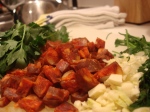
Clams and chorizo are delicious, gorgeous, easy  and lightning-fast to make, but be forewarned: the brine in the clams is so strong that the dish often turns out too, too salty.

I think I am going to start throwing peeled raw potatoes into the brine to soak up some of the salt; the flavors of this dish also harmonize with garbanzos (chick peas/ceci) so I may try adding a low-sodium can of those.  Kate from England suggests soaking clams in milk, but I usually use the clams in the shell…Any other suggestions are welcome!

Have a lot of good crusty bread available

Clams & Chorizo

3 TBs olive oil

4 cloves garlic, minced

¼ lb chorizo, peeled and coarsely chopped

¾ Cup dry white wine

2 lbs small clams in shells (or cockles or a mix) scrubbed

1 tsp parsley, chopped

Make sure you have tongs handy!

In a large pot, heat oil then briefly sauté garlic (do not brown). Add chorizo and sauté briefly, just until the oil begins to color. Add wine and bring to a boil. (This is where I think I’ll add garbanzos or potatoes in the future) Add clams and cover, then after a couple of minutes, open pot and begin to pull clams out with tongs as they open (they will get chewy if allowed to overcook even by seconds!). Put them in a serving dish with sides. If using potatoes, cook at low heat until they become tender. Stir parsley into the cooking liquid then pour over clams and serve (shells on) with crusty bread.

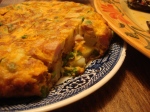
Party Snacks: Tortilla Torcal, a Spanish egg frittata with chorizo and ham

21 Dec

Today I lived my owned sour grapes fable. You remember: the Aesop story about the fox who can’t reach a bunch of grapes that are taunting him from a high vine. In the end, the fox gives up and consoles himself by saying, “Those grapes were probably sour anyway.”

Well, the tortilla flipper is probably overrated anyway.

Like the fox, I won’t find out whether this wondrous invention is as tasty as it looked on the online pages of a Spanish product vendor. It looks like two skillets hinged together that make flipping a classic Spanish tortilla (savory stovetop egg pie) easy. Like, you won’t burn your forearms as you upturn the eight not-quite-cooked eggs onto a plate and then slide the tortilla back into the skillet and you won’t make a goeey, cementy, eggy mess as the uncooked bits goop out of the skillet…

Nah, what would be the fun of that? Why take a muscle-y, down and dirty, daredevil sacrifice for the sake of food and turn it into a clinical, tidy, bloodless, soul-less operation?

Never. Not even if I could spare $50 to purchase another piece of kitchen equipment I have no room for.

So, screw the tortilla flipper. Or unscrew it. Or unhinge it. Forget it.

The tortilla itself, however, is a worthwhile enterprise. This is a case where the “easy” in “Hot, Cheap & Easy” is relative. A relative lie, actually. Making a Spanish tortilla takes time, patience, some strength and a set of stones. However, when you make a good one, your guests will lavish you with praise, something I am quite fond of.

And since I can make it the night before an event, it’s handy and portable.

The classic tortilla española is potato and egg, but this one, inspired by Penelope Casas’ recipe for Tortilla Torcal in her book Tapas makes it a mightier, spicier dish that really dresses up a tapas night.

Tortilla con chorizo y petit pois

1/2 cup olive oil

3 medium potatoes, peeled and cubed

8-10 eggs

1/4 tsp salt (optional, reduce or leave out if the ham is very salty)

1 small onion, chopped fine

1/4 lb. spicy Spanish-style chorizo sausage, peeled and diced

1/4 Cup ham steak or other cured/fully cooked ham, diced

1/4 Cup frozen peas, cooked


Heat the oil in a skillet and add potatoes, lower heat and cook potatoes slowly, turning frequently. When they start to brown, they are more than done. In a large bowl, beat the eggs lightly with the salt. Drain the potatoes, reserving the oil. Add the potatoes to the egg mixture and mix just barely (this gets the temperatures even).

Heat one tablespoon of oil to the skillet and sauté the onion until tender. Add the chorizo and the ham and cook just until the chorizo begins to release its oil (it will get bitter if allowed to cook more). Add the peas and cook for another few minutes. Stir very gently into the eggs and let sit for at least five minutes. Meanwhile, make sure your skillet (9” or 10” made of a material that is not too heavy!) is really clean, then heat two more tablespoons of oil and pour in the egg mixture. When you see the egg begin to cook on the edges, lower heat to medium low and cover. Allow to cook for ten minutes, until the center is thickened.

This is where it gets challenging. Get a plate that will fit smoothly to the edges of the skillet. The plate should be flat-surfaced, with no changes in levels. Take the skillet to the sink, put the plate on top and, with your hand firmly on the plate, turn the skillet over so the tortilla turns onto the plate (this is where the goo can scald your forearm, if you are unlucky or not careful). Then slide the tortilla back into the skillet, wet side down. Put back on heat and cover, continuing to cook until done (another five minutes or so). In the meantime, wash and dry the plate. When the tortilla is done, flip it back onto the plate and behold its golden loveliness.  

Allow to cool (I actually refrigerate overnight after it cools, wrapping in foil or plastic wrap or both). Serve at room temperature, or warm; it’s good at any temperature. I usually cut into squares for a tapas party and stick the squares with toothpicks to get people started.

 NB: Penelope Casas and other Spaniards prefer their tortillas a bit juicy inside. I find that Americans are too concerned about salmonella for that (and probably rightly so), so I cook it through. If you know your egg source, you should be fine cooking it rare!

Also, I really, truly thought the tortilla flipper was cool, but I think I am way cooler for doing it Old School. Sour grapes? You make the call.

Tapas 1: make your own mayo

17 Dec

This is the first in a bunch of posts about an evening of tapas, the Spanish snacks. On a recent evening I made tapas for some dear friends out in Greenport (an annual event) and you need to know how to do it too. It is an elegant yet friendly way to spend a long time at the table, eating and drinking in a leisurely fashion. The recipes are easy, but some can be time-consuming (I said hot, cheap and easy, but I didn’t say fast!) especially when you want to make several dishes. So choose things you can make ahead and serve cold or at room temp.

First off, make your own mayonnaise! It is lighter, creamier and fresher than what you buy in the store, doesn’t contain preservatives or other weird ingredients (it’ll keep for about a week in the fridge) and you can flavor it with garlic or herbs.

Homemade Mayo (with garlic mayo option)

2 yolks from fresh eggs

(2 cloves garlic, peeled and chopped, optional)

2 tsp lemon juice (or vinegar, if you must)

(1/4 tsp mustard powder, optional) 

pinch salt, grating of pepper

1 1/2 Cups light or extra-light olive oil (you can use different oils to achieve different flavors, but for basic mayo, light olive oils work best. I find regular olive oil too overpowering)

2 Tbsp warm water

Put the egg yolks, (garlic), lemon juice, (mustard), salt and pepper in a food processor or blender and buzz for a bit. Then leave the motor running and pour the oil in through the top in a very thin stream (I like having help for this part) and the mixture will get nice and thick. Add the warm water at the end.

Some people actually beat their own mayo; if you are so inclined, then do NOT use an aluminum bowl – it will turn the emulsion gray.

I like this slathered on tortillas (recipe to come), boiled potatoes, seasoned shrimp, in sandwiches…every which way you might use mayo or tartar sauce.

Cool science: Mayonnaise is an “emulsion” or a blend of two unlike things, in this case, oil and lemon juice (liquid). The egg yolks contain lecithin and that is the element that holds this fragile union together. Without it, you would have separation, just like in salad dressing. The reasoning behind fresh eggs is not just about food poisoning; the fresher the eggs, the more potent the lecithin and therefore the better your mayo.

Delusional – Why am I hosting a jewelry party? For the snacks!

21 Nov

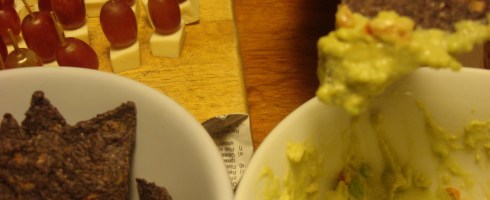
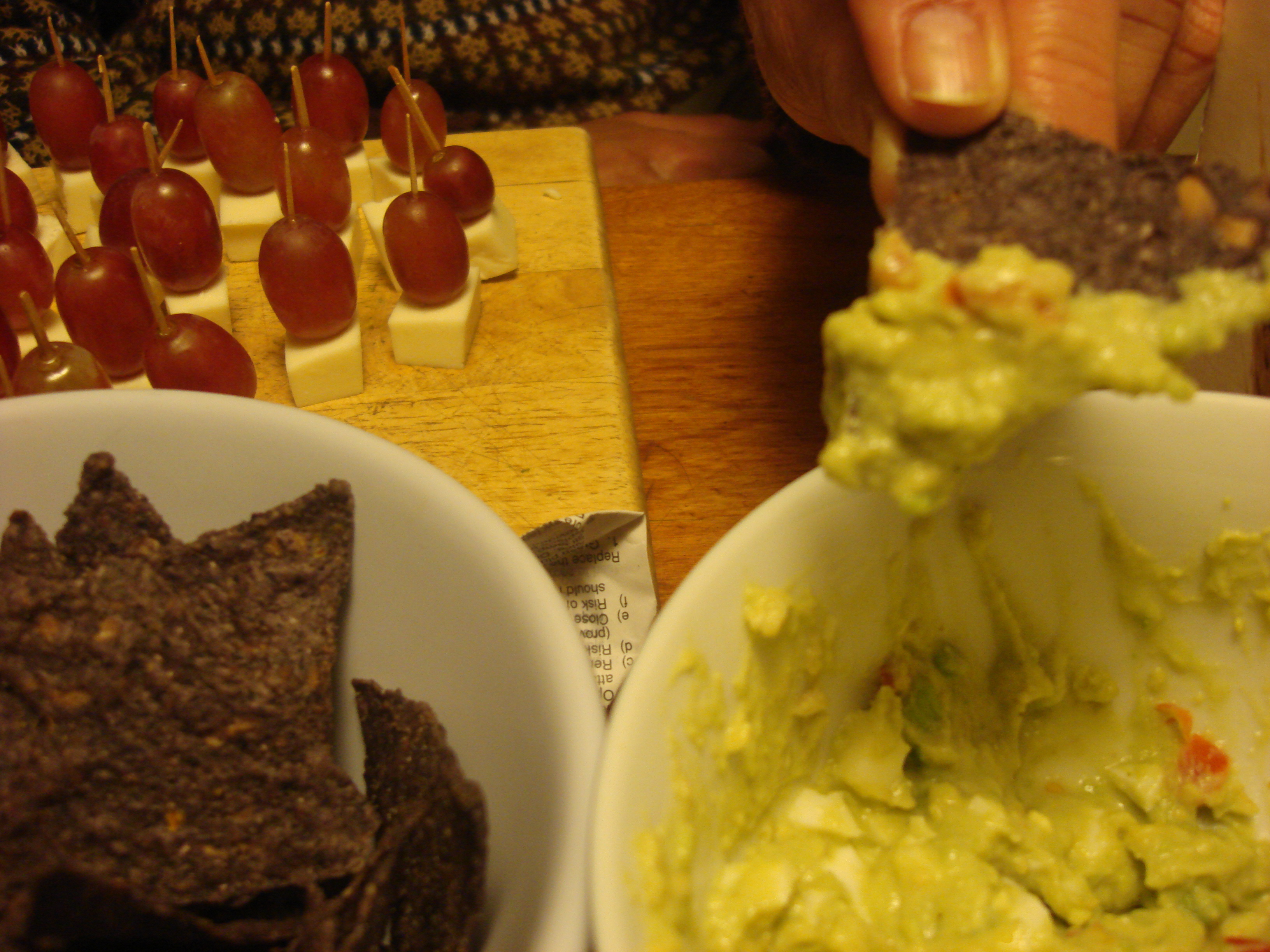
A do-the-best-you-can jewelry party snack table. White cheese and grapes are on the far left

It really was a great idea.

Really.

Really?

I decided to host a jewelry party at home, with the help of my mom, on the eve of Veteran’s Day since I and most of my friends had the next day off. Super.

Then my parents scheduled a trip and wouldn’t be around. Not-so-super.

Then the day actually came. Oh…sugar.

I don’t have time for this…

But, thankfully, Amanda, another mom at Spanish school, had just asked me for a quickie interesting recipe she could take to an outdoor party. “I know! Dominican white cheese and red grapes.”

All you need is cheese, grapes, toothpicks and a knife. Really.

Here’s your clever answer when someone wants to know where the idea came from (after you mention Hot, Cheap & Easy, of course).

Spain’s classic fruit and cheese combo of Manchego sheep cheese and membrillo (quince) is probably what inspires New World Latinos to try other pairings of fruit with local cheeses. Caribbean white cheese – sort of like firm mozzarella with more salt and muscle – goes unbelieveably well with tart-sweet red grapes. But to convince your guests to pop both in their mouths at the same time, skewer each block of cheese with a single grape and force the flavor explosion.

White Cheese and Grape Cocktail Skewers

Ingredients:

16 oz block of Queso Blanco (Latin white cheese, firm. It is available at Latin grocery stores, but my Costco also sells it in economy size bricks)

bunch seedless red grapes (the firmer the better)

toothpicks

Cut cheese into 1/2 inch square blocks. Skewer each block with a red grape. Arrange artfully on a tray. Enjoy the expressions of startled pleasure on faces.

Addendum: Amanda reports that she took it a step further and shredded parmesan cheese on a foil covered baking sheet at 300 or so, until browned and crisp. She then put the skewers on it for an edible (and therefore disposable) tray for her potluck. ¡Gracias amiga!