Archive | Puerto Rican RSS feed for this section

Abuela’s Juicy Meatloaf (or a reasonable, nostalgia-driven facsimile)

5 Oct

It’s not that I have the actual recipe, or ever did, or was even paying attention when it was being made, but guided by a bit of nostalgia — and inspired to meatloaf by a gorgeous Mexican Meatloaf recipe from fellow blogger Karen at Backroad Journal  — I put together a meatloaf that is reminiscent of what my late grandmother used to make for me.

Call it culinary forensics, trolling the recesses of my taste and scent memory for clues; flipping through the archives of meals at the round glass table of her dining room in urban Hato Rey; re-focusing my attention from the sounds of trucks blaring political messages from the avenue ten stories below, from the sensation of the cool tile floors under my bare toes, from the crumpled sogginess of the inevitable paper napkin, soaking up the condensation from the glass with the green and gold designs painted on it, the water flat tasting because she boiled it before drinking.

When I peeled away the distractions, finished my detective work and let my inner kitchen voices have their way, this is what I came up with – something fairly juicy, with fairly typical Puerto Rican seasonings and with tomato paste incorporated two ways. The one thing I am sure of is the tomato paste on the top, like icing on the cake for the savory set. The rest is an educated guess. In fact, it probably tastes nothing like what my grandmother used to make, but it gave me that same feeling and was mighty sabroso, so I am sticking with it.
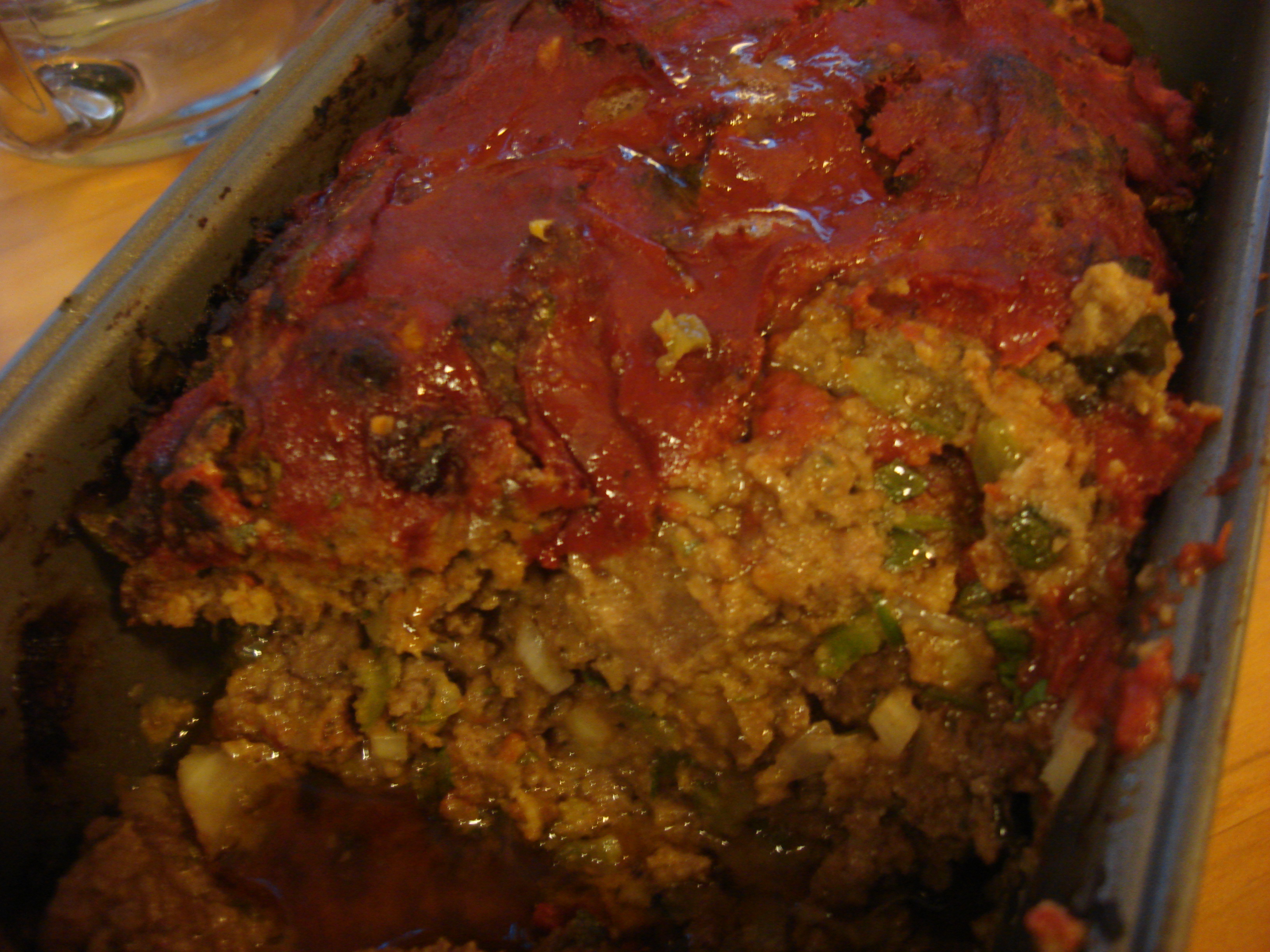
As a note (and call for advice): my dad and I are currently using the Verde Farms organic ground beef from Costco. The flavor is good, but it does have a fair bit of fat and the texture is a bit more fine than we like for things like meatloaf and meatballs and burgers (it’s okay for crumbled beef dishes). So this particular meatloaf is misshapen and reluctant to firm up and stick together for slicing purposes. It may be that I am doing something else wrong that could be corrected, so shout it out if you have an idea! The organic thing is important to me, in particular because of my son; any suggestions for a better ground beef available in Long Island would be most welcome.

Abuelita’s Juicy Meatloaf

2lbs ground beef

1 Cup dry breadcrumbs (seasoned is fine)

¾ Cup chopped onion

1 Tbs grated onion

3 cloves garlic, minced

½ Cup green bell/sweet pepper, minced

1 tsp cumin

2 Tbs fresh cilantro, chopped (may substitute parsley if someone has a cilantro aversion)

1 Tbs fresh oregano, chopped (halve if using dried)

1 Tbs fresh culantro (recao), chopped, optional

½ tsp chili powder

2 Tbs ketchup

1 Tbs tomato paste for the meat, plus 3 Tbs for the top

1 egg, beaten

Preheat oven to 375°F. Add all ingredients (except additional 3 Tbs tomato paste) to large bowl. Mix all ingredients with a fork or hands just until thoroughly combined, but do not work it through or knead it, or else the meatloaf will be tough.

Place in 8×5 loaf pan and bake for 40 minutes. Remove from oven and spread the reserved tomato paste evenly over the top. Return to oven and finish cooking (another 5-15 minutes – until a meat thermometer inserted in the center reads 140°F). Allow to cool slightly before serving.

Quickie Criollo Tomato and Avocado Salad (great side for spicy, salty or otherwise highly seasoned food)

3 Oct

A go-to side for spicy creole cooking!

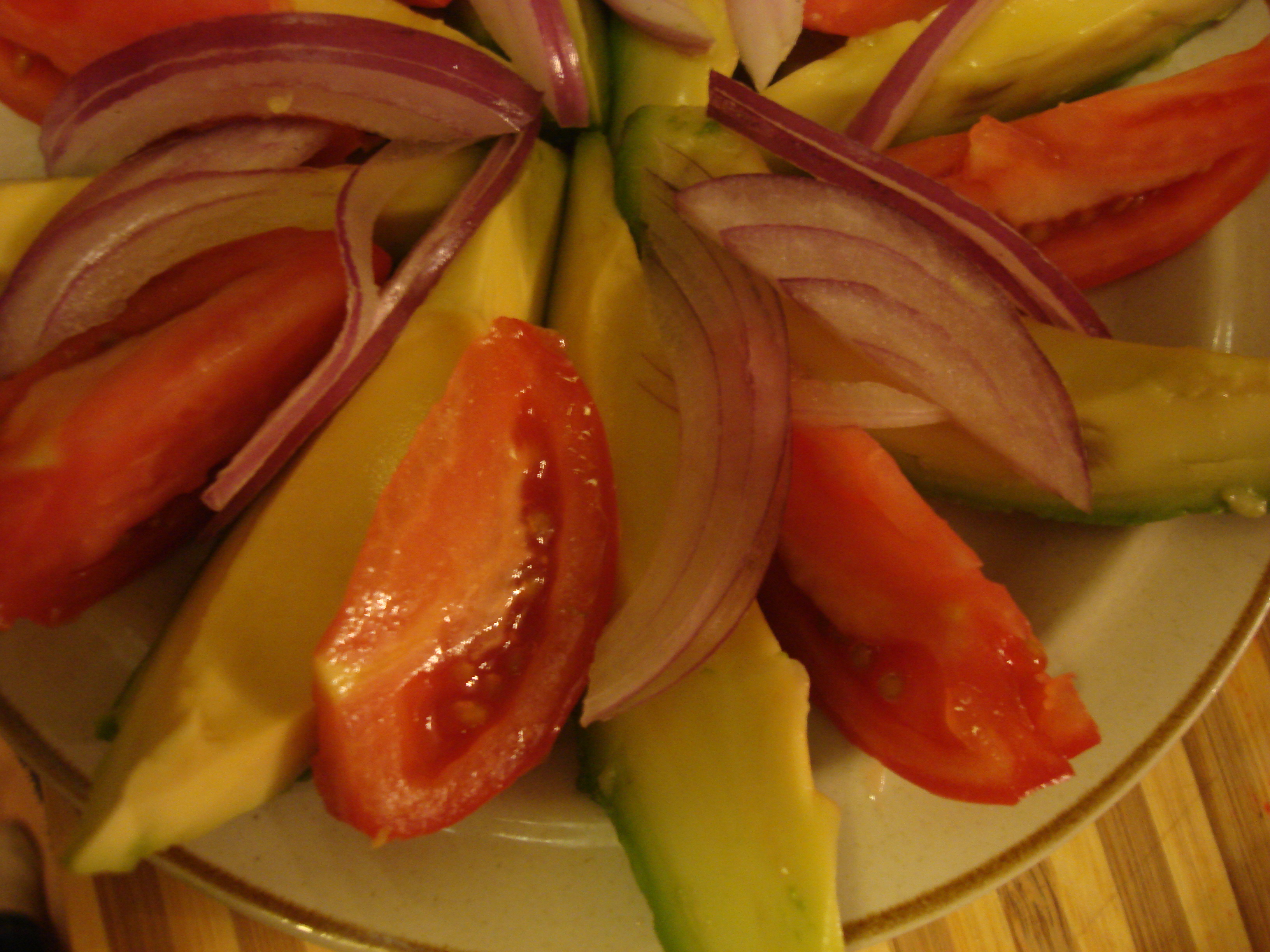
This is a super-quick, healthy side dish that we use in the Caribbean to accompany really salty stuff, like bacalao (salt cod) dishes, or to cool the palate between bites of something spicy. It goes wonderfully with creole soups, or as the lightest, yet most satisfying of dinners when you don’t want to fuss (A hard-boiled egg or a scoop of tuna would be a fine protein accompaniment). The colors and slices lend themselves to festive; this dish looks like a party, even if it’s just a party of one.
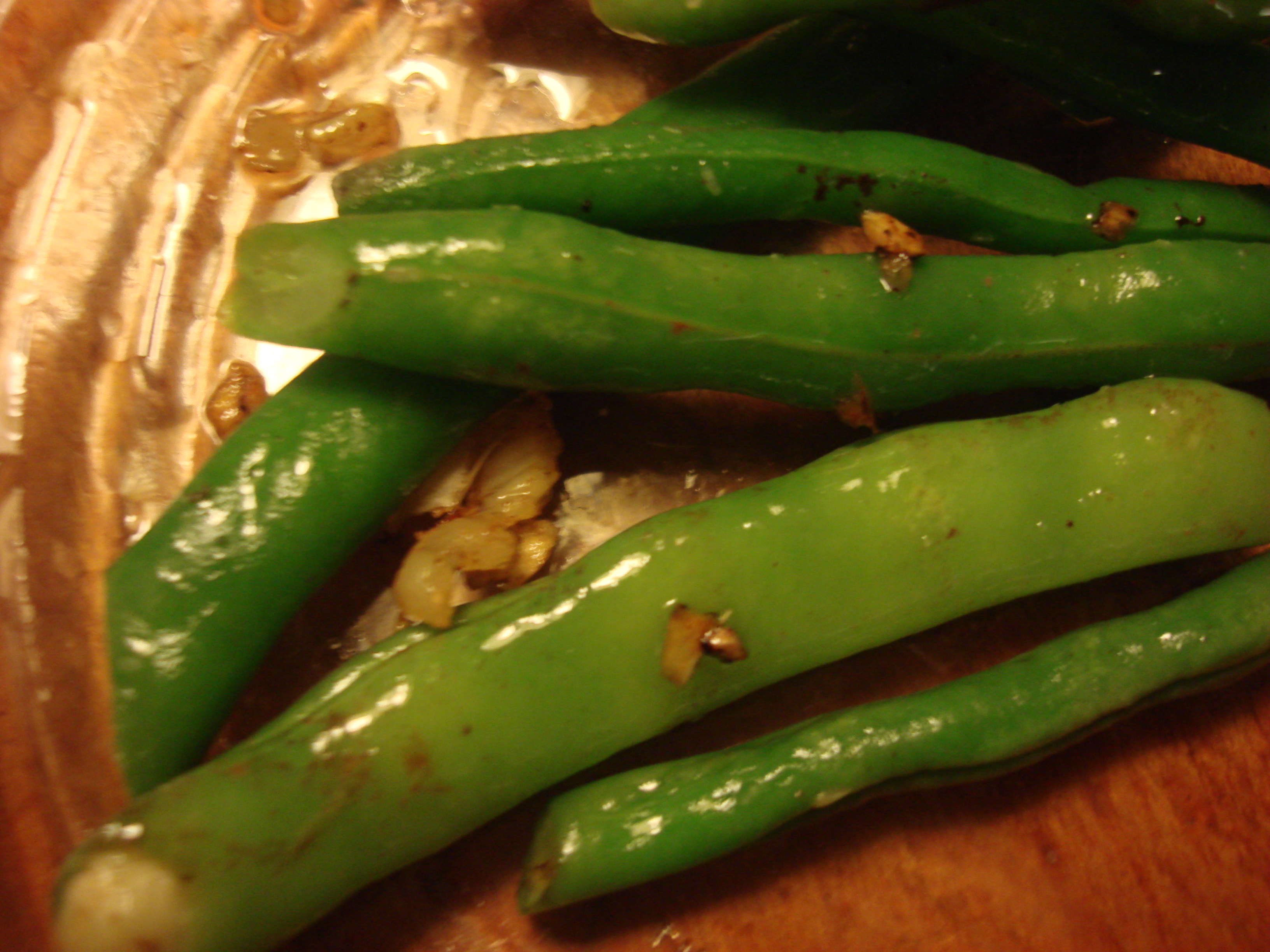
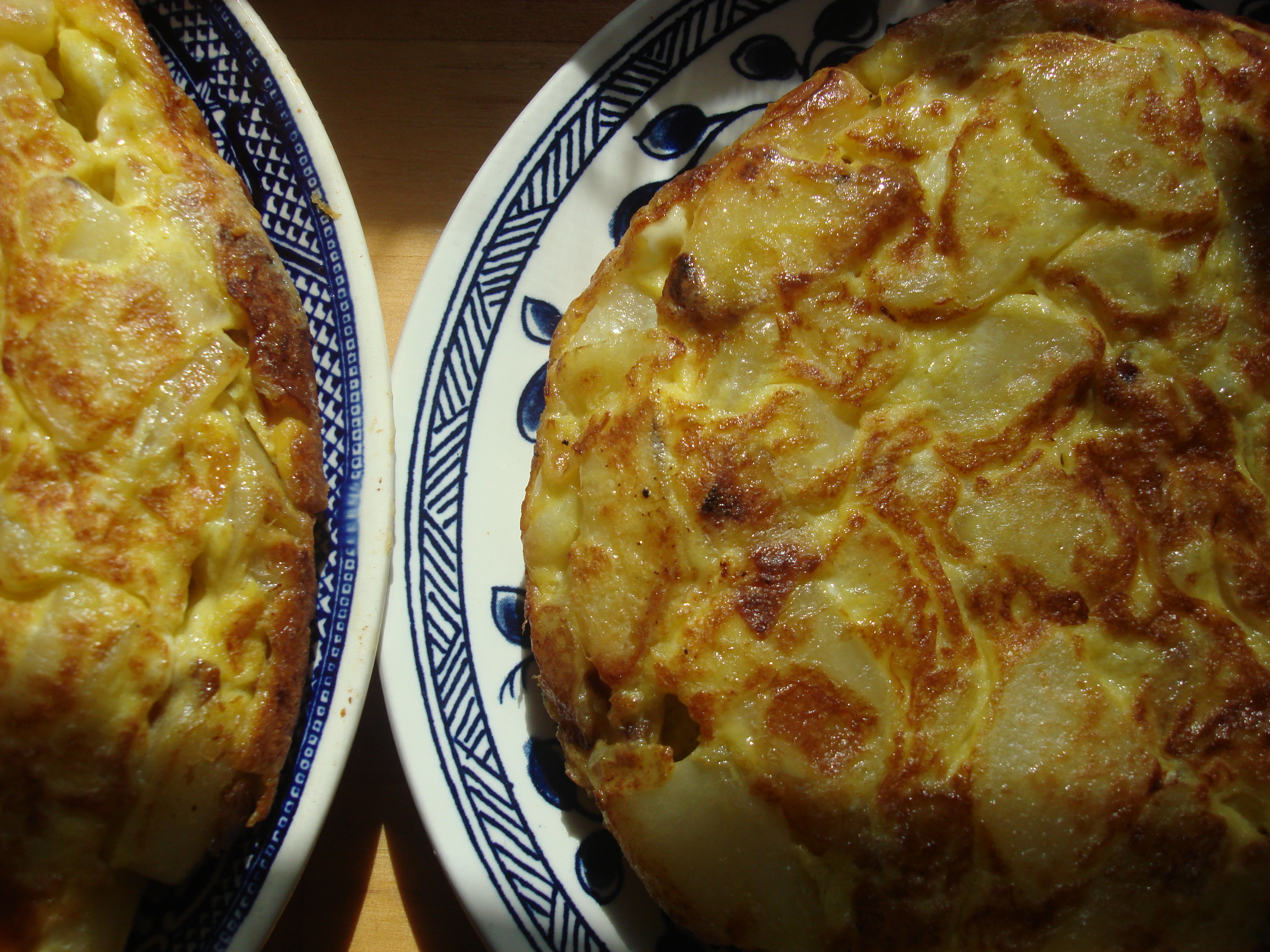
We had it tonight with a mini-tortilla española (potato and egg stovetop frittata) I made while doing a bigger sized one for our Restoration Farm potluck on Sunday, green salad and some string beans blanched and then sauteed with garlic and oil (and a bit of bacon fat, truth be told).


Quickie Tomato and Avocado Salad

1 ripe avocado (responds to pressure, but isn’t totally mushy*), sliced into eight wedges and peeled

1 ripe tomato, cut into eight wedges

¼ red onion, peeled and sliced thinly, lengthwise

Extra virgin olive oil for drizzling

Salt for sprinkling

Freshly cracked pepper, if desired

Arrange avocado and tomato wedges on a small plate, alternating

Scatter red onion on top. Drizzle olive oil as desired.

Sprinkle salt and optional black pepper and serve cold

*Buying avocado is not easy, I know! Lately I have had a 50-50 record of success with the little black Hass ones, despite my years of practice. I don’t know what’s up with that, but the general rule is to buy it hard and stick it in a paper bag — with an apple, if you’ve got — for a couple of days. If you are buying an avocado for the very same day, look for something that yields to pressure, but doesn’t totally mush. If it is ripe but you are not ready to use it, it will keep in the fridge for a couple of days.

Pollo Borracho (Drunken Chicken)

15 Sep

Usually when I have several pounds of organic boneless chicken thighs from Costco, I make pollo guisado (Latin stewed chicken) and eat some now, freeze some for later in pint containers. Very convenient and beloved by all (must be the beer and wine that go into it?  https://hotcheapeasy.wordpress.com/2010/12/17/abuelitas-stew-comes-through-%C2%A1un-guiso/)

But I just didn’t feel like it. At. All. No, no, no.

So instead, I made about three pounds worth of Pollo Borracho or Drunken Chicken, so called because it incorporates whatever the local hooch is in your part of Latin America. In the following version, adapted from Memories of a Cuban Kitchen by Mary Urrutia Randelman and Joan Schwartz (1992 Wiley Publishing),  the booze is white or light rum (I used Don Q Cristal, a Puerto Rican white rum, which is — by the way — the only acceptable rum for a Cuba Libre).

This recipe does take a long time to simmer, but the active part is very minimal and very basic. The texture is beautiful; it starts to shred of its own accord (I’m thinking quick black bean and chicken quesadillas…). Best of all, Leandro called me the best cook in the world after trying it (which means it is safe to pack the leftovers for his lunch tomorrow. Hurray!). I will experiment with freezing some for future reference!

Pollo Borracho

3 lbs skinless, boneless chicken thighs (you may use pretty much any chicken parts. Bone-in is fine, but do remove the skin)

¼-1/2 tsp salt

¼-1/2 tsp oregano

Black pepper to taste

4 Tbs extra virgin olive oil

3 cloves garlic, minced

1 large onion, peeled and sliced thick

1 bay leaf

¼ Cup dry white wine

¼ Cup light or white rum

¾ Cup pimiento-stuffed green olives (about 20) drained

Wash the chicken and pat dry, then season with salt, oregano and pepper. Heat olive oil at medium high (in a large skillet that can accommodate all the chicken and that you can cover) until fragrant and then brown the chicken thoroughly on all sides. Remove chicken and reserve.

Lower the heat to medium low. Put onions and garlic in the skillet and sauté until wilted. Add bay leaf, wine, rum and olives. Stir to incorporate, then add chicken pieces, stir, cover and cook on low for 45 -60 minutes. If your skillet is oven-proof, you can cook it in a 350°F oven for 45 minutes instead. Remove the bay leaf and serve with white or yellow Latin rice.

NB: If you are more of a tequila person and want to get a bit more elaborate, try this Mexican recipe by my friend and inspiration, the peerless Zarela Martínez  http://www.zarela.com/2010/pollo-borracho-drunken-chicken/ It was one of the most-requested dishes at her eponymous Manhattan restaurant. It includes raisins and almonds!

Fresh Tomato Sauce – Criollo-Style!

27 Aug

We anticipate a lot of flooding from Hurricane Irene, but the inundation I have been dealing with is far more pleasant: tomatoes. At Restoration Farm pick-up on Thursday, Farmer Dan’s dad, Daniel Holmes, heard I intended to make sauce and came up with four generous pounds of “seconds”: tomatoes that were harvested but don’t look pretty enough for distribution; a little bruised, maybe split, over-ripe – glorious grabbing for a peasant-hearted person. I was eager to take them, then of course got home and thought…oh s**t, I have to do these like, now, or what’s  the point?

And then I wasn’t sure how well my food mill would work – it seems to be missing a piece  – but I was in NO MOOD to blanch, peel and seed all these smaller tomatoes before cooking, so I went for it, just quartered them and dumped them in the pot. Luckily for me, I was able to rig the food mill to work, but if you are wondering what to get me for my birthday…(an egg timer would be equally welcome)

So, here is a very simple recipe for tomato sauce that tastes just like what my grandmother and her sisters used to make, often cooked with chopped eggplant or chicken thighs on the bone…I am not quite sure what I am going to do with my quart of sauce – it is in the freezer where it will keep for a few months, but I suspect that I will soon be misting up with nostalgia for my abuela over a bowl of eggplant and this sauce over rice.

If you are looking for an Italian style sauce, substitute the sofrito with a couple of sprigs of fresh basil (I may actually be doing that this afternoon with another batch while we still have electricity ) and add julienned basil at the end of cooking.

This sauce can be made anytime, substituting tomatoes from a can, but it is at its most fresh, light and charming when you take advantage of really ripe tomatoes.

This is pasta sauce the way my grandmother used to make it

Fresh Tomato Sauce – Criollo-Style

2 Tbs extra virgin olive oil

4 cloves garlic, minced

4 lbs ripe tomatoes, quartered if you have a food mill, peeled, seeded and diced if you don’t

¼-1/2 tsp sugar

4 Tbs homemade or prepared sofrito or two ice cubes worth if you have frozen (https://hotcheapeasy.wordpress.com/2011/06/30/sofrito-for-freezing-puerto-rican-mirepoix/)

Coarse salt, to taste (you’ll be adding it by the half teaspoon)

In a heavy-bottomed 3-quart saucepan, heat the oil over medium heat and add the garlic. Cook, stirring, until fragrant, 1-2 minutes. Do not allow to burn.

Add the tomatoes, sugar, sofrito and ½ tsp salt and bring to a simmer. Reduce heat to medium-low (a gentle simmer) and cook, stirring often until thickened. I simmer at least 30 minutes, but juicier tomatoes take longer.  Taste and add salt, as desired.

If using a food mill, use the medium blade. The peeled and seeded tomatoes will break up on their own, but you can run through the blender for a smoother texture.

Makes about 1 quart.

Sofrito for freezing (Puerto Rican mirepoix)

30 Jun

The green and lush fragrance of culantro is one of my favorite rainy day smells. In the kitchen garden I kept at my late grandmother’s house in Mayagüez, Puerto Rico, I had a vigorous crop and whenever it rained, the drops activated the fragrance, the scent pervaded the house, and I got hungry!

Without culantro (which we call recao), Puerto Rican food just isn’t as vibrant; it can’t taste quite like abuela’s. It is integral to sofrito, the starter to so many recipes, including beans, soups, stews and rice dishes. It is the equivalent of the French mirepoix, that combination of sauteed/roasted onions, carrots and celery that is the base for so many Gallic dishes.

Recao – culantro

Unfortunately, culantro is not as well known in the U.S. and doesn’t grow super-well in my planting zone, although I have had some small successes over the years (Thanks to Vic Muñoz for her growing tips). So I hit the local Latin supermarket on occasion and buy some pre-cut leaves from Costa Rica. Because once cut, recao loses its potency quickly, I use twice as much as I would if I had just gone out back and snipped some. And because it is sold by quantities much bigger than I need for a single dish, whenever I do buy it, I make enough sofrito to freeze.

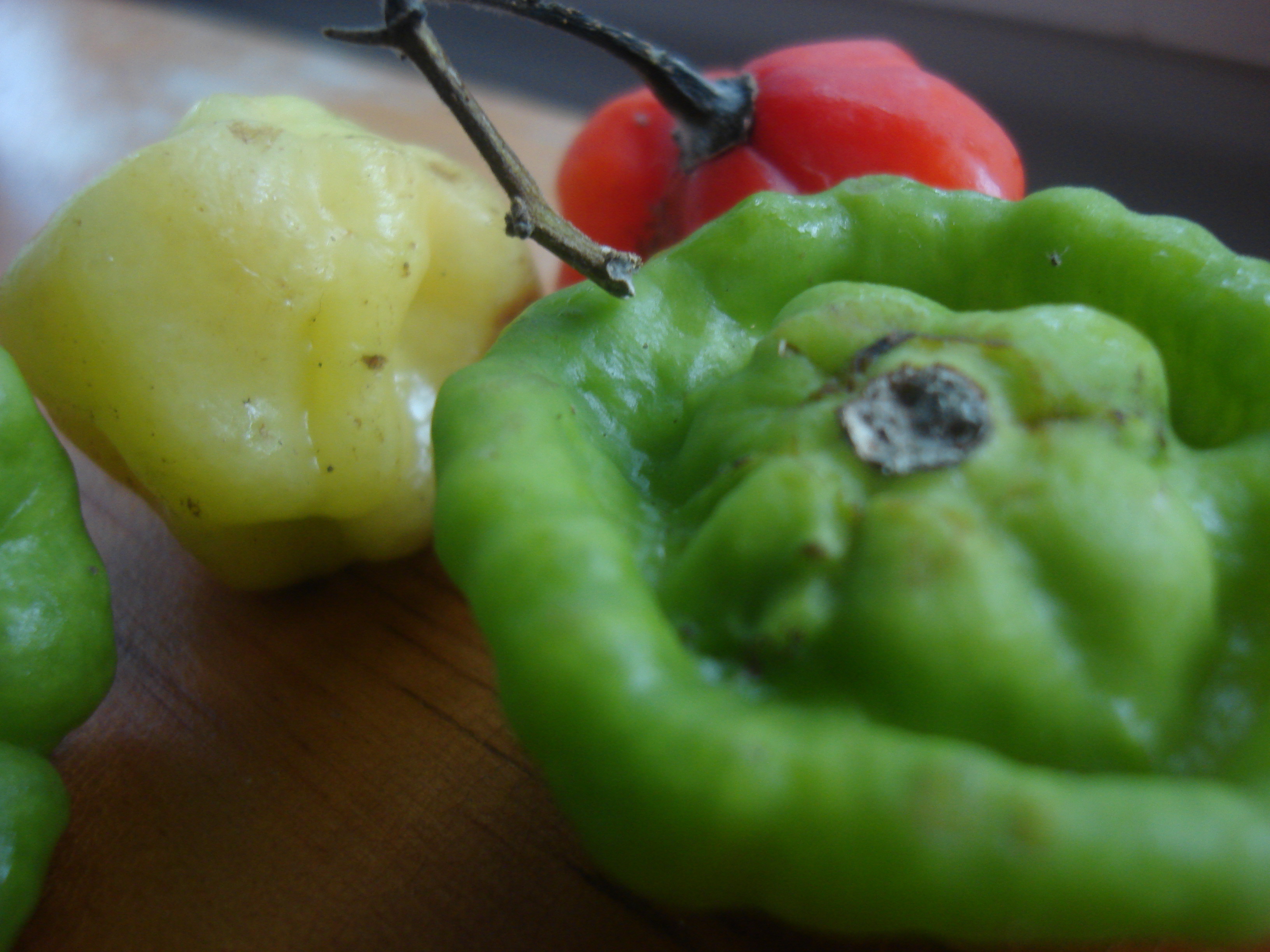
The same goes for ají dulce, the non-spicy small pepper that looks like a habanero, but isn’t at all spicy. I buy a bunch at once — along with the recao — and make sofrito to freeze. You have to be careful and taste it before adding it to the sofrito, because sometimes the store makes a mistake and labels the hot ones as sweet ones, or, I’ve been told, ají dulce planted too closely to ají bravo (angry, aggressive) will take on the spiciness. I can actually smell the heat when cutting habaneros (also called scotch bonnets); the volatility  is no joke.

Ají dulce – the sweet sibling to the hottie habanero

The following recipe is for those who have access to these products. If you don’t have a Latin market nearby, investigate the Asian/Indian markets, as they too use these ingredients.

Continue reading

Asopao de pollo (Soupy Chicken and Rice) with Pastured Bird!

23 Jun

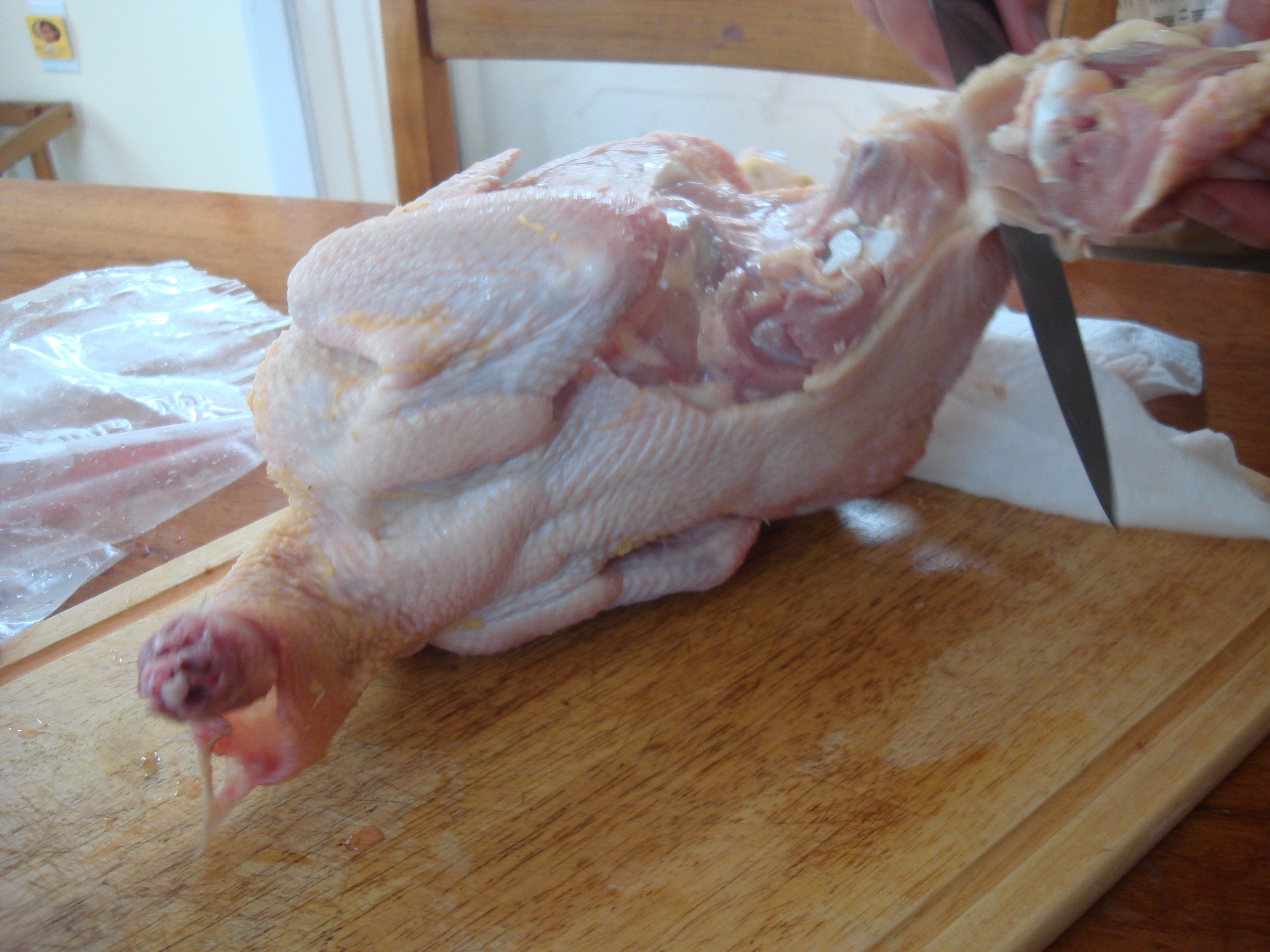
Sooooo, I managed to get to Restoration Farm in time to see the very tail end of the first processing (meaning when the birds are killed, plucked and eviscerated, lest I be accused of euphemism).

I did NOT take Leandro; I wanted to see things for myself and not have to focus on keeping him out of trouble. More on his reaction to the chicken in a moment.

First I want to say that the atmosphere at this first round of chicken processing was so calm and cooperative and lovely. The team of Trisha, Lucille, Steve, Brian, Denis, Dan and Caroline was tired, but elated, but not  giddy or punchy, after seven hours of chicken guts under the trees. Dan and Caroline’s two kids were there; two-year-old Ada was calm as could be in the face of all the activity.

My first bird

The chickens — all 35 made it to processing! – weighed in between 4. 16 and 6.65 lbs. As a note, these are not certified organic birds (that’s a whole ‘nother process), but they have been raised according to organic practices – from their feed to their pasture; they just don’t have the stamp.

I also forgot my bloody camera! I wanted to shoot myself (since I couldn’t shoot pictures). So you will have to wait and see whether someone is able to send me photos; then again, perhaps you don’t care to see the goings on. Anyhoo, it was clean and well-organized.

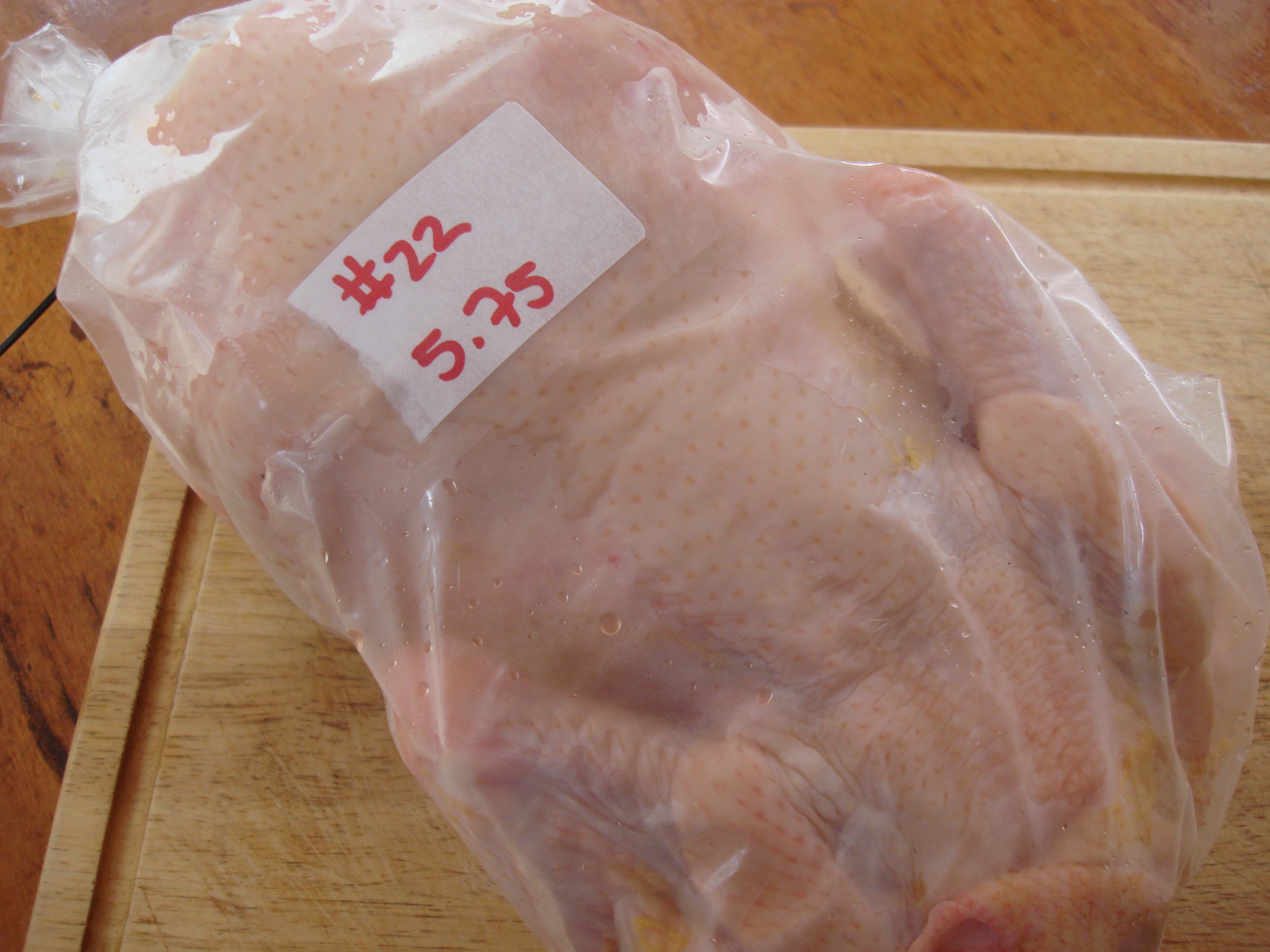
So I brought home bird #22, weighing 5.75 lbs. I picked up the necessary ingredients for asopao from the Compare (Latino) supermarket in Farmingdale on the way home. My dad, Pedro, roused himself from the NYTimes crossword puzzle to separate the bird (we saved the breasts for another meal cause this bird was so big!) and I went to work while Leandro was still across the street at a playdate. It was beautiful to work with. So clean.

Asopao isn’t really Hot, Cheap & Easy, except for the hot, sweaty work if you want to do it right (and I did). Perhaps I will invent a shortcut version one day, but not with this special bird. And really, my mom and dad were taken back to the days of my great-aunts cooking all day long…I really got it right. The chicken gave so much real flavor; it is certainly not as tender as factory-farmed, but it is really good. In the next few posts I’ll talk about some of the more unusual ingredients here and what to do if you can’t find them.

Leandro sat down to eat and said, “These are the little chickens that got big?”

and I said “Yes, Trisha and everyone killed them today so we could eat.”

“Oh. You went to see?” he said, and I said yes.

He stuck a big bite in his mouth and said, “Delicious.”

I forgot to tell him not to speak with his mouth full.

Asopao de Pollo (Soupy Chicken and Rice) Serves 6-8

Dedicated to my tía-abuelas

A – Three pounds chicken (may be whole chicken or, if you have a big bird, reserve the breasts for another meal. MUST HAVE BONES!!! Should have neck, heart and liver as well) cleaned and separated into drumsticks, thighs, wings (separated and tips cut off and reserved for stock), backbone, etc.

B – ADOBO (pound all ingredients in B in a mortar and pestle into a smooth paste)

  1. 3 cloves garlic, peeled
  2. 2 black peppercorns
  3. 1 tsp dry oregano
  4. 2.5 tsp salt
  5. 1 pinch (1/8 tsp) turmeric or sweet paprika (Turmeric stains, so beware!)
  6. 1.5 tsp olive oil
  7. ½ tsp vinegar

C – 2 Cups white rice (less if you want soupier soup.Sometimes the rice takes over.)

D – 9 Cups water and 1 Tbs salt

E – SOFRITO 1

  1. 3 Tbs olive oil
  2. 3 oz ham steak or jamón para cocinar, diced
  3. 1 oz bacon, chopped rustically
  4. 1 green cooking pepper (cubanelle or Italian pepper), diced
  5. 1 large onion, peeled and diced
  6. 6 culantro leaves (recao), minced
  7. 4 sweet small peppers called ají dulce in Hispanic markets (do NOT purchase Jamaican ají or scotch bonnet! They look the same but the Jamaican/scotch bonnet are HABANEROS, deadly hot and inappropriate for this dish!) seeded and minced
  8. ½ Cup cilantro leaves, minced
  9. 2 Tbs vegetable oil (seasoned with achiote, for the more expert criollo cook)

F – SOFRITO 2

  1. 1 Tbs capers, drained indifferently
  2. 1 tomato, seeded and diced
  3. 1  8 oz can Spanish-style tomato sauce
  4. 4 oz roasted red pepper, drained indifferently and diced
  5. 10 pimiento stuffed green olives
  6. 4 oz Spanish dry, cured chorizo sausage

G – ½ Cup light red wine

H –  OPTIONAL – in Puerto Rico we decorate and cool off the soup by topping with a can of petit pois or asparagus. Today’s foodies are not so hip to those particular vegetables in their mushy canned form. I leave it up to you.

Instructions

  1. Separate chicken parts into two large bowls. The back bone, neck, wingtips, liver, heart, and kidneys go in one for the stock. The meatier drumsticks, wings, thighs, and breasts (if using) go in the other. I remove most of the skin and cut off much of the fat. Season all pieces with the ingredients in B. (Adobo).
  2. Soak the rice in abundant water while doing the rest of the prep and cooking.
  3. Place the ingredients in D in a large (6 qt) saucepan. Add the stock chicken pieces, cover, bring to a boil at medium high, boil for 15 minutes, then reduce heat and simmer for an additional 30 minutes, covered.
  4. In an even larger pot, place all the ingredients in E (Sofrito 1), and sauté at medium high until vegetables begin to wilt. Add all the ingredients in F (Sofrito 2) and continue stirring until combined and beginning to stick. Add wine and scrape bottom of pot. Add the meaty chicken pieces and cook at medium, turning frequently to coat well. Cover and cook for 30 minutes on medium low.
  5. When the stock and chicken sofrito are ready, drain stock into chicken. From the stock, reserve the back and wings and get as much meat off them as you can, adding to the soup, discarding the bones. You may add heart and liver to the soup as well.
  6. Bring to a boil.
  7. Drain the rice, stir into the soup, cover and bring to a boil. Reduce heat and cook, covered until rice is cooked (start checking in 10-15 minutes). Serve with roasted red pepper, peas or asparagus garnish. If the rice takes over, just add water.

Black Bean Variation (Frijoles Negros con pimientos morrones y chorizo)

19 Jun

As much as I like my basic five-minute black bean recipe, (https://hotcheapeasy.wordpress.com/2010/11/24/five-minute-black-beans/)I do get bored with it occasionally and I also actually sometimes have more than five minutes (this prep takes maybe ten minutes).

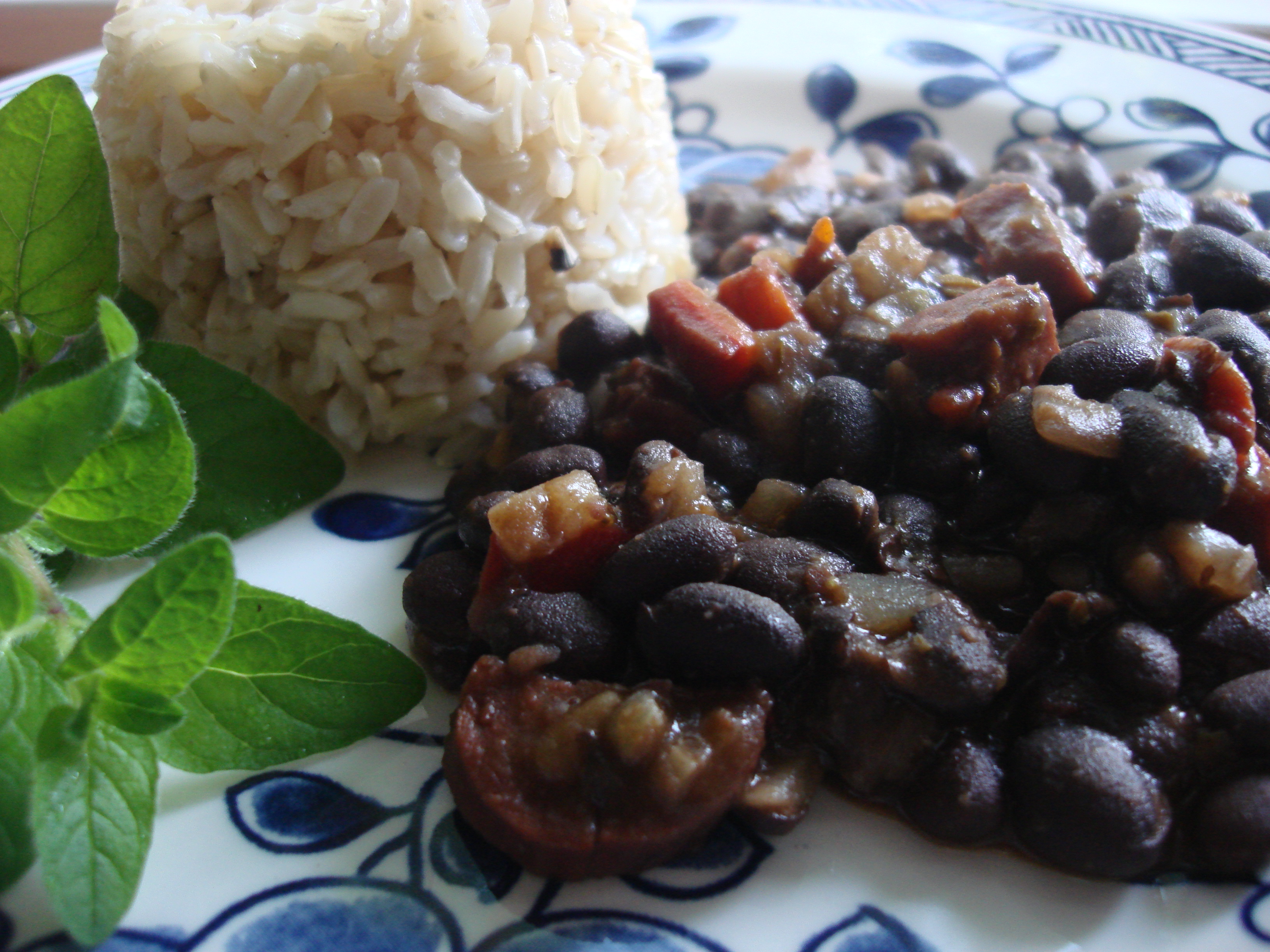
On this occasion of boredom and time to spare, I had some chorizo and roasted red pepper doing nothing but getting old in my fridge, so I broke out of my box. The result was much, much better than I anticipated; the addition of chorizo added a silky umami sort of mouthfeel that was actually a bit like gravy. So give it a try; my son and I enjoyed the added spiciness and actually had it with rice one day and on tortilla chips topped with Monterey Jack cheese and lightly broiled the next day.

Black bean variation (with chorizo, roasted red pepper and oregano)

1.5 Tbs olive oil

1 medium onion, peeled and chopped

3 cloves garlic, peeled and chopped

3oz Spanish-style dry chorizo sausage, peeled and diced

1 Tbs roasted red pepper from a jar, drained and diced

1 29oz can black beans, drained and rinsed

2 tsp dry oregano

Heat olive oil in a heavy-bottomed saucepan until fragrant. Add onion, stir to coat and lower heat to medium. Cook for five minutes. Add garlic, cook one minute. Add chorizo and cook until it starts to release color. Add red pepper, stir to coat. Cook an additional minute. Add beans, oregano and ½ cup water (more if you want more liquid for rice; about that or less for future quesadilla filling or nacho topping). Bring to a boil, reduce to a simmer and cook 15-20 minutes.

One Week to Our First Pastured Chicken: Final Selection of Recipe Has Begun!

15 Jun

Leandro's first homegrown peapod

Just before this week’s visit to Restoration Farm, we went out into our yard where Leandro picked the very first pea pod from a plant he himself started from seed! We were very pleased, even though the peas weren’t so tasty raw. This was a random variety from a garden show craft, so we have high hopes for the others we planted – Burpees Garden Sweet (organic). His eyes reflected the magic of a seed transforming into food.

Trish and one of her flock

Then at Restoration Farm, we visited that other transformation into food; Trisha tells us that the pastured chickens are a week away from our cooking pots. They will be seven weeks and one day, and — we hope — about five pounds. She had initially planned to go to eight weeks, but due to the window of opportunity for processing and the fact that they are getting slower and heavier and more prone to disease, she figures next week is it!

Ignorance is bliss


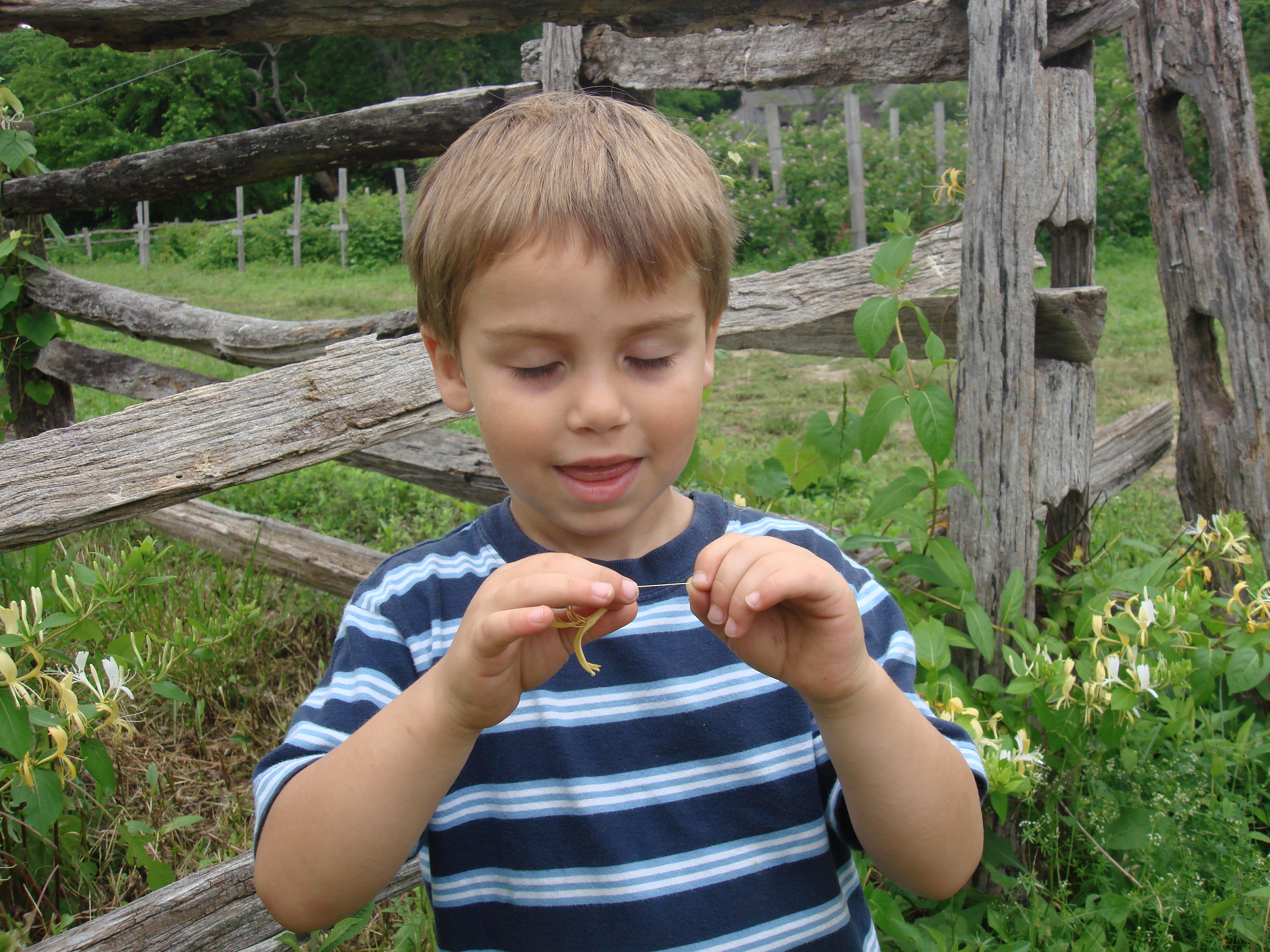
Leandro still finds the chickens stinky (and really, they are pretty pungent at this point) and was more interested in drawing sweet beads of nectar out of the honeysuckle blossoms that are exhaling seductive breaths of fragrance all over the farm these days. He learned the art of drawing out the style from Farmer Steve and then taught me! Delicious.

Honeysuckle gives it up for Leandro

So now I am planning what to do with my first bird. As I expect it to be less fatty and moist than a factory bird or even an organic chicken from a large facility, I am thinking about dishes that will help contain the moisture and make the most of the added flavor that a slightly more muscular bird will have. I also want to do something that is already in Leandro’s growing list of delectable foods, so as not to risk some refusal. And then there is the desire to honor my Caribbean forebears who lived off the land (some still do, at least in part).

So… I’ve got two ideal candidates from the criollo* canon: arroz con pollo: chicken and rice,or asopao de pollo: soupy chicken and rice. Feel free to share your thoughts and opinions on which one it should be!

*Criollo or Creole refers to the generations of colonialists actually born in the colonized place. In the case of Puerto Rico, the Spanish were the first Europeans to settle. They remained Spaniards, but their offspring born on the island (in many cases, half European and half native) were known as criollos – not quite European, but not quite native, either. Criollo cooking (like Creole in New Orleans, for example), reflects the meeting of different worlds of cooking ingredients and techniques.

Black Bean Soup (Criollo Caribbean style – sort of)

29 May

¡Eso!

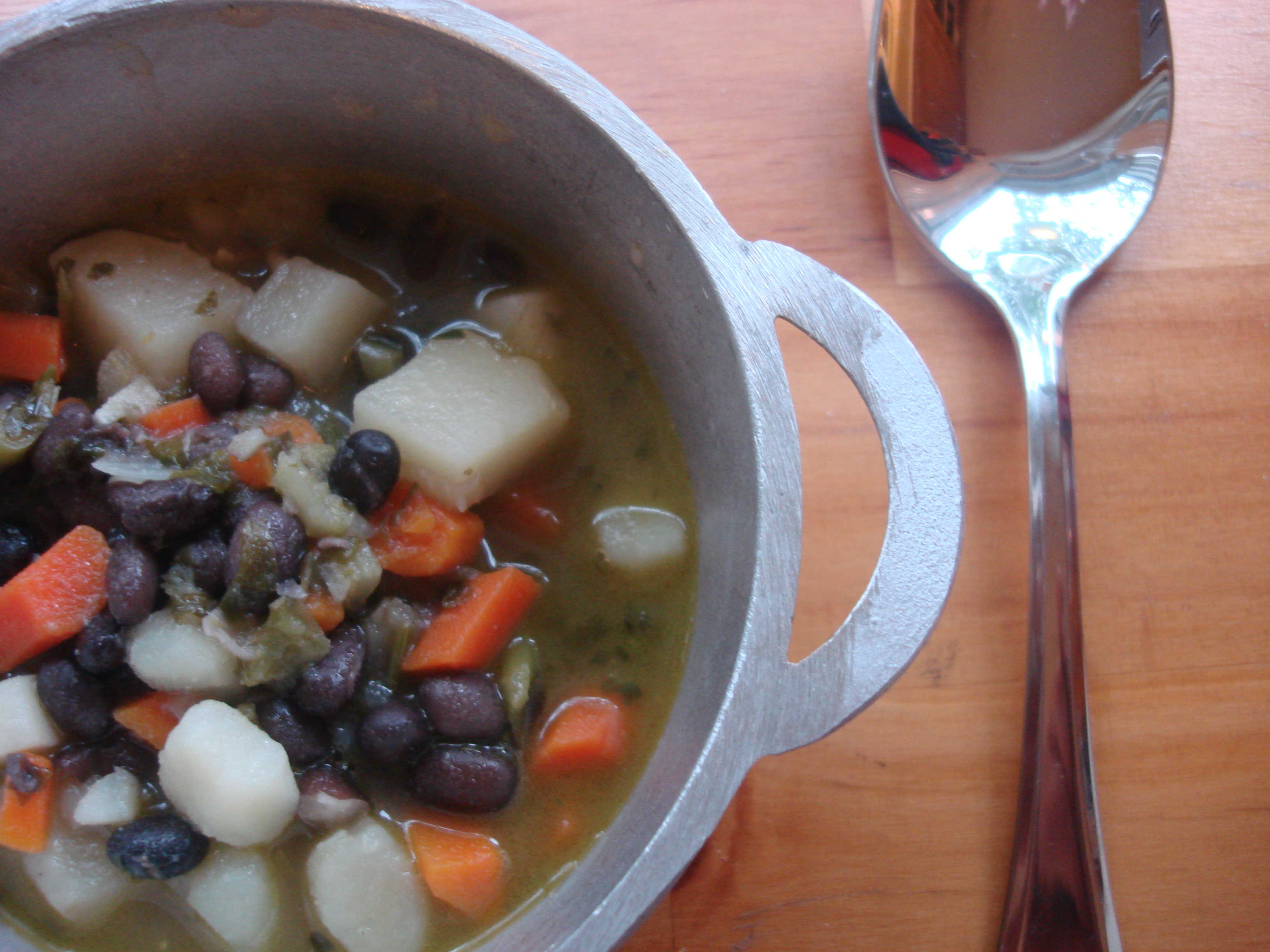
Black bean soup is the perfect blend of pragmatic and sexy. Black beans may be cheap and robust and there is no shyness to their flavor or definitive color – but they have a nutty subtlety that intrigues and keeps you coming back for more and wanting to try it new ways. They are happy in the company of the spicy as well as the subdued. Try this basic recipe first (it is broken down into easy steps, so it only looks long) and then start ad-libbing and improvising according to your tastes. Black beans are very sociable and get along with all sorts of flavors!

Black Bean Soup (with vegetarian options)

SOFRITO

2 oz salt pork in a single piece, scored – don’t cut through as you will remove it (skip if doing vegetarian soup)

2 Tbs extra virgin olive oil

1 cup yellow onion, minced

3 cloves garlic, minced

½ cup cubanelle or green bell pepper, minced (may mix or substitute with red pepper. Cubanelles are the pale green cooking pepper, sometimes called Italian cooking peppers)

6 culantro leaves, minced (if available. If fresh from the garden, 2-3 leaves should be enough. If you can’t find it, skip or add parsley)

1 Tbs cilantro, chopped (plus another Tbs chopped and reserved for garnish)

VEGETABLES

2-3 carrots, peeled and diced (about ½ cup)

2-3 stalks celery, diced (about ½ cup)

2 medium potatoes, peeled and diced (about 1 cup)

BROTH

1 quart chicken or vegetable broth

1 Tbs oregano (2 Tbs if fresh)

1 tsp cumin powder

BEANS

2 Cups black beans from dried (soaked overnight, water replaced in the morning and simmered for two hours in the afternoon) OR two 15 oz cans black beans, rinsed and drained.

Salt and pepper to taste

INSTRUCTIONS

SOFRITO

Heat 1 Tbs olive oil in a soup pot. Add salt pork and sauté until it has rendered much of the fat. Remove the salt pork and discard. Add remaining tablespoon of olive oil and warm it. One at a time, stirring to coat, add onion, garlic, peppers, culantro (recao), and cilantro. Saute at medium heat, stirring occasionally.

VEGETABLES

When the sofrito elements are translucent and limp, add the vegetables and stir to coat and cook till somewhat tender.

BROTH AND BEANS

Add broth and heat to boiling. If using soaked beans, add at this time with remaining spices and cook for 15-20 minutes, until tender. If using beans from a can, first cook broth and vegetables for 15 minutes, then add beans and cook for another five minutes.

(Optional finishing touches: Some folks, Cubans in particular, like to add a couple of teaspoons of red wine vinegar at the end to finish. You may like to serve with sliced or chopped avocado, dressed with a bit of red onion, squeeze of lime and salt. You can also serve over rice. I like to garnish with finely minced red onion, cilantro, and/or finely chopped hard-boiled egg. Sriracha is my current favorite hot sauce, but any hot pepper based hot sauce will spike this up nicely)

Pastelón de Yuca (Puerto Rican Shepherd’s Pie)

22 May

In an October post I gave you my recipe for Basic Seasoned Ground Beef (recipe repeated here, so don’t lose heart!) a Latin-style ground beef basic (similar to Carne para Rellenar, for the cognoscenti) that I make loads of at a time and freeze in serving size portions to be transformed into nachos, chili con carne (with the addition of red beans, tomato puree and chile pepper), ragu sauce for pasta (add Italian seasonings and tomato puree) or any number of things.

One of my favorite things to do with Basic Seasoned Ground Beef is make pastelón; the Puerto Rican equivalent of Shepherd’s Pie. It doesn’t take a lot of active prep (although it does require oven time in addition to stove top time) and it is a warming dish that will take everyone to their happy place. Click here for Pastelón de Platanos – Plantain Pastelón – another classic version of this dish). The more beef you use, the thicker it will be. You can also substitute Pollo Guisado (stewed chicken). The first section is the yuca preparation, but I also include the beef and chicken recipes in this post so you have them handy. Continue reading