Archive | farming RSS feed for this section

Two-fer Tuesday: Chickpea and Tahini II and Balsamic Dressing for Tomatoes

30 Aug


Sometimes it just takes a little change to make a big difference in flavor. Here are two quickie recipes — one a salad and one a dressing for those crazy seasonal tomatoes that you no longer know what to do with  — that are variations on stuff I do regularly, but with a new ingredient that updates it, keeps it from getting stale.

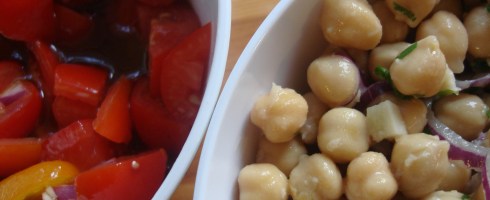
In the chickpea and tahini salad, I add ginger and soy sauce to my basic tahini dressing for a slightly Asian flavor. For the dressing, I use balsamic vinegar instead of red wine vinegar as well as a dash of agave nectar; a little sweetness harmonizes with sweet seasonal tomatoes, but also mellows out their acidity.

These can be done in a flash and will complement any summer meal or be a light dinner in themselves with some crusty bread.

Chickpea and Tahini Salad II

1 Tbs lemon juice

1 Tbs tahini

1 tsp soy sauce

1 28oz can chickpeas, rinsed and drained

2 cloves garlic, minced

2 Tbs red onion (a quarter of a medium red onion), sliced thin

1 Tbs cilantro

1 tsp grated ginger

Mix or whisk lemon juice, tahini and soy sauce together in a bowl. Add remaining ingredients and stir to mix well.

Balsamic dressing for tomatoes

1-2 Tbs Balsamic vinegar (I prefer less)

8 Tbs olive oil

1 garlic clove, minced

½ tsp agave nectar

Salt to taste (start with a pinch – 1/8 tsp and work from there)

Whisk all ingredients in a bowl and pour over tomatoes in whatever quantity you like. Sliced red onion goes very well. You can serve with mozzarella and basil as a caprese salad, or over pasta for a summer buffet dish, hot or cold. Dip crusty bread into the liquid….
Fresh Tomato Sauce – Criollo-Style!

27 Aug

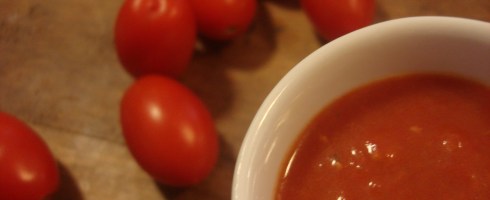
We anticipate a lot of flooding from Hurricane Irene, but the inundation I have been dealing with is far more pleasant: tomatoes. At Restoration Farm pick-up on Thursday, Farmer Dan’s dad, Daniel Holmes, heard I intended to make sauce and came up with four generous pounds of “seconds”: tomatoes that were harvested but don’t look pretty enough for distribution; a little bruised, maybe split, over-ripe – glorious grabbing for a peasant-hearted person. I was eager to take them, then of course got home and thought…oh s**t, I have to do these like, now, or what’s  the point?

And then I wasn’t sure how well my food mill would work – it seems to be missing a piece  – but I was in NO MOOD to blanch, peel and seed all these smaller tomatoes before cooking, so I went for it, just quartered them and dumped them in the pot. Luckily for me, I was able to rig the food mill to work, but if you are wondering what to get me for my birthday…(an egg timer would be equally welcome)

So, here is a very simple recipe for tomato sauce that tastes just like what my grandmother and her sisters used to make, often cooked with chopped eggplant or chicken thighs on the bone…I am not quite sure what I am going to do with my quart of sauce – it is in the freezer where it will keep for a few months, but I suspect that I will soon be misting up with nostalgia for my abuela over a bowl of eggplant and this sauce over rice.

If you are looking for an Italian style sauce, substitute the sofrito with a couple of sprigs of fresh basil (I may actually be doing that this afternoon with another batch while we still have electricity ) and add julienned basil at the end of cooking.

This sauce can be made anytime, substituting tomatoes from a can, but it is at its most fresh, light and charming when you take advantage of really ripe tomatoes.

This is pasta sauce the way my grandmother used to make it

Fresh Tomato Sauce – Criollo-Style

2 Tbs extra virgin olive oil

4 cloves garlic, minced

4 lbs ripe tomatoes, quartered if you have a food mill, peeled, seeded and diced if you don’t

¼-1/2 tsp sugar

4 Tbs homemade or prepared sofrito or two ice cubes worth if you have frozen (https://hotcheapeasy.wordpress.com/2011/06/30/sofrito-for-freezing-puerto-rican-mirepoix/)

Coarse salt, to taste (you’ll be adding it by the half teaspoon)

In a heavy-bottomed 3-quart saucepan, heat the oil over medium heat and add the garlic. Cook, stirring, until fragrant, 1-2 minutes. Do not allow to burn.

Add the tomatoes, sugar, sofrito and ½ tsp salt and bring to a simmer. Reduce heat to medium-low (a gentle simmer) and cook, stirring often until thickened. I simmer at least 30 minutes, but juicier tomatoes take longer.  Taste and add salt, as desired.

If using a food mill, use the medium blade. The peeled and seeded tomatoes will break up on their own, but you can run through the blender for a smoother texture.

Makes about 1 quart.

Tandoori-Style Roasted Chicken (great hot or cold!)

26 Aug

We picked up another pastured bird from our share at Restoration Farm this week, which reminded me how delicious the last one turned out.

While I decide what to do with this one (as Hurricane Irene churns her diabolical way up the Eastern Seaboard in our direction and I am checking batteries, gathering candles and surveying our canned goods), let me share this easy and extremely tasty recipe that tasted great right out of the oven, but also made for an excellent quick-grab out of the fridge in the following days, re-heated as well as cold!

This tandoori-style chicken was a recipe for whole chicken that Leandro picked out from a magazine (EveryDay Food, from Martha Stewart). He thought the picture looked very tasty and we had everything we needed in the house, except maybe the ginger. Since I am encouraging him to start eating chicken off the bone, letting him select the recipe worked out very well. I just tweaked the original to our tastes (more garlic, more spice) and it was smooth sailing!

Tandoori-style oven-roasted chicken

1 whole chicken (4-4.5 lbs), rinsed, patted dry and quartered (skin on)

1 cup plain non- or low-fat yogurt

½ yellow onion, roughly chopped

2-inch piece ginger, peeled (with vegetable peeler) and sliced

3 garlic cloves, peeled

3 Tbs fresh lemon juice

1 tsp ground cumin

1 – 1.5 tsp ground coriander

1 Tbs vegetable oil

Coarse salt and ground pepper

Place chicken pieces in a gallon-size zip-top bag. In a blender or food processor, blend all other ingredients until smooth and pour into bag. Seal and shake and refrigerate (4 hours to overnight).

Preheat oven to 500°F. Place a wire rack in a foil-lined baking sheet with sides. Place chicken parts on rack, skin side down, seasoning generously with salt and pepper. Roast until begins to char and flip for a total of about 35 minutes. Reduce heat to 450°F and roast until chicken is cooked through, 8-10 more minutes (insert meat thermometer into thickest part of thigh to check). Allow to rest 5 minutes before serving.

Natalia’s Refrigerator Pickles (prep in 30 minutes, eat in 24 hours)

11 Aug


Refrigerator pickles are kind of like entry-level preserving for those of us who aspire to be like Martha Stewart, but don’t have the time, patience or domestic staff.

I started making them last year with a bumper crop of CSA pickles and zucchini and had so much fun, instant gratification and praise that I have kept going. I actually entered them in the Long Island Fair last fall, but the jar cracked and put me out of the running (wardrobe malfunction of the foodista variety). I will try again next year (so don’t even think about trying to enter this recipe on your own!).

These are a really popular item at BBQs and nice hostess gifts for wherever you are going to have dinner. By all means play around with the ingredients; I think turmeric is crucial, but leave it out for a more pure dill flavor.

And really, they don’t take more than 30 minutes to get in the jars if you arrange your ingredients ahead of time. Use labels to keep track of ingredients and Best By date (they keep about 3 months in the fridge).

Natalia’s Refrigerator Pickles

2 lbs medium Kirby cucumbers, sliced (I prefer spears, but you can also do rounds. Zucchini can also be substituted. Do not eliminate turmeric if using zucchini)

1 medium onion, sliced thin

6 cloves garlic, peeled and smashed (1.5 cloves per jar)

1 tsp black peppercorns

1 tsp whole mustard seed

1 tsp turmeric (This stuff stains! Careful!)

Several sprigs fresh dill weed

4 whole dried bay leaves (1 per jar)

1 1/3 cups brown sugar

13 TBS distilled white vinegar (approx ¾ Cup)

13 TBS white wine vinegar (approx ¾ Cup)

1.5 Cups water

  1. Divide cucumber and dry ingredients (except sugar) evenly between four quart jars with lids.
  2. Stir together brown sugar, vinegars and water.
  3. Pour vinegar mixture into the jars, screw on lids and shake well to combine. (Don’t worry if there doesn’t seem to be enough liquid to cover. The contents shrink after a day)
  4. Cover and chill. You can start eating them after 24 hours and they will keep up to three months in the fridge. Eat the onions too!

Slow-Roasted Grape Tomatoes (For pasta, bruschetta or sandwiches)

3 Aug

Here is more to do with those gorgeous tiny tomatoes that are so abundant and sweet at this time of year!

I’ll give you the link for the original recipe which I didn’t have time to do completely. I saw it in The New York Times recently, but didn’t have time nor basil to prepare the special oil, so I modified to suit what I had at home, basically eliminating a step and that’s the recipe you’ll find below. Here’s the original  http://www.nytimes.com/2011/07/26/health/nutrition/26recipehealth.html

My version is lovely summer fare – bright and sweet and yet with depth. It also requires very little work and I did it successfully in the toaster oven, limiting the heat index in my kitchen! You can serve it on crusty bread or over pasta, but I popped a fair few into my mouth just as they were….
Slow-Roasted Tomatoes with Italian Seasoning

1 pint grape/cherry/Sun Gold tomatoes

1 pinch salt

1 pinch sugar

2 Tbs extra virgin olive oil

1-2 Tbs Italian herbs/Provencal herbs

Preheat oven to 300°F. Line an oven dish with aluminum foil and spread tomatoes in a single layer. Sprinkle with sugar and salt, then coat with olive oil. Sprinkle with herbs and roast for about 30 minutes, so that tomato skins are crinkling and splitting, but not fallen apart. Cool and serve on garlicky toast as bruschetta, as sandwich spread or mixed into hot pasta.

Best Book for Maximizing the Farmer’s Market/CSA Experience!

28 Jul


DON’T PANIC and Always Bring a Reusable Bag

The more farmers markets and Community Supported Agriculture farms that pop up all over Long Island and its environs, the better we like it. There is better, fresher produce, we can support the local economy and we can feel healthy and virtuous as we bring our boxes of glorious stuff into our kitchens to be converted into all manner of delicious dishes.

But ‘fess up…sometimes you have no idea what that lump of vegetable with the fan-like greens is, much less what to do with it. How do you store it? How do you prepare it? What is it called?

Well, DON’T PANIC. As The Hitchhiker’s Guide to the Galaxy is to interplanetary travelers, so is the Field Guide to Produce to intrepid locavores.

This handy guide to most any fruit or vegetable you might encounter at a greenmarket or specialty supermarket will fit in your backpack or good-size handbag (or your reusable bag). It has more than 200 color images of produce, as well as information on the history and lore of each (e.g. “The ancient Egyptians and Greeks ate wild asparagus shoots as a rare spring delicacy” and “In the Old Testament, Adam and Eve covered their bodies with fig leaves, and Cleopatra hid the poisonous asp she used to take her life in a basket of figs”).

The nitty-gritty is right there with the history lesson; Green tells you how to select the produce at its peak, how to store it (and whether it can be frozen) and basic guidelines on what to do with it when you are ready to slice, dice and create something delicious. For the independent traveler, she includes flavor affinities for each item (e.g.  parsnips: “apples, brown butter, brown sugar, cream, curry, leeks, oranges, root vegetables, stews and ragouts, truffles.”)  setting you off on your own path to culinary greatness.

Before Field Guide to Produce, I pretty much sautéed anything I didn’t recognize from my C.S.A. pick-up in garlic and oil and called it a day. If it was particularly nice-looking, I’d stick it in a vase for a centerpiece that looked great, but never got eaten. Now, emboldened by my trusty Guide, I am roasting, stir-frying, steaming and experimenting with great confidence and a certain savoir faire that I didn’t have before. And where I used to ignore the vegetables that stumped me until they got rather nasty in the fridge, now I am using every bit of my weekly take, either fresh or in frozen form. Come the long, cold winter, I will be pulling great Long Island summer flavors out of the ice box, thanks in part to Aliza Green. Share and Enjoy.

Field Guide to Produce: How to Identify, Select, and Prepare Virtually Every Fruit and Vegetable at the Market by Aliza Green, Quirk Books 2004

Heat Wave Solution: No-cook Pasta Sauce – with tiny tomatoes!

23 Jul

Oh this heat wave is tough. I’ve been cooking as little as possible, trying to limit turning on the stove and oven and trying not to eat food that is hot and heavy. Simple wrap sandwiches of veggie spears and hummus, apple slice dipped in hummus, cherry and Sungold tomatoes just popped into my mouth straight from the fridge.

This is a go-to no-cook pasta sauce that, yes, requires you to cook the pasta, but is fresh and cool going down. It’s done in an instant, and takes full advantage of the sweet little tomatoes and basil that are starting to hit their stride right about now. This sauce ends up with a silky sweetness that is almost buttery, but there is no dairy involved – unless you choose to add cheese…

Here’s wishing you a cool weekend!

Cool pasta for hot days

Raw tomato sauce for pasta

1 pound pasta (penne or other short pasta preferred)

2 Tbs extra virgin olive oil

1 pint cherry/grape or Sungold tomatoes, cut in half (the sweeter the better)

3 cloves garlic, minced

¼ cup basil leaves, chopped

Salt to taste

(Grated cheese for serving, optional)

Prepare pasta according to package directions. Drain (reserving a few tablespoons of pasta water, just in case) and place in large serving bowl. Stir in remaining ingredients (including pasta water if the mix seems too dry). Serve with optional grated cheese.

Fast track Spanish-style tortilla (camping friendly, no potatoes)

22 Jul

I love me some camp stove scrambled eggs, but it is not hard to step up the game a bit and make something fancier and more satisfying, even in the minimalist camp kitchen. The following recipe makes for rocking outdoor breakfast/brunch eggs: a cross between an omelette and a tortilla.

This is where you learn that it doesn’t have to have potatoes to be a tortilla…this one celebrates the zucchini season, but amps up the wow factor with a bit of spicy chorizo. It does justice to that big appetite that the outdoor life gives you, but cuts cooking and prep time in half.

(Love that fresh local flavor: my eggs come from Makinajian Poultry Farm in Huntington. It is hard to mess up eggs when they are that good)

Take your omelette to a new level....

Shortcut tortilla for camping

6 eggs, lightly beaten

1 Tbs extra virgin olive oil

½ medium onion, peeled and diced

½ medium zucchini, diced

3-4 oz Spanish (hot, dry) chorizo, peeled and diced

Salt and pepper to taste

Set aside the lightly-beaten eggs in a large bowl.

Heat half the olive oil until fragrant in an 8 or 9 inch skillet, then add onion and zucchini and sauté until tender. Remove from heat and stir vegetables into the egg mixture.

Wipe skillet (leaving a bit of grease) and add chorizo, cooking at medium until it begins releasing its oil. Then add to egg mixture and allow to rest five minutes. In the meantime, wipe the skillet and add remaining oil. Heat the oil on medium high until fragrant and add egg mixture, seasoning with a bit of salt and pepper.

Once the bottom of the egg mixture begins to set, shake pan to loosen and lower heat to medium. Cover and cook five minutes or until the whole egg mixture looks mostly set. Uncover and place a flat plate on top of the egg mixture and carefully turn skillet over so tortilla comes out. Slide tortilla back into the skillet and cook the other side till set. You may flip it several times until completely set.

Flip finished tortilla out of pan and onto plate. Allow to cool somewhat before cutting into wedges and serving.

Zesty Zucchini and Sizzling Squash with lemon and oregano

21 Jul

This is a simple seasonal recipe that highlights the flavors and freshness of summer (and can be done in a jiffy at a campsite).

Summer squash refers to vegetables such as zucchini and yellow squash, that look like gourds, but have thin, tender skins. Right around this time of summer backyard gardeners start to harvest so many of them, they will be giving them away. This is a fast and easy way to take advantage of the bounty without working too hard!

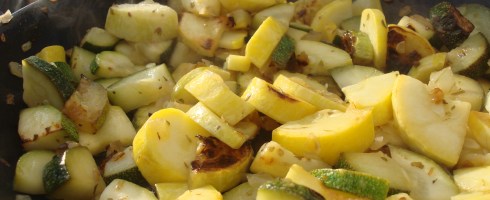
How this dish looked at our campsite on the beach

Sauteed Summer Squash with Oregano and Lemon

1 Tbs extra virgin olive oil

1/2 medium onion, peeled and diced

2 medium summer squashes (yellow/zucchini), quartered lengthwise and sliced

Tsp dry oregano

Juice of half a lemon (you may add by teaspoon to taste)

Salt and pepper to taste

Heat olive oil in a skillet at medium high until liquid and fragrant. Add onions and stir to coat. Add zucchini and stir to coat. Lower heat and cook until just tender, about 5 minutes. Add oregano, lemon and salt to taste and cook until flavors are blended, just a minute or two, longer if you want it very tender. Serve over rice, with pasta or just on its own.

De-Friended by a Vegetarian!?! (plus: new poll on your food choices!)

19 Jul

A vegetarian recently de-friended me on Facebook. She was unhappy with my posts on the pastured chickens at Restoration Farm and found them too painful, so she apologized (sort of) and pulled the plug.

I wasn’t particularly offended — to each his/her own — but it got me thinking about the food choices my readers make. So out of curiosity, I put together this quick poll. Please let me know what you will and won’t eat. I welcome comments on why as well!

I, in case you haven’t noticed, am an omnivore, but I try to limit my meat, fish and poultry consumption to organic/sustainably harvested products.