Archive | Comida Criolla RSS feed for this section

Classic Spanish-Caribbean Black Beans (Frijoles Negros) and Perfect White Rice

4 Dec

I have a four-year-old boy, so you know that toilet humor reigns supreme around here. I don’t particularly like all the burp and fart and poop talk, but I am a pragmatic woman; I try to make my reality work for me and try not to dwell on the way things “should” be.

So, what passes for classic poetry in my house starts out, “Beans, beans, good for your heart…” and you probably know the rest. I have no problem getting Leandro to eat beans several times a week; what preschooler could resist the lure of stinking out family and friends with such jackhammer potency? It goes much the same for asparagus; I reeled him in with the promise of sulphurous-smelling pee and now it’s one of his favorite (of very few) vegetables.

This is perhaps not the most appetizing of ways to introduce a recipe, but I’ll take my chances that you are interested enough in making fast, easy and healthy black beans that taste just as good as whatever you get in your local Cuban joint to overlook the other factors. Or, if you are a boy of any age, perhaps it is just the intro you need to start incorporating more beans into your diet!

(Note: the more often you eat beans, the better your body processes them, so some of the gassy part dissipates over time. And the low-fat, fiber, protein benefits are incredible. They are also cheap, especially if you soak your own*).

Classic Latin Black Beans (Frijoles Negros)

1 Tbs olive oil

1 medium onion, chopped

½ red or green bell or cubanelle – Italian long sweet – pepper (about ¼ Cup), diced

3 cloves garlic, minced

28 oz can black beans, rinsed and drained (4 Cups if using dried*)

½ Cup water (you can add more as needed)

1-2 stock cubes (vegetarian vegetable is fine; I use Knorr chicken)

1 Tbs dry oregano (or 1.5 fresh)

1 tbs cider vinegar (optional)

Heat olive oil in a heavy soup pot at medium high until fragrant. Add onion and peppers and stir to coat. Lower heat and cook until softened, about five minutes. Add garlic, stir to coat and cook another minute. Add remaining ingredients. Bring to a boil, then cover and lower heat to simmer, about 15 minutes. Serve with white rice (recipe below).

*Soaking dried beans: Rinse a pound of beans (from a store that seems to move a lot of dried beans – one of the problems is that if the beans are old, they will never soften up nicely), soak them in two quarts water overnight. Change the water in the morning and in the evening rinse and change water. Simmer them for two hours and holy legumes, Batman: 1.5 quarts of beans to play with.And talk about cheap: a pound of dried beans costs about the same as a 15.5 oz can of them and you choose how much sodium you want with it.


Perfect White Rice (you can halve this recipe if you are not big into carbs)

1 Tbs olive oil

2 Cups long-grain white rice (Sello Rojo, Goya or other Latin brand preferred)

4 Cups water

½ tsp salt

Place olive oil in a medium pot (with a tight lid). Begin heating to high while adding the rice. Stir to coat, Add water and salt. Stir once, then bring to a boil. Lower heat to medium and allow water to evaporate until it goes below the surface of the rice and there are a couple of holes in the surface. Turn rice over once with a big spoon. Cover and cook on low another ten minutes. Fluff with a fork and serve.

Mango Tango Salsa!

16 Nov

It was almost too late for that poor mango, bought in a frenzy of nostalgia for the tree my grandmother planted in her backyard in Mayagüez, a Puerto Rican town celebrated for its delicious, juicy, juicy, sweet, meaty, fiber-free mangos. In June, those suckers drop out of the sky and plop heavily onto the ground where you have to get them before the other critters do. They fall in such quantities that I spent many mornings cutting, slicing, peeling and freezing – you can’t possibly eat them all as they ripen. Friends in San Juan used to love to see me arrive with freezer bags full of Mayagüez mangos; they’d have the blender, booze and ice ready for action before I could even lock my car and get to the front door.

No such welcoming committee for this mango, even after its long journey from Brazil or Mexico or somesuch warm place, after its boring days in a chilly supermarket produce aisle next to a basket of equally foreign avocados, after too many days in the pale fall light of my southern exposure window, defended from attackers by its only company: several very busy spiders and a valiant Venus Flytrap. No, this poor mango was in dire need of attention and accessorizing, as its best days were behind it.

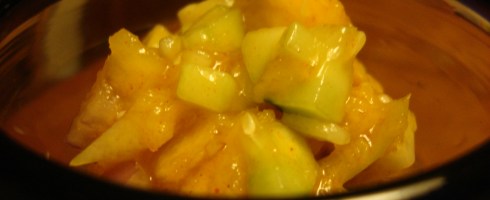
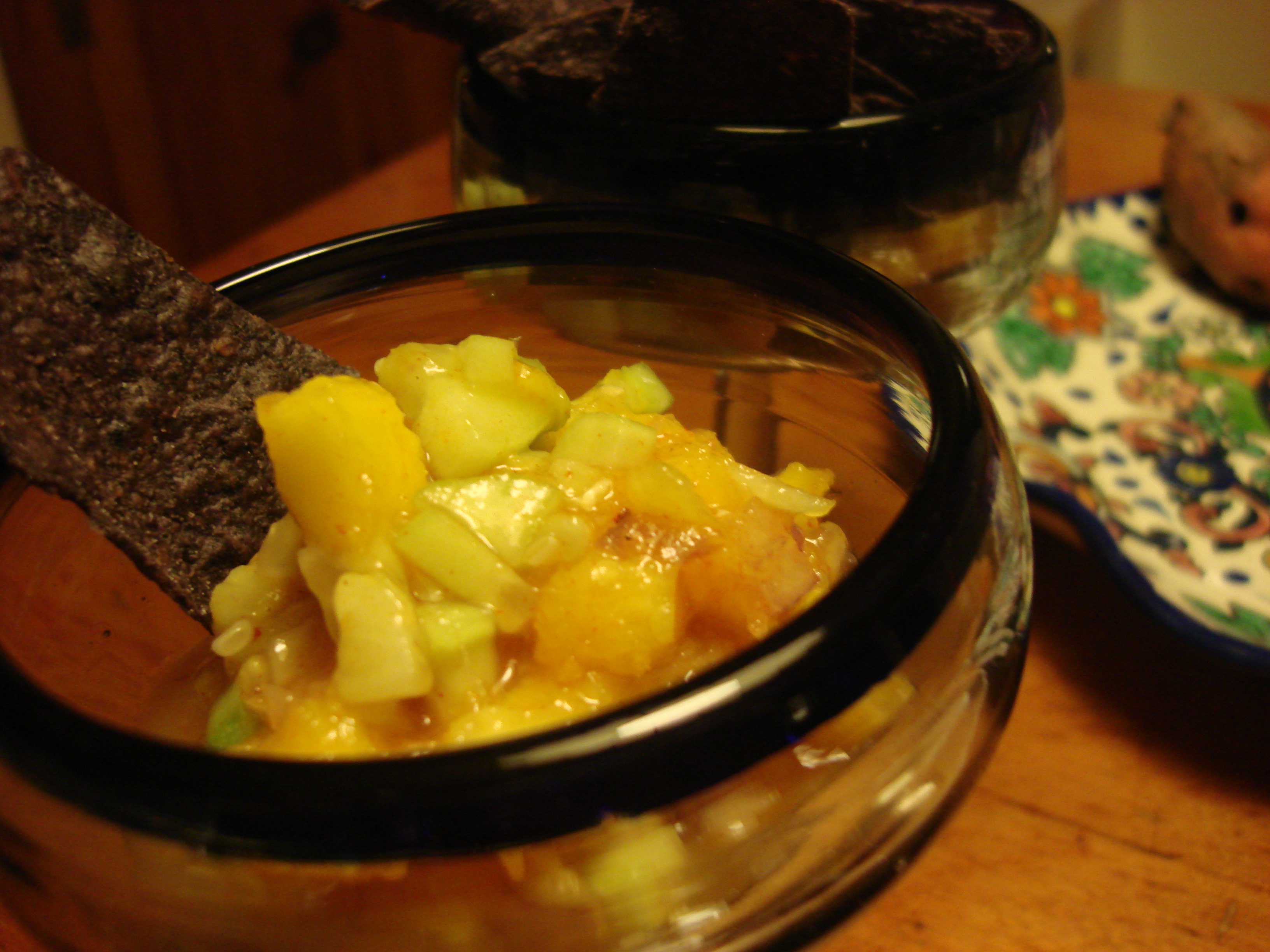
So, Mango Salsa it was, quick and dirty. Good excuse to eat blue corn tortilla chips, which are a weakness of mine (Waterloo to any attempt to get bikini ready) and to further prove that the Spanish love for fruit and cheese is grounded in pure genius and has infinite possibilities. The salsa sweet-tartness and the tortilla crunch just beg to be completed with some salty squeaky cheese – Queso Blanco (the firm kind of Latin white cheese) and Monterey Jack are my choices, but salted mozzarella would likely work also.

So here it is – a one bowl operation, served up in a margarita glass, a neglected mango finally loved up the way it should be.

Mango Tango Salsa

1 cup mango, chopped into small chunks*

1 cup cucumber, peeled, seeded (or not) and chopped into small chunks

3 Tbs red onion, minced

1 Tbs mango-orange juice (or mango or orange)

2 tsp chipotle in adobo paste (spoon it off the chipotles, but don’t include the peppers themselves)

3 tsp freshly squeezed lime juice

1 pinch salt

Put all ingredients into a small bowl. Mix thoroughly, add seasonings to taste, cover and refrigerate until chilled. Serve with sliced Caribbean white cheese, salted mozzarella or Monterey Jack and tortilla chips.

* To cut up a mango, hold it on its side lengthwise on a cutting board and choose a spot about a third of the way in. You want to slice down on either side of the seed so you have two bowls.  Score the flesh of each bowl like a checkerboard and turn it inside out (we call this a porcupine). Slice off the chunks and dice as needed. Yo can also cut flesh off the seed (or just eat the flesh off the seed yourself- you are the cook after all and deserve the treat!)

Mini-Fiesta Chili con Carne and Perfect Latin White Rice (Yes, all the kids ate it…eventually)

10 Oct

My friend Pam often opens her home for massive Mom-and-Kid-Family playdates on Saturday afternoons with our extended group of single mom friends. Think a dozen little maniacs — ages 7 and under — tearing around a big backyard on bikes and scooters and what have you, swinging, arguing, playing…while the moms share stories from the frontlines of parenting solo.

On these occasions I often invite myself and Leandro to stay for dinner after everyone’s gone.  These meals tend to be a collaborative effort (as the best sort of friendships tend to be). Our kids — she has two — love each other’s company and she’s got loads of toys so they leave us in relative peace to chew the fat, complain about them, worry about everything, laugh at ourselves…you know the routine.

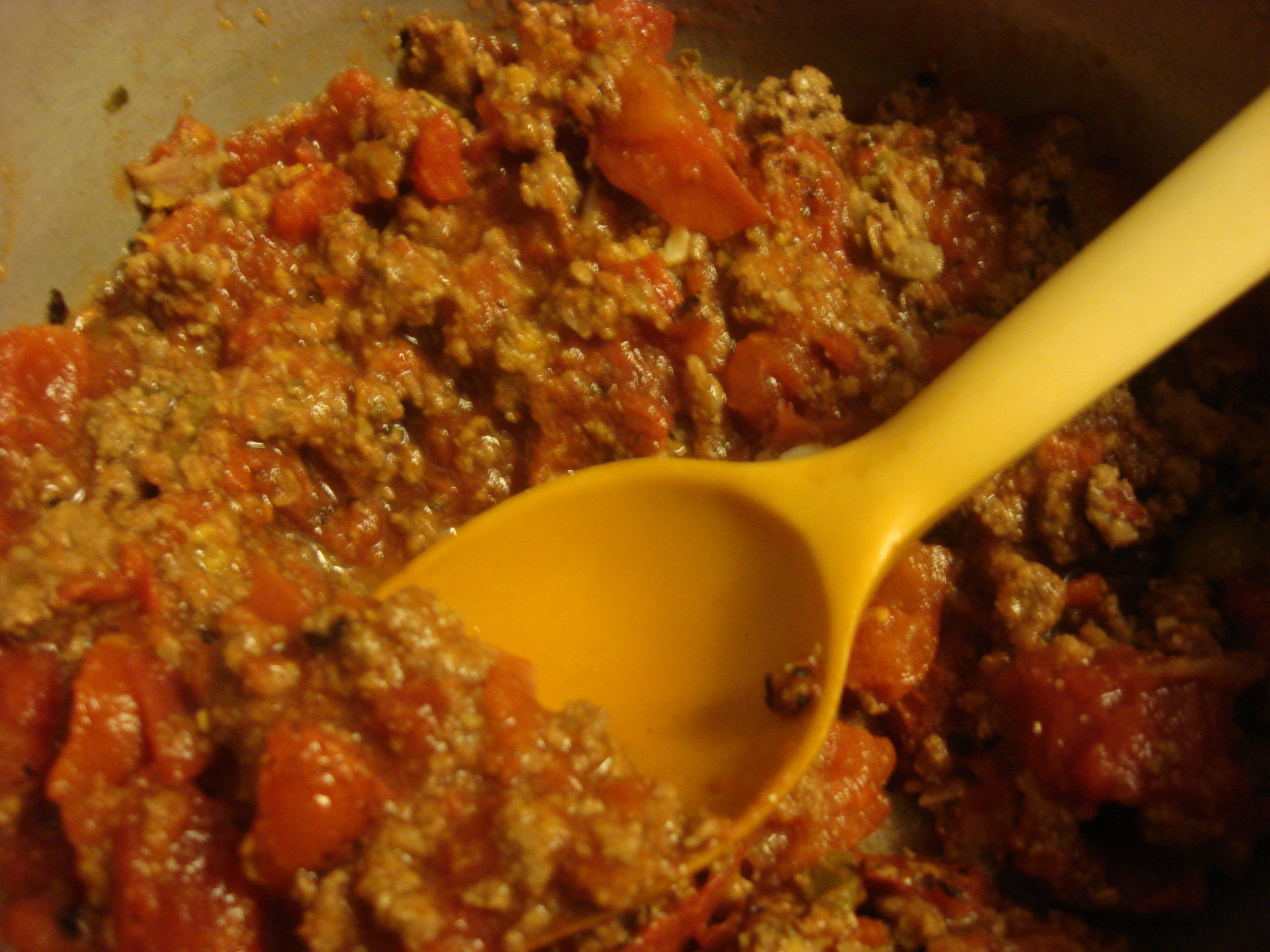
This time I invited ourselves over again, but I had the meal already in hand. In my cooler tote went a pint of Basic Seasoned Ground Beef that I pulled from the freezer, a 28 oz can of whole, peeled tomatoes, a 15 oz can of red kidney beans, chili powder, cheddar cheese (secret weapon) and a bag of rice.

I also brought a bottle of Wölffer Estate apple wine, because it’s locally produced, refreshing, tasty, good with food, and –at just 7 percent alcohol — Pam — the Lightweight Champion of the World — can have more than one glass and so can I, even though I have a drive home later. Kim and her two girls also stayed, so we popped the cork and got the party started!

Now, don’t think the kids just tucked right into it. No way. Leandro loves the stuff, but the other moms were skeptical whether their kids would go for something quite so bean-y, quite so meat-y, quite so seasoned, quite so different from what they usually have, ’cause that is how kids are.

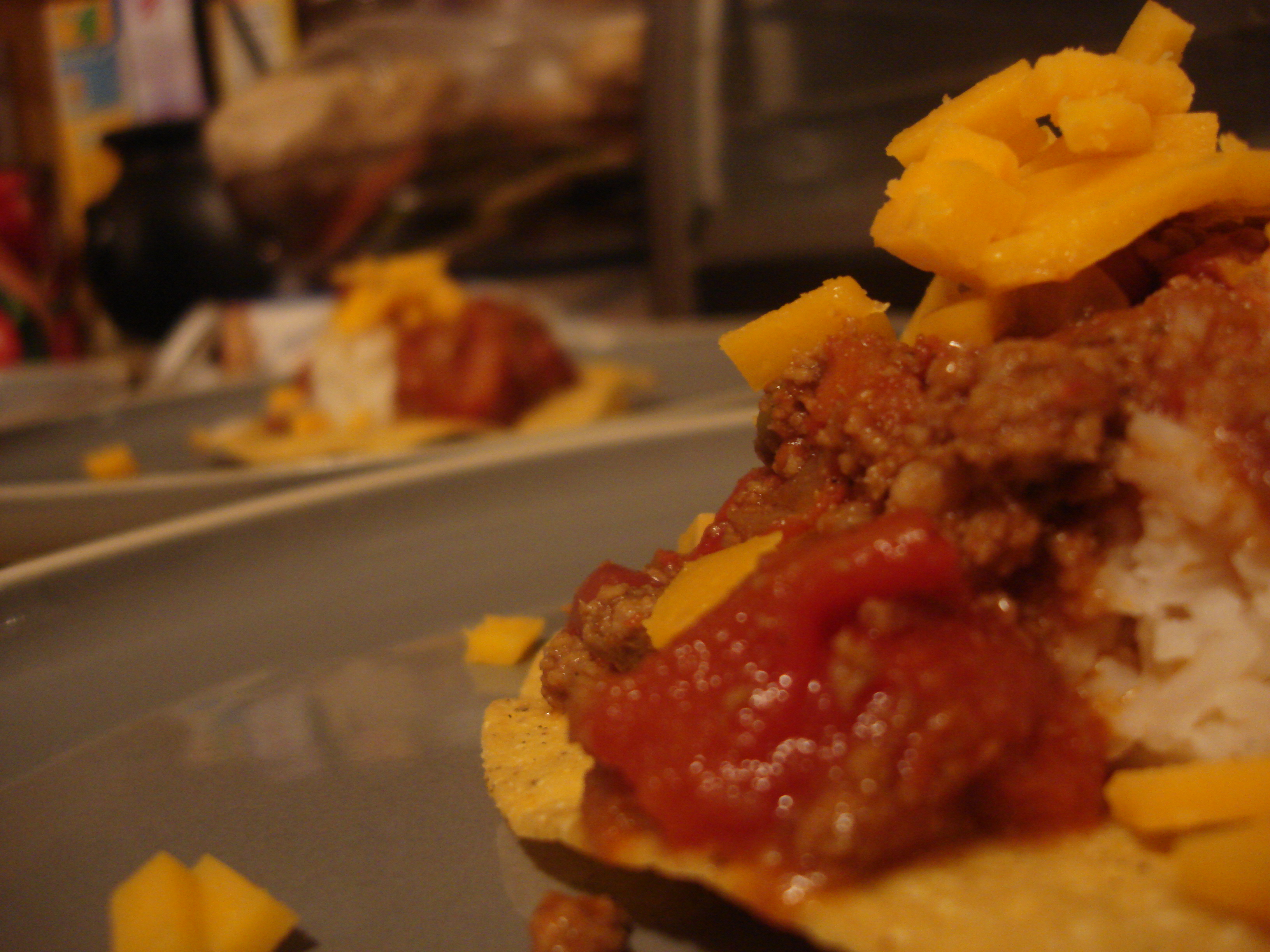
They were right; the cute little molded mounds of rice went quickly, and they picked the cheddar cheese off the top of the chili, but they were decidedly unenthusiastic about the main part of the meal. So I told them they were hurting my feelings, offered to mix in rice and cheese to anyone who would just try the food to make me happy, and soon enough, they were eating it up. Score!

Please note: this is easy to assemble in no time at all (20 minutes or so from fridge to table), IF you have pre-made seasoned ground beef stored in pint containers in your freezer. I include the recipe here; it is a pillar of my kitchen strategy and I recommend you make it three pounds at a time!

I also include my recipe for perfect Latin white rice…Pam actually made excellent rice in her pressure cooker this time, but I include the recipe just the same. The parboiled quick stuff is just not acceptable, except in extremis, sorry.

Chili Con Carne (serves four adults)

1 pint Basic Seasoned Ground Beef (see below)

28 oz can tomato puree/whole peeled tomatoes/crushed tomatoes (Italian-style NOT recommended; basil has no place here)

15 oz can red kidney beans, rinsed and drained

1 Tbs chili powder

hot sauce, if desired

1 cup shredded cheddar cheese (Monterey Jack would work too)

In a large pot, add beef, tomatoes, beans and chili powder, bring to a boil and then simmer. Begin preparing rice (see recipe below). When the rice is ready, the chili should be ready too. Just adjust for seasoning and serve rice topped with chili and cheese.

Basic Seasoned Ground Beef

You can build on this dish to make many different meals

BASIC SEASONED GROUND BEEF (this is half of what I usually do to freeze. To do 3 lbs. at a time, double everything – Note: do NOT skip the olives and capers, even if you hate them. I never eat olives — green or black –yuck! but I cook with them. In this dish they give a salty, sharp, savoriness that is crucial and the little bits pretty much disappear in the cooking. Pam and Kim and the kids all ate them without noticing!)

2 Tbs extra virgin olive oil

1 baseball sized onion, chopped

3-4 cloves garlic, minced (go for more if you like – I do!)

1.5 lbs. ground beef

(Optional1/4-1/2 C. chopped red pepper fresh or roasted from a jar)

1/2 tsp adobo powder* (if desired – I generally don’t use it, but some people love the extra salt and the umami)

1 heaping Tbs capers, drained

10 manzanilla olives (pitted and stuffed with pimientos), chopped small

(optional 1/2 cup tomatoes from a can – diced, chopped, whatever or a spoonful of tomato paste you need to use up)

Heat oil on high in a large saucepan until thin and fragrant. Add onion and cook, stirring, for two minutes until well coated and getting translucent. Lower heat to fairly low and cook for five minutes, add garlic and cook for another minute. Raise heat to high and crumble in ground beef, stirring and breaking up frequently until fully-browned. Spoon out fat or pour off (don’t make it too dry!) into sink (carefully!).

Return to heat, add red pepper, optional adobo, capers, olives and optional tomato. Mix completely. Lower heat, cover and simmer 20 minutes until fat begins to separate from sauce. Serve or freeze.

 *instead of adobo powder, mix 1/4 tsp salt and 1 Tbs mixed chopped fresh herbs (oregano, rosemary, parsley) or 1 tsp dried

Perfect White Rice (you can halve this recipe if you are not big into carbs)

1 Tbs olive oil

2 Cups long-grain white rice (Sello Rojo, Goya or other Latin brand preferred)

4 Cups water

½ tsp salt

Place olive oil in a medium pot (with a tight lid). Begin heating to high while adding the rice. Stir to coat, Add water and salt. Stir once, then bring to a boil. Lower heat to medium and allow water to evaporate until it goes below the surface of the rice and there are a couple of holes in the surface. Turn rice over once with a big spoon. Cover and cook on low another ten minutes. Fluff with a fork and serve.

Bits and Bobs Broccoli Pasta (FAST)

9 Oct

My dad took Leandro for a haircut when we got home from the workday– they love to do the man thing at the barber together  — so I dashed off to do some solo grocery shopping which I find heavenly (It is a sad commentary on the state of my life that an unaccompanied trip to the supermarket has replaced dinner and a show on my top-five list of things to do). Then it was off to the farm for pick-up and then I headed home with no time to fuss over dinner, but nothing prepared and a child about to realize – with the suddenness of an improvised explosive device — that he is STARVING.

I did call my dad on the way home to see if he could get water on the boil, which he did! Masha danki, Padushi! (Mark Bittman – the NYTimes Minimalist food writer and one of my heroes — says whenever you get home you should get the water going, so you can throw anything in there, inspired or not). So on the rest of the 15-minute drive home, I did a mental inventory of all the scraps in my fridge and larder that needed using – Multigrain pasta, check. Leftover olive oil from tortillas, check. Unused peeled onion halves from another dish, yup. Too many peppers from the farm, uh-huh. The ever-present broccoli that represents probably 50 percent of Leandro’s vegetable consumption (heavy sigh), right. Dab of tomato paste I didn’t need for the meatloaf…etc. etc.

And by the time I got home, I was good to go and get dinner on the table in about 15 minutes (6-minute pasta was key). You should note that tomato paste is a great thing to add tomato tang and depth. I guess it is thanks to its concentration that it releases its flavors with just a bit of sauteing (unlike purees or whole peeled tomatoes, which much be cooked for a while to get really good). That’s a criollo trick I learned in Puerto Rico!

In this recent version, I used two tablespoons of the reserved olive oil that I had used to saute the onions and potatoes for a recent tortilla, which adds a nice flavor, but you can just use extra virgin olive oil as stated in the recipe.

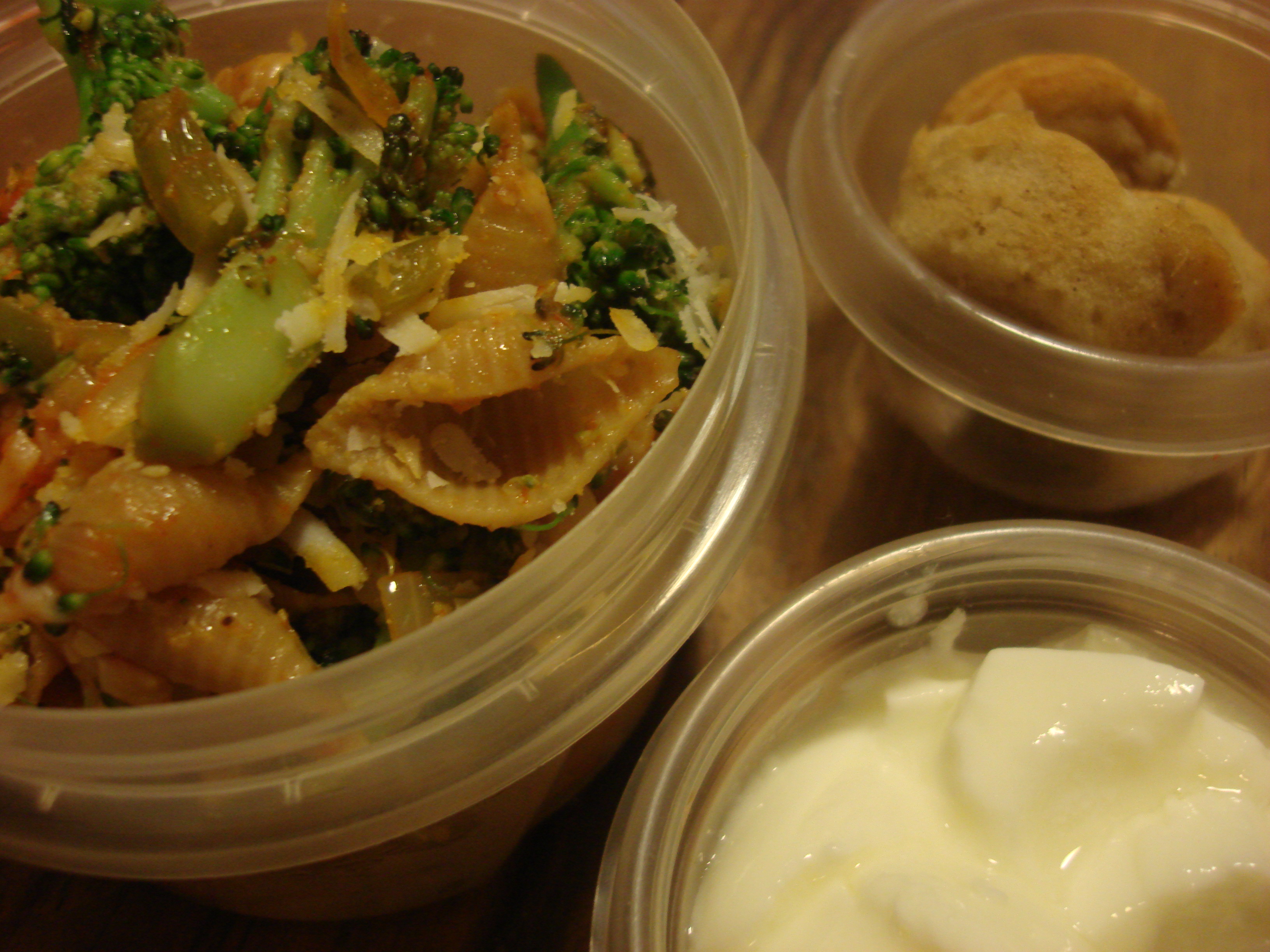
Not only did this work for Leandro’s evening meal, but he asked for the leftovers for lunch the following day and I was very happy to oblige. You can see the lunch he took to school here!

Typical Leandro lunch: pasta, yogurt and mini-muffins for dipping

Bang Together Bits and Bobs Broccoli Pasta (makes two kid servings)

6 oz whole grain medium pasta shells(about half a 13.5 oz box)

A handful of broccoli florets separated into forkfuls (and peeled and chopped stems, if you like)

2 Tbs extra virgin olive oil

½ onion, peeled and chopped fine (about ¼-1/2 Cup)

½ green pepper (Cubanelle, sweet or bell are fine), chopped fine

1 clove garlic, peeled and chopped

1 Tbs tomato paste

2 tsp chopped herbs of your choice (basil, oregano, thyme, culantro; halve for dried herbs)

Grated cheese (such as Parmigiano Reggiano or Gran Padano) or nutritional yeast (optional)

Prepare pasta according to package directions in a medium to large pot, adding the broccoli 3-4 minutes before the boiling is finished. Drain, reserving ½ Cup cooking liquid.

Let the same pot dry over the burner, add the olive oil and heat at medium high until loose and fragrant. Add the onion and green pepper and stir to coat. Add garlic and lower heat to medium and cook for a minute. Add tomato paste and herbs and stir around until fully incorporated. Add the pasta and mix thoroughly (if you find it too dry, add tablespoons of the reserved cooking liquid). Add cheese and serve.

Abuela’s Juicy Meatloaf (or a reasonable, nostalgia-driven facsimile)

5 Oct

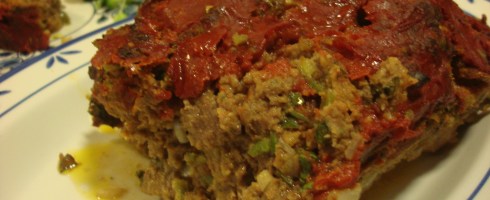
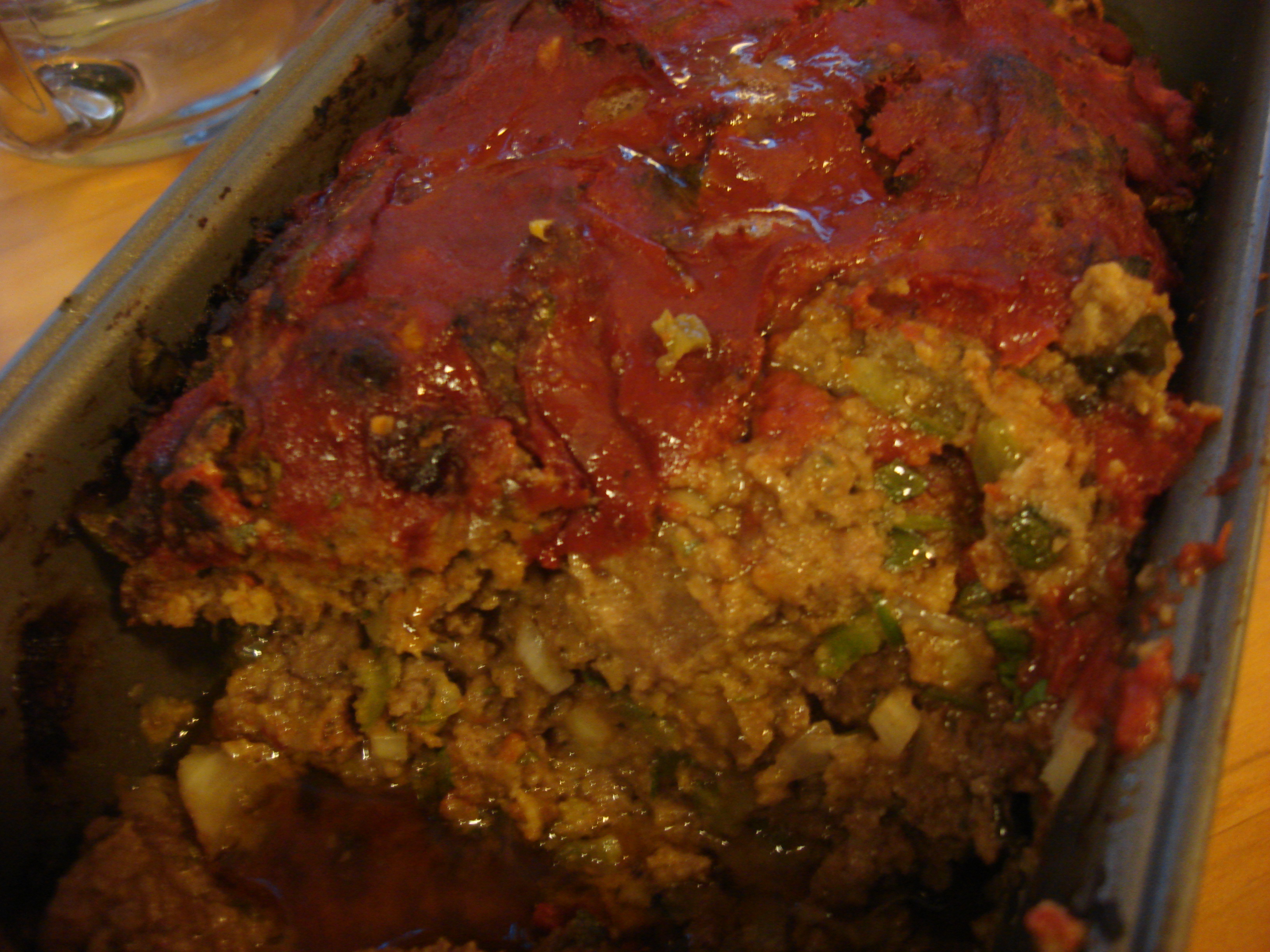
It’s not that I have the actual recipe, or ever did, or was even paying attention when it was being made, but guided by a bit of nostalgia — and inspired to meatloaf by a gorgeous Mexican Meatloaf recipe from fellow blogger Karen at Backroad Journal  — I put together a meatloaf that is reminiscent of what my late grandmother used to make for me.

Call it culinary forensics, trolling the recesses of my taste and scent memory for clues; flipping through the archives of meals at the round glass table of her dining room in urban Hato Rey; re-focusing my attention from the sounds of trucks blaring political messages from the avenue ten stories below, from the sensation of the cool tile floors under my bare toes, from the crumpled sogginess of the inevitable paper napkin, soaking up the condensation from the glass with the green and gold designs painted on it, the water flat tasting because she boiled it before drinking.

When I peeled away the distractions, finished my detective work and let my inner kitchen voices have their way, this is what I came up with – something fairly juicy, with fairly typical Puerto Rican seasonings and with tomato paste incorporated two ways. The one thing I am sure of is the tomato paste on the top, like icing on the cake for the savory set. The rest is an educated guess. In fact, it probably tastes nothing like what my grandmother used to make, but it gave me that same feeling and was mighty sabroso, so I am sticking with it.

As a note (and call for advice): my dad and I are currently using the Verde Farms organic ground beef from Costco. The flavor is good, but it does have a fair bit of fat and the texture is a bit more fine than we like for things like meatloaf and meatballs and burgers (it’s okay for crumbled beef dishes). So this particular meatloaf is misshapen and reluctant to firm up and stick together for slicing purposes. It may be that I am doing something else wrong that could be corrected, so shout it out if you have an idea! The organic thing is important to me, in particular because of my son; any suggestions for a better ground beef available in Long Island would be most welcome.

Abuelita’s Juicy Meatloaf

2lbs ground beef

1 Cup dry breadcrumbs (seasoned is fine)

¾ Cup chopped onion

1 Tbs grated onion

3 cloves garlic, minced

½ Cup green bell/sweet pepper, minced

1 tsp cumin

2 Tbs fresh cilantro, chopped (may substitute parsley if someone has a cilantro aversion)

1 Tbs fresh oregano, chopped (halve if using dried)

1 Tbs fresh culantro (recao), chopped, optional

½ tsp chili powder

2 Tbs ketchup

1 Tbs tomato paste for the meat, plus 3 Tbs for the top

1 egg, beaten

Preheat oven to 375°F. Add all ingredients (except additional 3 Tbs tomato paste) to large bowl. Mix all ingredients with a fork or hands just until thoroughly combined, but do not work it through or knead it, or else the meatloaf will be tough.

Place in 8×5 loaf pan and bake for 40 minutes. Remove from oven and spread the reserved tomato paste evenly over the top. Return to oven and finish cooking (another 5-15 minutes – until a meat thermometer inserted in the center reads 140°F). Allow to cool slightly before serving.

Pollo Borracho (Drunken Chicken)

15 Sep

Usually when I have several pounds of organic boneless chicken thighs from Costco, I make pollo guisado (Latin stewed chicken) and eat some now, freeze some for later in pint containers. Very convenient and beloved by all (must be the beer and wine that go into it?  https://hotcheapeasy.wordpress.com/2010/12/17/abuelitas-stew-comes-through-%C2%A1un-guiso/)

But I just didn’t feel like it. At. All. No, no, no.

So instead, I made about three pounds worth of Pollo Borracho or Drunken Chicken, so called because it incorporates whatever the local hooch is in your part of Latin America. In the following version, adapted from Memories of a Cuban Kitchen by Mary Urrutia Randelman and Joan Schwartz (1992 Wiley Publishing),  the booze is white or light rum (I used Don Q Cristal, a Puerto Rican white rum, which is — by the way — the only acceptable rum for a Cuba Libre).

This recipe does take a long time to simmer, but the active part is very minimal and very basic. The texture is beautiful; it starts to shred of its own accord (I’m thinking quick black bean and chicken quesadillas…). Best of all, Leandro called me the best cook in the world after trying it (which means it is safe to pack the leftovers for his lunch tomorrow. Hurray!). I will experiment with freezing some for future reference!

Pollo Borracho

3 lbs skinless, boneless chicken thighs (you may use pretty much any chicken parts. Bone-in is fine, but do remove the skin)

¼-1/2 tsp salt

¼-1/2 tsp oregano

Black pepper to taste

4 Tbs extra virgin olive oil

3 cloves garlic, minced

1 large onion, peeled and sliced thick

1 bay leaf

¼ Cup dry white wine

¼ Cup light or white rum

¾ Cup pimiento-stuffed green olives (about 20) drained

Wash the chicken and pat dry, then season with salt, oregano and pepper. Heat olive oil at medium high (in a large skillet that can accommodate all the chicken and that you can cover) until fragrant and then brown the chicken thoroughly on all sides. Remove chicken and reserve.

Lower the heat to medium low. Put onions and garlic in the skillet and sauté until wilted. Add bay leaf, wine, rum and olives. Stir to incorporate, then add chicken pieces, stir, cover and cook on low for 45 -60 minutes. If your skillet is oven-proof, you can cook it in a 350°F oven for 45 minutes instead. Remove the bay leaf and serve with white or yellow Latin rice.

NB: If you are more of a tequila person and want to get a bit more elaborate, try this Mexican recipe by my friend and inspiration, the peerless Zarela Martínez  http://www.zarela.com/2010/pollo-borracho-drunken-chicken/ It was one of the most-requested dishes at her eponymous Manhattan restaurant. It includes raisins and almonds!

Party Snacks: Oven-Charred Tomatillo, Tomato and Hot Chile Salsa

22 Aug

If you are lucky enough to get a handful of tomatillos in your CSA share or find them in your grocery store, this recipe for a small amount will make your tastebuds very happy (or scream in agony if you overdo it on the hot peppers) and won’t take you very long at all.

There are very few commercially prepared salsas that I like; most are too sweet or too tomatoe-y or just boring, so making my own makes a lot of sense. Once you see how easy tomatillos are to char, you will probably become adventurous with your own flavor combinations.

Tomatillo (Physalis philadelphica) is indeed in the same family as the tomato, as well as the ground cherry (or cape gooseberry), which it actually resembles more, in looks, if not flavor. Native to Mexico, tomatillo has green or sometimes purple fruit, surrounded by a husk that gets papery as it ripens; it has always reminded me of a Japanese lantern.

When you buy, look for firm fruit with the husk still on (they will keep for a month in a paper bag). When you buy green ones, avoid any that are yellowish.  To prepare them for cooking, remove the husk and wash off the stickiness on the skin.

Although tomatillo is most often used for salsa verde (green sauce), I used purple ones in this recipe. I charred them under the broiler with red tomatoes and mixed them together for a deep and satisfying color.


Roasted Tomatillo, Tomato  and Chile Salsa

7-8 tomatillos, husked, rinsed and cut in half

Tomatoes of your choice, in an equal amount to the tomatillos, sliced in half (if using cherry-types) or chunked to the same size as the tomatillo halves

1 fresh hot chile pepper of your choice (I use jalapeño)

2 Tbs red onion, minced

2 cloves garlic, minced

2 Tbs cilantro, chopped

1/8 tsp lime juice

1/8-1/4 tsp coarse salt

Place tomatillos, tomatoes and whole chile pepper on a baking sheet and broil, turning once (carefully!) with a spatula when the tops start to char (my sturdy, but not so high-powered toaster oven took 10 minutes on each side {!} but a stronger oven could do the job in half the time, so watch out!)

When the vegetables are charred, let them cool until you can peel them (over a bowl to catch the juices). Discard peels and add tomatillo and tomato to bowl. Also peel the pepper and BE WARNED: this is a small amount of salsa, so you don’t want to go overboard on the heat. I use only half a jalapeño and remove the seeds and it is still pretty searing on the tongue. So…add roasted chile at your discretion/peril.

I break my salsa up with a fork – unnecessary if you are going to use a blender at the end. Stir in remaining ingredients. For a smoother texture, pulse a few times in a food processor or blender (I prefer chunkier and I hate extra equipment to wash, so I skip it). Garnish with cilantro and serve with tortilla chips.

Sofrito for freezing (Puerto Rican mirepoix)

30 Jun

The green and lush fragrance of culantro is one of my favorite rainy day smells. In the kitchen garden I kept at my late grandmother’s house in Mayagüez, Puerto Rico, I had a vigorous crop and whenever it rained, the drops activated the fragrance, the scent pervaded the house, and I got hungry!

Without culantro (which we call recao), Puerto Rican food just isn’t as vibrant; it can’t taste quite like abuela’s. It is integral to sofrito, the starter to so many recipes, including beans, soups, stews and rice dishes. It is the equivalent of the French mirepoix, that combination of sauteed/roasted onions, carrots and celery that is the base for so many Gallic dishes.

Recao – culantro

Unfortunately, culantro is not as well known in the U.S. and doesn’t grow super-well in my planting zone, although I have had some small successes over the years (Thanks to Vic Muñoz for her growing tips). So I hit the local Latin supermarket on occasion and buy some pre-cut leaves from Costa Rica. Because once cut, recao loses its potency quickly, I use twice as much as I would if I had just gone out back and snipped some. And because it is sold by quantities much bigger than I need for a single dish, whenever I do buy it, I make enough sofrito to freeze.

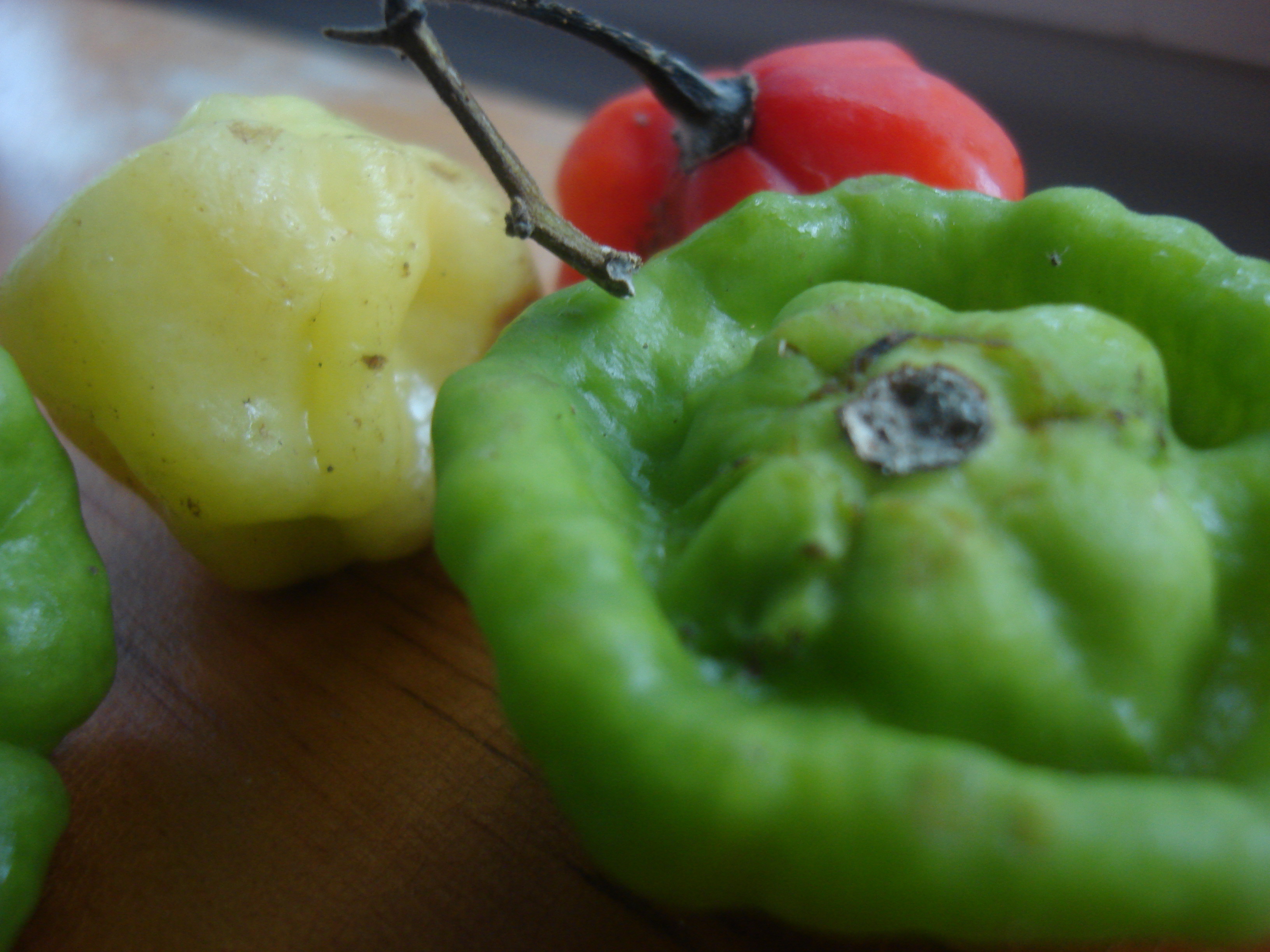
The same goes for ají dulce, the non-spicy small pepper that looks like a habanero, but isn’t at all spicy. I buy a bunch at once — along with the recao — and make sofrito to freeze. You have to be careful and taste it before adding it to the sofrito, because sometimes the store makes a mistake and labels the hot ones as sweet ones, or, I’ve been told, ají dulce planted too closely to ají bravo (angry, aggressive) will take on the spiciness. I can actually smell the heat when cutting habaneros (also called scotch bonnets); the volatility  is no joke.

Ají dulce – the sweet sibling to the hottie habanero

The following recipe is for those who have access to these products. If you don’t have a Latin market nearby, investigate the Asian/Indian markets, as they too use these ingredients.

Continue reading

Asopao de pollo (Soupy Chicken and Rice) with Pastured Bird!

23 Jun

Sooooo, I managed to get to Restoration Farm in time to see the very tail end of the first processing (meaning when the birds are killed, plucked and eviscerated, lest I be accused of euphemism).

I did NOT take Leandro; I wanted to see things for myself and not have to focus on keeping him out of trouble. More on his reaction to the chicken in a moment.

First I want to say that the atmosphere at this first round of chicken processing was so calm and cooperative and lovely. The team of Trisha, Lucille, Steve, Brian, Denis, Dan and Caroline was tired, but elated, but not  giddy or punchy, after seven hours of chicken guts under the trees. Dan and Caroline’s two kids were there; two-year-old Ada was calm as could be in the face of all the activity.

My first bird

The chickens — all 35 made it to processing! – weighed in between 4. 16 and 6.65 lbs. As a note, these are not certified organic birds (that’s a whole ‘nother process), but they have been raised according to organic practices – from their feed to their pasture; they just don’t have the stamp.

I also forgot my bloody camera! I wanted to shoot myself (since I couldn’t shoot pictures). So you will have to wait and see whether someone is able to send me photos; then again, perhaps you don’t care to see the goings on. Anyhoo, it was clean and well-organized.

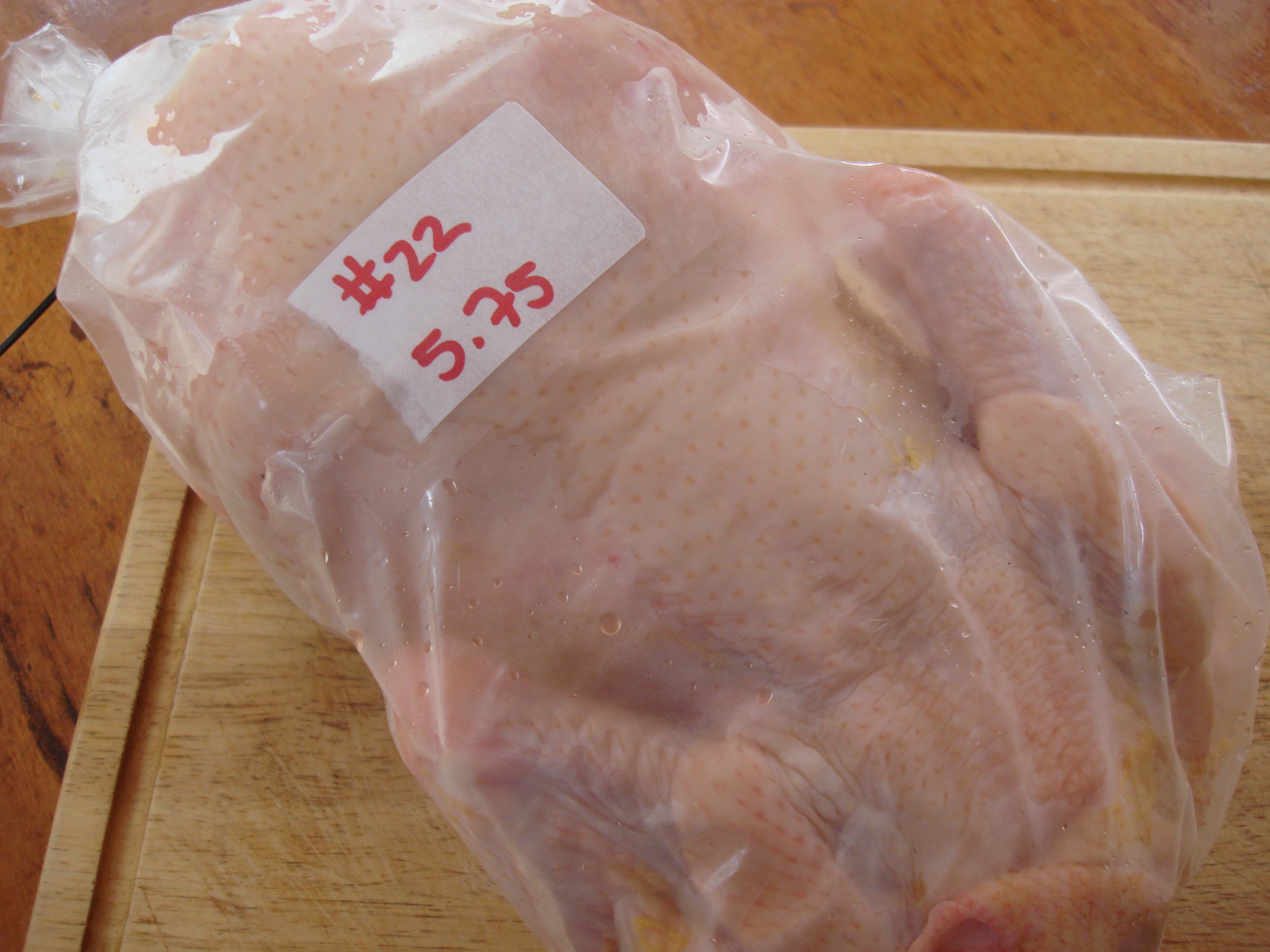
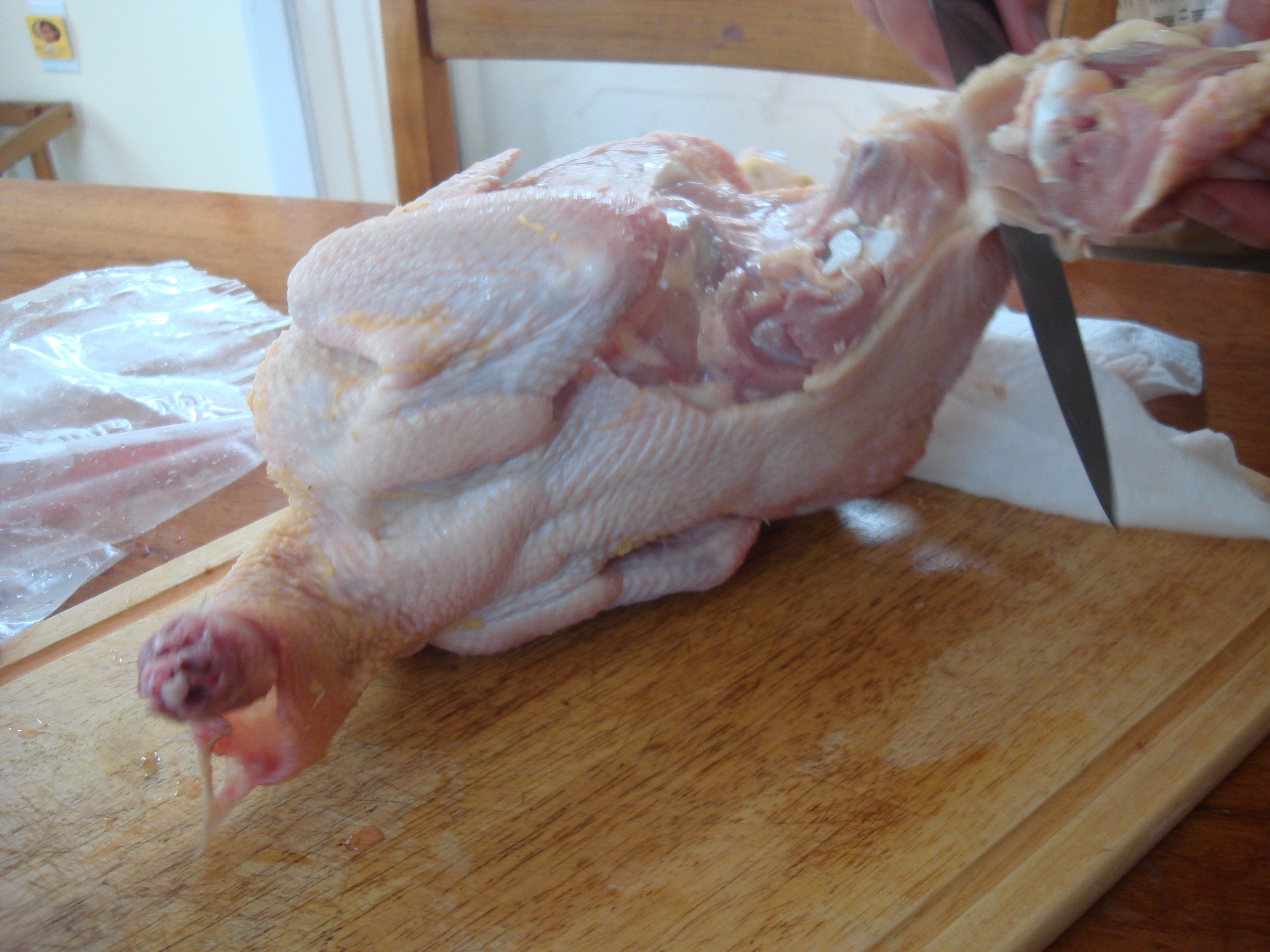
So I brought home bird #22, weighing 5.75 lbs. I picked up the necessary ingredients for asopao from the Compare (Latino) supermarket in Farmingdale on the way home. My dad, Pedro, roused himself from the NYTimes crossword puzzle to separate the bird (we saved the breasts for another meal cause this bird was so big!) and I went to work while Leandro was still across the street at a playdate. It was beautiful to work with. So clean.

Asopao isn’t really Hot, Cheap & Easy, except for the hot, sweaty work if you want to do it right (and I did). Perhaps I will invent a shortcut version one day, but not with this special bird. And really, my mom and dad were taken back to the days of my great-aunts cooking all day long…I really got it right. The chicken gave so much real flavor; it is certainly not as tender as factory-farmed, but it is really good. In the next few posts I’ll talk about some of the more unusual ingredients here and what to do if you can’t find them.

Leandro sat down to eat and said, “These are the little chickens that got big?”

and I said “Yes, Trisha and everyone killed them today so we could eat.”

“Oh. You went to see?” he said, and I said yes.

He stuck a big bite in his mouth and said, “Delicious.”

I forgot to tell him not to speak with his mouth full.

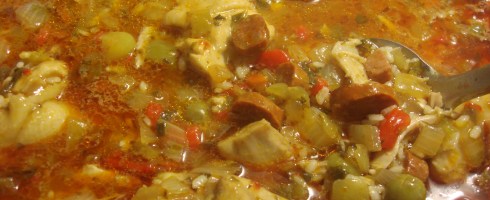
Asopao de Pollo (Soupy Chicken and Rice) Serves 6-8

Dedicated to my tía-abuelas

A – Three pounds chicken (may be whole chicken or, if you have a big bird, reserve the breasts for another meal. MUST HAVE BONES!!! Should have neck, heart and liver as well) cleaned and separated into drumsticks, thighs, wings (separated and tips cut off and reserved for stock), backbone, etc.

B – ADOBO (pound all ingredients in B in a mortar and pestle into a smooth paste)

  1. 3 cloves garlic, peeled
  2. 2 black peppercorns
  3. 1 tsp dry oregano
  4. 2.5 tsp salt
  5. 1 pinch (1/8 tsp) turmeric or sweet paprika (Turmeric stains, so beware!)
  6. 1.5 tsp olive oil
  7. ½ tsp vinegar

C – 2 Cups white rice (less if you want soupier soup.Sometimes the rice takes over.)

D – 9 Cups water and 1 Tbs salt

E – SOFRITO 1

  1. 3 Tbs olive oil
  2. 3 oz ham steak or jamón para cocinar, diced
  3. 1 oz bacon, chopped rustically
  4. 1 green cooking pepper (cubanelle or Italian pepper), diced
  5. 1 large onion, peeled and diced
  6. 6 culantro leaves (recao), minced
  7. 4 sweet small peppers called ají dulce in Hispanic markets (do NOT purchase Jamaican ají or scotch bonnet! They look the same but the Jamaican/scotch bonnet are HABANEROS, deadly hot and inappropriate for this dish!) seeded and minced
  8. ½ Cup cilantro leaves, minced
  9. 2 Tbs vegetable oil (seasoned with achiote, for the more expert criollo cook)

F – SOFRITO 2

  1. 1 Tbs capers, drained indifferently
  2. 1 tomato, seeded and diced
  3. 1  8 oz can Spanish-style tomato sauce
  4. 4 oz roasted red pepper, drained indifferently and diced
  5. 10 pimiento stuffed green olives
  6. 4 oz Spanish dry, cured chorizo sausage

G – ½ Cup light red wine

H –  OPTIONAL – in Puerto Rico we decorate and cool off the soup by topping with a can of petit pois or asparagus. Today’s foodies are not so hip to those particular vegetables in their mushy canned form. I leave it up to you.

Instructions

  1. Separate chicken parts into two large bowls. The back bone, neck, wingtips, liver, heart, and kidneys go in one for the stock. The meatier drumsticks, wings, thighs, and breasts (if using) go in the other. I remove most of the skin and cut off much of the fat. Season all pieces with the ingredients in B. (Adobo).
  2. Soak the rice in abundant water while doing the rest of the prep and cooking.
  3. Place the ingredients in D in a large (6 qt) saucepan. Add the stock chicken pieces, cover, bring to a boil at medium high, boil for 15 minutes, then reduce heat and simmer for an additional 30 minutes, covered.
  4. In an even larger pot, place all the ingredients in E (Sofrito 1), and sauté at medium high until vegetables begin to wilt. Add all the ingredients in F (Sofrito 2) and continue stirring until combined and beginning to stick. Add wine and scrape bottom of pot. Add the meaty chicken pieces and cook at medium, turning frequently to coat well. Cover and cook for 30 minutes on medium low.
  5. When the stock and chicken sofrito are ready, drain stock into chicken. From the stock, reserve the back and wings and get as much meat off them as you can, adding to the soup, discarding the bones. You may add heart and liver to the soup as well.
  6. Bring to a boil.
  7. Drain the rice, stir into the soup, cover and bring to a boil. Reduce heat and cook, covered until rice is cooked (start checking in 10-15 minutes). Serve with roasted red pepper, peas or asparagus garnish. If the rice takes over, just add water.

Black Bean Variation (Frijoles Negros con pimientos morrones y chorizo)

19 Jun

As much as I like my basic five-minute black bean recipe, (https://hotcheapeasy.wordpress.com/2010/11/24/five-minute-black-beans/)I do get bored with it occasionally and I also actually sometimes have more than five minutes (this prep takes maybe ten minutes).

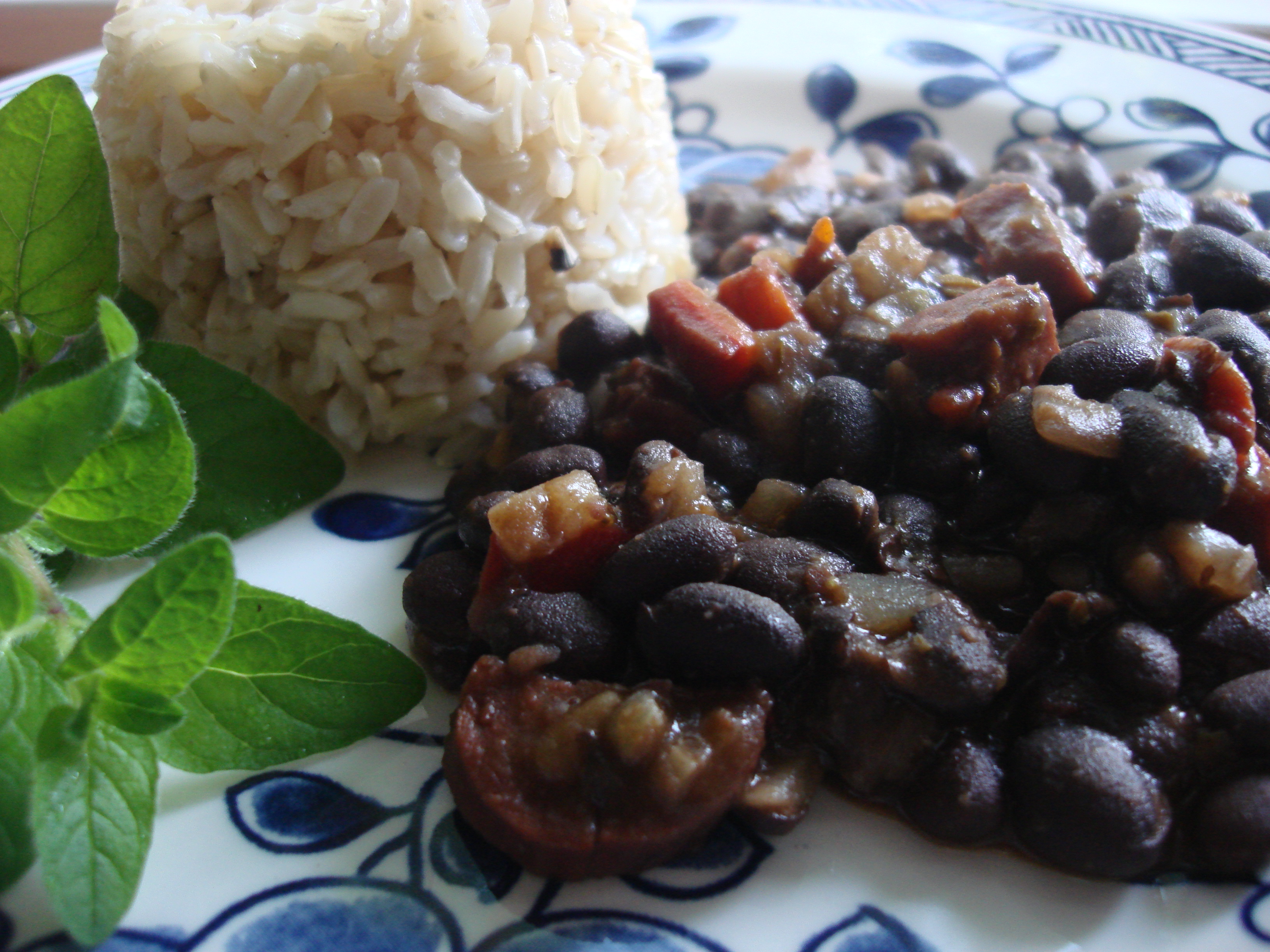
On this occasion of boredom and time to spare, I had some chorizo and roasted red pepper doing nothing but getting old in my fridge, so I broke out of my box. The result was much, much better than I anticipated; the addition of chorizo added a silky umami sort of mouthfeel that was actually a bit like gravy. So give it a try; my son and I enjoyed the added spiciness and actually had it with rice one day and on tortilla chips topped with Monterey Jack cheese and lightly broiled the next day.

Black bean variation (with chorizo, roasted red pepper and oregano)

1.5 Tbs olive oil

1 medium onion, peeled and chopped

3 cloves garlic, peeled and chopped

3oz Spanish-style dry chorizo sausage, peeled and diced

1 Tbs roasted red pepper from a jar, drained and diced

1 29oz can black beans, drained and rinsed

2 tsp dry oregano

Heat olive oil in a heavy-bottomed saucepan until fragrant. Add onion, stir to coat and lower heat to medium. Cook for five minutes. Add garlic, cook one minute. Add chorizo and cook until it starts to release color. Add red pepper, stir to coat. Cook an additional minute. Add beans, oregano and ½ cup water (more if you want more liquid for rice; about that or less for future quesadilla filling or nacho topping). Bring to a boil, reduce to a simmer and cook 15-20 minutes.