Tag Archives: Puerto Rican

Yuca Salad Revisited – You May Never Make Potato Salad Again

5 Dec

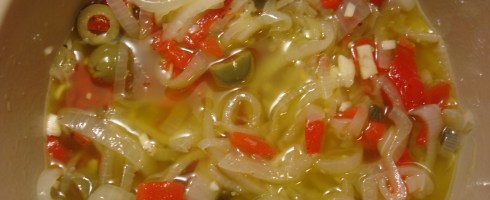
There is no better big-dinner, buffet, picnic, or other party dish in my arsenal than Yuca Salad (aka ensalada de yuca, yuca en escabeche). None. I kid you not.

Pimiento-stuffed olives

Pimiento-stuffed olives

It is easy, has big flavor, is unusual, goes with everything, is portable, and very cheap…it is even vegan, but no one has to know until they’ve tried it. I have served it to pretty much everyone I have ever cooked for (and if I haven’t done it for you yet, it is just a matter of time) and gotten rave reviews every time. Continue reading

Chicken Breasts in Spicy Creole Sauce (Pechuga de pollo en salsa entomatada)

2 Dec

Today’s post will be very straightforward and workman-like, as today I have to finish up a magazine article and my parents are having their annual holiday cocktail for a group of friends, so we will be busy all day! It suits, however, because for all the vibrant color and flavor of the result, this is one of our everyday, workman-like meals. Continue reading

About that gravy. (Roast turkey and gravy, pavochón-style)

25 Nov

Let’s start by saying that I did NOT screw up the gravy this year. (Click here for last year’s debacle). In fact, it was smooth, fragrant and delicious.

Brining the turkey requires just a bucket, a trash bag, salt and water. The difference it makes is amazing!

However, (you knew this was coming) it was also too damn salty.  But… Pedro’s turkey, duly brined and seasoned Puerto Rican-style, was juicy, tasty and all around wonderful. And I have worked out why and the gravy recipe (which may very well be repeated at Christmas, and certainly next Thanksgiving) has been modified accordingly.

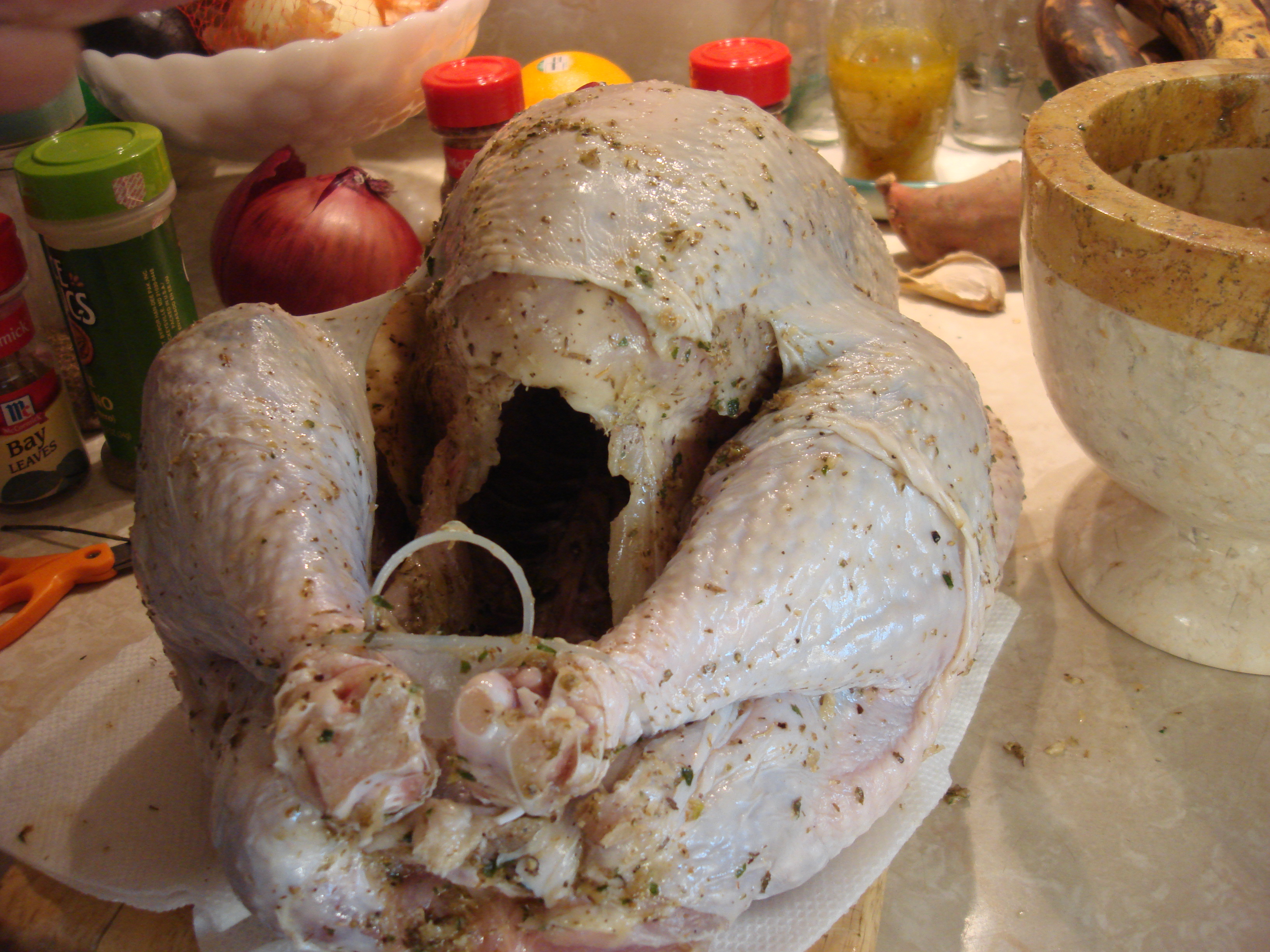
Leandro mashed up the adobo

So what happened with the gravy?

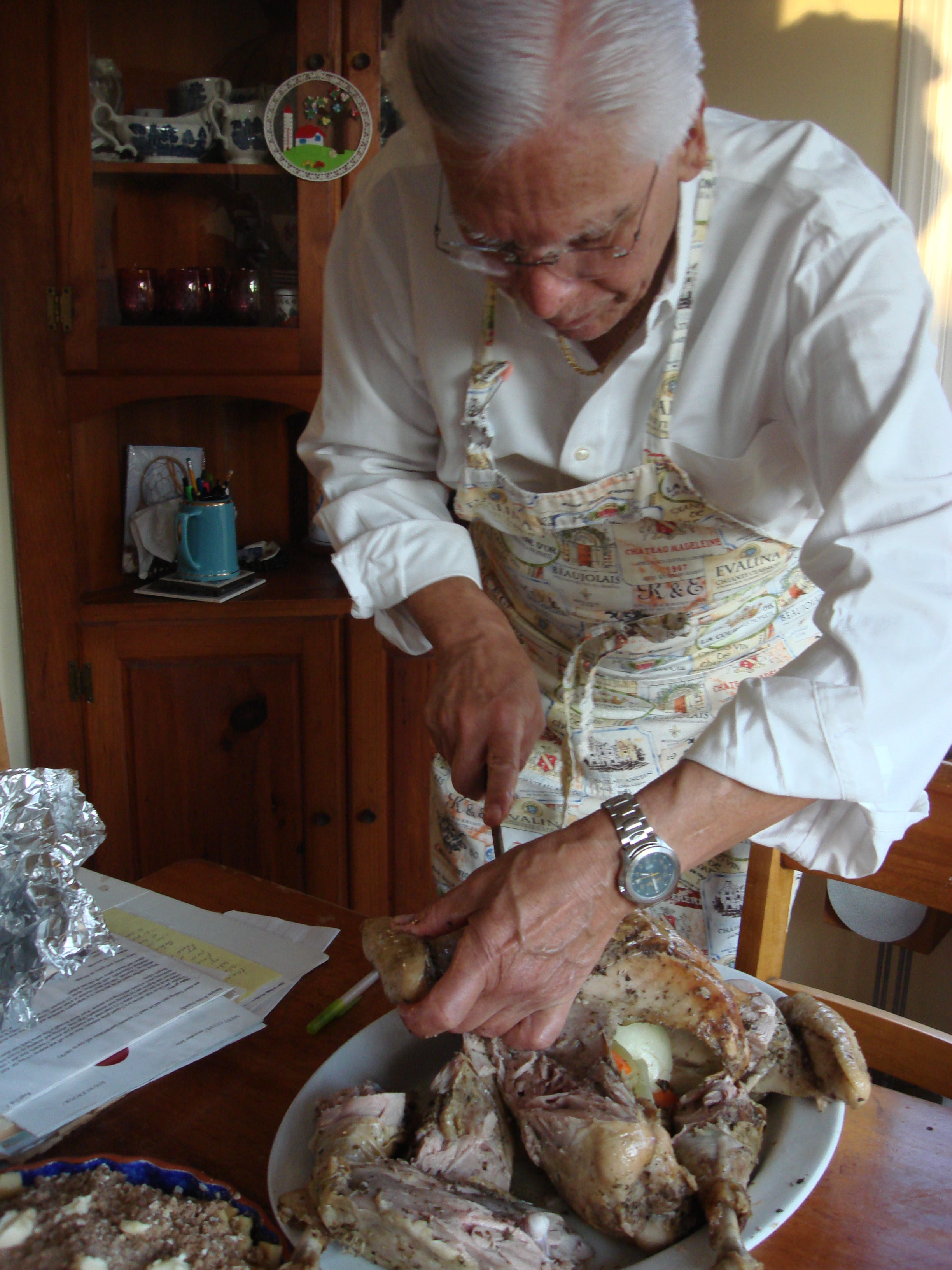
Pedro really gets in there with the adobo

Two things. Usually to make the turkey stock I add my own home-made chicken stock which has little or no salt additional to whatever salt the carcass I used brought with it, or I buy low-sodium stock to simmer in conjunction with the turkey necks. This time, I used store-bought chicken stock with all the salt, thereby adding salt where none was needed.
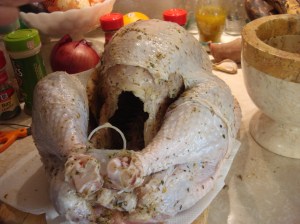
Trussed and oven-ready

Two, the pavochón-style spice rub (adobo) that is actually a recipe for roast pork/roast suckling pig modified for turkey is saltier than what we usually prepare (and Pedro cut the amount recommended in the classic Cocina Criolla by Carmen Aboy de Valldejuli in half!).
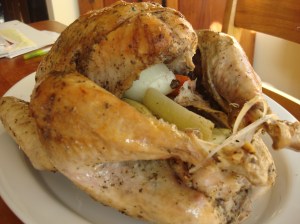
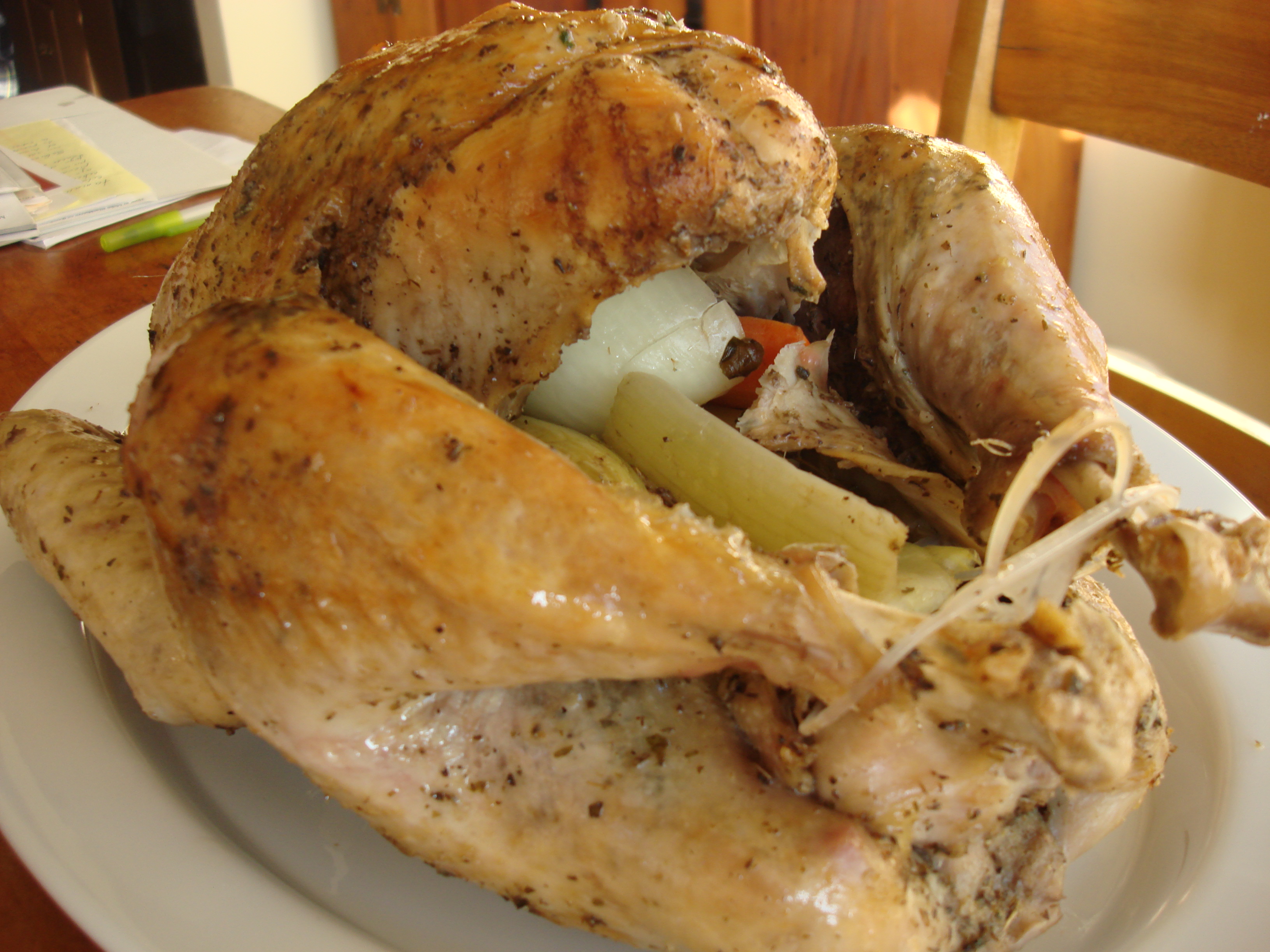
And…a beautiful pavochón!

The turkey was perfectly salted, but the pan juices that I relied on for the gravy were much saltier than I anticipated. So, live and learn.

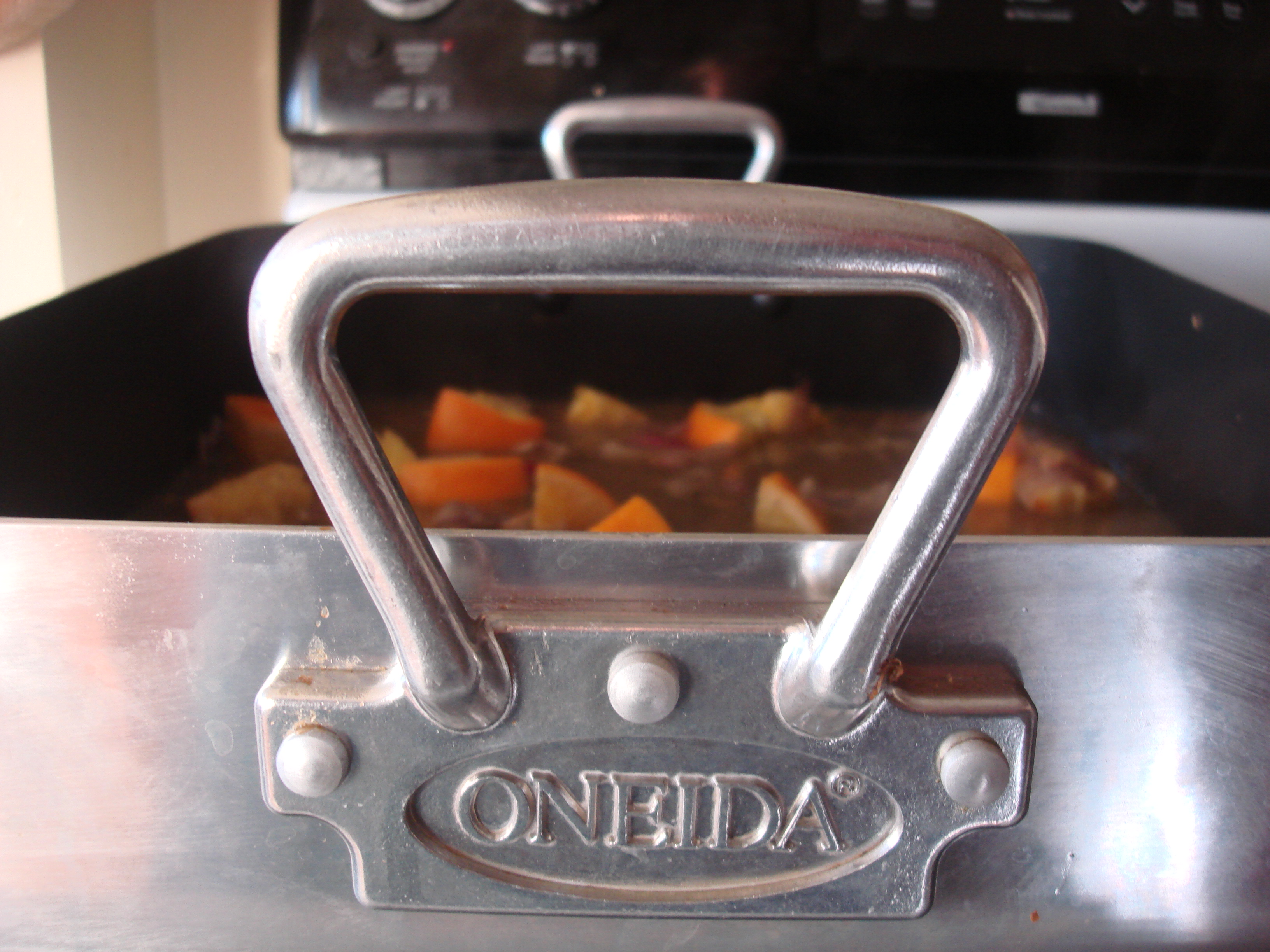
Pan juices on the stove for deglazing

The solution? The next time we make this particular adobo, I will make sure that I have my own no-salt stock laid by for the gravy.

Smooth, baby. Smooth.

And this time, at least, my mom didn’t have to bust out the jar of gravy. I think this time she didn’t even buy one. I appreciate the vote of confidence.

The Surgeon at Work

Roast Turkey, Latin-style (Pavochón)

Overnight, brine a 10-12 lb turkey, quills removed and neck and giblets (excluding liver!) reserved for making stock. (8 quarts water, 2 Cups kosher salt in a bucket lined with a trash bag. Keep chilled overnight)

In a large mortar and pestle, mash:

3 large cloves garlic, peeled and roughly chopped

20-25 peppercorns

Add:

1.5 Tbs oregano (dry)

1Tbs oregano (fresh or just add another half Tbs dry)

6 tsp coarse kosher salt (1/2 tsp per pound)

4 Tbs extra virgin olive oil

Additional ingredients for the turkey cavity:

1 stalk celery, snapped in half

1 carrot, peeled, and sliced in half

1 onion, peeled and cut into chunks

1 bay leaf

Additional ingredients for the gravy:

1 navel orange, peel on, chopped into chunks

1 red onion, peeled, chopped into rough chunks

1 Tbs butter, softened

1 tsp extra virgin olive oil

4 Cups turkey stock (as low in salt as possible)

1/3 Cup all-purpose flour

Instructions

Preheat the oven to 450°F.

Use the ingredients in the mortar and pestle to season the inside and outside of the bird and under the skin. Leave some of the spice paste in the mortar and pestle and add additional oil; you will be using this for basting.

Stuff the turkey with the ingredients for the cavity. Tie the drumsticks together and pin the wings to the body with small skewers.

Put the turkey on a rack set in a large flameproof roasting pan and roast in the center of the oven for 30 minutes.

While turkey is roasting, toss the orange chunks and onion in the butter and oil listed under gravy ingredients.

Reduce the oven temperature to 350°F. Brush more spice paste (adding oil if necessary) all over the bird. Put the orange chunks and onion underneath the rack (this will season the pan juices which you will need for the gravy) and return the turkey to the oven, basting every thirty minutes until an instant read thermometer inserted into the fleshy part of the thigh reads 170°F.

Important note: We also had a pop-up thermometer in the breast, which popped up waaaaay before the thighs were cooked (a typical problem and the reason why the breast on roasted whole turkey is often dry and overcooked. We simply turned the turkey over onto the breast and kept roasting, sacrificing crispy skin for juicy breast. You decide what you want – we may actually cook the bird in pieces next year – but having two different thermometers for the two major zones of the bird was very helpful).

When the bird is done (total roasting time is 1.5-2 hours), remove and discard the vegetables in the cavity and let the bird rest on a platter for an hour before slicing.

Gravy (do this right away so the liquids are still hot)

Transfer the pan juices (with oranges and onions) to a 2-quart glass measure, then skim off and reserve ¼ Cup fat.

Add enough turkey stock to bring the pan juice level to 4.5 Cups.

Set roasting pan across two burners, add one cup of the pan juice mixture and deglaze pan over moderately high heat, scraping off any brown bits. Add the rest of the pan juice mixture and bring to a simmer. Strain through a fine sieve back into your 2-quart glass container and discard the onions and oranges.

In a heavy saucepan, whisk the reserved fat and flour together and cook at medium low, whisking, for about 3 minutes. Then add hot pan juice mixture in a fast stream, whisking constantly to prevent lumps, then simmer, whisking occasionally, for about 10 minutes, until thickened. Salt to taste (but we didn’t need ANY additional salt. We needed LESS salt!)

Serve turkey with gravy on the side.


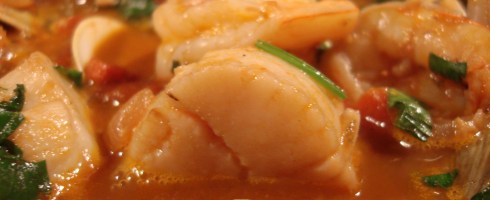
Cioppino Latino (San Fran Seafood Stew, Caribbean-style)

12 Oct

This Cioppino recipe includes an element of redemption.

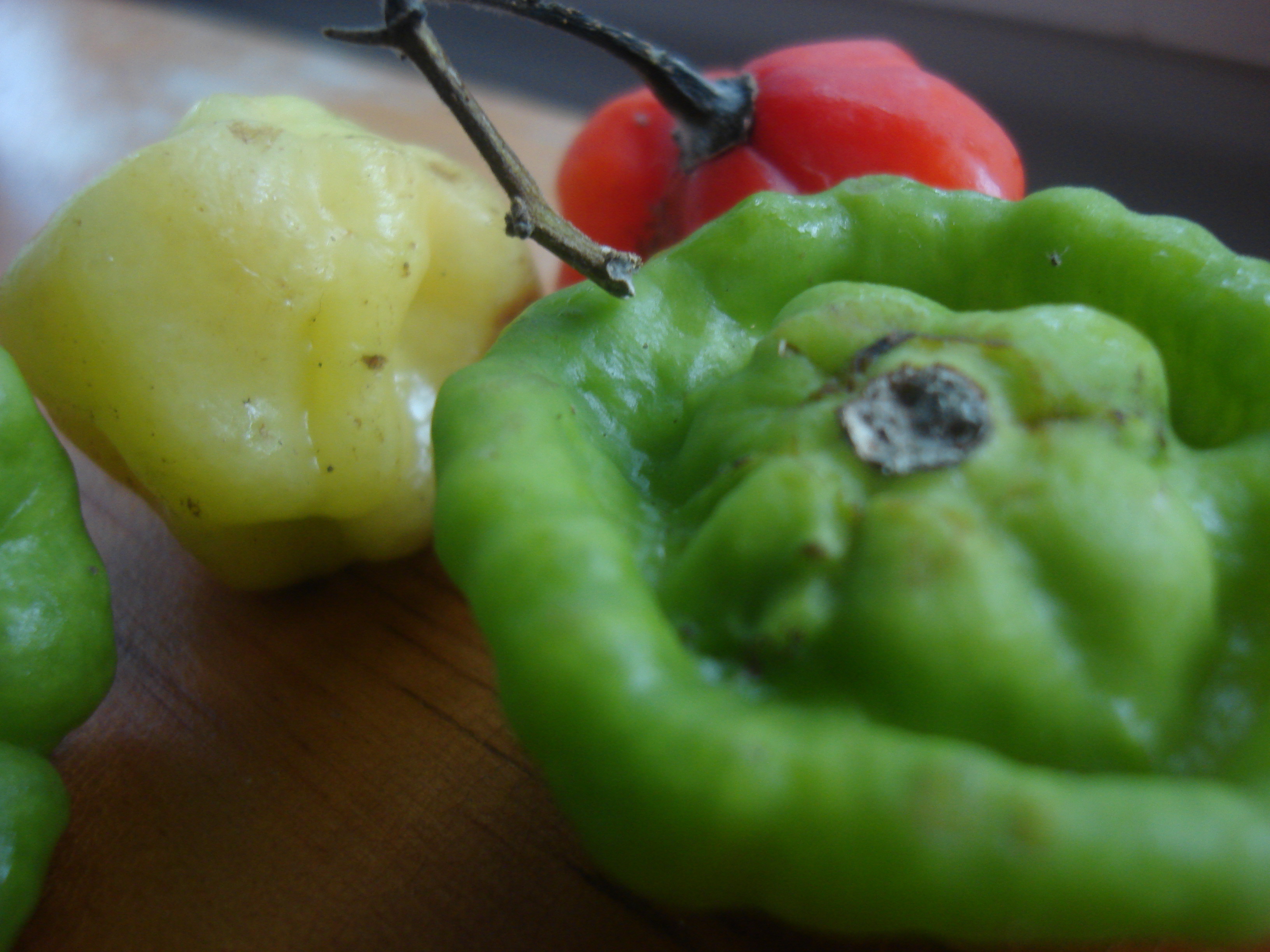
Ají dulce…home-grown on Long Island!

Adriana — my dear friend from way back when in Puerto Rico, and now another single mom by choice and an essential part of my New York life,  has made numerous appearances on Hot, Cheap & Easy. But even more of our fantastic meals together have never made it to these pages. We like to blame it on the kids. It’s one of the things children are good for.

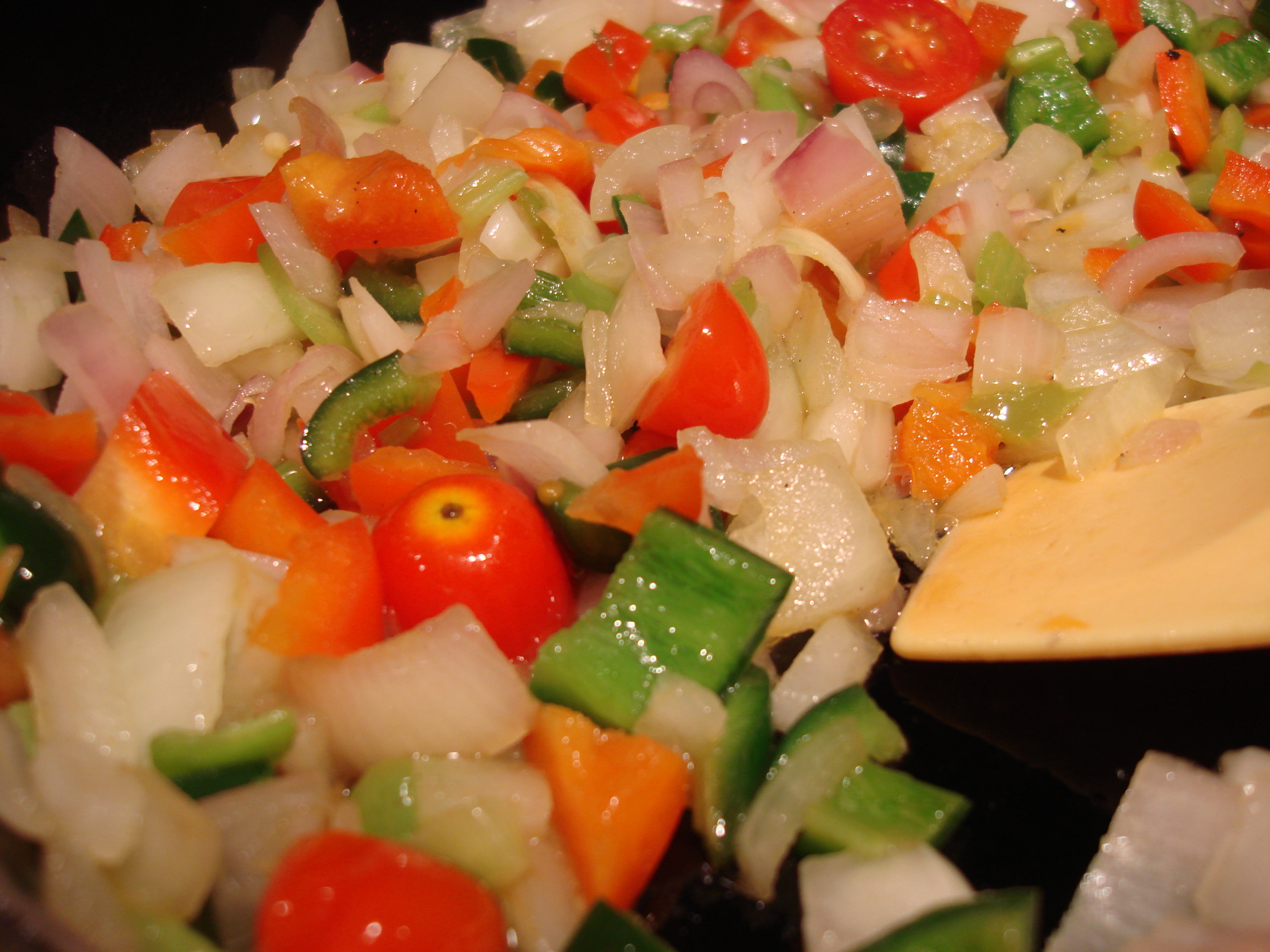
Sofrito

It’s not as though we don’t try. We start out dutifully recording the ingredients; me glaring across the counter at Adriana waving the appropriate measuring implements at her, grabbing the bloody and limp plastic wrap from the butcher as she is trying to throw it out so I can write down the exact weight of the meat, and giving her the evil eye every time she starts to improvise before I have a chance to count the peppercorns or the coriander seeds, or, the grains of salt, she would say. Continue reading

Lasagna Latina: Tortillas, Beans, and Shredded Chicken

4 Oct

The start of the semester for me and kindergarten for Leandro has me in a tizzy.

One month in, the days seem never-ending and yet never long enough. I am up at 5:30 a.m. every day. Eighteen hours later, I still find myself vertical, eyes open, preparing food, washing dishes, cleaning the bathroom (!), folding clothes, laying out everything for the morning in a semi-headachy fog, wrinkling my nose and wondering, in the words of David Byrne, “How Did I Get Here?”

Scenes from the Farm

So when — oh s**t! — the Restoration Farm End-of-Summer-Potluck came roaring up, I was sort of astonished, and not a little dismayed. Continue reading

Filete de pescado entomatado (Fish filets in spicy creole sauce!)

4 Jun

In the supermarket the other day, Leandro asked for fish for lunch. This is not in itself odd…everyone in this family is island-born somehow, we all love fish, and he is a huge fan of River Monsters on Animal Planet (which I strongly encourage, because I think Jeremy – the mad fisherman — is quite hot and much better to watch with my son than Diego the animal rescuer – why, why, why do he and his bloody cousin, Dora the Explorer, have to shout everything they say? –  or Phineas and Ferb – who are quite sweet, but not nearly as compelling as flesh and blood Jeremy and his sunburnt, craggy-faced, understated British delivery, rod-wielding self ).

So I picked up some wild caught tilapia to accommodate him, and because I suddenly got a strong craving (antojo) for fish in salsa criolla.

Fortunately, I had all the ingredients in – aside from the fish, it’s a pantry dish, and double fortunately, Leandro loved it, so happy, happy! Triple fortunately, it can be adapted to chicken and shrimp too, so keep that in mind! I’m happy, hope you’re happy too…

I served it with spinach pasta, on the boy’s request…I definitely would have preferred polenta, but who has time for that at 1 p.m. with no lunch ready?

Filete de pescado entomatado (Fish filets in spicy creole sauce)

1 Tbs extra virgin olive oil

1 medium onion, chopped

3 cloves garlic, minced

½ Cup roasted red peppers (yellow or green are fine too!)

Pinch hot red pepper flakes, optional

8 oz can Spanish-style tomato sauce

8-10 pimiento-stuffed green olives, sliced

1 generous tsp capers, drained indifferently

½ -1 lb tilapia filets (or other flat whitefish)

Salt and pepper to taste

Heat olive oil in a large sauce pan at medium high until liquid and fragrant. Add onions, stir to coat, and lower heat to medium. After five minutes, add garlic and peppers and pepper flakes, if desired. Cook an additional 5 minutes, until vegetables are tender, then add tomato sauce, olives and capers and cook at a lively simmer for 10 minutes.

Meanwhile, lightly salt and pepper tilapia filets on both sides. When sauce has cooked until the oil is beginning to separate from the sauce, lay filets on the sauce without filets touching one another.

Cook for about 4 minutes, then turn filets carefully (they will fall apart if you are not careful) and cover with sauce, cooking another 4 minutes or so (check for doneness – opaque flesh – with a fork). The genius of this recipe is that the fish won’t dry out if overcooked!

Serve with rice or atop polenta.

Sofrito for freezing (Puerto Rican mirepoix)

30 Jun

The green and lush fragrance of culantro is one of my favorite rainy day smells. In the kitchen garden I kept at my late grandmother’s house in Mayagüez, Puerto Rico, I had a vigorous crop and whenever it rained, the drops activated the fragrance, the scent pervaded the house, and I got hungry!

Without culantro (which we call recao), Puerto Rican food just isn’t as vibrant; it can’t taste quite like abuela’s. It is integral to sofrito, the starter to so many recipes, including beans, soups, stews and rice dishes. It is the equivalent of the French mirepoix, that combination of sauteed/roasted onions, carrots and celery that is the base for so many Gallic dishes.

Recao – culantro

Unfortunately, culantro is not as well known in the U.S. and doesn’t grow super-well in my planting zone, although I have had some small successes over the years (Thanks to Vic Muñoz for her growing tips). So I hit the local Latin supermarket on occasion and buy some pre-cut leaves from Costa Rica. Because once cut, recao loses its potency quickly, I use twice as much as I would if I had just gone out back and snipped some. And because it is sold by quantities much bigger than I need for a single dish, whenever I do buy it, I make enough sofrito to freeze.

The same goes for ají dulce, the non-spicy small pepper that looks like a habanero, but isn’t at all spicy. I buy a bunch at once — along with the recao — and make sofrito to freeze. You have to be careful and taste it before adding it to the sofrito, because sometimes the store makes a mistake and labels the hot ones as sweet ones, or, I’ve been told, ají dulce planted too closely to ají bravo (angry, aggressive) will take on the spiciness. I can actually smell the heat when cutting habaneros (also called scotch bonnets); the volatility  is no joke.

Ají dulce – the sweet sibling to the hottie habanero

The following recipe is for those who have access to these products. If you don’t have a Latin market nearby, investigate the Asian/Indian markets, as they too use these ingredients.

Continue reading

One Week to Our First Pastured Chicken: Final Selection of Recipe Has Begun!

15 Jun

Leandro's first homegrown peapod

Just before this week’s visit to Restoration Farm, we went out into our yard where Leandro picked the very first pea pod from a plant he himself started from seed! We were very pleased, even though the peas weren’t so tasty raw. This was a random variety from a garden show craft, so we have high hopes for the others we planted – Burpees Garden Sweet (organic). His eyes reflected the magic of a seed transforming into food.

Trish and one of her flock

Then at Restoration Farm, we visited that other transformation into food; Trisha tells us that the pastured chickens are a week away from our cooking pots. They will be seven weeks and one day, and — we hope — about five pounds. She had initially planned to go to eight weeks, but due to the window of opportunity for processing and the fact that they are getting slower and heavier and more prone to disease, she figures next week is it!

Ignorance is bliss


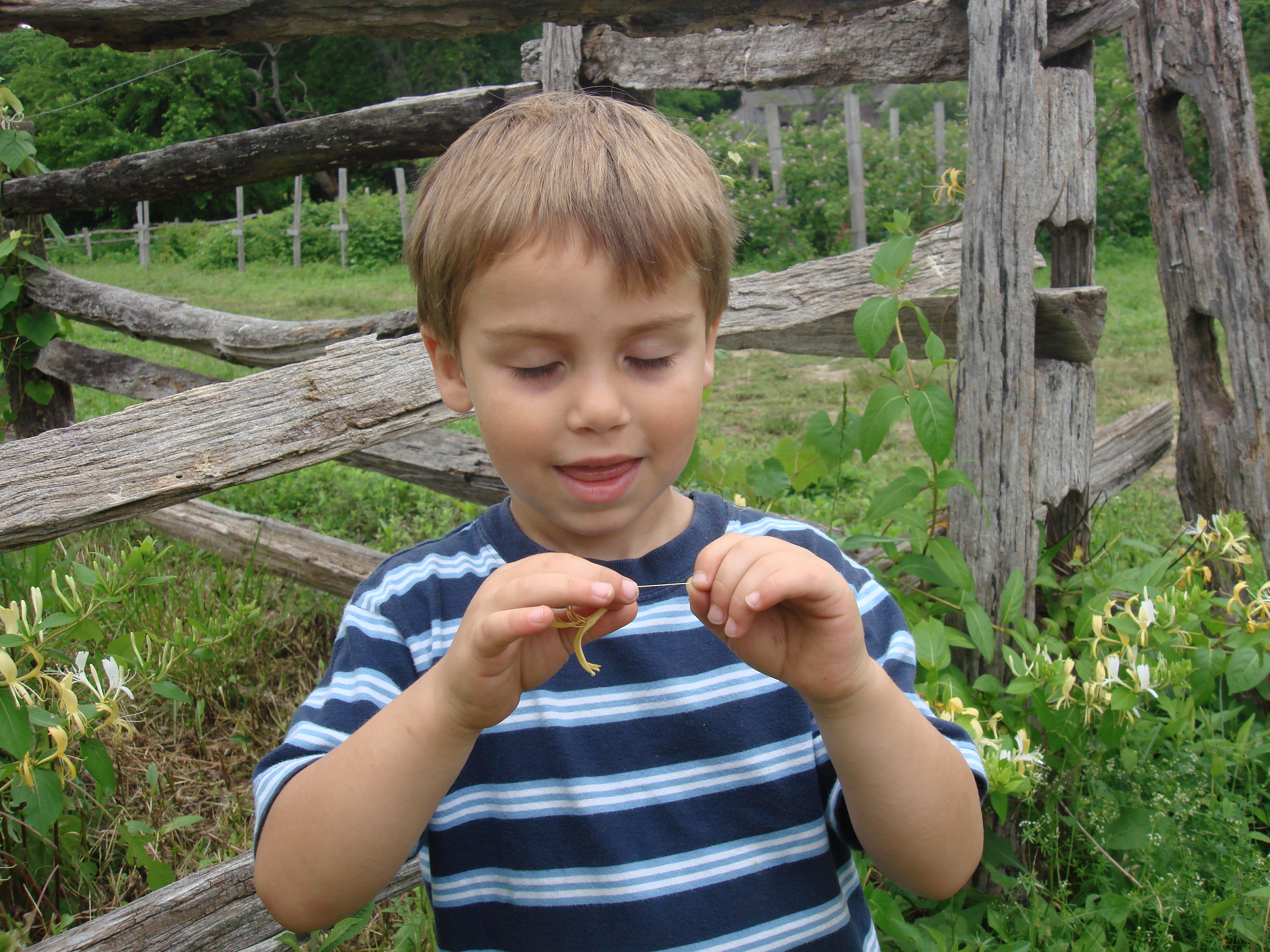
Leandro still finds the chickens stinky (and really, they are pretty pungent at this point) and was more interested in drawing sweet beads of nectar out of the honeysuckle blossoms that are exhaling seductive breaths of fragrance all over the farm these days. He learned the art of drawing out the style from Farmer Steve and then taught me! Delicious.

Honeysuckle gives it up for Leandro

So now I am planning what to do with my first bird. As I expect it to be less fatty and moist than a factory bird or even an organic chicken from a large facility, I am thinking about dishes that will help contain the moisture and make the most of the added flavor that a slightly more muscular bird will have. I also want to do something that is already in Leandro’s growing list of delectable foods, so as not to risk some refusal. And then there is the desire to honor my Caribbean forebears who lived off the land (some still do, at least in part).

So… I’ve got two ideal candidates from the criollo* canon: arroz con pollo: chicken and rice,or asopao de pollo: soupy chicken and rice. Feel free to share your thoughts and opinions on which one it should be!

*Criollo or Creole refers to the generations of colonialists actually born in the colonized place. In the case of Puerto Rico, the Spanish were the first Europeans to settle. They remained Spaniards, but their offspring born on the island (in many cases, half European and half native) were known as criollos – not quite European, but not quite native, either. Criollo cooking (like Creole in New Orleans, for example), reflects the meeting of different worlds of cooking ingredients and techniques.

Pastelón de Yuca (Puerto Rican Shepherd’s Pie)

22 May

In an October post I gave you my recipe for Basic Seasoned Ground Beef (recipe repeated here, so don’t lose heart!) a Latin-style ground beef basic (similar to Carne para Rellenar, for the cognoscenti) that I make loads of at a time and freeze in serving size portions to be transformed into nachos, chili con carne (with the addition of red beans, tomato puree and chile pepper), ragu sauce for pasta (add Italian seasonings and tomato puree) or any number of things.

One of my favorite things to do with Basic Seasoned Ground Beef is make pastelón; the Puerto Rican equivalent of Shepherd’s Pie. It doesn’t take a lot of active prep (although it does require oven time in addition to stove top time) and it is a warming dish that will take everyone to their happy place. Click here for Pastelón de Platanos – Plantain Pastelón – another classic version of this dish). The more beef you use, the thicker it will be. You can also substitute Pollo Guisado (stewed chicken). The first section is the yuca preparation, but I also include the beef and chicken recipes in this post so you have them handy. Continue reading