Tag Archives: food

Aglio olio variations

28 Jun

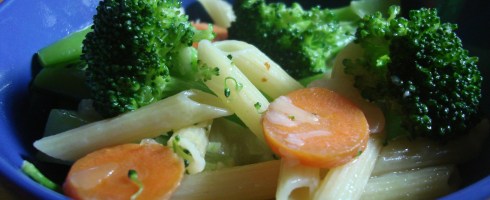
Now that Leandro loves aglio, olio e peperoncino, I am milking the situation. I am adding all sorts of vegetables in the pasta water 3-4 minutes before taking off the boil and draining. Then I drench all of it in the ali-oli and spice! Leandro will now try anything if it is part of aglio-olio, so our carrot consumption is way, way up.

Fitting carrots into our repertoire

Aglio-olio veggie variations (serves 2)

½ lb pasta of your choice (with vegetables, penne or other short and fun pasta – wagon wheels, fiore, farfalle, fusilli –   are  a good choice)

1-2 Cups Mix and Match Veggies 1: roughly chopped broccoli florets/peeled sliced carrots/ peas – in pods or frozen or fresh/cauliflower florets/chopped asparagus spears/shelled edamame (basically, whatever vegetables you like or think your kid might try and that need just a bit of softening to be edible and appealing)

2 Tbsp extra virgin olive oil

1/2 Cup Mix and Match Veggies 2 (onion, peeled and chopped; or diced peppers: green, red, yellow, orange; mushrooms, chopped)

3 cloves garlic, minced

1/8 to ¼ tsp hot red pepper flakes

1/4 cup grated grana padano or parmigiano reggiano

Boil the pasta according to package instructions, making sure to salt the water well. Add Mix and Match Veggies 1 to the pasta water 3-4 minutes before the pasta is fully cooked. Drain and reserve in a separate bowl or the colander. In the same pot that you cooked the pasta, add the olive oil, lowering heat to medium. When the olive oil is loose and fragrant, add mix and match veggies 2, garlic and red pepper flakes (to taste) and stir around until the garlic is golden (not brown). Add the pasta and vegetables back to the pot and mix well, adding grated cheese. Serve!

No-cook Cannellini and Garlic Scape Dip (fast and seasonal)

26 Jun

Garlic scapes are the gorgeous twisty tops of garlic plants as they begin to mature in late spring. They need to be removed from the plant so they don’t take growing power away from the bulbs still developing underground.

They are so good to look at that I actually stick them in vases and use as centerpieces when they are in season, but of course I pull them right out of their decorative function whenever I need garlic flavor, which is what garlic scapes give you. You top and tail them to remove the crown and any woodiness at the bottom of the stem, slice and voila! fresh tasting garlic. When I have had overabundance, I have diced and frozen them to good effect.

This is a recipe that Caroline Fanning, head grower at Restoration Farm, suggested I play around with, as the farm had just such an abundance this year. I added the oil and thyme; You can really experiment with whichever herbs you like. Basil, oregano, rosemary, parsley, savory, and sage all complement the nuttiness of cannellini beans.

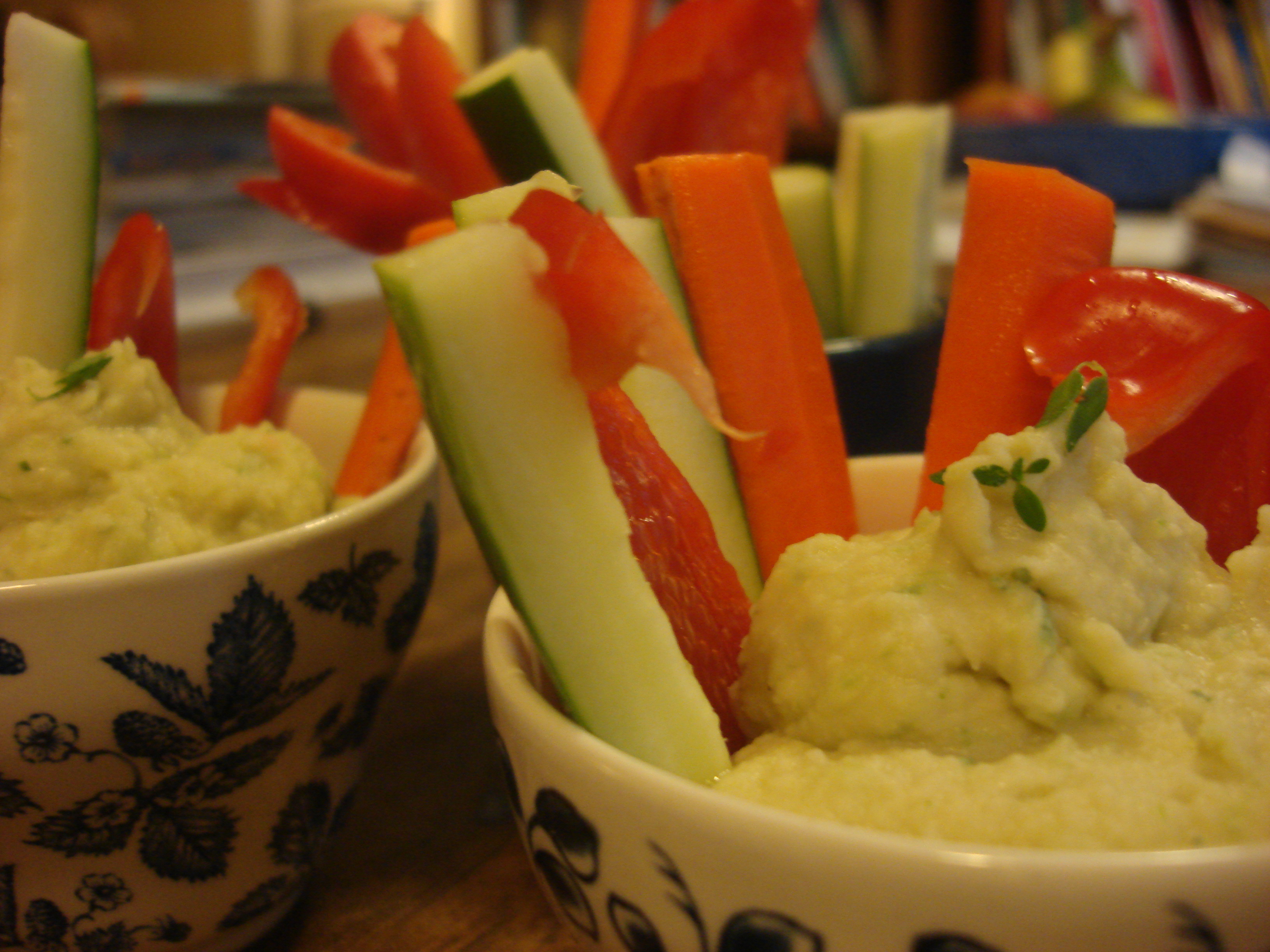
You can use this as dip or spread on sandwiches or wraps, to add flavor and creaminess to other ingredients. Great party dip! I served them as an appetizer, using teacups for individual servings of dip with cut vegetable dippers stuck right in!

No-cook Cannellini and Garlic Scape Dip

4-5 garlic scapes, crown removed and stem trimmed of any woodiness at the bottom

2 15.5 oz cans cannellini (white) beans, rinsed and drained

1 generous Tbs extra virgin olive oil

2 tsp dried thyme (4 tsp fresh)

Place all ingredients in food processor and blend until smooth. Serve with baguette toasts, crackers or fresh vegetable sticks.

Asopao de pollo (Soupy Chicken and Rice) with Pastured Bird!

23 Jun

Sooooo, I managed to get to Restoration Farm in time to see the very tail end of the first processing (meaning when the birds are killed, plucked and eviscerated, lest I be accused of euphemism).

I did NOT take Leandro; I wanted to see things for myself and not have to focus on keeping him out of trouble. More on his reaction to the chicken in a moment.

First I want to say that the atmosphere at this first round of chicken processing was so calm and cooperative and lovely. The team of Trisha, Lucille, Steve, Brian, Denis, Dan and Caroline was tired, but elated, but not  giddy or punchy, after seven hours of chicken guts under the trees. Dan and Caroline’s two kids were there; two-year-old Ada was calm as could be in the face of all the activity.

My first bird

The chickens — all 35 made it to processing! – weighed in between 4. 16 and 6.65 lbs. As a note, these are not certified organic birds (that’s a whole ‘nother process), but they have been raised according to organic practices – from their feed to their pasture; they just don’t have the stamp.

I also forgot my bloody camera! I wanted to shoot myself (since I couldn’t shoot pictures). So you will have to wait and see whether someone is able to send me photos; then again, perhaps you don’t care to see the goings on. Anyhoo, it was clean and well-organized.

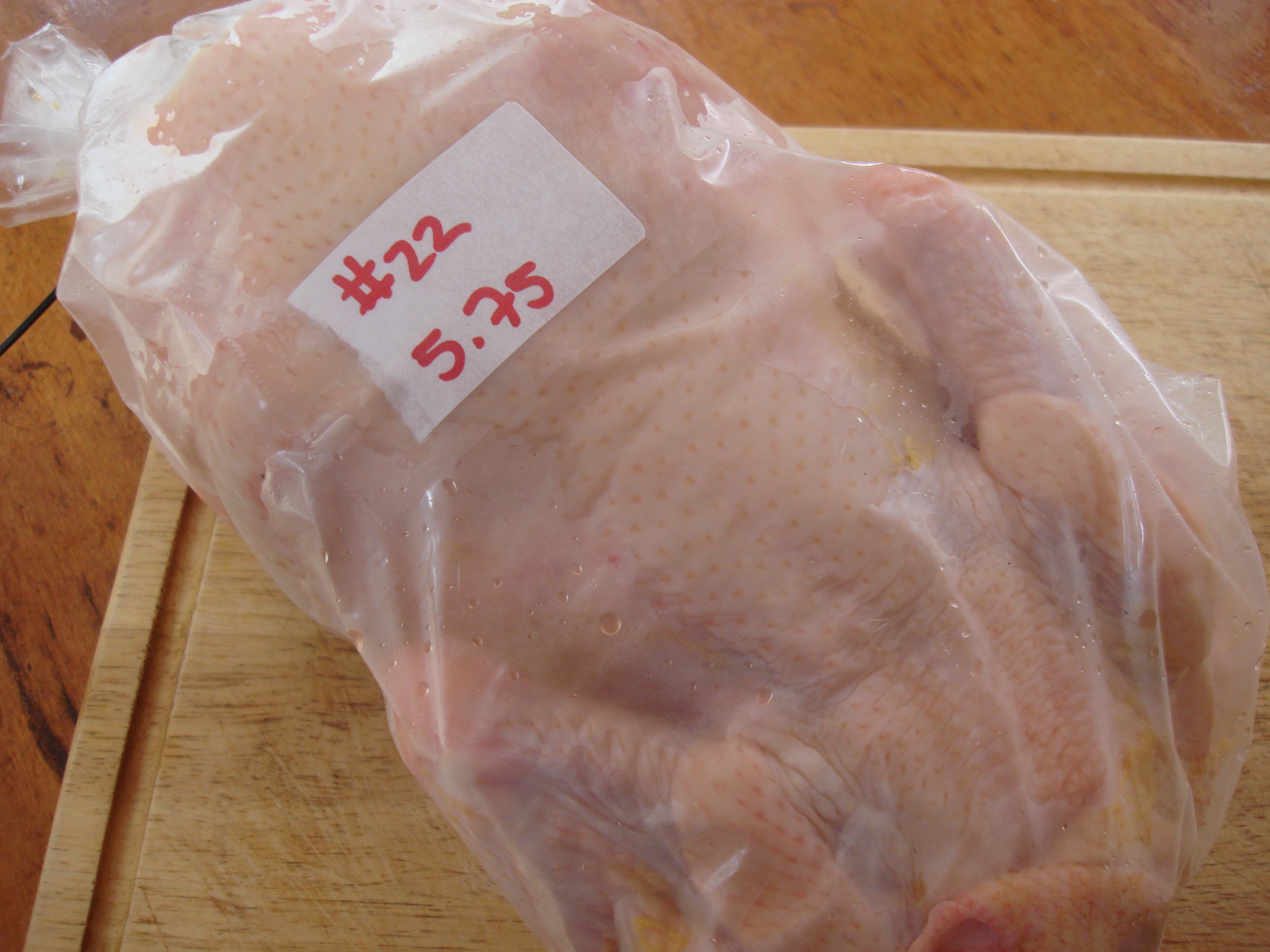
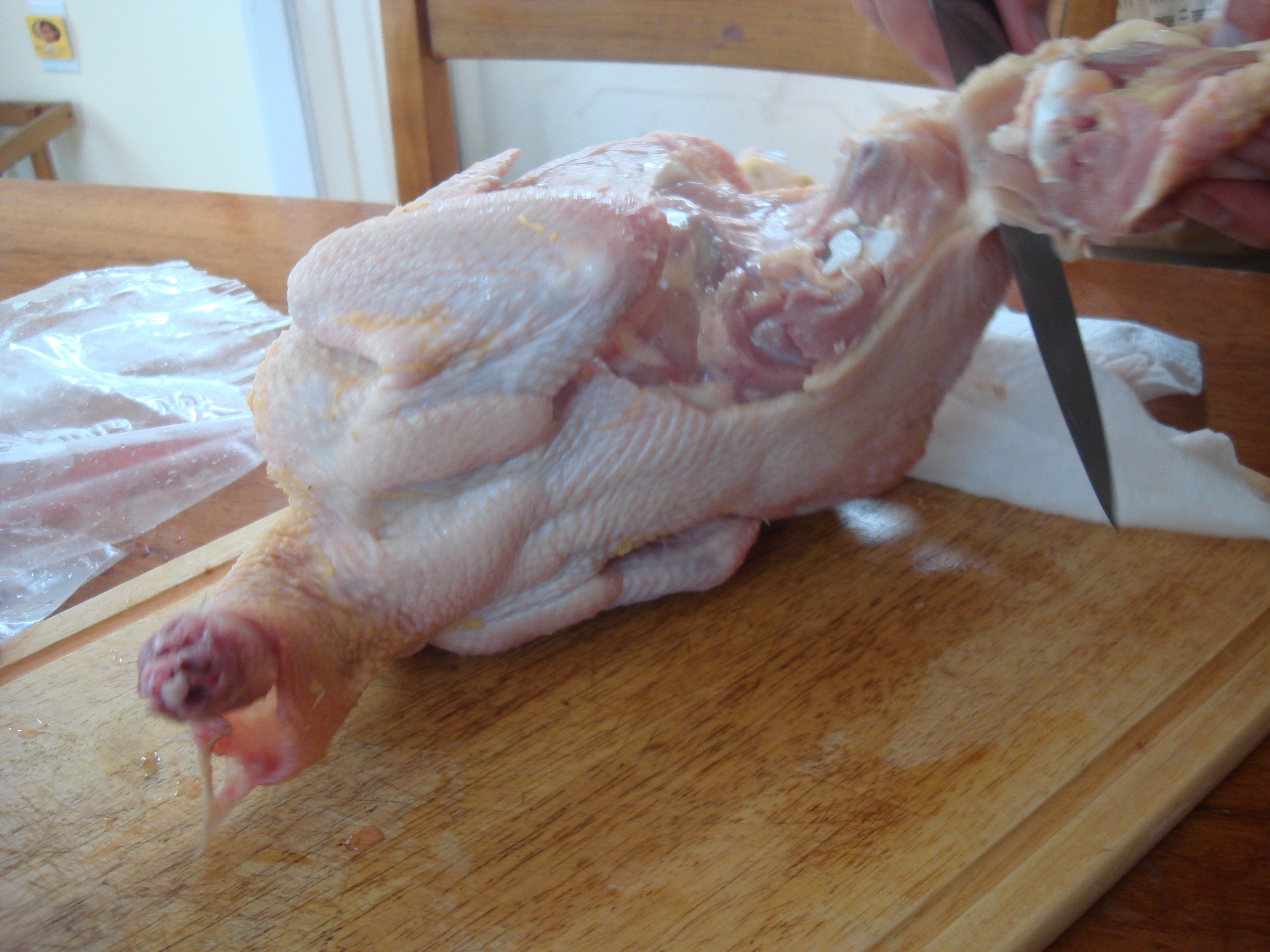
So I brought home bird #22, weighing 5.75 lbs. I picked up the necessary ingredients for asopao from the Compare (Latino) supermarket in Farmingdale on the way home. My dad, Pedro, roused himself from the NYTimes crossword puzzle to separate the bird (we saved the breasts for another meal cause this bird was so big!) and I went to work while Leandro was still across the street at a playdate. It was beautiful to work with. So clean.
Asopao isn’t really Hot, Cheap & Easy, except for the hot, sweaty work if you want to do it right (and I did). Perhaps I will invent a shortcut version one day, but not with this special bird. And really, my mom and dad were taken back to the days of my great-aunts cooking all day long…I really got it right. The chicken gave so much real flavor; it is certainly not as tender as factory-farmed, but it is really good. In the next few posts I’ll talk about some of the more unusual ingredients here and what to do if you can’t find them.

Leandro sat down to eat and said, “These are the little chickens that got big?”

and I said “Yes, Trisha and everyone killed them today so we could eat.”

“Oh. You went to see?” he said, and I said yes.

He stuck a big bite in his mouth and said, “Delicious.”

I forgot to tell him not to speak with his mouth full.

Asopao de Pollo (Soupy Chicken and Rice) Serves 6-8

Dedicated to my tía-abuelas

A – Three pounds chicken (may be whole chicken or, if you have a big bird, reserve the breasts for another meal. MUST HAVE BONES!!! Should have neck, heart and liver as well) cleaned and separated into drumsticks, thighs, wings (separated and tips cut off and reserved for stock), backbone, etc.

B – ADOBO (pound all ingredients in B in a mortar and pestle into a smooth paste)

  1. 3 cloves garlic, peeled
  2. 2 black peppercorns
  3. 1 tsp dry oregano
  4. 2.5 tsp salt
  5. 1 pinch (1/8 tsp) turmeric or sweet paprika (Turmeric stains, so beware!)
  6. 1.5 tsp olive oil
  7. ½ tsp vinegar

C – 2 Cups white rice (less if you want soupier soup.Sometimes the rice takes over.)

D – 9 Cups water and 1 Tbs salt

E – SOFRITO 1

  1. 3 Tbs olive oil
  2. 3 oz ham steak or jamón para cocinar, diced
  3. 1 oz bacon, chopped rustically
  4. 1 green cooking pepper (cubanelle or Italian pepper), diced
  5. 1 large onion, peeled and diced
  6. 6 culantro leaves (recao), minced
  7. 4 sweet small peppers called ají dulce in Hispanic markets (do NOT purchase Jamaican ají or scotch bonnet! They look the same but the Jamaican/scotch bonnet are HABANEROS, deadly hot and inappropriate for this dish!) seeded and minced
  8. ½ Cup cilantro leaves, minced
  9. 2 Tbs vegetable oil (seasoned with achiote, for the more expert criollo cook)

F – SOFRITO 2

  1. 1 Tbs capers, drained indifferently
  2. 1 tomato, seeded and diced
  3. 1  8 oz can Spanish-style tomato sauce
  4. 4 oz roasted red pepper, drained indifferently and diced
  5. 10 pimiento stuffed green olives
  6. 4 oz Spanish dry, cured chorizo sausage

G – ½ Cup light red wine

H –  OPTIONAL – in Puerto Rico we decorate and cool off the soup by topping with a can of petit pois or asparagus. Today’s foodies are not so hip to those particular vegetables in their mushy canned form. I leave it up to you.

Instructions

  1. Separate chicken parts into two large bowls. The back bone, neck, wingtips, liver, heart, and kidneys go in one for the stock. The meatier drumsticks, wings, thighs, and breasts (if using) go in the other. I remove most of the skin and cut off much of the fat. Season all pieces with the ingredients in B. (Adobo).
  2. Soak the rice in abundant water while doing the rest of the prep and cooking.
  3. Place the ingredients in D in a large (6 qt) saucepan. Add the stock chicken pieces, cover, bring to a boil at medium high, boil for 15 minutes, then reduce heat and simmer for an additional 30 minutes, covered.
  4. In an even larger pot, place all the ingredients in E (Sofrito 1), and sauté at medium high until vegetables begin to wilt. Add all the ingredients in F (Sofrito 2) and continue stirring until combined and beginning to stick. Add wine and scrape bottom of pot. Add the meaty chicken pieces and cook at medium, turning frequently to coat well. Cover and cook for 30 minutes on medium low.
  5. When the stock and chicken sofrito are ready, drain stock into chicken. From the stock, reserve the back and wings and get as much meat off them as you can, adding to the soup, discarding the bones. You may add heart and liver to the soup as well.
  6. Bring to a boil.
  7. Drain the rice, stir into the soup, cover and bring to a boil. Reduce heat and cook, covered until rice is cooked (start checking in 10-15 minutes). Serve with roasted red pepper, peas or asparagus garnish. If the rice takes over, just add water.

Jam On! Fresh Strawberry Rhubarb Jam (no gelatin, no pectin, no sweat!)

21 Jun

Being part of a farm makes you really work with the seasons!

Take rhubarb. I’ve never actually cooked rhubarb before, as much as I love strawberry rhubarb pie (Briermere Farm in Riverhead makes the best I’ve had!). This vegetable is not part of my Caribbean repertory and, to be honest, I have been a little intimidated by it.

Silly me! It is simple! Continue reading

Black Bean Variation (Frijoles Negros con pimientos morrones y chorizo)

19 Jun

As much as I like my basic five-minute black bean recipe, (https://hotcheapeasy.wordpress.com/2010/11/24/five-minute-black-beans/)I do get bored with it occasionally and I also actually sometimes have more than five minutes (this prep takes maybe ten minutes).

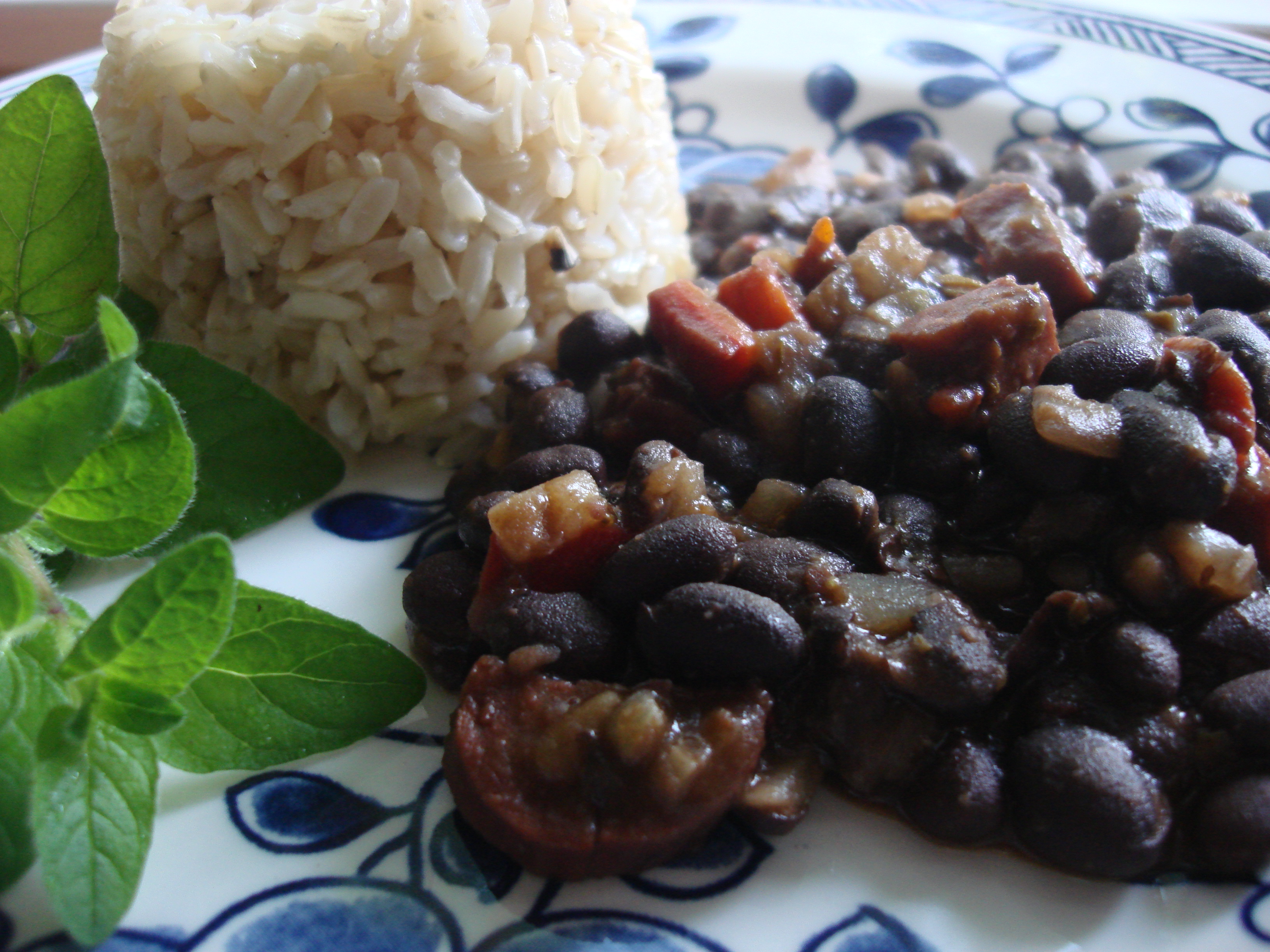
On this occasion of boredom and time to spare, I had some chorizo and roasted red pepper doing nothing but getting old in my fridge, so I broke out of my box. The result was much, much better than I anticipated; the addition of chorizo added a silky umami sort of mouthfeel that was actually a bit like gravy. So give it a try; my son and I enjoyed the added spiciness and actually had it with rice one day and on tortilla chips topped with Monterey Jack cheese and lightly broiled the next day.

Black bean variation (with chorizo, roasted red pepper and oregano)

1.5 Tbs olive oil

1 medium onion, peeled and chopped

3 cloves garlic, peeled and chopped

3oz Spanish-style dry chorizo sausage, peeled and diced

1 Tbs roasted red pepper from a jar, drained and diced

1 29oz can black beans, drained and rinsed

2 tsp dry oregano

Heat olive oil in a heavy-bottomed saucepan until fragrant. Add onion, stir to coat and lower heat to medium. Cook for five minutes. Add garlic, cook one minute. Add chorizo and cook until it starts to release color. Add red pepper, stir to coat. Cook an additional minute. Add beans, oregano and ½ cup water (more if you want more liquid for rice; about that or less for future quesadilla filling or nacho topping). Bring to a boil, reduce to a simmer and cook 15-20 minutes.

One Week to Our First Pastured Chicken: Final Selection of Recipe Has Begun!

15 Jun

Leandro's first homegrown peapod

Just before this week’s visit to Restoration Farm, we went out into our yard where Leandro picked the very first pea pod from a plant he himself started from seed! We were very pleased, even though the peas weren’t so tasty raw. This was a random variety from a garden show craft, so we have high hopes for the others we planted – Burpees Garden Sweet (organic). His eyes reflected the magic of a seed transforming into food.

Trish and one of her flock

Then at Restoration Farm, we visited that other transformation into food; Trisha tells us that the pastured chickens are a week away from our cooking pots. They will be seven weeks and one day, and — we hope — about five pounds. She had initially planned to go to eight weeks, but due to the window of opportunity for processing and the fact that they are getting slower and heavier and more prone to disease, she figures next week is it!

Ignorance is bliss


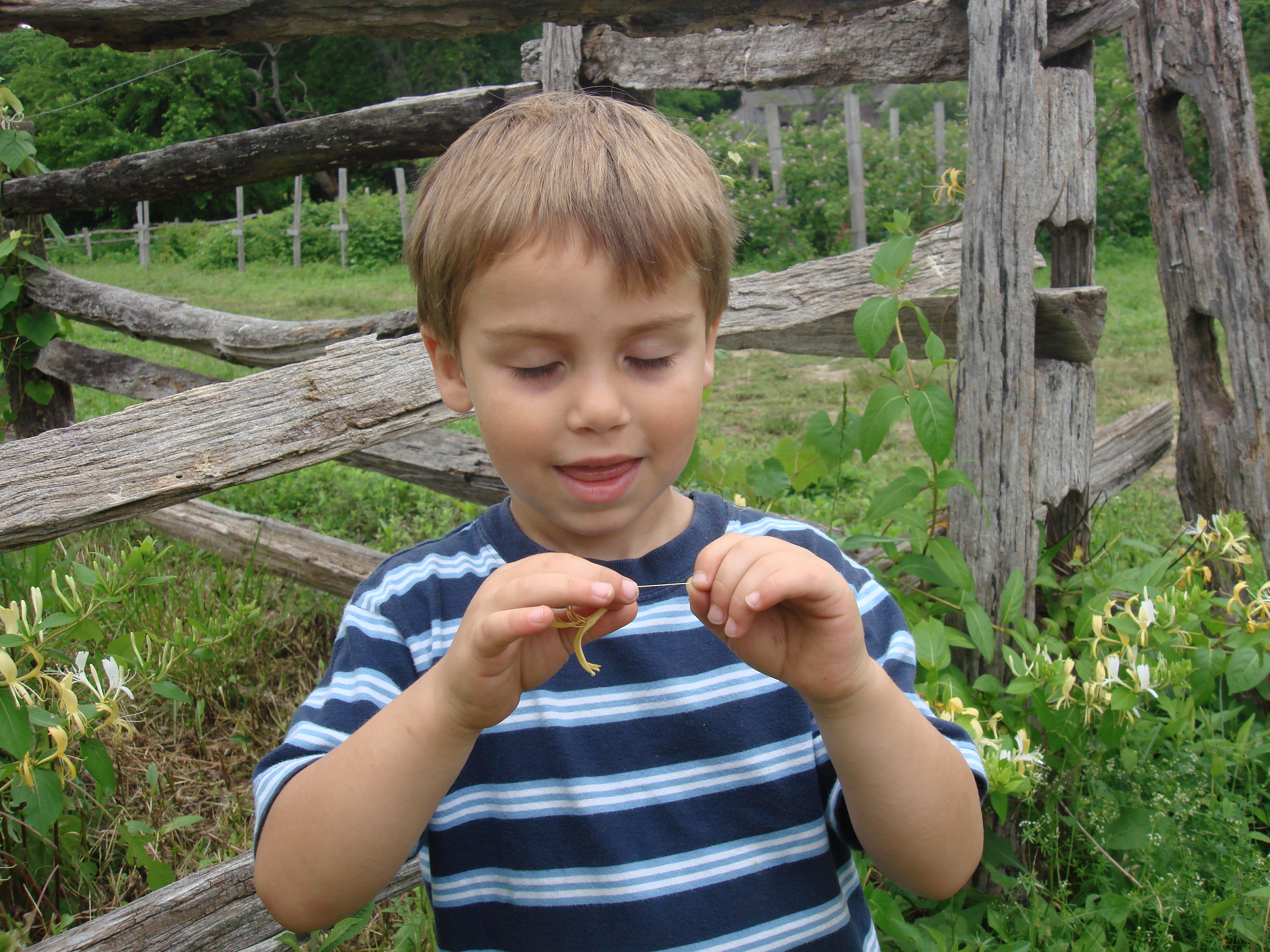
Leandro still finds the chickens stinky (and really, they are pretty pungent at this point) and was more interested in drawing sweet beads of nectar out of the honeysuckle blossoms that are exhaling seductive breaths of fragrance all over the farm these days. He learned the art of drawing out the style from Farmer Steve and then taught me! Delicious.

Honeysuckle gives it up for Leandro

So now I am planning what to do with my first bird. As I expect it to be less fatty and moist than a factory bird or even an organic chicken from a large facility, I am thinking about dishes that will help contain the moisture and make the most of the added flavor that a slightly more muscular bird will have. I also want to do something that is already in Leandro’s growing list of delectable foods, so as not to risk some refusal. And then there is the desire to honor my Caribbean forebears who lived off the land (some still do, at least in part).

So… I’ve got two ideal candidates from the criollo* canon: arroz con pollo: chicken and rice,or asopao de pollo: soupy chicken and rice. Feel free to share your thoughts and opinions on which one it should be!

*Criollo or Creole refers to the generations of colonialists actually born in the colonized place. In the case of Puerto Rico, the Spanish were the first Europeans to settle. They remained Spaniards, but their offspring born on the island (in many cases, half European and half native) were known as criollos – not quite European, but not quite native, either. Criollo cooking (like Creole in New Orleans, for example), reflects the meeting of different worlds of cooking ingredients and techniques.

Blueberry-lingonberry muffins (or mix and match berries and jam)

14 Jun

A favorite for tea, lunchbox or thoughtful treat for neighbors, caregivers and friends

Nothing makes people happier than a fresh baked treat, except a fresh-baked treat that isn’t too sinful and comes in small enough portions to make sense rather than create guilt.

Such are these blueberry-lingonberry mini-muffins that I adapted from a Stonyfield Farms strawberry muffin recipe. This recipe I first started doing with my beloved niece, The Incomparable Sofía, when she was just little (she is now a gorgeous and grown-up six-and-three-quarter-years-old). Whenever she comes home for a visit, we bake them up too. I miss her goofy little concentrated self and her beautiful long fingers in the kitchen. It is now Leandro’s favorite thing to bake. It is slightly more complicated than my banana bread or banana muffins; just make sure to lay out all your ingredients, measuring spoons and cups, and bowls before calling the kids to the work table and you can easily do it with a three-year-old maniac (or two!)

We prefer blueberries to strawberries (although to be honest, blueberries do lend a greenish tinge to the final product that is a bit weird, though no one ever, ever complains) as I think they have a punchier flavor when baked. I’ve done it with mixed berries, but early on some kids objected to the seed bits in blackberries and raspberries, so I fell out of the habit of using them.

The real key to good berry flavor, though, I learned from Cook’s Illustrated magazine, which suggests adding berry jam. Blueberry jam might be the obvious choice for blueberry muffins, but as a non-jam eater, I just used what I had in the fridge the first time out, which happened to be lingonberry (shout-out to Sofía’s mom, Annika from Sweden; you’ll find it at IKEA) and we liked the tart sweetness so much, we’ve stuck with it. If you are not familiar with them, think red currant or a softer, gentler version of cranberries.

I prefer mini-muffins, because they allow me to divide and share them more easily and because you can feel good about popping just one or two. Leandro’s caregivers really appreciate getting a batch, and it makes a perfect element to a good fika (Swedish coffee break hang out session – coffee klatch to New Yorkers!).

Blueberry-lingonberry/Any-berry muffins (makes 48 mini-muffins or 12 standard)

1 Cup all purpose flour

1 Cup whole wheat flour

½ Cup sugar (white or light brown)

1.5 tsp baking soda

2 eggs

1 Cup plain yogurt (I use nonfat, lowfat is also fine)

¼ Cup butter (unsalted preferred, but salted is okay) melted and cooled

1 tsp vanilla

1 Cup chopped/mashed blueberries or berries of your choice (frozen are very convenient. Thaw first)

1-2 Heaping Tbs berry jam (I use lingonberry, but use whatever red/blue/purple berry jam you’ve got)

Preheat oven to 375°F. Grease your muffin tins ahead (especially if baking with children – Be prepared!)

In a large bowl, mix together dry ingredients.

In another bowl mix the eggs, yogurt, melted butter and vanilla (if your butter is still very hot, you may get crusty bits when it comes in contact with the cold yogurt. Just break them up as you mix and don’t worry).

Fold berries into the dry mixture. Fold wet mixture into the dry mixture. Swirl in the jam. Spoon batter into greased muffin tins, filling about 2/3 up. Bake for 12 minutes (mini-muffins) or 20-25 minutes (standard size). Cool for a minute, then remove from tins and let cool completely on wire racks (if you’ve got; otherwise any cool, clean surface will do). These keep well tightly covered in the fridge for a week.


Ensalada de Lentejas (Lentil Salad, Spanish-style)

11 Jun

The hot, hazy and humid summer weather typical of Long Island has started early this year, but that doesn’t mean I am giving up my lentils. I like the taste, the price and the fact that, unlike many of the other legumes, they don’t need pre-soaking.

Nutritionally these tiny almost-beans, almost-peas are giants. According to the Mayo Clinic’s Katherine Zeratsky, R.D., L.D., “…lentils are high in protein and fiber and low in fat, which makes them a healthy substitute for meat. They’re also packed with folate, iron, phosphorus, potassium and fiber.” So hip-rah, hip-rah! You should always, always, always have lentils in your pantry.

In winter I make hearty lentil soup, but hot weather calls for something cooler and lighter. I use a recipe — inspired once again by Penelope Casas’ The Foods and Wines of Spain. Have it as a main course with boiled potatoes or rice, or pair it with grilled sausages (from andouille to kielbasa..lentils love a good sausage partner). Lentils also marry well with grilled fish steaks; you can use the lentils as a bed, perhaps accompanied with polenta. This serves four as a side dish; you may want to double it for a BBQ accompaniment or main course.

Lentil Salad

½ lb uncooked pardina lentils (smaller and cuter than your average lentil, but you are free to substitute*)

1 onion, peeled. Cut in half, leaving one half whole and mincing the other half

1 clove

1 bay leaf

1 carrot scraped or peeled (scraping helps maintain a brighter color)

3 cloves garlic, peeled and smashed

1/8 tsp salt (a fat pinch)

Freshly ground pepper

¼ cup good olive oil

1.5 Tbs red wine vinegar

1 clove garlic, minced

 2 Tbs drained and minced roasted red pepper from a jar, plus 1 Tbs chopped for garnish

Rinse and pick through lentils and place in a large pot with enough cold water to cover. Stick the clove in the onion half (reserve the minced onion), then add to pot with bay leaf, carrot, smashed garlic, salt and pepper. Bring to a boil, cover and lower heat to a simmer and cook for 20-25 minutes, until just tender (longer if using regular green lentils). Drain and rinse well in cold water. Remove onion (and any clove that has fallen out), bay leaf and garlic. Dice carrot and place in serving bowl with lentils. Add olive oil, vinegar, reserved mined onion, chopped garlic and minced red pepper and mix gently (you don’t want the lentils to fall apart). Let rest for at least a half hour and serve, topped with reserved red pepper as garnish.

*Green lentils are great for salads because they keep their texture. Brown can get mushy and red lentils fall apart when cooked too long, If you choose them as substitutes, start checking the texture after 15 minutes of simmering.

¿Que qué? ¡Quesadillas! (Camp stove friendly)

9 Jun

Finger food supreme

One day I will be an eater of sandwiches.

But for now aside from the odd grilled cheese, I am not a sandwich girl. Just don’t like all the bread, the sliced deli meats, cold salads inside…I just don’t get it. Unless of course it is a pressed Cuban sandwich, con todos los poderes, de Elegguá pa’bajo…you know, like real bread, toasted, mad quantities of stuff, greased up…I can do that. In Miami. Or San Juan de Puerto Rico (ah, Kasalta). Occasionally.

But not being a sandwich person in this American life is to miss out on a lot of convenience and portability. So, I have discovered the quesadilla. Take whatever you’ve got in the fridge, spread it over half of a tortilla toasting in a skillet, sprinkle melty cheese, fold it, flip it, and allí está…a sandwich worth eating. Slice it like a pizza and you can dip it into hot sauce too.

It worked very well on our camping trip. Leftover black beans, some Monterrey Jack and sriracha and go, baby, go. Other things I have stuffed into quesadillas include pollo guisado; cheddar cheese and tomato slices; leftover sliced steak; roasted vegetables; sundried tomato and smoked mozzarella…all awesome and all done in no time, sealed with a kiss of cheese. You can slip avocado in the middle where it won’t get hot to give a lovely creaminess (plus health benefits, I am sure, but who cares?)

Quesadillas (with your choice of stuffing)

1 package of large soft tortillas (flour or corn)

a spritz of cooking oil on a good iron skillet or nonstick

1-2 cups filling (LEFTOVERS! cooked beans, cooked veg, stewed meat, sliced cooked meat)

couple of fistfuls shredded meltable cheese

1-2 Tbs herbs/hot red pepper flakes/salsa – it’s up to you to make the matches

Heat the skillet and the oil to medium. Lay a tortilla on it. Cover half with filling (Not too thick! Maybe 1/4 inch – you don’t want a mess). Sprinkle cheese (especially around the edge to make a seal). Fold the empty tortilla half over. Allow to cook a minute, then flip with fingers if you are daring, or a spatula. Turn a few times until a bit crispy and transfer to a plate. Start again with another tortilla. You can slice into wedges and serve with whatever condiments go with your filling.

Farm and chicken update (and new poll!)

7 Jun


We headed over to Restoration Farm, our CSA, today to put in a little work and visit the chickens.

Leandro was a champion snap pea picker (he remembered his skills from last year) on this bright sunny day that showed hints of what a sweltering hazy, hot and humid Long Island summer can be.

Many peas didn’t make it to the basket, as they ended up in his mouth. He won’t yet eat the pods, preferring to open them up and eat the tiny peas inside, edamame-style. It’s a start. And at least he knows they grow on vines, not exclusively in the frozen food section! Mommy gets the pods, which are wonderfully crunchy and bright.

The boy was also introduced to the delights of picking strawberries, but won’t get a chance to pick his own quart until our pick-up day, later this week. Whether any berries he picks will actually end up getting home is doubtful. I will have to make sure he doesn’t get out of hand. He can devour a pound of strawberries at a sitting and since they are amongst the most chemical-laden of fruits when conventionally-grown (see http://ewg.org/) and very expensive to buy organic, I hope this is a good year for strawberries in our neighborhood!

We visited the chickens, of course. He still loves Donna’s future egg-layers and their roving chicken coop (now painted a proper barnyard red), but the now five-week-old eating birds, not so much.

“Ew! Stinky!” is all I got out of him today, as he ran away to see what he could spirit out of the berry patch. As we get closer to our first installment of locally pastured chickens, I am starting to think about what irresistible dish to concoct for him….