Archive | Recipes RSS feed for this section

No Crust, Less Fuss: Broccoli and Feta Quiche

18 Feb


I love eggs, I love broccoli and I love cheese. They are so flexible and useful that they are natural convenience foods and I usually have all of the above in my fridge at any given moment. Like today, when I got a craving for a simple dinner with some charm. Quiche would’ve been perfect, except that the crust is a big pain, and adds more dough than I really want after a long winter of indolence.

 Then I remembered a Vegetarian Times recipe that eliminated the crust. I thought, “Hey! Why didn’t I think of that?” and adapted it to what I had in the house.

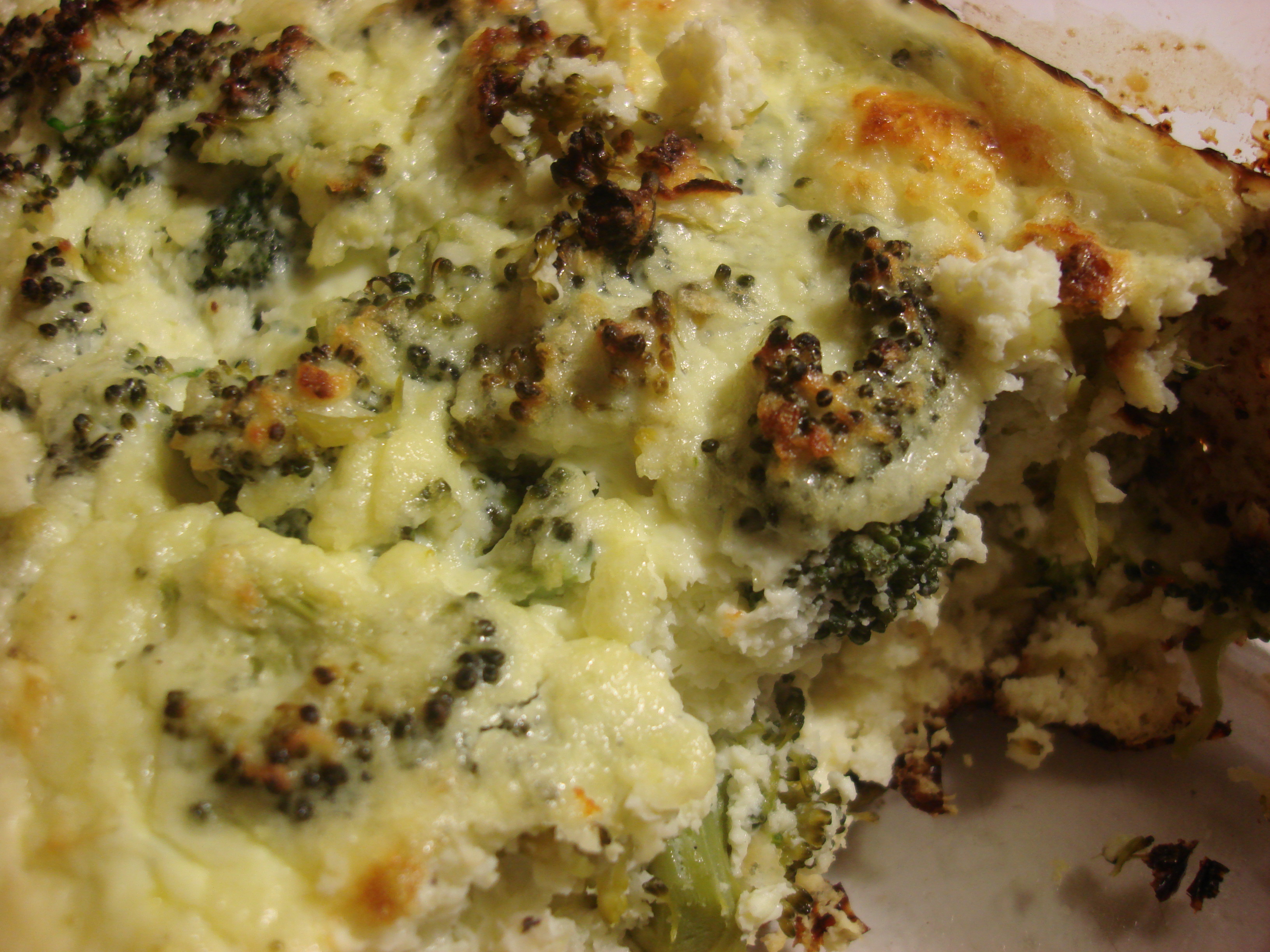
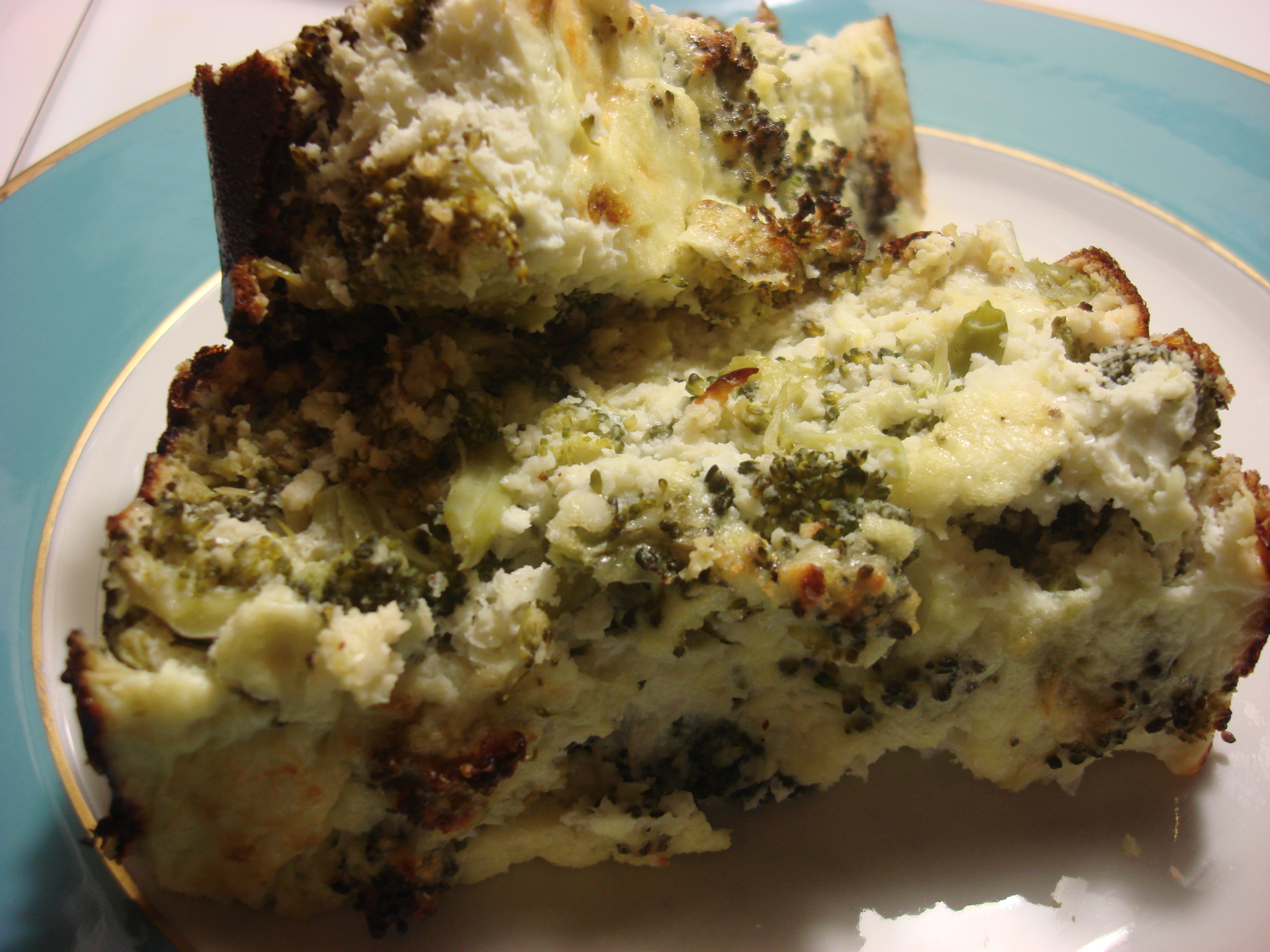
Fifteen minutes of prep (and about 40 minutes in the oven) yielded a tasty and light combo of my favorite things. It was cozy out of the oven, but crumbly to cut proper slices. I will have more tomorrow morning for breakfast — quite possibly cold. My son is demonstrating great interest, so we’ll see if we can tempt him into giving it a try, ’cause it has potential to be good breakfast food for eating in the car (heavy sigh). If not, well I have the leftover yolks mixed with a bit of water and stored in fridge for scrambled eggs for his breakfast.

No Crust Broccoli and Feta Quiche

1 lb. broccoli crowns, cut into tiny little trees

½ Tbsp olive oil

1 onion, peeled and quartered

2 cloves garlic, peeled

5 oz. feta

2 large eggs

5 large egg whites

Preheat oven to 425°. Grease a 9”x5” baking pan (you will put it in the oven to warm up a few minutes before pouring in the egg mixture). Toss broccoli with oil in a bowl.

Put onions and garlic for a spin in the food processor until they are minced. Then add the feta and process until creamy.  Add eggs and egg whites* and process until smooth. Crack a bit of pepper over it.

Remove warmed pan from oven, add broccoli, then pour egg mixture over, stirring to mix. Cook about 35 minutes (40 if using a glass baking dish) or until the top is light brown and a tester inserted comes out clean.

*To separate whites from yolks, crack the eggs and gently pass the yolk from one half to the other, allowing the whites to drain into the bowl. Save the yolks for another purpose by mixing with water (just a bit) and storing tightly sealed in the fridge overnight.

Oatmeal, Cranberry, Raisin, Walnut COOKIES

17 Feb

Feeling my oats

The phrase “do it right the first time” is especially relevant for dealing with food cravings.

If you want a cookie, don’t pretend, don’t justify, don’t explain, don’t wait. Eat the damn cookie. And don’t eat anything that just pretends to be a cookie or pretends that it is a virtuous cookie; you will have to eat twice as many to get any real satisfaction, then you’ll eat the cookie you wanted anyway.

Let’s face it; most cereal bars are cookies masquerading as health food. So many of them contain an incredible variety and amount of sugars (high fructose corn syrup, dextrose, sucrose, etc, etc, ad nauseum) and weird processed ingredients and preservatives packed into in incredibly small and — to me — unsatisfying, serving sizes — bars the size of a couple of my fingers —  and they still get to say things like: “heart-healthy” or “0% saturated fats” on their tidy foil wrappers. Really. 

So, rather than futile attempts to make homemade cereal bars that would somehow be more virtuous, me and Leandro just make sugar-laden cookies that don’t pretend to be anything else.

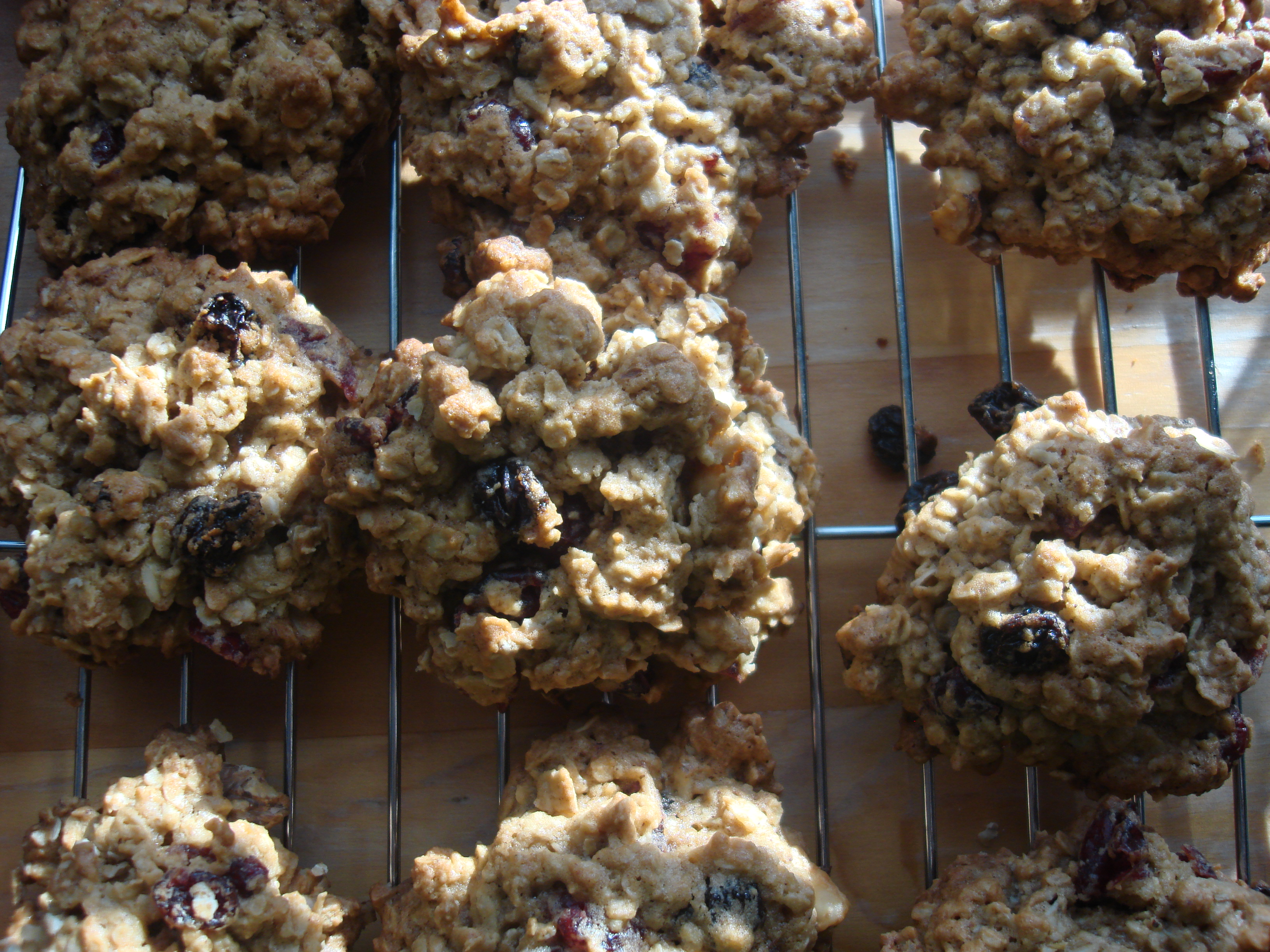
Don’t let the oatmeal, nuts and fruit fool you: this is a sweet treat with plenty of sugar and butter, with tartness, chewiness and crunch to keep it interesting. Eat too many and you will get a tummyache. Eat them frequently and you will get fat. But make them every so often, pass on a few to neighbors, colleagues or the other people who make your life liveable, save a few for yourself to dunk in milk or tea or coffee and everything will be alright.

The recipe is an adaptation of the classic “Quaker Oats Vanishing Oatmeal Raisin Cookies.” I dedicate it to Canadian comedienne Andrea Martin, (very) late of SCTV and recent of kid’s program, Dino Dan, where she looks weirdly young and smooth-skinned, with what appears to be a surgically modified schnozz, but who is as kooky and loveable as ever as the bizarrely attired art teacher who gets tends to get lost in her “creative zone.” Here is why she gets the dedication: My son — who loves Dino Dan and everyone in it — turned to me the other day and said, “When we bake you and me are in the same creative zone, right Mommy?” and everything felt right with the world.

Oatmeal, Raisin, Cranberry, Walnut Cookies

½ Cup plus 6 Tbs butter, softened

¾ firmly packed brown sugar (I like to mix dark and light brown, but use whatever is on hand)

½ cup granulated sugar

2 eggs

1 tsp vanilla

1 ½ Cups unbleached all-purpose flour

1 tsp baking soda

1 tsp ground cinnamon

¼ tsp salt

3 Cups quick or old-fashioned oats

½ Cup raisins

½ Cup dried cranberries

¾ Cup coarsely chopped walnuts

Preheat oven to 350°. In a large bowl, beat butter and sugars until blended and kind of creamy (I don’t have an electric mixer – yet—so I just use a big fork). Add eggs and vanilla and beat well. In a separate bowl combine flour, baking soda, cinnamon and salt. Then add the oats and the fruit and nuts and mix well until all the oats are damp.

Drop rounded tablespoons of dough on ungreased cookie sheets and bake for 10-12 minutes or until light brown. After a minute cooling on the baking sheets, move the cookies to wire cooling racks and cool completely. Store in tightly covered containers.

Rice and Beans: A Love Story

14 Feb

We eat a lot of rice and beans around here and you should too. At less than a dollar a can (one day I will soak my own, but for the moment, the canned will do fine) and just minutes in the making, they solve many an issue in this household. And with all the protein and roughage they pack, well, they give a lot of nutritional bang for the buck.

Having said that, I don’t actually do classic Puerto Rican rice and beans often. It’s a lot about ingredients and disappointment. Nothing ever tastes as good as you remember it. No one (except certain Dominican kitchen geniuses) can do it quite the way Abuelita (or Titi) used to. And some ingredients don’t grow here or travel well. So, recognizing that my expectations far outway any realistic possiblities of fulfillling them, I opt out. And daydream.

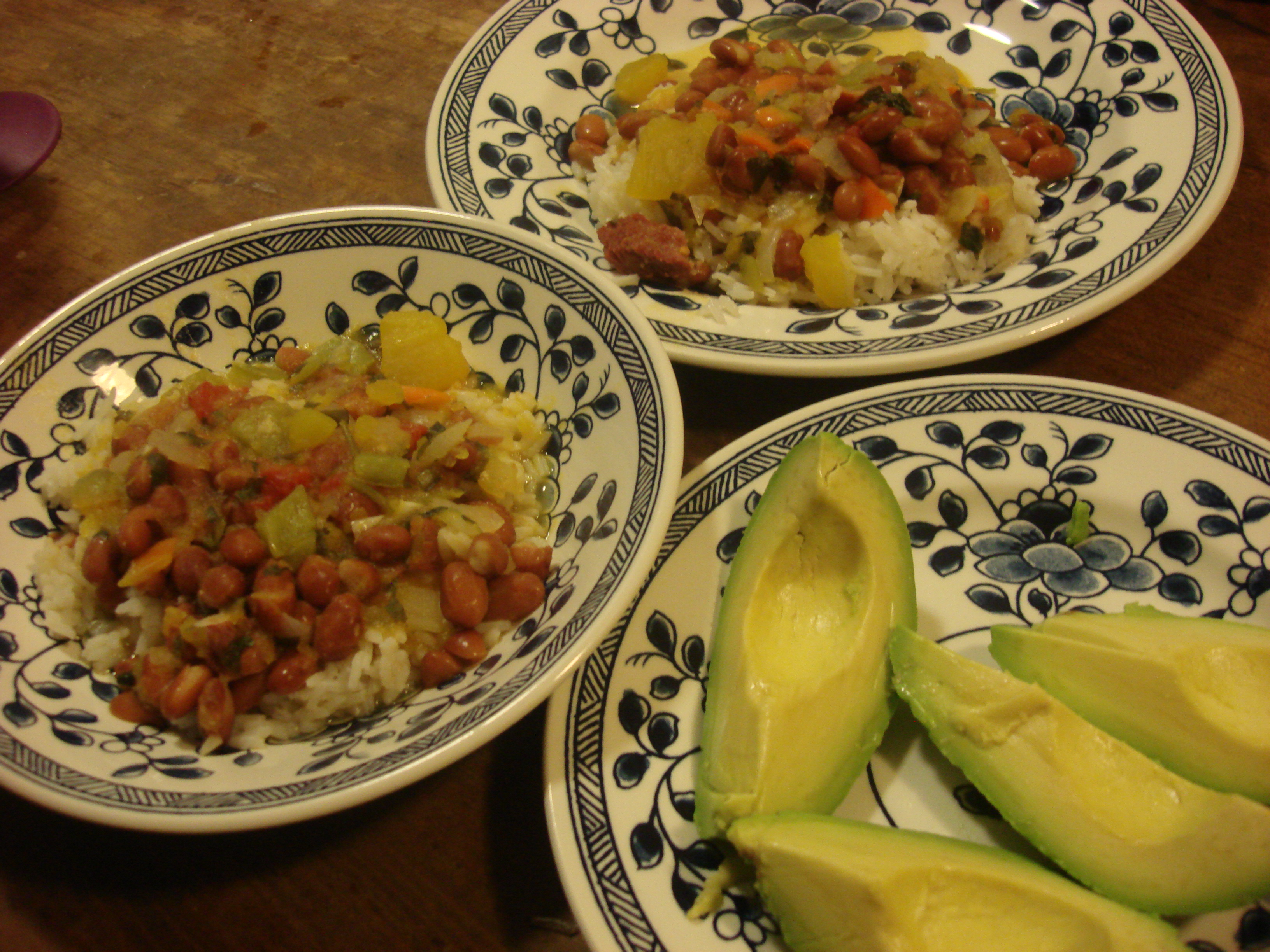
arroz con habichuelas

arroz con habichuelas

But…if you can’t be with the ingredients you love, honey, love the ones you’re with.

Love the ones you’re with.


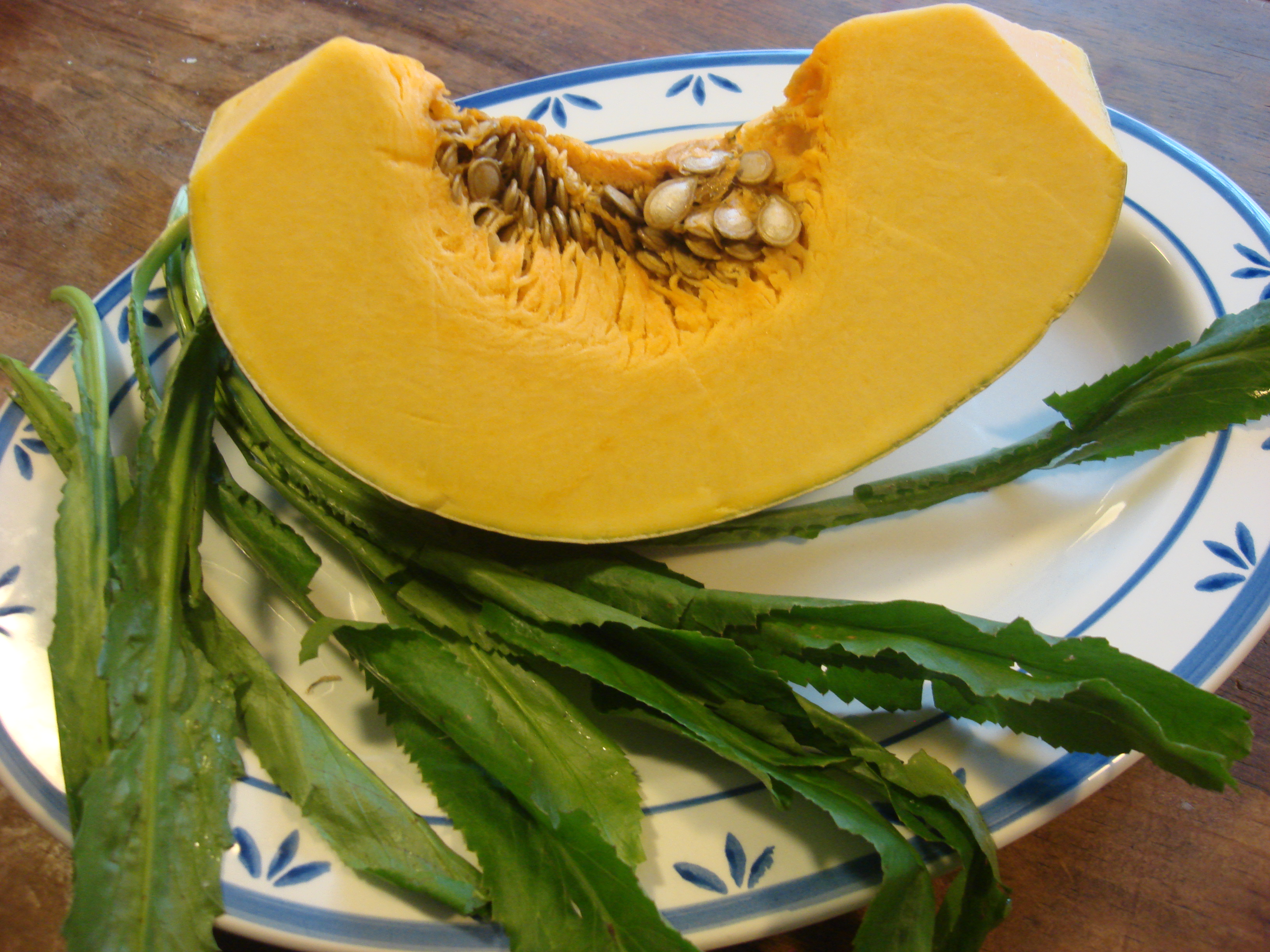
calabaza and sawtooth coriander

calabaza and sawtooth coriander

So in celebration of Valentine’s Day, I will stop the silly nostalgia for meals never again to be equaled, the yearning for ingredients elusive, the disdain for what is offered right in front of me. I will share a recipe for Puerto Rican rice and beans that embraces, not fantasy, but reality. It is not what could be, but what actually is. It may not be exactly what I dream of, but it provides exactly what I need, and my heart swells in gratitude.

And that, my dear readers, is true romance, true love, true bliss.


Authentic arroz con habichuelas

Authentic arroz con habichuelas

Born on the Moon Beans

Puerto Rican independentista and poet Juan Corretjer once penned “Yo sería borincano si naciera en la luna” or loosely translated: “I would be Puerto Rican even if I had been born on the moon.”

It is the heartsong of millions on the island and in the diaspora, including me, as it happens! So….Beans Born on the Moon, seems an appropriate name for this dish.  It is ingredient-heavy, but easy to assemble once everything is chopped.

Ingredients

  1. 1lb calabaza caribeña (Caribbean pumpkin) OR 1 lb. acorn squash, washed, cut in half, seeds removed and cut into big chunks (you can cut the rind off before boiling or peel it off after). It should be boiled for 15 minutes, or until tender. Set aside and reserve ½ cup cooking liquid.
  2. ½ lb salt pork, diced (don’t discard the hard rind, just score the fat as best you can). You can also use ham steak – readily available in the supermarket
  3. SOFRITO

(sofrito is the roux, the mirepoix, the basic saute seasoning of Puerto Rican cooking and is very difficult to reconstruct in the mainland U.S., which is why Goya makes a fortune selling it in jars. So if you can get most of the ingredients for sofrito at the local bodega/supermarket, then do this! –actually, quadruple or quintuple it and freeze it in ice cube trays for use later. Otherwise, buy commercial sofrito and use a couple of heaping tablespoons)

½ onion, minced (about ¾ Cup)

1 cubanelle (long green Italian cooking) pepper, seeded and diced

Five or six ajíes (non-spicy green peppers that look exactly like scotch bonnets/habaneros, but are not at all spicy! Taste them! They are hard to find), seeded and diced. Use another cubanelle – the redder the better — if you can’t get these.

Five or six hojas de recao – culantro leaves- chopped. Not to be confused with cilantro, these look like dandelion leaves without the curvy sides. They are hard to get, usually come from Costa Rica and their potency disappears quickly after cutting. I actually grow my own in the summer, which takes forever and yields very little in my part of the world. If you find them, use them as soon as you get them home! If you can’t find them, buy the sofrito WITH culantro

3 Tbs tomato paste or pureed tomatoes (optional)

1 Tbs dried oregano (2 Tbs fresh)

2 Tbs chopped fresh cilantro (optional)

  1. two 15-oz cans pink beans (habichuelas rosadas), rinsed and drained

While you are boiling the calabaza, heat the pork in a heavy pot. Cook it through and remove the scored rind. Leave the diced meat. Add a bit of olive oil, if necessary, then sauté the sofrito ingredients until tender, adding optional tomato at the end. Add beans. Add cooked calabaza and the reserved liquid. Cook for 15 minutes and serve on white rice.

Feta-ccompli: Feta-Walnut Spread

13 Feb

The whole Super Bowl thing has got me thinking about creative solutions for portable party food that doesn’t bore, travels well without dripping onto your car seat or collapsing en route and isn’t unwieldy if you take public transport. It should look nice – presentation counts for a lot. If you are not sure whether the crowd is primarily vegetarian, a meatless dish can be a very thoughtful additon to a party buffet. And of course, you want it to be simple and easy.

Enter Feta Walnut Spread. I made it in a few minutes with the help of my food processor, ably pulsed by my three year old (DISCLAIMER: My son is a good eater, but please don’t think he’ll eat everything I make or that you see on this blog. He refused to try this spread, even though he participated in the making and really likes feta cheese in other dishes. Can’t win ’em all ).

We took it to a Valentine’s playdate-party for my Single Moms By Choice group this weekend. I can’t say it won everyone over, but I liked it a whole lot with the vegetable sticks I cut up. I think next time I will pair it with toasted pita chips (they won’t compete as much with the flavor of the spread) and I think that the leftovers will make an excellent alternative to mayo on chicken or vegetable sandwiches.

The original inspiration comes from Molly Katzen’s Moosewood Cookbook, which I had to buy again after my well-worn original fell prey to a hurricane-related flood in Puerto Rico years ago, and which I was delighted to find still had all the recipes written by hand.

Feta-Walnut Spread

1 Cup chopped walnuts

½ packed Cup fresh parsley, roughly chopped

1 cup crumbled feta cheese

½ cup water

Three cloves garlic, peeled and chunked (less or none if you are not a garlic fan)

1 tsp lemon juice

(garnish – hot red pepper flakes, dried oregano, olive oil)

Pulse the walnuts and parsley in a food processor until blended. Add the rest of the ingredients (except the garnish) and puree until smooth. Transfer to serving bowl and cover tightly. Place in fridge to chill. Before serving, drizzle with olive oil and sprinkle with oregano and red pepper flakes. Serve with toasted pita chips or as a dip for crudité.

Super Bowl: Yuca en Escabeche- a bold alternative to potato salad

5 Feb

I’ve got nothing against potato salad; in fact, it is a big favorite of mine for summer barbecues, church functions, Christmas buffets or midnight raids on the leftovers.

But Game Day calls for a more assertive strategy: yuca en escabeche (or, as my friends and family know and love it: yuca salad) is the clear winner for full flavor, honking big texture, great colors and the ability to stand up to spicy wings and ribs. It has the heft to defend against the beer and alcohol blitz of Super Bowl Sunday, but is not so exotic looking or smelling as to scare off cautious diners. And of course it makes for more interesting conversation amongst those who are only really there for the food and the commercials.

The colors are very appealing

The colors are very appealing

Yuca (Manihot esculenta) is a rough-skinned root vegetable native to Brazil. It is also known as cassava, manioc and mandioca. The bitter kind has a poison that native Americans from the Caribbean on down used to tip their hunting arrows with back in the day. We’re not serving that kind. In fact, I have never seen it (although that is exactly the type that gets made into bland tapioca – go figure). Up here we get the sweet kind that simply needs to be peeled and boiled to share its goodness (just don’t eat it raw).

Continue reading

Zesty, Zingy, Zarela – Reinterpreting Pollo al Limón

4 Feb


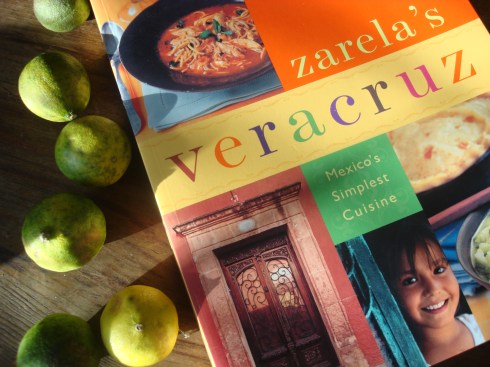
Fab cookbook by my hero - ¡Zarela!

I have a weakness for what Puerto Ricans call limones del país or “local limes”, the ones you may know as Key limes, one of many varieties of Citrus aurantifolia, native to Southeast Asia. They are the small, thin-skinned ones, sometimes mottled, often more yellow than green, definitely more acidic and sweet than the thick-skinned ones more commonly found in my New York area supermarkets or as woefully tiny and bedraggled triangles of peel, drowning ineffectually in bar drinks. 

My great-aunt Titi Quicio used to make me limonada from the ones from the tree in her yard in Mayagüez — every yard worth a damn back then had a lime tree for luck and on principle — as well as chickens and any number of useful medicinal herbs planted in glorious, battered, colorful, rusting tin cans – and that sweet-tart zing of acid and sugar syrup in a glass clinking with ice cubes and sweating into the disintegrating paper towel wrapped inevitably around the bottom remains one of the most powerful flavor memories I possess. Anything that comes even close sends me straight back to childhood places from which I wish I didn’t have to ever return.

So whenever I see a green net bag of those little round babies in a store, I have to buy it, no matter the price. Once I get home, however, I have no idea what to do…My Cuba libre consumption (the difference between a rum and coke and a Cuba libre is that the Cuba libre has lime; a Cuban might tell you that the difference is that there is no such thing as a free Cuba, but we’ll leave that alone) has dropped to nothing in the years since I left Puerto Rico and the likelihood of my making limonada in the middle of winter is decidedly small.

So I slice one open and suck out the juice, prompting much pleasurable wincing and squinting and squirting of salivary glands. Then I agonize over how not to waste the rest.

Fortunately, last week when limones del país showed up in my local supermarket, I thought of my hero, mentor and friend, Zarela Martínez.

Zarela, who grew up killing rattlers with a lariat on a ranch in Mexico, toughed her way through a bad marriage to haul her twin boys to New York and make a dramatically wonderful and interesting career in restaurants (Her eponymous restaurant on NYC’s 2nd Ave @ 50th & 51 has been going strong for 22 years!), making PBS programs and writing wonderful books. I met her through the James Beard Foundation Awards when she and her son, Food Network hottie Aaron Sánchez, hosted a few years back, and I am grateful that we have been friends ever since.

She is utterly candid, hard-working, stylish and just fabulosa. And her book: Zarela’s Veracruz, was just the thing, because Mexicans know exactly what to do with limes without making life difficult.

So here is my adaptation of her Chuletas de Pollo al Limón, made with things I had around the house…I used my limes, but whichever kind you find in the supermarket will work just fine. Honestly, my adaptations resulted more from mistakes (I am not very good at following recipes), but that just proves how flexible and resilient this one is. And the leftovers – very adaptable too!

Pollo al Limón Verde – Lime Chicken

 (adapted from Chuletas de Pollo al Limon, Zarela’s Veracruz)

4 tsp soy sauce

2 tsp Worcestershire (chicken or classic) sauce

(if you have Maggi sauce, change the soy/Worcestershire  comb to 2 tsp soy sauce and 1 tsp Maggi sauce)

¼ cup lime juice

1/3 cup olive oil

1.25 lbs boneless skinless chicken thighs, pounded to half the thickness

Mix soy sauce, Worcestershire or Maggi sauce, lime juice and olive oil in a cover/sealable container big enough to hold marinade and chicken together and marinate for at least an hour (if you have time)

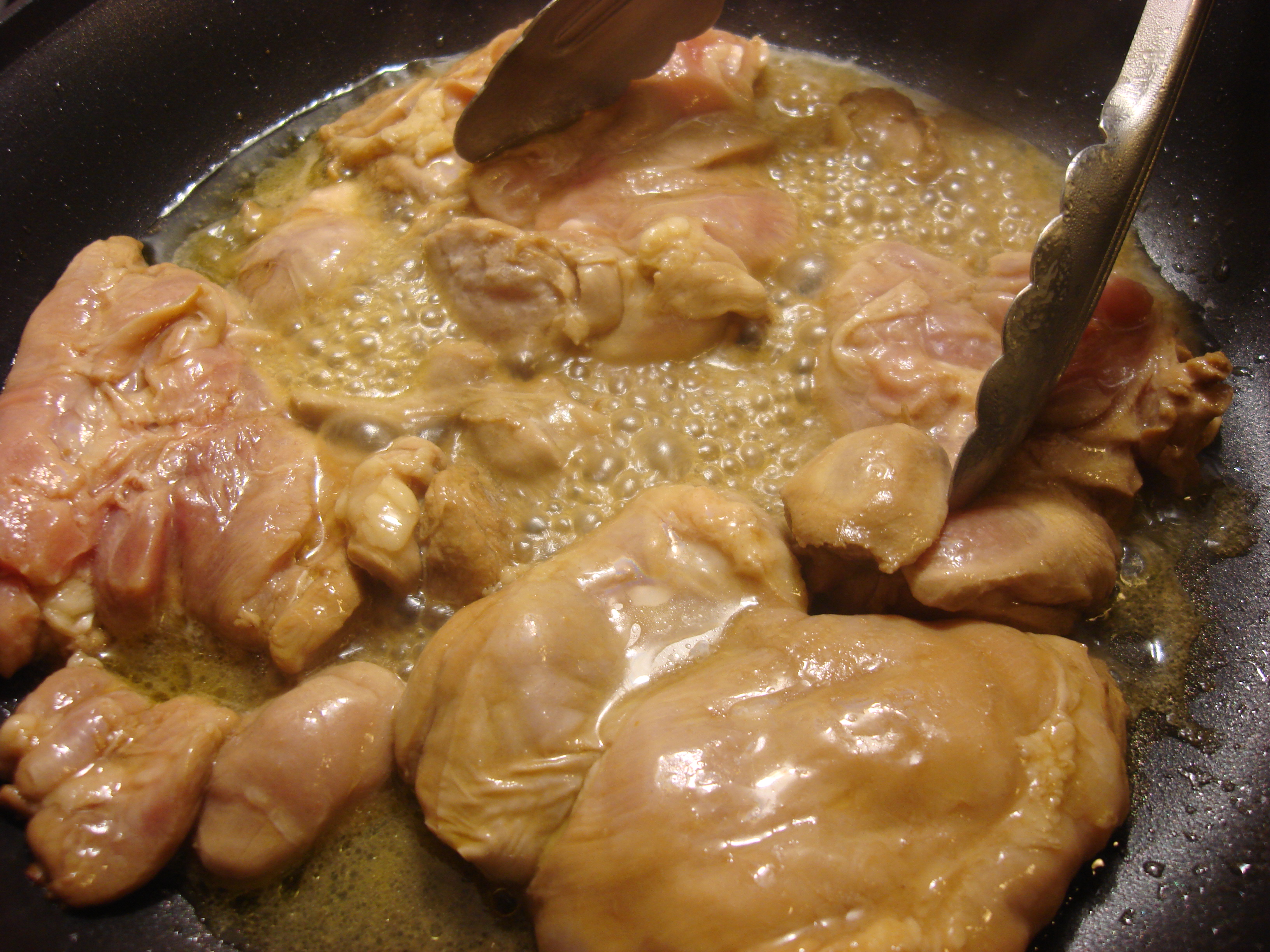
Heat a skillet until fairly hot and place thighs in it with room to spare (reserving marinade). Unless you have a pretty big skillet, you’ll have to do it in batches. Sear to white on each side, then cook an additional  5-6 minutes on each side, lowering heat to medium. When all the chicken is cooked, turn up the heat in the skillet, pour in reserved marinade and boil for a minute. Pour over chicken and serve.

(I loved this dish both straight from the skillet and as leftovers. I sliced it up and added it to a vegetable stir-fry at the end after adding a bit of soy sauce to the vegetables, just to warm up the chicken and it added great substance, texture and taste. This chicken is also good cold with mayo/mustard in a sandwich, wrap or salad.)

Super Bowl: My Guacamole Kicks Your Guacamole’s …

29 Jan

An integral part of any Super Bowl strategy

The Super Bowl is only a game.

Super Bowl food, however, is serious business.

Guacamole is the bottom line of that business.

Guacamole (an appropriate linguistic blend of  the Spanish word for avocado: “aguacate” and “mole” or “milled/mashed”) is an integral part of the strategy of any self-respecting Super Bowl party, with avocado forming the base. I borrow this from Steve Inskeep on NPR’s Morning Edition to give you an idea:

Avocado consumption during the Super Bowl has become the stuff of urban legend. Most of the statistics are probably exaggerated, but that’s not going to stop us from repeating them. Because one says Americans will consume about 50 million pounds of the fruit as they sit on their couches watching the game. A more graphic claim comes from the California Avocado Commission (which)… has been quoted saying the amount of guacamole that Americans will eat this Sunday is enough to cover a football field – end-zone to end-zone, waist deep.

And when it comes to guacamole, I am the one who should have several big, fat Super Bowl rings studding my stumpy-sturdy, more-useful-than-beautiful, hands. Any time I serve it, I win.

I do not care what is traditional, what is correct, what should be, how anyone else does it. My guacamole has always and will always rock. I am proud of it and everyone loves it.

So now that we have dispensed with any pretense at humility, I will give you my recipe, which is a more-or-less one that you should taste while making, because that is what I do. It never tastes exactly the same, but it always tastes good.

Natalia de Cuba Romero’s Legendary Guacamole

2-3-4 Hass (small black pebbly) avocadoes, purchased relatively hard, 3-4 days before the game and scrupulously monitored for a gentle give before cutting open*

3-4 generous and fragrant cloves garlic, peeled (minced superfine if you don’t have a garlic press. If you do have a garlic press, wait for instructions)

1 tsp ground cumin (at least)

¼ cup fresh-squeezed lime juice (Key limes are the best, but not crucial; pre-squeezed from those plastic lime shaped containers is not an acceptable option)

¼ tsp salt

1 Cup nonfat plain yogurt

1-2 hard-boiled eggs, chopped

Handful grape tomatoes, halved, insides squeezed out haphazardly, then chopped

1 Tbs cilantro, finely chopped (unless you have some aversion to cilantro, which many people, remarkably enough, do)

Black pepper to sprinkle

Note: You really should have a garlic press for this.

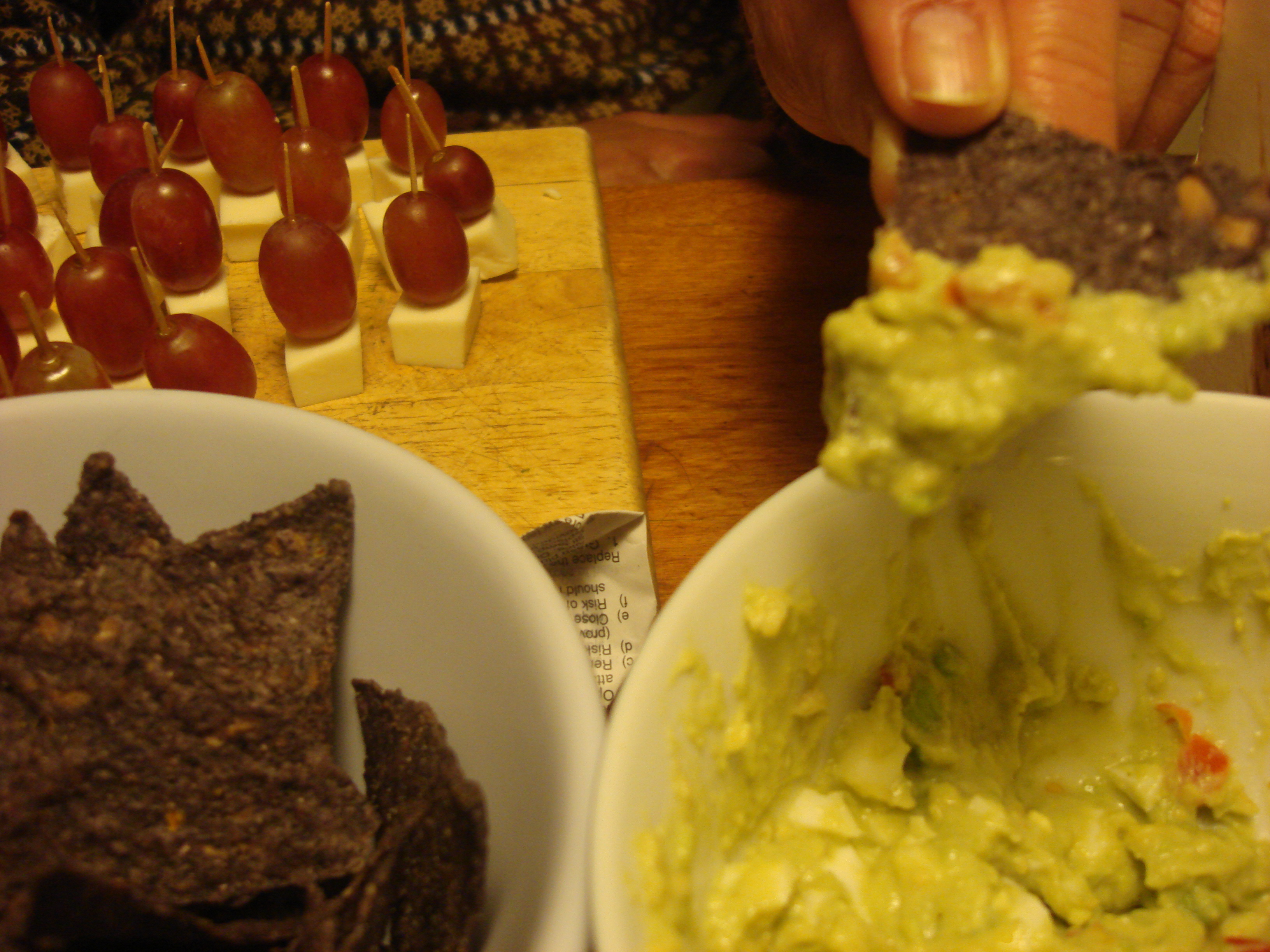
Have a big bowl ready. Cut the avocado in half, remove pit and peel. Place in bowl. Press  (or add minced) garlic. Add cumin, salt, and some of the lime juice. Mash it to your liking (smooth or chunky). Add a couple of generous tablespoons of yogurt to taste (this is a stretching measure so you need to play with it and add as needed). Play with the spices a quarter tsp at a time and the lime a tsp at a time. When you like the flavor you have achieved, stir in the eggs and tomato. Et voila! The best guacamole ever. Serve with good tortilla chips (I like the blue corn ones, myself)

 *Do NOT wait till game day to buy your avocadoes because only the hard, unripe ones will be left. Buy several days ahead, let soften outside the fridge and if they give a LOT when you press, put them in the fridge immediately. The yogurt will save you if you don’t have enough soft or if you have too much brown flesh.

If using the Florida/Caribbean large, smooth-skinned variety, you may not need much yogurt, because they are more watery, not as dense.


Manning Up to Meatballs

24 Jan

I have been very sneaky about meatballs lately.

I have a secret (until now) fear of attempting meatballs and having them fall apart when I fry them. I love fried foods, but hate frying. I never get it right!

But my son loves meatballs (we call them albóndigas), they reheat well, are convenient for lunches, and keep frozen for ages. And then of course, I prefer him (and me) to eat homemade everything. So I resort to manipulation.

I get the meat (3lbs organic ground beef) and then tell my dad I need his help to do meatballs because I want to learn his recipes and techniques (which is true), because he makes the best meatballs in the world (also true), and because with my son vying for my attention all the time, it is hard for me to get such a project done all by myself (also true).

Then, my dad – who has always been the kind of father who would start helping with your science project and end up constructing a windmill of Frank Lloyd Wright-worthy grace, proportion and utility while you sat idly watching over his shoulder, without getting a chance even to drive a nail – well, he takes over the meatball-making process, so by the time he is heating the oil, I am either making a salad, doing dishes or otherwise safe from the dreaded frying process.

This time, however, there was thawed meat that needed cooking, no dad to call on for assistance and too much seasoned ground beef already stocked in the freezer to make switching gears a viable escape route. It was a snow day and Leandro was occupied with visiting friends. So, I had to face my fear and man up. It was time to make some meatballs.

And meatballs I made using the recipe I have been writing down and editing everytime I watch my dad make them. He is getting used to using measuring instruments instead of just eyeballing the ingredients so I get an accurate measure.

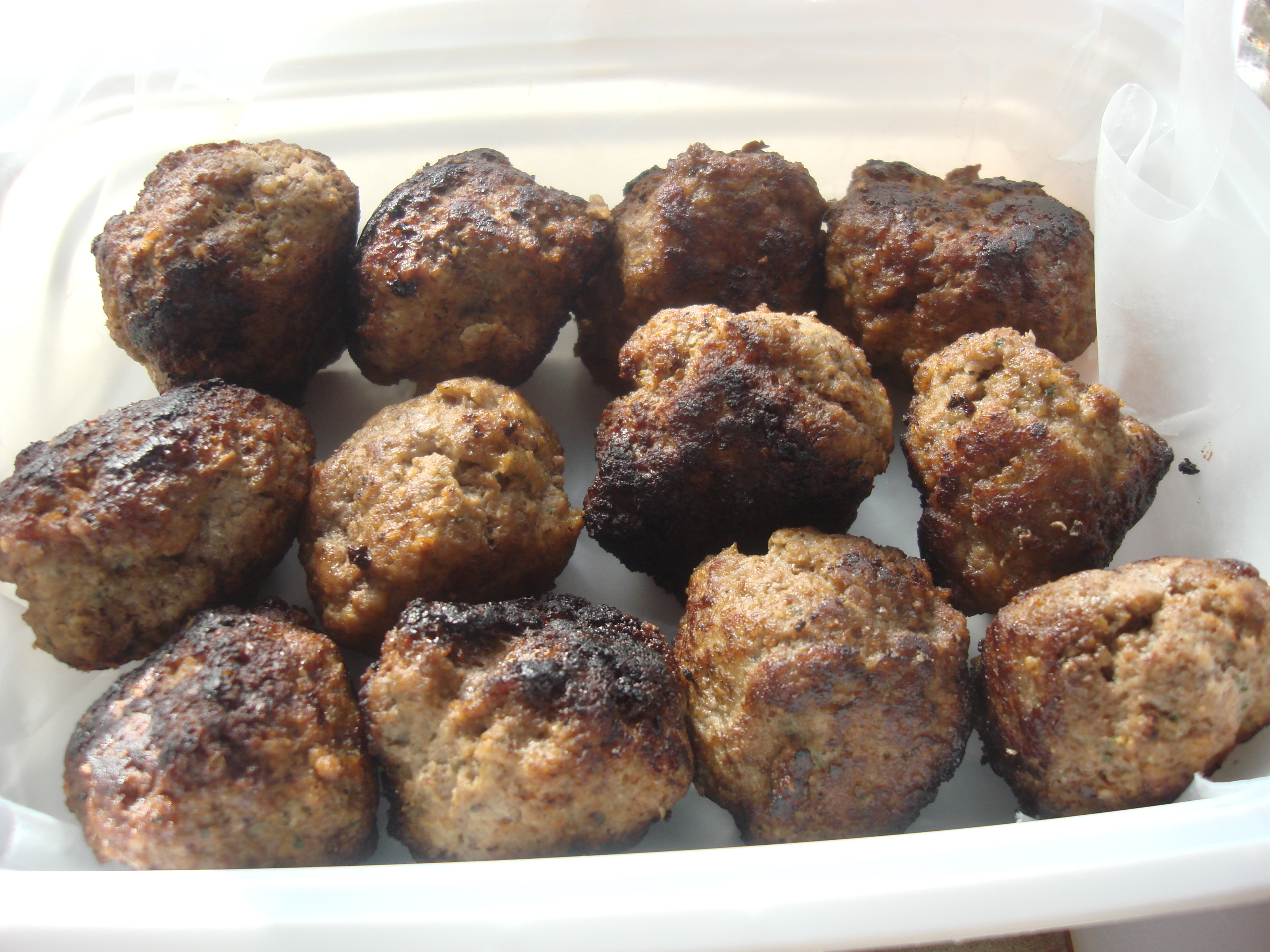
The frying went fine, once I traded in the spatula and began using my beloved tongs to turn the meatballs frequently while browning. Are they as good as my dad’s? Well no, not yet. Next time I think I will leave out the oil in the seasoning paste and I still have to work on my rolling and frying for a firmer, more evenly cooked result. But I have busted through the fear that was preventing me from trying and flavorwise they are outstanding. Really, really good. As Leandro said when he ate them (reheated) for dinner tonight, “These meatballs rock in my tummy, Mommy!”

Pedro’s Albóndigas

5 cloves garlic, peeled

1 Cup onion, chopped

2 Tbs olive oil

1 Cup flat fresh parsley (stems removed) or 1 Tbs dry

¼ 1 tsp chile powder

2 tsp Old Bay Seasoning

1 tsp salt

3 lbs ground beef (you can substitute 1lb of pork for 1lb of beef)

2 whole eggs (optional)

1 cup breadcrumbs (plain or seasoned)

Whir garlic, onions, olive oil and parsley in a blender or food processor until minced fine. Add chile powder, Old Bay and salt and pulse a few times until it forms a paste.

In a large bowl place meat, seasoning paste, optional eggs, and bread crumbs. Mix well so that breadcrumbs are evenly distributed. Using your hands, roll into balls about 1.5 inches across. You can dip your hands in water to keep from sticking.

Heat 2 Tbs oil in heavy skillet at medium heat until the oil flows like water and a meatball dipped in it sizzles softly. Fry several at a time (use tongs to turn quickly) browning on all sides, then lower to medium low and cook for about six minutes, shaking the pan and turning meatballs occasionally. When they are cooked through, cool on paper towels. Can be frozen for three months in an airtight container.


Oh. My. Cod. Fresh Filets with Onions and Capers

20 Jan

As a Caribbean person, I often forget the existence of fresh cod.

In my world, cod is called bacalao, usually comes in salt-crusted bricks or paddles, much as it was when it arrived in the New World, masterminded by intrepid Basques and other seafaring peoples, to make an important (and tasty) protein source last and last and last. It has to be soaked for ages with many changes of water and, if you don’t like fishy-fish, you are probably not going to like bacalao.

I promise that I will get to the fresh (non-fishy, non-salty) version in a second and give you a killer recipe that is all flair and no hard work and can be used with any firm-fleshed white fish, but  indulge me for a moment as I take my tastebuds for a saunter down a Puerto Rican Cuisine Memory Lane.

Think batter-fried bacalaitos (best-eaten from a battered pot full of dubious grease bubbling over coals at a palm-roofed beachfront kiosk marshalled by an old lady in rollers and washed down with an ice-cold Medalla beer), or shredded into rice (arroz con bacalao) for the holidays, or dressed with vinaigrette and served with boiled tubers (serenata) on a Lenten Friday, or in a reddish sauce with hard-boiled eggs (bacalao a la vizcaína) any old time.

I am dabbing nostalgic tears from my eyes and nostalgic water from the corners of my mouth right now, overwhelmed by food memory.

Fortunately, my present latitude offers some solace.

As a Caribbean person adapting to living in the cruel Northeastern winter, frozen fish has taken the place of salted fish (and fresh too, to be honest). And so, I recently discovered the wonder of some vacuum-packed slablets of frozen fresh cod (a phrase which only makes sense in contextual comparison to salted fish) at, you guessed it, Costco Warehouse. As it is “Wild Alaskan”, it is also a good choice from a non-polluted environment and in terms of sustainability (visit the Monterey Bay Aquarium Seafood Watch site if you are concerned about that sort of thing http://www.montereybayaquarium.org/cr/cr_seafoodwatch/sfw_recommendations.aspx). I sauteed a couple experimentally just for me and the result was a quick yet good-looking plate of big flakes of fish just sliding apart and yet another way to incorporate capers into a dish.

This one I would definitely serve on date night.

Sauteed Fresh Cod Dressed with Onions and Capers

(tilapia or any firm white fish would work well here)

1 Tbs extra virgin olive oil

1 Tbs butter

2 small slabs fresh cod filet (5-8 oz each)

Salt and pepper

½ medium onion, peeled and sliced thin

1-2 tsp capers, mostly drained

Heat oil and butter together in a heavy skillet at relatively high heat.

Using about ¼ tsp salt, sprinkle fish on all sides. Do the same with the pepper, preferably fresh cracked.

When the foaming of the butter subsides, cook fish on each side at high heat until just white. Then lower heat and cook on each side from 4-6 minutes each (I prefer my fish somewhat undercooked; if you are just learning to cook fish, simply use a fork or knife in the center to check for done-ness: no more translucence).

Remove cod and set on a plate (preferably warm). In the same skillet, sauté the onions in the oil and butter at medium high until wilted and somewhat tender. Add the capers to warm them up. Then spoon the onions and capers over the fish and serve.

This fish would be great over wilted greens, polenta or couscous or with Snap and Go Asparagus. I ate my second slice cold over salad and it was yummy!

It’s Winter and I Am Roasting (vegetables)

17 Jan

Moving and angst are natural partners. We’ve been moving upstairs and emptying a storage unit  this week — as in:

“I didn’t even know I still (or ever) had this!”

“Where the f**k did all this crap come from?”

“I have never seen a dust mouse that big. Ever.”

“Oh God, how am I going to get all this done before the semester starts on Tuesday?”

“Leandro please don’t run in front of: the moving truck/hand truck/person trying to move a big box up the stairs/me. ”

“Sweet Jesus, the moving guy just looked in that long-unopened drawer before I  had a chance to remove the scandalous lingerie that I had completely (and sadly) forgotten about.”

…etc. etc. etc….

and add to that an aching, frigging back from said moving, ’cause the ten years that have passed since I last saw that stuff haven’t made me any younger. Heavy sigh.

So, our diet has not been virtuous – Chef Boyardee was on the menu more than once; reheated pizza, Cheese-Its, leftover Halloween chocolate, cheese and crackers, cheese and crackers, salty popcorn, basically a diet of shut-up food all in front of the T.V. and endless repeats of a Scooby-Doo video — where can I buy those Scooby Snacks, anyway, cause Lord knows they would fit right in with my current mode…

But within the frenzy, I have made some good food happen too, thanks to some of the very recipes you have seen here. The spinach sauce for pasta served for a couple of meals, especially because I used farfalle (bow ties), which Leandro really really digs (and which grip a lot of spinach).

I made the basic seasoned ground beef in a big batch, a third of which went into an impromptu pasta dinner for friends on Friday, another third into chili con carne with rice Saturday, then on tortilla chips with cheese today (Sunday) and another third is frozen for next week and the new semester.

I also roasted vegetables.  This is something I do all winter (it’s too damn hot in the summer to turn on the oven) and then eat the vegetables all week in different formats. This is just one version (as I continue to crave asparagus in the off-season). It really is best with the linguine, but I was pressed for time and my son is not yet interested in this kind of dish, so I just served it to myself (several days running) with leftover rice and a dash of soy sauce. I also gave a plastic tublet to Leandro’s godmother (a teacher) for her take-to-school lunch.

Roasted Vegetable Linguine

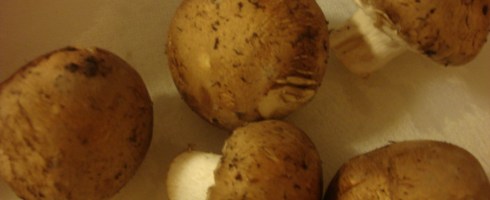
2 packets (about 20 oz) baby bella mushrooms, washed and sliced

1 lb asparagus, trimmed and cut into 1 ½ inch pieces

1 bunch broccoli crowns, separated into florets

1 red pepper, cored, seeded and chopped

1 medium onion, chopped

5 cloves garlic, chopped

3 Tbs olive oil

½ tsp red pepper flakes

1 cup cherry tomatoes

½ cup white wine

½ lb linguine

½ cup torn fresh basil leaves or 1 Tbs dry oregano

Preheat oven to 450°F.

Toss all vegetables (except tomatoes and herbs but including red pepper flakes!) and oil into a large roasting pan and roast for 20 minutes, stirring once or twice.

Get your pasta water on the boil and prepare pasta according to package directions. Save ½ cup pasta water when draining.

Add tomatoes to pan and roast 10 more minutes. Transfer vegetables to a bowl. Set pan on two burners on medium heat and add wine, stirring and scraping off burnt bits. Simmer for 3 minutes or so, until wine has cooked off then add reserved pasta water.

Return pasta to pot, add vegetables and liquid from pan. Warm to serving temperature and add herbs.