Archive | gardening RSS feed for this section

Slow-Roasted Grape Tomatoes (For pasta, bruschetta or sandwiches)

3 Aug

Here is more to do with those gorgeous tiny tomatoes that are so abundant and sweet at this time of year!

I’ll give you the link for the original recipe which I didn’t have time to do completely. I saw it in The New York Times recently, but didn’t have time nor basil to prepare the special oil, so I modified to suit what I had at home, basically eliminating a step and that’s the recipe you’ll find below. Here’s the original  http://www.nytimes.com/2011/07/26/health/nutrition/26recipehealth.html

My version is lovely summer fare – bright and sweet and yet with depth. It also requires very little work and I did it successfully in the toaster oven, limiting the heat index in my kitchen! You can serve it on crusty bread or over pasta, but I popped a fair few into my mouth just as they were….
Slow-Roasted Tomatoes with Italian Seasoning

1 pint grape/cherry/Sun Gold tomatoes

1 pinch salt

1 pinch sugar

2 Tbs extra virgin olive oil

1-2 Tbs Italian herbs/Provencal herbs

Preheat oven to 300°F. Line an oven dish with aluminum foil and spread tomatoes in a single layer. Sprinkle with sugar and salt, then coat with olive oil. Sprinkle with herbs and roast for about 30 minutes, so that tomato skins are crinkling and splitting, but not fallen apart. Cool and serve on garlicky toast as bruschetta, as sandwich spread or mixed into hot pasta.

Best Book for Maximizing the Farmer’s Market/CSA Experience!

28 Jul


DON’T PANIC and Always Bring a Reusable Bag

The more farmers markets and Community Supported Agriculture farms that pop up all over Long Island and its environs, the better we like it. There is better, fresher produce, we can support the local economy and we can feel healthy and virtuous as we bring our boxes of glorious stuff into our kitchens to be converted into all manner of delicious dishes.

But ‘fess up…sometimes you have no idea what that lump of vegetable with the fan-like greens is, much less what to do with it. How do you store it? How do you prepare it? What is it called?

Well, DON’T PANIC. As The Hitchhiker’s Guide to the Galaxy is to interplanetary travelers, so is the Field Guide to Produce to intrepid locavores.

This handy guide to most any fruit or vegetable you might encounter at a greenmarket or specialty supermarket will fit in your backpack or good-size handbag (or your reusable bag). It has more than 200 color images of produce, as well as information on the history and lore of each (e.g. “The ancient Egyptians and Greeks ate wild asparagus shoots as a rare spring delicacy” and “In the Old Testament, Adam and Eve covered their bodies with fig leaves, and Cleopatra hid the poisonous asp she used to take her life in a basket of figs”).

The nitty-gritty is right there with the history lesson; Green tells you how to select the produce at its peak, how to store it (and whether it can be frozen) and basic guidelines on what to do with it when you are ready to slice, dice and create something delicious. For the independent traveler, she includes flavor affinities for each item (e.g.  parsnips: “apples, brown butter, brown sugar, cream, curry, leeks, oranges, root vegetables, stews and ragouts, truffles.”)  setting you off on your own path to culinary greatness.

Before Field Guide to Produce, I pretty much sautéed anything I didn’t recognize from my C.S.A. pick-up in garlic and oil and called it a day. If it was particularly nice-looking, I’d stick it in a vase for a centerpiece that looked great, but never got eaten. Now, emboldened by my trusty Guide, I am roasting, stir-frying, steaming and experimenting with great confidence and a certain savoir faire that I didn’t have before. And where I used to ignore the vegetables that stumped me until they got rather nasty in the fridge, now I am using every bit of my weekly take, either fresh or in frozen form. Come the long, cold winter, I will be pulling great Long Island summer flavors out of the ice box, thanks in part to Aliza Green. Share and Enjoy.

Field Guide to Produce: How to Identify, Select, and Prepare Virtually Every Fruit and Vegetable at the Market by Aliza Green, Quirk Books 2004

Asian Stir Fry Sauce (this time with vegetables and your choice of noodles or rice)

27 Jul

One of my favorite prepared sauces comes from Sang Lee Farms in Cutchogue, on the North Fork of Long Island http://sangleefarms.com/. Their Asian Stir-Fry Sauce is all organic and adds incredible Asian pop to stir fry dishes, without the annoying cloying sweetness and goopiness of other seasonings in a bottle.

However, I run out of it pretty fast, so I am in the process of trying to recreate it at home. I haven’t quite got it, but this version is very yummy and does the job pretty damn well. When I hit exactly the combination I want, I will make larger batches, but for now, the amount in this recipe will season a couple of pounds of vegetables – enough for two to four people, depending on what you serve it with.

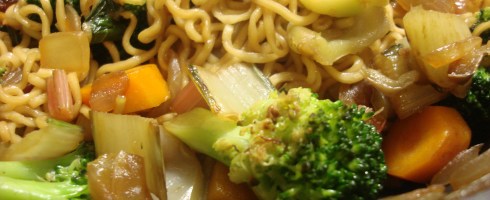
We used soba noodles (Leandro’s request, cause the curly noodles and Japanese writing on the package caught his eye and he absolutely loved them). We also had enough left over to drizzle over some cold chicken wraps I made the next day (and which will be the next post, haha!).

Do you make your own stir fry sauce? Please add your ideas in comments in this post!

Soba noodles make a worthy (and fun) accompaniment to stir fry veggies

Asian Stir-Fry Sauce

¼ Cup soy sauce or tamari (preferably low-sodium)

½ tsp crushed garlic

Scant ¼ tsp sesame oil

¼ tsp grated ginger

½ tsp lemon juice

Mix ingredients together and refrigerate overnight if possible.

When you are ready to cook the dish, begin preparing a cup or two of white rice or a package of soba noodles or other pasta of your choice, following package instructions.

Vegetables

2-2.5 lbs mixed stir-fry vegetables, cut into ¾ inch pieces (we used onions, carrots, some leftover chard stems and a beautiful purple pepper, all from Restoration Farm, plus broccoli from the supermarket)

Generous ½ tsp sugar

Heat the  vegetable oil in a 12 inch skillet with a heavy bottom, until just rippling and just beginning to smoke. Add vegetables and sprinkle the sugar over, coat with the oil and cook, stirring frequently, for about eight minutes, looking for caramelization on the vegetables. Lower the temperature to medium if you get a lot of sticking.

Push vegetables to the side and add a tablespoon of the stir-fry sauce , stir to heat, then mix with the vegetables. Add two to three more tablespoons as desired, being wary of making it too salty.

Serve over rice, noodles or pasta.

Asparagus, Tomato and Hummus Wraps

25 Jul

I love asparagus and red pepper and especially love them with hummus. The following recipe is an easy wrap that tastes delicious and feels virtuous going down. It is easy to assemble, quite portable and looks very nice when you serve it (or eat it with shameless gusto in front of your admiring colleagues at the lunch table). The slightly charred tomatoes really give it a depth of flavor you will like, especially in this season when they are abundant and ultra-sweet.

But first: a confession.

Ready to roll

It has been a very, very long time since I made my own hummus.

When I lived in Puerto Rico and there wasn’t any readily available, I made my very own, very yummy hummus using (expensive) tahini from the health food store. Today, I have to admit, I buy the Sabra stuff from Costco in big tubs; it’s my In Case of Emergency Break Glass (or plastic seal) lifesaver for surprise guests or a snack for watching the news before dinner with my folks. One day I will go back to making my own (and of course I will tell you all about it and look forward to any recipes you would like to share), but for right now, Sabra is a shortcut I feel pretty comfortable with.

In this recipe, I give the ingredients to make four or five wraps, but you may want to double the vegetables so that you can have some as an appetizer and make the wraps for next day fare.


Wrap and go

Asparagus Wraps

1/2 lb asparagus spears, bottoms snapped off and set aside for stock/another day

1 red pepper, top and seeds removed, sliced long

1 Tbs extra virgin olive oil, plus a smear of olive oil for the skillet (only if sauteing the peppers_

½ pint small tomatoes (grape, cherry, Sungold), halved

1-2 Tbs hummus per wrap (about 1 Cup)

4-5 wrappers of your choice (tortillas for example)

If roasting the asparagus and red pepper, preheat oven to 400°F. Coat vegetables in olive oil and roast 20 minutes, turning once or twice, until fairly tender. You may also simmer the asparagus for five minutes in water instead and follow skillet instructions for red pepper.

In a skillet, warm each wrap until soft and pliable and keep warm on a plate, covered (may also be heated in microwave, following package instructions).

In the same skillet, warm a bit of olive oil on medium to cook the red pepper (if you haven’t already roasted it) until tender. Add the roasted vegetables and the raw tomato halves to the skillet and cook on high about three minutes, until the tomatoes look slightly charred and softened, shaking the pan frequently. Go back to the wraps, smear one half of each with a tablespoon or two of hummus. On the half that has the hummus, place a few vegetables. Roll up and serve, or pack up for an excellent work lunch or beach snack.


Heat Wave Solution: No-cook Pasta Sauce – with tiny tomatoes!

23 Jul

Oh this heat wave is tough. I’ve been cooking as little as possible, trying to limit turning on the stove and oven and trying not to eat food that is hot and heavy. Simple wrap sandwiches of veggie spears and hummus, apple slice dipped in hummus, cherry and Sungold tomatoes just popped into my mouth straight from the fridge.

This is a go-to no-cook pasta sauce that, yes, requires you to cook the pasta, but is fresh and cool going down. It’s done in an instant, and takes full advantage of the sweet little tomatoes and basil that are starting to hit their stride right about now. This sauce ends up with a silky sweetness that is almost buttery, but there is no dairy involved – unless you choose to add cheese…

Here’s wishing you a cool weekend!

Cool pasta for hot days

Raw tomato sauce for pasta

1 pound pasta (penne or other short pasta preferred)

2 Tbs extra virgin olive oil

1 pint cherry/grape or Sungold tomatoes, cut in half (the sweeter the better)

3 cloves garlic, minced

¼ cup basil leaves, chopped

Salt to taste

(Grated cheese for serving, optional)

Prepare pasta according to package directions. Drain (reserving a few tablespoons of pasta water, just in case) and place in large serving bowl. Stir in remaining ingredients (including pasta water if the mix seems too dry). Serve with optional grated cheese.

Zesty Zucchini and Sizzling Squash with lemon and oregano

21 Jul

This is a simple seasonal recipe that highlights the flavors and freshness of summer (and can be done in a jiffy at a campsite).

Summer squash refers to vegetables such as zucchini and yellow squash, that look like gourds, but have thin, tender skins. Right around this time of summer backyard gardeners start to harvest so many of them, they will be giving them away. This is a fast and easy way to take advantage of the bounty without working too hard!

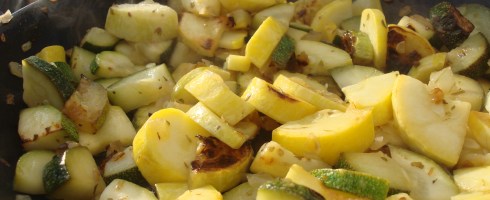
How this dish looked at our campsite on the beach

Sauteed Summer Squash with Oregano and Lemon

1 Tbs extra virgin olive oil

1/2 medium onion, peeled and diced

2 medium summer squashes (yellow/zucchini), quartered lengthwise and sliced

Tsp dry oregano

Juice of half a lemon (you may add by teaspoon to taste)

Salt and pepper to taste

Heat olive oil in a skillet at medium high until liquid and fragrant. Add onions and stir to coat. Add zucchini and stir to coat. Lower heat and cook until just tender, about 5 minutes. Add oregano, lemon and salt to taste and cook until flavors are blended, just a minute or two, longer if you want it very tender. Serve over rice, with pasta or just on its own.

De-Friended by a Vegetarian!?! (plus: new poll on your food choices!)

19 Jul

A vegetarian recently de-friended me on Facebook. She was unhappy with my posts on the pastured chickens at Restoration Farm and found them too painful, so she apologized (sort of) and pulled the plug.

I wasn’t particularly offended — to each his/her own — but it got me thinking about the food choices my readers make. So out of curiosity, I put together this quick poll. Please let me know what you will and won’t eat. I welcome comments on why as well!

I, in case you haven’t noticed, am an omnivore, but I try to limit my meat, fish and poultry consumption to organic/sustainably harvested products.

Sofrito for freezing (Puerto Rican mirepoix)

30 Jun

The green and lush fragrance of culantro is one of my favorite rainy day smells. In the kitchen garden I kept at my late grandmother’s house in Mayagüez, Puerto Rico, I had a vigorous crop and whenever it rained, the drops activated the fragrance, the scent pervaded the house, and I got hungry!

Without culantro (which we call recao), Puerto Rican food just isn’t as vibrant; it can’t taste quite like abuela’s. It is integral to sofrito, the starter to so many recipes, including beans, soups, stews and rice dishes. It is the equivalent of the French mirepoix, that combination of sauteed/roasted onions, carrots and celery that is the base for so many Gallic dishes.

Recao – culantro

Unfortunately, culantro is not as well known in the U.S. and doesn’t grow super-well in my planting zone, although I have had some small successes over the years (Thanks to Vic Muñoz for her growing tips). So I hit the local Latin supermarket on occasion and buy some pre-cut leaves from Costa Rica. Because once cut, recao loses its potency quickly, I use twice as much as I would if I had just gone out back and snipped some. And because it is sold by quantities much bigger than I need for a single dish, whenever I do buy it, I make enough sofrito to freeze.

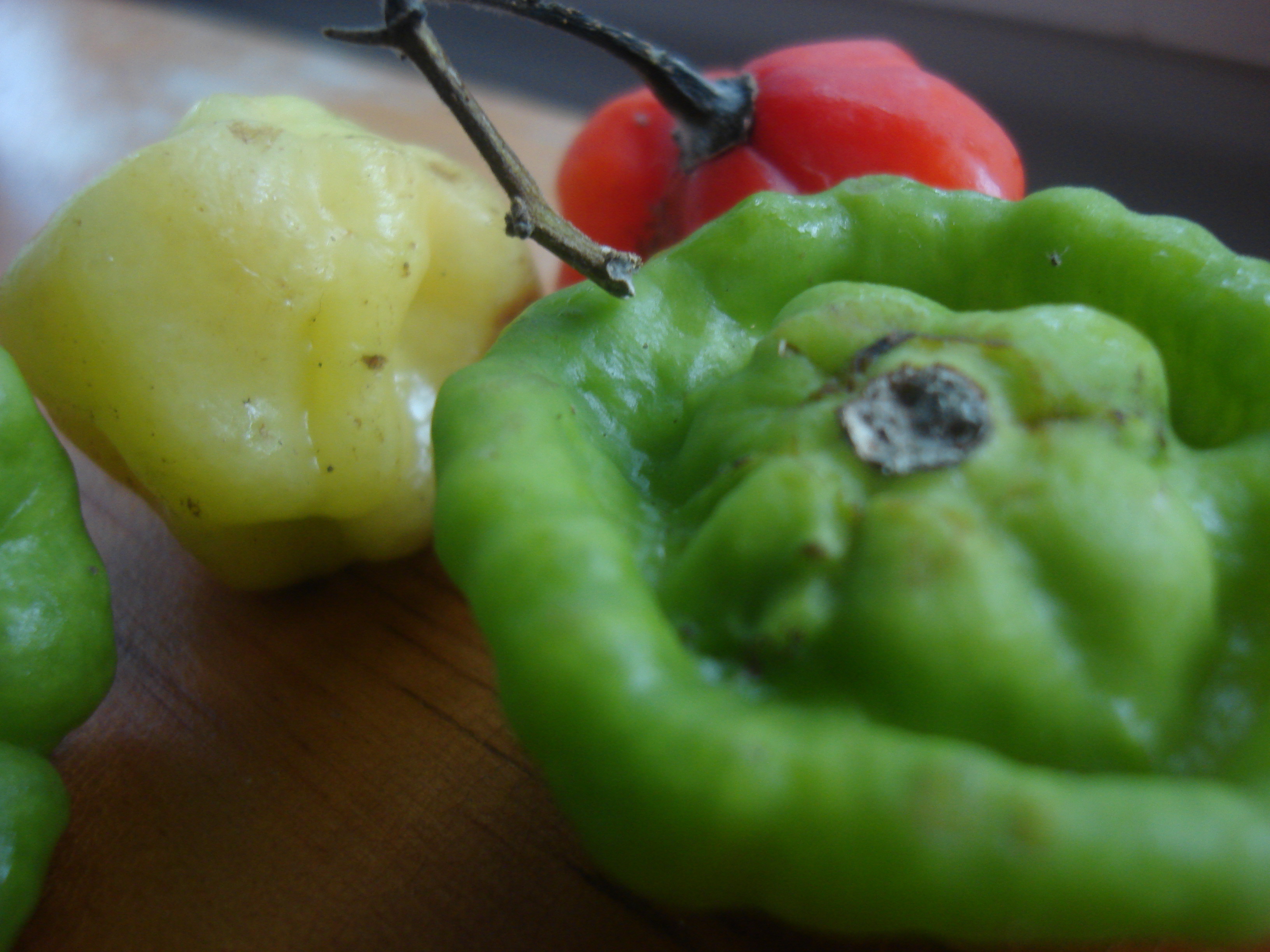
The same goes for ají dulce, the non-spicy small pepper that looks like a habanero, but isn’t at all spicy. I buy a bunch at once — along with the recao — and make sofrito to freeze. You have to be careful and taste it before adding it to the sofrito, because sometimes the store makes a mistake and labels the hot ones as sweet ones, or, I’ve been told, ají dulce planted too closely to ají bravo (angry, aggressive) will take on the spiciness. I can actually smell the heat when cutting habaneros (also called scotch bonnets); the volatility  is no joke.

Ají dulce – the sweet sibling to the hottie habanero

The following recipe is for those who have access to these products. If you don’t have a Latin market nearby, investigate the Asian/Indian markets, as they too use these ingredients.

Continue reading

No-cook Cannellini and Garlic Scape Dip (fast and seasonal)

26 Jun

Garlic scapes are the gorgeous twisty tops of garlic plants as they begin to mature in late spring. They need to be removed from the plant so they don’t take growing power away from the bulbs still developing underground.

They are so good to look at that I actually stick them in vases and use as centerpieces when they are in season, but of course I pull them right out of their decorative function whenever I need garlic flavor, which is what garlic scapes give you. You top and tail them to remove the crown and any woodiness at the bottom of the stem, slice and voila! fresh tasting garlic. When I have had overabundance, I have diced and frozen them to good effect.

This is a recipe that Caroline Fanning, head grower at Restoration Farm, suggested I play around with, as the farm had just such an abundance this year. I added the oil and thyme; You can really experiment with whichever herbs you like. Basil, oregano, rosemary, parsley, savory, and sage all complement the nuttiness of cannellini beans.

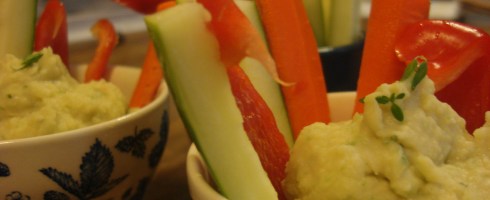
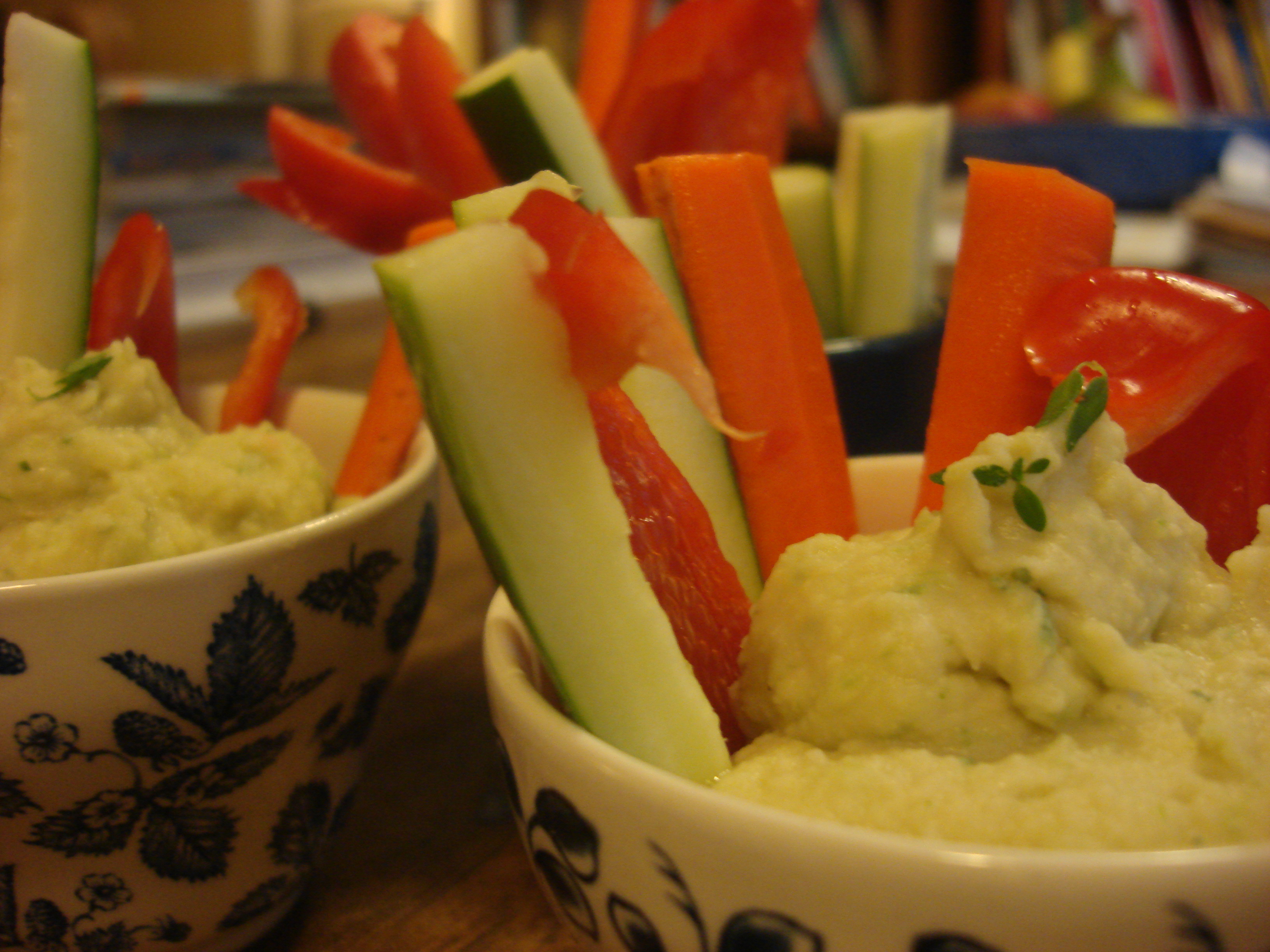
You can use this as dip or spread on sandwiches or wraps, to add flavor and creaminess to other ingredients. Great party dip! I served them as an appetizer, using teacups for individual servings of dip with cut vegetable dippers stuck right in!

No-cook Cannellini and Garlic Scape Dip

4-5 garlic scapes, crown removed and stem trimmed of any woodiness at the bottom

2 15.5 oz cans cannellini (white) beans, rinsed and drained

1 generous Tbs extra virgin olive oil

2 tsp dried thyme (4 tsp fresh)

Place all ingredients in food processor and blend until smooth. Serve with baguette toasts, crackers or fresh vegetable sticks.

Asopao de pollo (Soupy Chicken and Rice) with Pastured Bird!

23 Jun

Sooooo, I managed to get to Restoration Farm in time to see the very tail end of the first processing (meaning when the birds are killed, plucked and eviscerated, lest I be accused of euphemism).

I did NOT take Leandro; I wanted to see things for myself and not have to focus on keeping him out of trouble. More on his reaction to the chicken in a moment.

First I want to say that the atmosphere at this first round of chicken processing was so calm and cooperative and lovely. The team of Trisha, Lucille, Steve, Brian, Denis, Dan and Caroline was tired, but elated, but not  giddy or punchy, after seven hours of chicken guts under the trees. Dan and Caroline’s two kids were there; two-year-old Ada was calm as could be in the face of all the activity.

My first bird

The chickens — all 35 made it to processing! – weighed in between 4. 16 and 6.65 lbs. As a note, these are not certified organic birds (that’s a whole ‘nother process), but they have been raised according to organic practices – from their feed to their pasture; they just don’t have the stamp.

I also forgot my bloody camera! I wanted to shoot myself (since I couldn’t shoot pictures). So you will have to wait and see whether someone is able to send me photos; then again, perhaps you don’t care to see the goings on. Anyhoo, it was clean and well-organized.

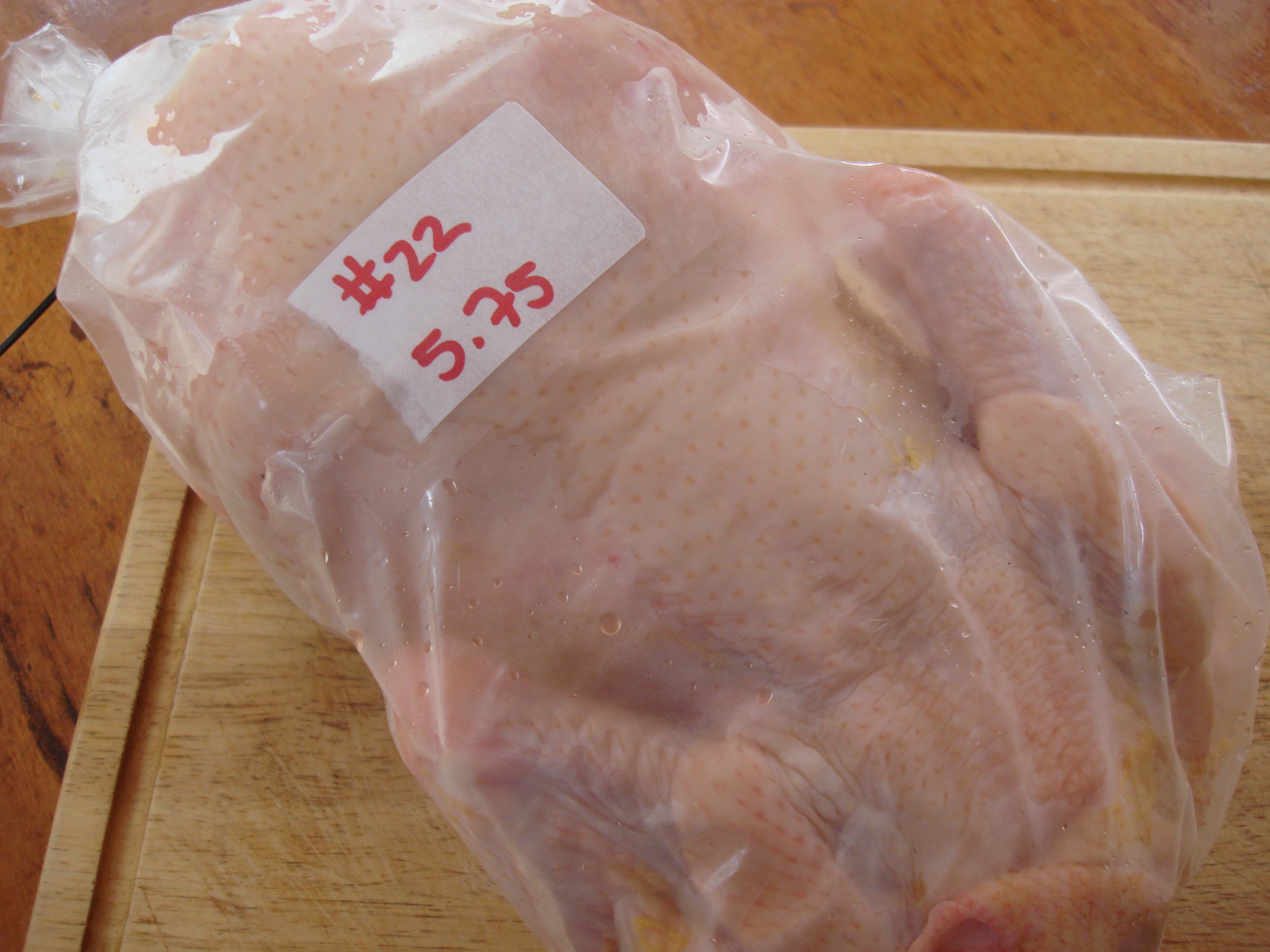
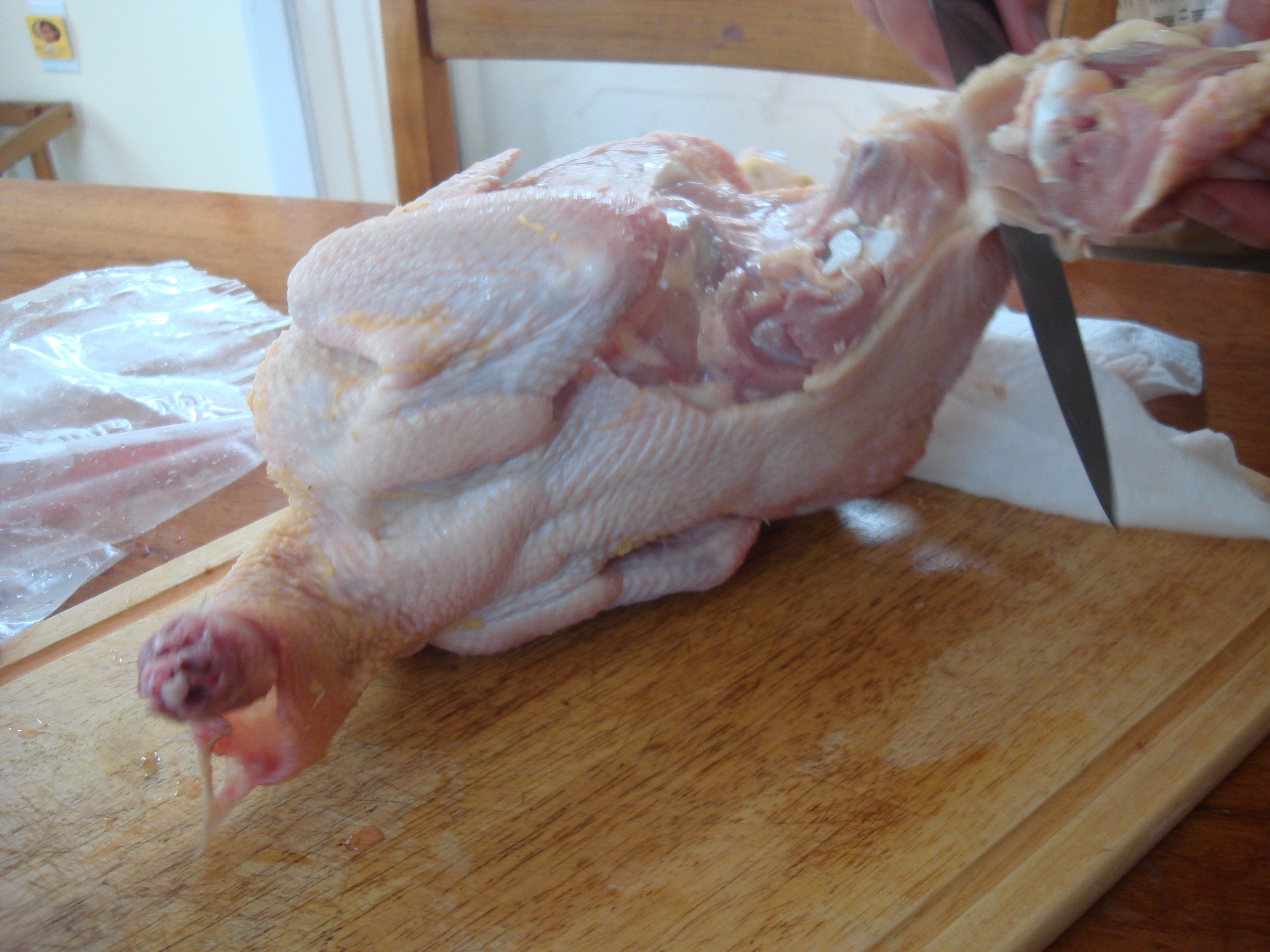
So I brought home bird #22, weighing 5.75 lbs. I picked up the necessary ingredients for asopao from the Compare (Latino) supermarket in Farmingdale on the way home. My dad, Pedro, roused himself from the NYTimes crossword puzzle to separate the bird (we saved the breasts for another meal cause this bird was so big!) and I went to work while Leandro was still across the street at a playdate. It was beautiful to work with. So clean.
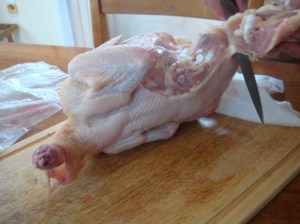
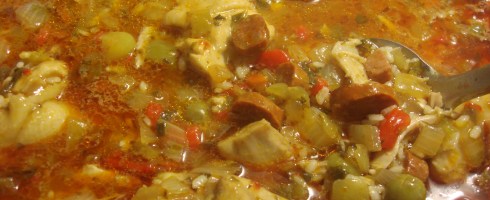
Asopao isn’t really Hot, Cheap & Easy, except for the hot, sweaty work if you want to do it right (and I did). Perhaps I will invent a shortcut version one day, but not with this special bird. And really, my mom and dad were taken back to the days of my great-aunts cooking all day long…I really got it right. The chicken gave so much real flavor; it is certainly not as tender as factory-farmed, but it is really good. In the next few posts I’ll talk about some of the more unusual ingredients here and what to do if you can’t find them.

Leandro sat down to eat and said, “These are the little chickens that got big?”

and I said “Yes, Trisha and everyone killed them today so we could eat.”

“Oh. You went to see?” he said, and I said yes.

He stuck a big bite in his mouth and said, “Delicious.”

I forgot to tell him not to speak with his mouth full.

Asopao de Pollo (Soupy Chicken and Rice) Serves 6-8

Dedicated to my tía-abuelas

A – Three pounds chicken (may be whole chicken or, if you have a big bird, reserve the breasts for another meal. MUST HAVE BONES!!! Should have neck, heart and liver as well) cleaned and separated into drumsticks, thighs, wings (separated and tips cut off and reserved for stock), backbone, etc.

B – ADOBO (pound all ingredients in B in a mortar and pestle into a smooth paste)

  1. 3 cloves garlic, peeled
  2. 2 black peppercorns
  3. 1 tsp dry oregano
  4. 2.5 tsp salt
  5. 1 pinch (1/8 tsp) turmeric or sweet paprika (Turmeric stains, so beware!)
  6. 1.5 tsp olive oil
  7. ½ tsp vinegar

C – 2 Cups white rice (less if you want soupier soup.Sometimes the rice takes over.)

D – 9 Cups water and 1 Tbs salt

E – SOFRITO 1

  1. 3 Tbs olive oil
  2. 3 oz ham steak or jamón para cocinar, diced
  3. 1 oz bacon, chopped rustically
  4. 1 green cooking pepper (cubanelle or Italian pepper), diced
  5. 1 large onion, peeled and diced
  6. 6 culantro leaves (recao), minced
  7. 4 sweet small peppers called ají dulce in Hispanic markets (do NOT purchase Jamaican ají or scotch bonnet! They look the same but the Jamaican/scotch bonnet are HABANEROS, deadly hot and inappropriate for this dish!) seeded and minced
  8. ½ Cup cilantro leaves, minced
  9. 2 Tbs vegetable oil (seasoned with achiote, for the more expert criollo cook)

F – SOFRITO 2

  1. 1 Tbs capers, drained indifferently
  2. 1 tomato, seeded and diced
  3. 1  8 oz can Spanish-style tomato sauce
  4. 4 oz roasted red pepper, drained indifferently and diced
  5. 10 pimiento stuffed green olives
  6. 4 oz Spanish dry, cured chorizo sausage

G – ½ Cup light red wine

H –  OPTIONAL – in Puerto Rico we decorate and cool off the soup by topping with a can of petit pois or asparagus. Today’s foodies are not so hip to those particular vegetables in their mushy canned form. I leave it up to you.

Instructions

  1. Separate chicken parts into two large bowls. The back bone, neck, wingtips, liver, heart, and kidneys go in one for the stock. The meatier drumsticks, wings, thighs, and breasts (if using) go in the other. I remove most of the skin and cut off much of the fat. Season all pieces with the ingredients in B. (Adobo).
  2. Soak the rice in abundant water while doing the rest of the prep and cooking.
  3. Place the ingredients in D in a large (6 qt) saucepan. Add the stock chicken pieces, cover, bring to a boil at medium high, boil for 15 minutes, then reduce heat and simmer for an additional 30 minutes, covered.
  4. In an even larger pot, place all the ingredients in E (Sofrito 1), and sauté at medium high until vegetables begin to wilt. Add all the ingredients in F (Sofrito 2) and continue stirring until combined and beginning to stick. Add wine and scrape bottom of pot. Add the meaty chicken pieces and cook at medium, turning frequently to coat well. Cover and cook for 30 minutes on medium low.
  5. When the stock and chicken sofrito are ready, drain stock into chicken. From the stock, reserve the back and wings and get as much meat off them as you can, adding to the soup, discarding the bones. You may add heart and liver to the soup as well.
  6. Bring to a boil.
  7. Drain the rice, stir into the soup, cover and bring to a boil. Reduce heat and cook, covered until rice is cooked (start checking in 10-15 minutes). Serve with roasted red pepper, peas or asparagus garnish. If the rice takes over, just add water.