Archive | soup RSS feed for this section

A Ruined Gravy, but Still Successful Turkey Stock (pre- or post-roast)

29 Nov

True confessions from Thanksgiving? I screwed up the gravy. Yes, I did.

I forgot to leave out the liver when simmering the stock and suddenly, as everything was going ever so well, Leandro having helped me assemble the ingredients and snip the thyme from our little container outside and put everything together…I smelt it. We went from that fragrant poultry and herb simmering gorgeousness to a deep, ugly pungency that for someone with a liver aversion, someone like me, who feels ill with just a whiff of the awful offal, well, that smells like disaster.

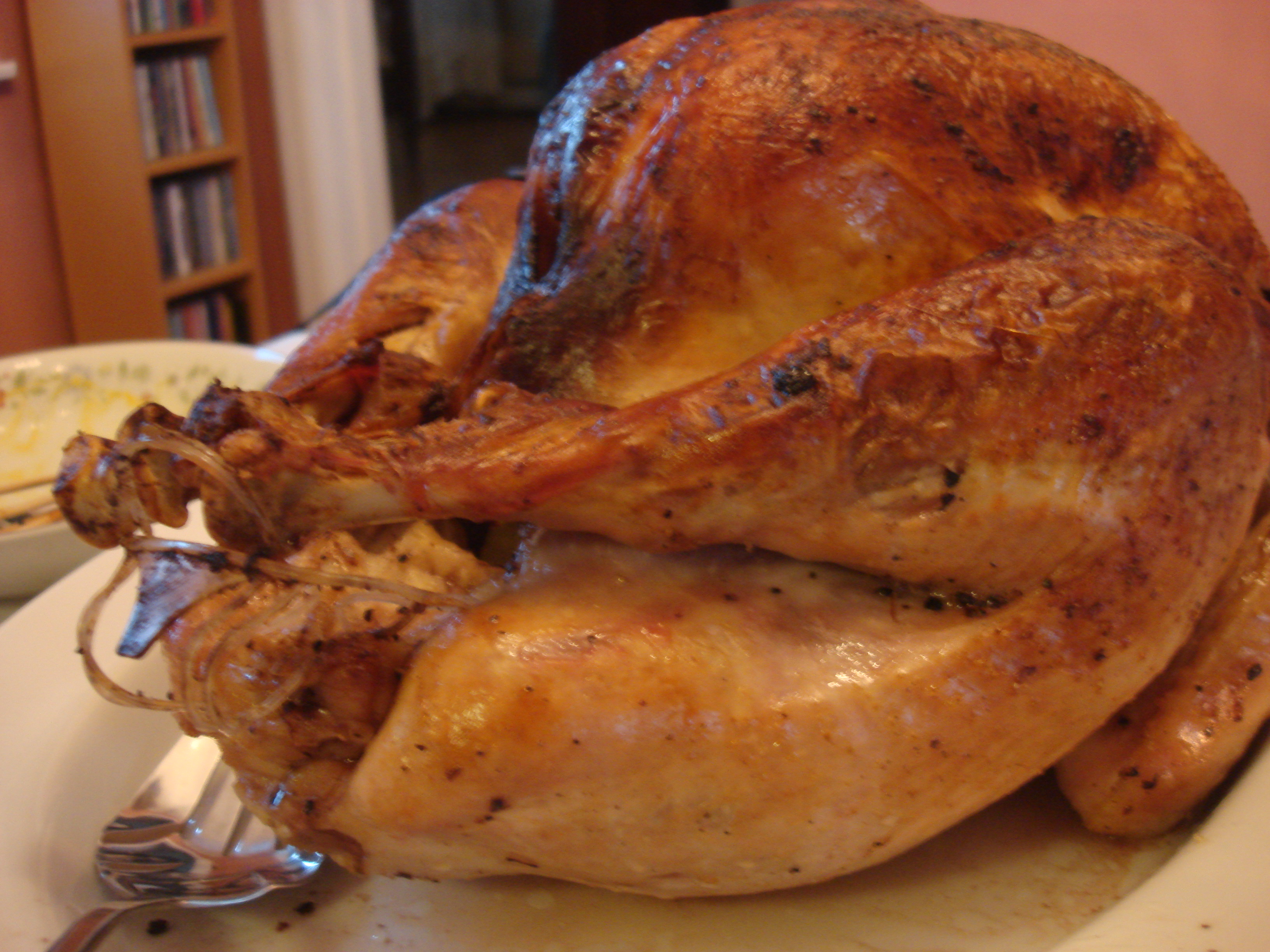
I dumped lock, stock and barrel, opened the windows and managed to salvage something resembling gravy from just the juices of the roast turkey (all available stock having been used up for other dishes), but it was so damn salty it could only be used drop by drop and I didn’t have time to thin it. Perhaps worse than the stock — and therefore gravy — failure on my part, my mom got to use the packet of powdered s**t that she bought just in case I should eff it up (to her credit, she didn’t gloat very much over saving the day).

Those of you out there who are really from-scratch foodies will feel my pain, will understand that the handy envelope is evil like heroin, that it feels even worse than resorting to the drive-thru Happy Meal with the toy because you are just not a good enough parent to stand another minute of whinging child in the back seat….that it is — if not rock-bottom — somewhere pretty deep to go.

But, nevermind – everything else  — the bird, the veg, the potatoes…the stuffing! — was delicious and joyous and I let it go…pretty much. I focused on the future, because not only does Thanksgiving return the next year so you get  to try again (and make different mistakes), but also, alleluyah, the roasted carcass of that delicious bird offers possibilities for redemption.

So here is my normally very successful stock recipe. You can make it when you’ve got the turkey neck and giblets (LEAVE THE LIVER OUT, PLEASE!!! – Do as I say, not as I do) while the turkey is roasting (or the night before without distractions, which is what I should have done) or use the carcass after (which is what I did, just fine!). Or both!


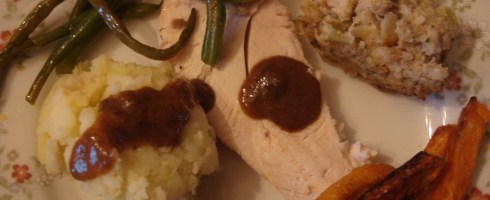
Dots of gravy - more point of honor than glory

Turkey Stock

(from Thanksgiving roasted carcass OR turkey neck and giblets)

1 post-roasted turkey carcass, usable meat removed and carcass separated into pieces

OR at least one turkey neck and giblets (EXCEPT liver)

8 whole black peppercorns

3 sprigs thyme

3 sprigs parsley

1 onion, peeled and spiked with two cloves

3 cloves garlic, peeled and smashed

Place all ingredients in a large pot with enough water to cover (2 quarts). Bring to a boil, scooping off foam. Reduce heat and simmer until water is reduced by at least half. (I usually leave it at least an hour). Strain through a sieve into a container that will let you scoop off fat when the stock cools and the fat rises to the top. Use to make gravy or store for another dish. Will keep several days in the fridge; three months in the freezer.

Butternut Squash Bisque and Bonus! Pepitas (roasted winter squash seeds)

27 Nov

In theory, starting a meal with soup will tend to make you eat less during the rest of the meal.

Well, maybe it’s true for some people, some of the time, but not so at Thanksgiving, where no matter how much I snack or soup ahead of the Big Feast I still eat ridiculous amounts of food during the main course.

Incredible Restoration Farm squash - LOOK at that color

However, hope springs eternal and therefore in this house we start the Thanksgiving Eat-a-thon with this creamy winter squash bisque. It is not just for Thanksgiving though; this bisque is lovely for any fall meal, and you can use any of the hard-rind winter squash available in autumn and throughout the cold season.

Bonus recipe? What I call pepitas – roasted winter squash seeds that you can use to garnish your soup, or to snack on while you are making the meal or to give to your kid who is feeling a bit neglected by all this focus on food prep.


Pepitas!

Butternut Squash Bisque

(makes four to six cups)

2 Tbs unsalted butter

3 cloves garlic, chopped fine

2 ribs celery, diced (about 1 Cup)

1 onion diced (about 1 Cup)

2 leeks, carefully cleaned and diced (white part only)

2 lbs squash flesh (about 5 Cups)

2 quarts chicken or vegetable broth

2 Tbs dry white wine

1 Tbs grated ginger

Salt, to taste

½ tsp ground nutmeg (optional)

1/2 cup plain yogurt (or sour cream or crème fraiche)

Heat the butter in a soup pot over medium heat. When any bubbling subsides, add the garlic, celery, onion, and leek. Cook, stirring occasionally, until the onion is translucent (8-10 minutes). Add the squash and broth. Bring to a boil and immediately reduce heat to a simmer. Cook until vegetables are tender, about 30 minutes.

Meanwhile, heat wine to a simmer in a small saucepan. Immediately remove from heat, add ginger and cover. Steep 10 minutes, then strain the wine and discard the ginger.

Strain the solids from the soup, reserving liquid. Using a food processor or immersion blender, puree the solids, adding enough of the reserved liquid to get a good consistency.

Add the wine to soup and season with salt and optional nutmeg. Grate additional ginger into the soup, if desired, using a fine grater. Serve, garnishing each bowl with a dollop of yogurt. You may also garnish with 

Roasted Winter Squash Seeds (pepitas)

Handful winter squash seeds (however many you get from prepping the squash), rinsed, cleaned and dried

Enough extra virgin olive oil to lightly coat your amount of seeds (start with about a tsp poured into your palm)

Salt to taste

Heat oven to 275°F. Line a baking pan with foil or parchment paper. Rub seeds with olive oil, lay in a single layer on baking pan, sprinkle with salt and bake for 15 minutes until seeds start to pop. Cool in a bowl and serve.


Quickie Criollo Tomato and Avocado Salad (great side for spicy, salty or otherwise highly seasoned food)

3 Oct

A go-to side for spicy creole cooking!

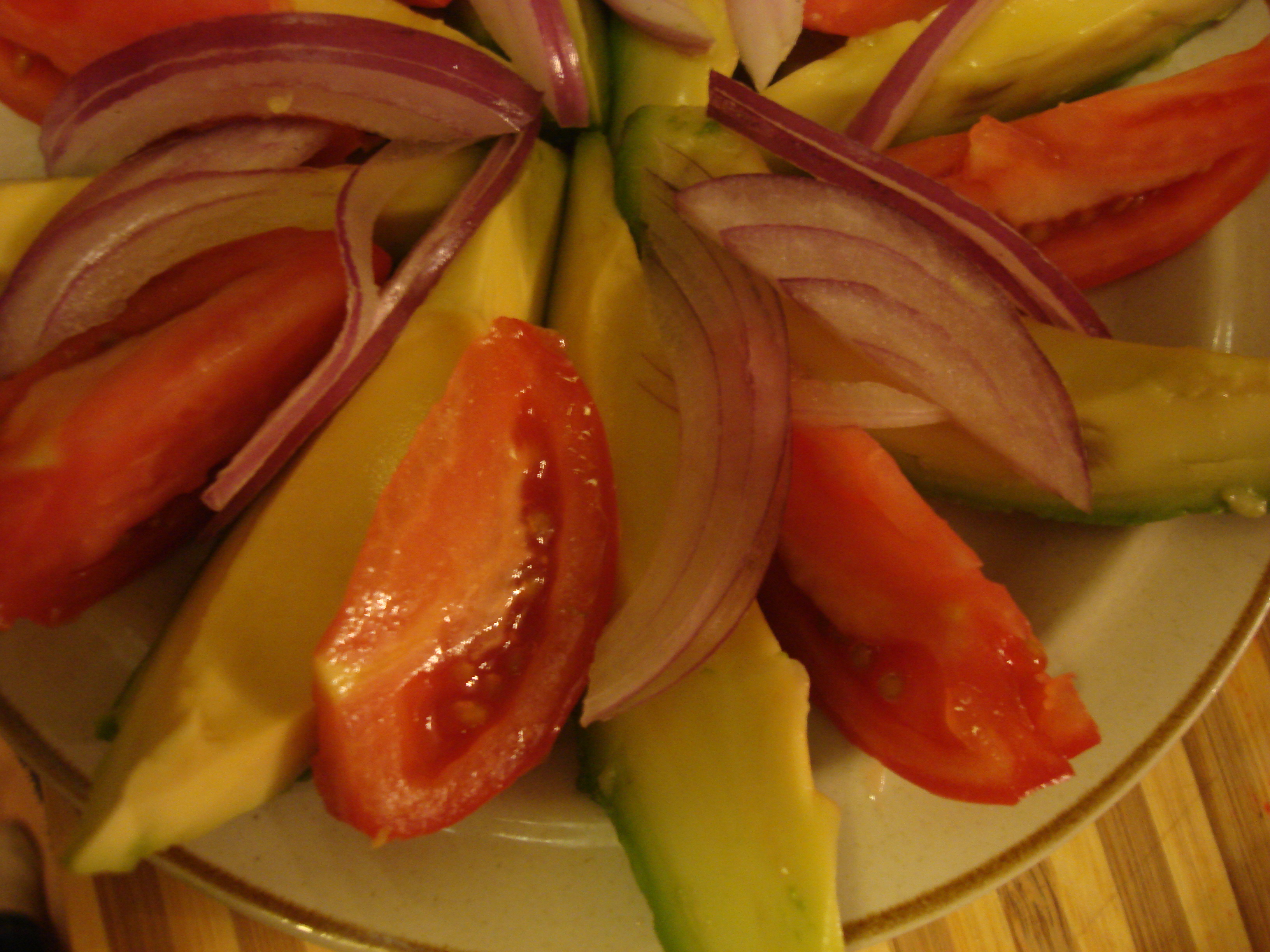
This is a super-quick, healthy side dish that we use in the Caribbean to accompany really salty stuff, like bacalao (salt cod) dishes, or to cool the palate between bites of something spicy. It goes wonderfully with creole soups, or as the lightest, yet most satisfying of dinners when you don’t want to fuss (A hard-boiled egg or a scoop of tuna would be a fine protein accompaniment). The colors and slices lend themselves to festive; this dish looks like a party, even if it’s just a party of one.
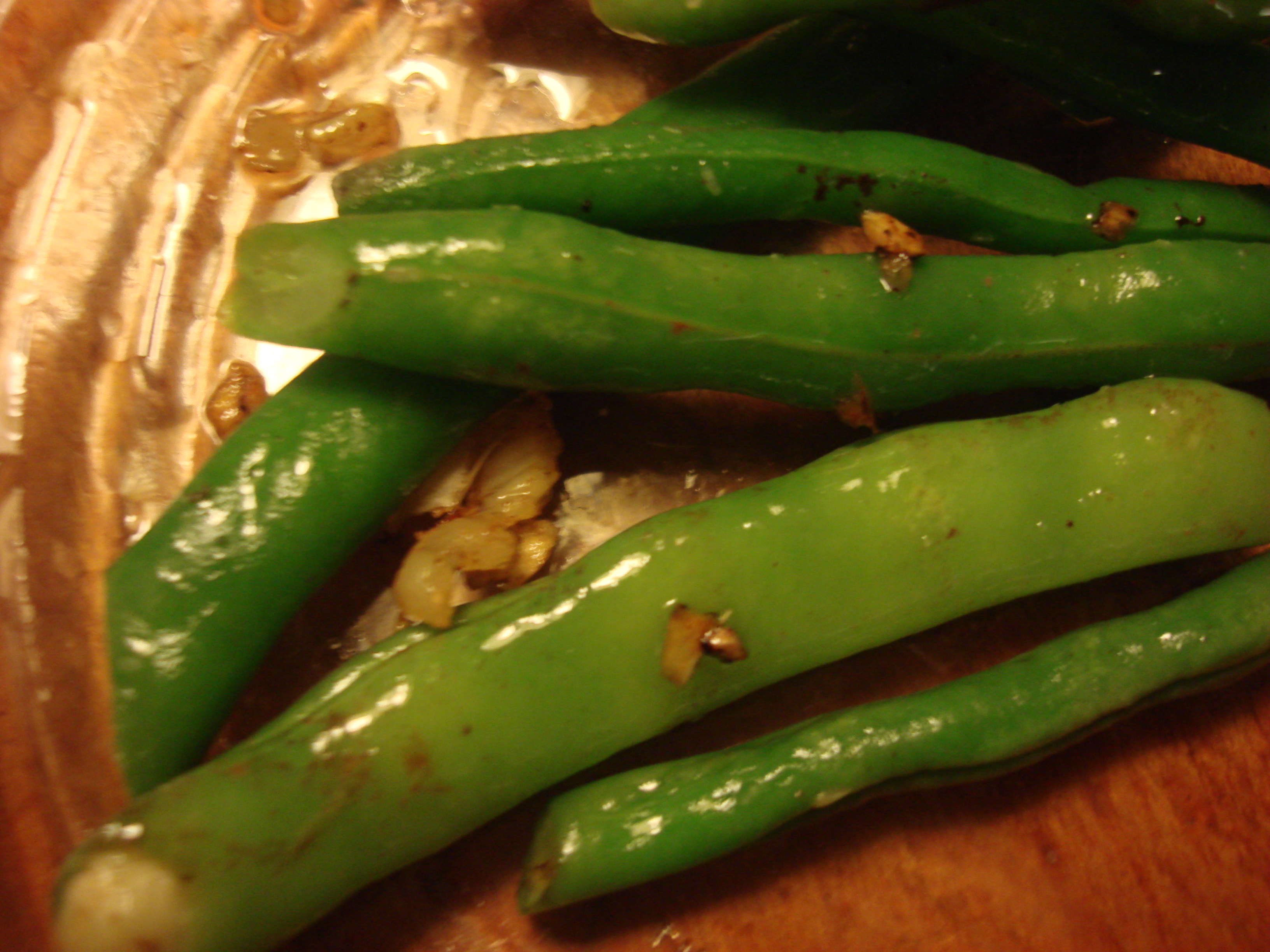
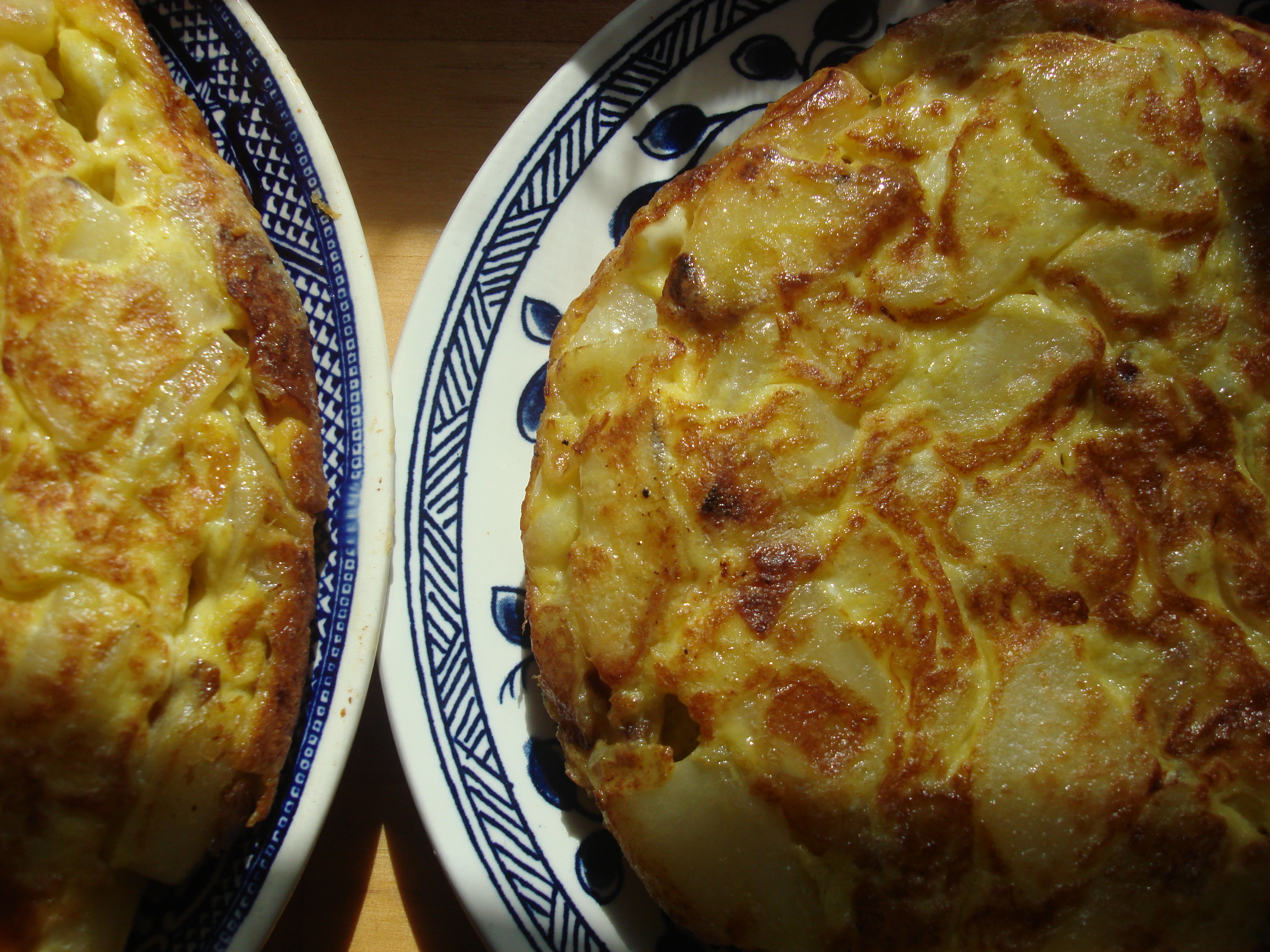
We had it tonight with a mini-tortilla española (potato and egg stovetop frittata) I made while doing a bigger sized one for our Restoration Farm potluck on Sunday, green salad and some string beans blanched and then sauteed with garlic and oil (and a bit of bacon fat, truth be told).


Quickie Tomato and Avocado Salad

1 ripe avocado (responds to pressure, but isn’t totally mushy*), sliced into eight wedges and peeled

1 ripe tomato, cut into eight wedges

¼ red onion, peeled and sliced thinly, lengthwise

Extra virgin olive oil for drizzling

Salt for sprinkling

Freshly cracked pepper, if desired

Arrange avocado and tomato wedges on a small plate, alternating

Scatter red onion on top. Drizzle olive oil as desired.

Sprinkle salt and optional black pepper and serve cold

*Buying avocado is not easy, I know! Lately I have had a 50-50 record of success with the little black Hass ones, despite my years of practice. I don’t know what’s up with that, but the general rule is to buy it hard and stick it in a paper bag — with an apple, if you’ve got — for a couple of days. If you are buying an avocado for the very same day, look for something that yields to pressure, but doesn’t totally mush. If it is ripe but you are not ready to use it, it will keep in the fridge for a couple of days.

Freeze! The Lazy (or clever) Cook’s Guide to Preserving Tomatoes

5 Sep

This was the year I would start preserving and canning…at least that’s what I swore when I laid down the money for a canning pot and associated equipment at Walmart a couple of months ago (Walmart being the new Woolworth’s; it is where you will find a lot of the old-fashioned domestic arts type of stuff that Woolworth’s used to carry back in the day).

Well, canning with heat didn’t happen, or at least hasn’t happened yet and doesn’t look like happening any time soon. But I have still been making an effort to preserve some of the flavors of summer for the colder months in a less time-consuming and sweaty way. Regular visitors will remember a creole tomato sauce I made and froze for later, for example https://hotcheapeasy.wordpress.com/2011/08/27/fresh-tomato-sauce-criollo-style/.

But at this time of year, with all the vegetables we have and the time to work with them running short due to school, I had to shorten even the shortcuts. So I blanched and froze sauce tomatoes for later.

All you have to do is

1) take your farm fresh, ripe tomatoes, wash and core the stem area (you don’t have to go all the way down; just take a cone out),

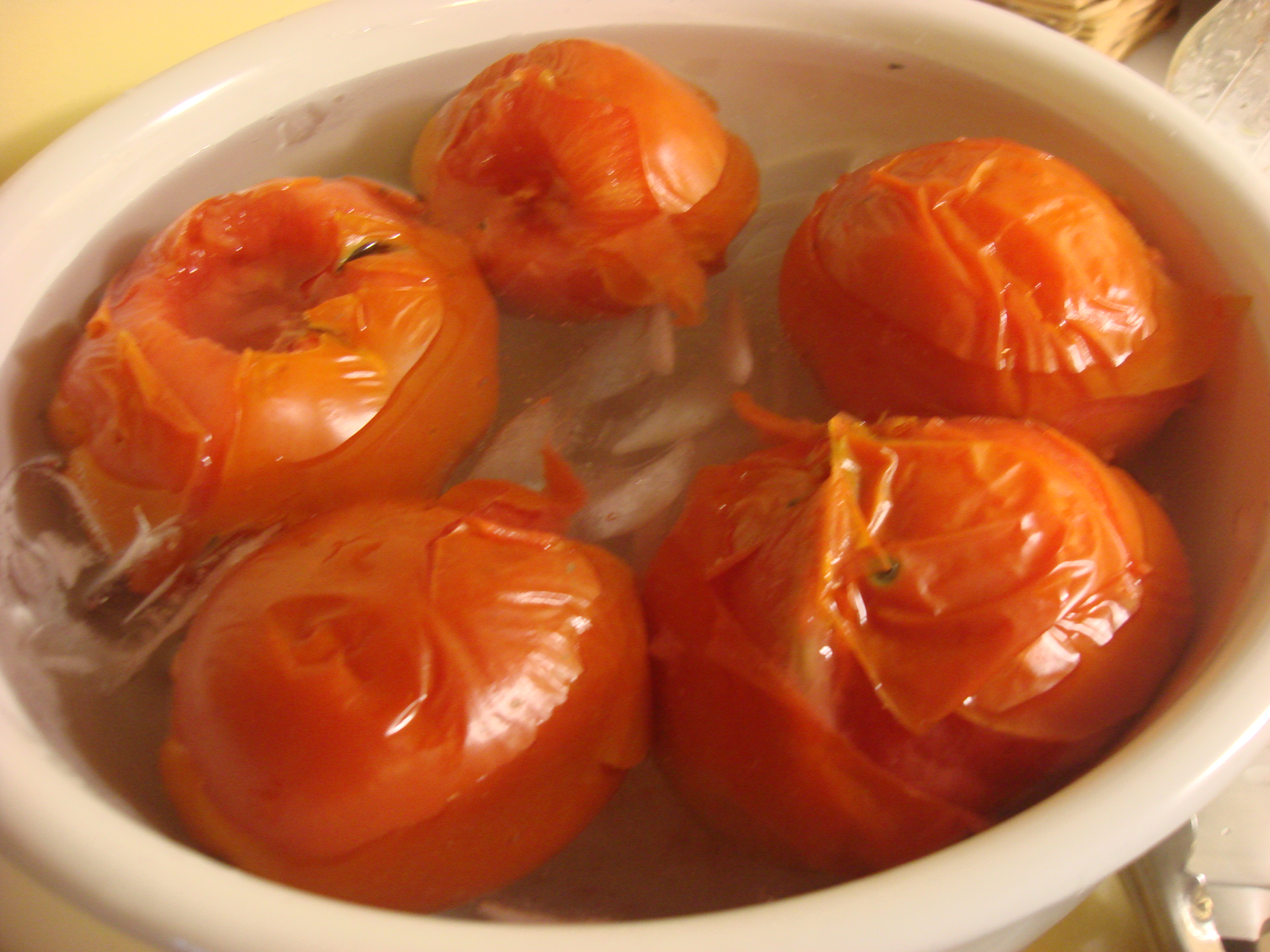
2) throw them in boiling water for a minute (until they start to split)– 30 seconds for smaller tomatoes — and then

3) plunge them in ice water for about five minutes for large tomatoes and a couple of minutes for small.

Et voila! Freezer-ready tomatoes. Some people peel them at that point; I sometimes do and sometimes don’t. You will have to do it when you thaw them later, as the skins get chewy in the freezer. Some people don’t even blanch them, but I do like to set the flavor and freshness and I think blanching does that pretty well. Anyway, once they are cool, all you have to do is

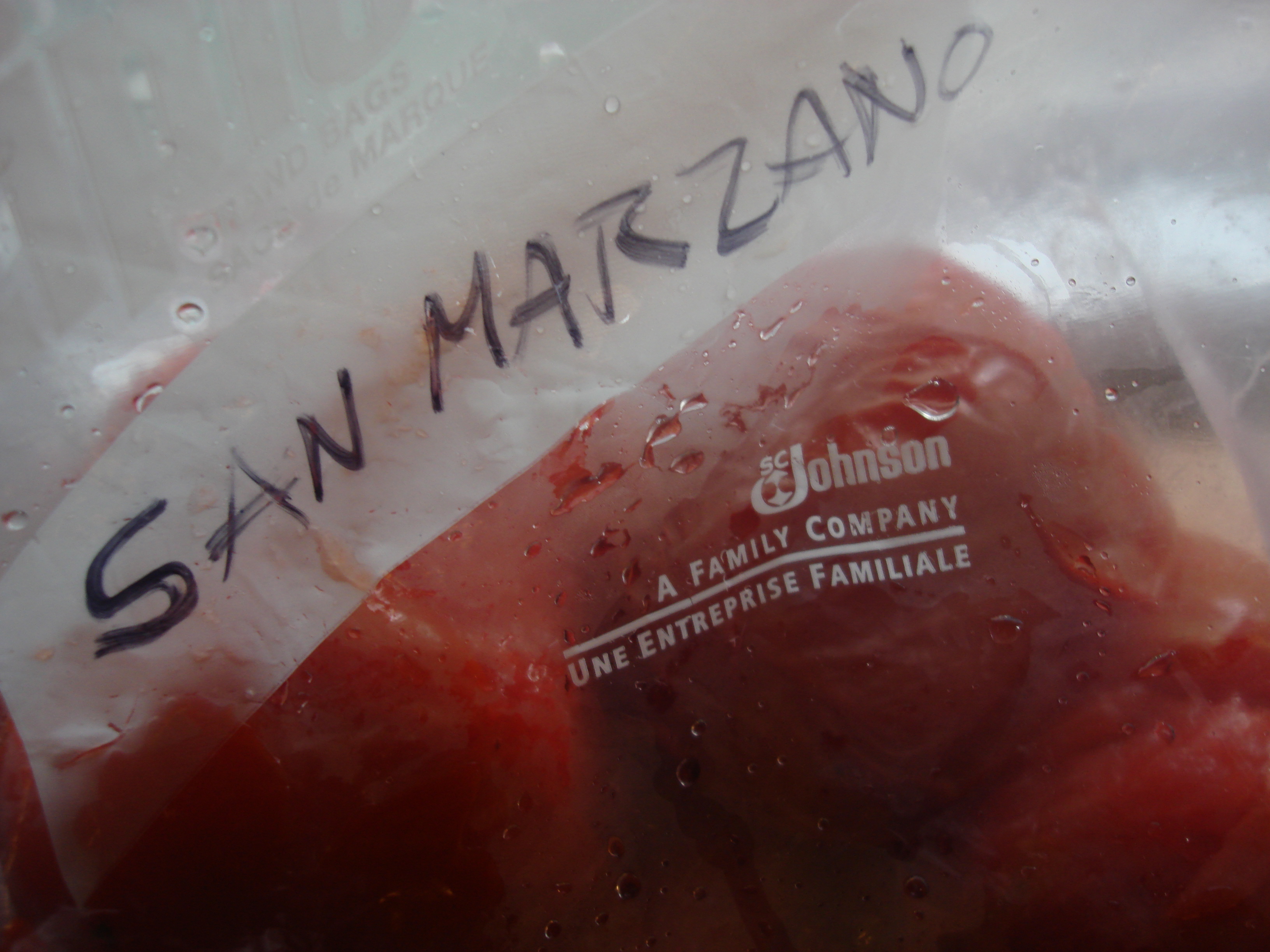
4) put them in a freezer bag (quartering them is optional), squeeze out the air, seal and label them. Stick them in the freezer and they will keep 6-8 months and will be suitable for sauces and soups (not salads, as the texture will get mushy over time.

Right now I have a few pounds of San Marzanos, a pound of plum tomatoes and about four pounds of whatever yellow tomatoes it is that I am getting from the farm. I am going to be soooooo, sooooo, sooooo happy to make fresh sauce or minestrone with them in the dark days of February when my arms are about to fall off from shoveling snow!

Recommended tomatoes are Roma, Brandywine and plums, as they make great sauce!

Sofrito for freezing (Puerto Rican mirepoix)

30 Jun

The green and lush fragrance of culantro is one of my favorite rainy day smells. In the kitchen garden I kept at my late grandmother’s house in Mayagüez, Puerto Rico, I had a vigorous crop and whenever it rained, the drops activated the fragrance, the scent pervaded the house, and I got hungry!

Without culantro (which we call recao), Puerto Rican food just isn’t as vibrant; it can’t taste quite like abuela’s. It is integral to sofrito, the starter to so many recipes, including beans, soups, stews and rice dishes. It is the equivalent of the French mirepoix, that combination of sauteed/roasted onions, carrots and celery that is the base for so many Gallic dishes.

Recao – culantro

Unfortunately, culantro is not as well known in the U.S. and doesn’t grow super-well in my planting zone, although I have had some small successes over the years (Thanks to Vic Muñoz for her growing tips). So I hit the local Latin supermarket on occasion and buy some pre-cut leaves from Costa Rica. Because once cut, recao loses its potency quickly, I use twice as much as I would if I had just gone out back and snipped some. And because it is sold by quantities much bigger than I need for a single dish, whenever I do buy it, I make enough sofrito to freeze.

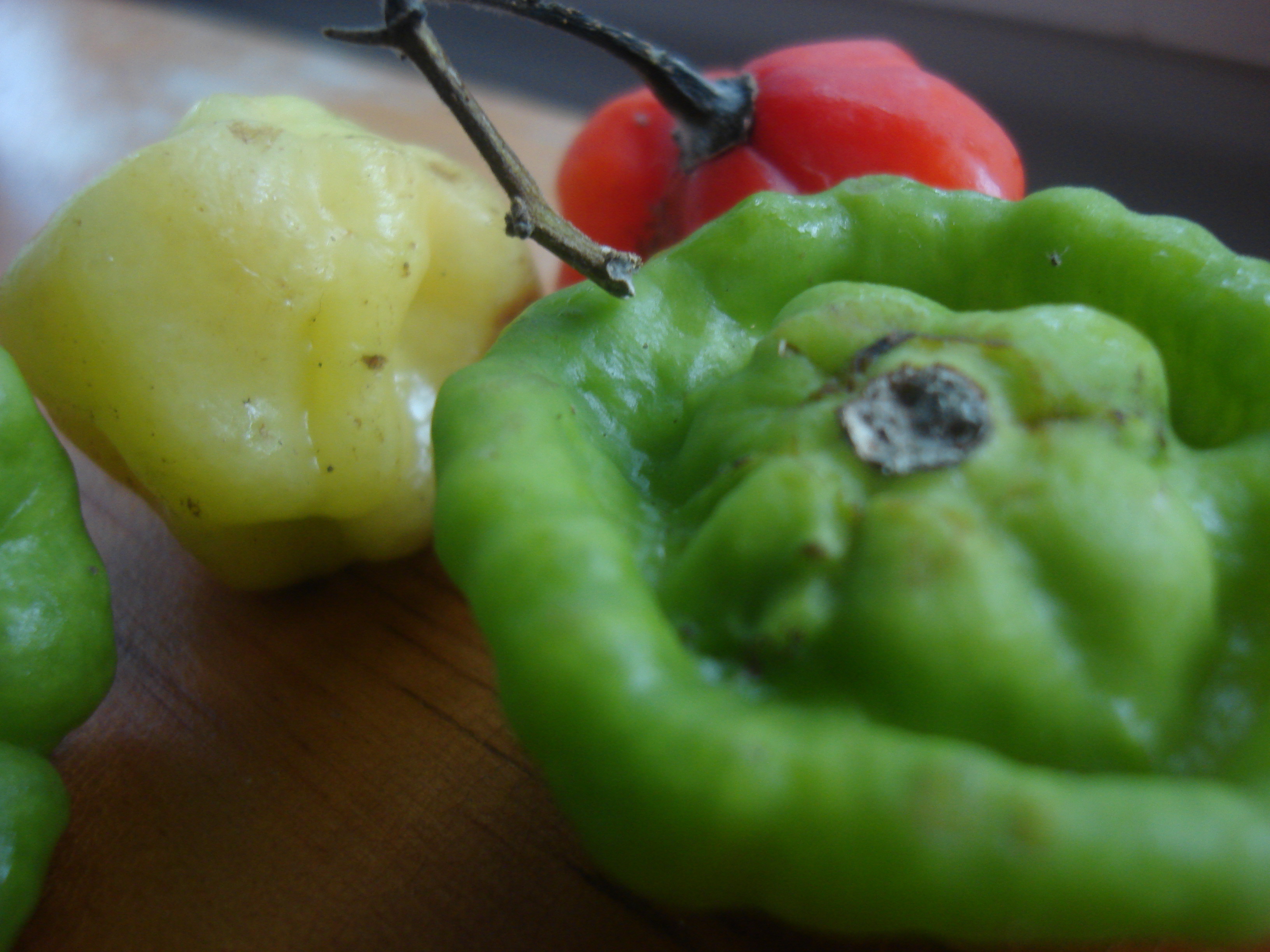
The same goes for ají dulce, the non-spicy small pepper that looks like a habanero, but isn’t at all spicy. I buy a bunch at once — along with the recao — and make sofrito to freeze. You have to be careful and taste it before adding it to the sofrito, because sometimes the store makes a mistake and labels the hot ones as sweet ones, or, I’ve been told, ají dulce planted too closely to ají bravo (angry, aggressive) will take on the spiciness. I can actually smell the heat when cutting habaneros (also called scotch bonnets); the volatility  is no joke.

Ají dulce – the sweet sibling to the hottie habanero

The following recipe is for those who have access to these products. If you don’t have a Latin market nearby, investigate the Asian/Indian markets, as they too use these ingredients.

Continue reading

Asopao de pollo (Soupy Chicken and Rice) with Pastured Bird!

23 Jun

Sooooo, I managed to get to Restoration Farm in time to see the very tail end of the first processing (meaning when the birds are killed, plucked and eviscerated, lest I be accused of euphemism).

I did NOT take Leandro; I wanted to see things for myself and not have to focus on keeping him out of trouble. More on his reaction to the chicken in a moment.

First I want to say that the atmosphere at this first round of chicken processing was so calm and cooperative and lovely. The team of Trisha, Lucille, Steve, Brian, Denis, Dan and Caroline was tired, but elated, but not  giddy or punchy, after seven hours of chicken guts under the trees. Dan and Caroline’s two kids were there; two-year-old Ada was calm as could be in the face of all the activity.

My first bird

The chickens — all 35 made it to processing! – weighed in between 4. 16 and 6.65 lbs. As a note, these are not certified organic birds (that’s a whole ‘nother process), but they have been raised according to organic practices – from their feed to their pasture; they just don’t have the stamp.

I also forgot my bloody camera! I wanted to shoot myself (since I couldn’t shoot pictures). So you will have to wait and see whether someone is able to send me photos; then again, perhaps you don’t care to see the goings on. Anyhoo, it was clean and well-organized.

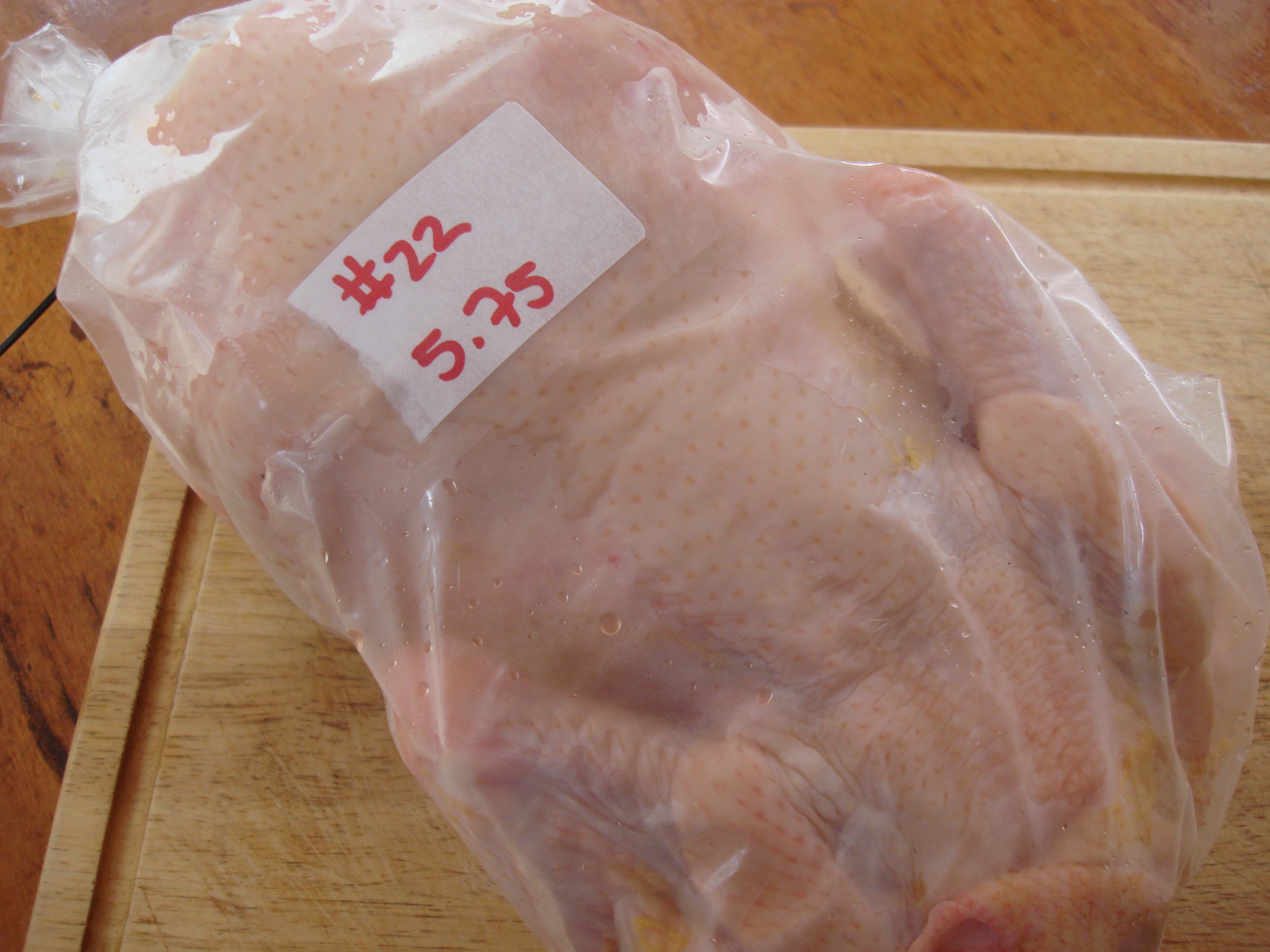
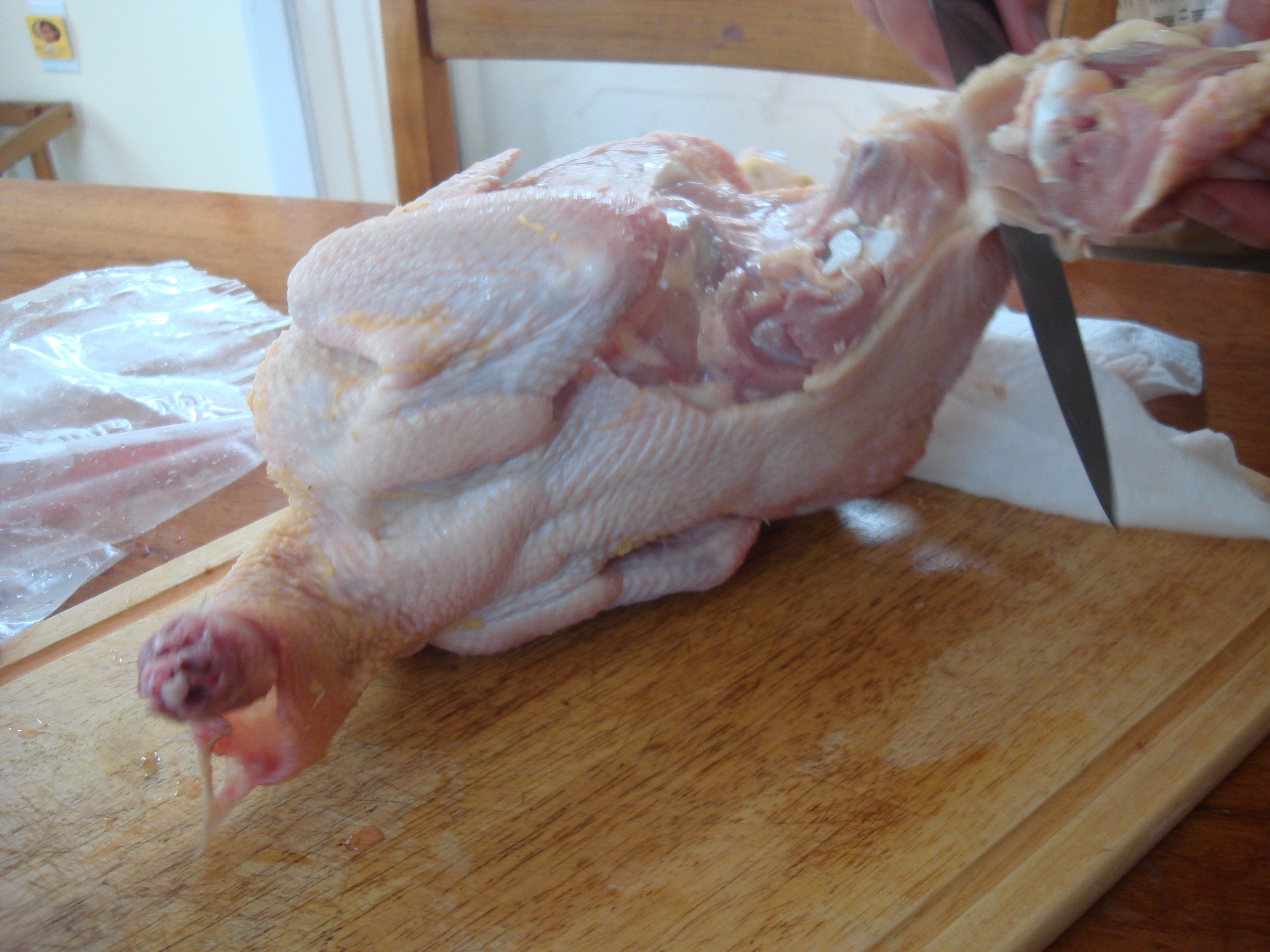
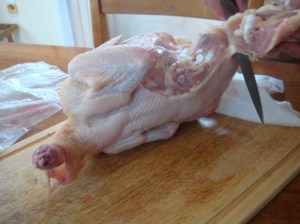
So I brought home bird #22, weighing 5.75 lbs. I picked up the necessary ingredients for asopao from the Compare (Latino) supermarket in Farmingdale on the way home. My dad, Pedro, roused himself from the NYTimes crossword puzzle to separate the bird (we saved the breasts for another meal cause this bird was so big!) and I went to work while Leandro was still across the street at a playdate. It was beautiful to work with. So clean.
Asopao isn’t really Hot, Cheap & Easy, except for the hot, sweaty work if you want to do it right (and I did). Perhaps I will invent a shortcut version one day, but not with this special bird. And really, my mom and dad were taken back to the days of my great-aunts cooking all day long…I really got it right. The chicken gave so much real flavor; it is certainly not as tender as factory-farmed, but it is really good. In the next few posts I’ll talk about some of the more unusual ingredients here and what to do if you can’t find them.

Leandro sat down to eat and said, “These are the little chickens that got big?”

and I said “Yes, Trisha and everyone killed them today so we could eat.”

“Oh. You went to see?” he said, and I said yes.

He stuck a big bite in his mouth and said, “Delicious.”

I forgot to tell him not to speak with his mouth full.

Asopao de Pollo (Soupy Chicken and Rice) Serves 6-8

Dedicated to my tía-abuelas

A – Three pounds chicken (may be whole chicken or, if you have a big bird, reserve the breasts for another meal. MUST HAVE BONES!!! Should have neck, heart and liver as well) cleaned and separated into drumsticks, thighs, wings (separated and tips cut off and reserved for stock), backbone, etc.

B – ADOBO (pound all ingredients in B in a mortar and pestle into a smooth paste)

  1. 3 cloves garlic, peeled
  2. 2 black peppercorns
  3. 1 tsp dry oregano
  4. 2.5 tsp salt
  5. 1 pinch (1/8 tsp) turmeric or sweet paprika (Turmeric stains, so beware!)
  6. 1.5 tsp olive oil
  7. ½ tsp vinegar

C – 2 Cups white rice (less if you want soupier soup.Sometimes the rice takes over.)

D – 9 Cups water and 1 Tbs salt

E – SOFRITO 1

  1. 3 Tbs olive oil
  2. 3 oz ham steak or jamón para cocinar, diced
  3. 1 oz bacon, chopped rustically
  4. 1 green cooking pepper (cubanelle or Italian pepper), diced
  5. 1 large onion, peeled and diced
  6. 6 culantro leaves (recao), minced
  7. 4 sweet small peppers called ají dulce in Hispanic markets (do NOT purchase Jamaican ají or scotch bonnet! They look the same but the Jamaican/scotch bonnet are HABANEROS, deadly hot and inappropriate for this dish!) seeded and minced
  8. ½ Cup cilantro leaves, minced
  9. 2 Tbs vegetable oil (seasoned with achiote, for the more expert criollo cook)

F – SOFRITO 2

  1. 1 Tbs capers, drained indifferently
  2. 1 tomato, seeded and diced
  3. 1  8 oz can Spanish-style tomato sauce
  4. 4 oz roasted red pepper, drained indifferently and diced
  5. 10 pimiento stuffed green olives
  6. 4 oz Spanish dry, cured chorizo sausage

G – ½ Cup light red wine

H –  OPTIONAL – in Puerto Rico we decorate and cool off the soup by topping with a can of petit pois or asparagus. Today’s foodies are not so hip to those particular vegetables in their mushy canned form. I leave it up to you.

Instructions

  1. Separate chicken parts into two large bowls. The back bone, neck, wingtips, liver, heart, and kidneys go in one for the stock. The meatier drumsticks, wings, thighs, and breasts (if using) go in the other. I remove most of the skin and cut off much of the fat. Season all pieces with the ingredients in B. (Adobo).
  2. Soak the rice in abundant water while doing the rest of the prep and cooking.
  3. Place the ingredients in D in a large (6 qt) saucepan. Add the stock chicken pieces, cover, bring to a boil at medium high, boil for 15 minutes, then reduce heat and simmer for an additional 30 minutes, covered.
  4. In an even larger pot, place all the ingredients in E (Sofrito 1), and sauté at medium high until vegetables begin to wilt. Add all the ingredients in F (Sofrito 2) and continue stirring until combined and beginning to stick. Add wine and scrape bottom of pot. Add the meaty chicken pieces and cook at medium, turning frequently to coat well. Cover and cook for 30 minutes on medium low.
  5. When the stock and chicken sofrito are ready, drain stock into chicken. From the stock, reserve the back and wings and get as much meat off them as you can, adding to the soup, discarding the bones. You may add heart and liver to the soup as well.
  6. Bring to a boil.
  7. Drain the rice, stir into the soup, cover and bring to a boil. Reduce heat and cook, covered until rice is cooked (start checking in 10-15 minutes). Serve with roasted red pepper, peas or asparagus garnish. If the rice takes over, just add water.

One Week to Our First Pastured Chicken: Final Selection of Recipe Has Begun!

15 Jun

Leandro's first homegrown peapod

Just before this week’s visit to Restoration Farm, we went out into our yard where Leandro picked the very first pea pod from a plant he himself started from seed! We were very pleased, even though the peas weren’t so tasty raw. This was a random variety from a garden show craft, so we have high hopes for the others we planted – Burpees Garden Sweet (organic). His eyes reflected the magic of a seed transforming into food.

Trish and one of her flock

Then at Restoration Farm, we visited that other transformation into food; Trisha tells us that the pastured chickens are a week away from our cooking pots. They will be seven weeks and one day, and — we hope — about five pounds. She had initially planned to go to eight weeks, but due to the window of opportunity for processing and the fact that they are getting slower and heavier and more prone to disease, she figures next week is it!

Ignorance is bliss


Leandro still finds the chickens stinky (and really, they are pretty pungent at this point) and was more interested in drawing sweet beads of nectar out of the honeysuckle blossoms that are exhaling seductive breaths of fragrance all over the farm these days. He learned the art of drawing out the style from Farmer Steve and then taught me! Delicious.

Honeysuckle gives it up for Leandro

So now I am planning what to do with my first bird. As I expect it to be less fatty and moist than a factory bird or even an organic chicken from a large facility, I am thinking about dishes that will help contain the moisture and make the most of the added flavor that a slightly more muscular bird will have. I also want to do something that is already in Leandro’s growing list of delectable foods, so as not to risk some refusal. And then there is the desire to honor my Caribbean forebears who lived off the land (some still do, at least in part).

So… I’ve got two ideal candidates from the criollo* canon: arroz con pollo: chicken and rice,or asopao de pollo: soupy chicken and rice. Feel free to share your thoughts and opinions on which one it should be!

*Criollo or Creole refers to the generations of colonialists actually born in the colonized place. In the case of Puerto Rico, the Spanish were the first Europeans to settle. They remained Spaniards, but their offspring born on the island (in many cases, half European and half native) were known as criollos – not quite European, but not quite native, either. Criollo cooking (like Creole in New Orleans, for example), reflects the meeting of different worlds of cooking ingredients and techniques.

Black Bean Soup (Criollo Caribbean style – sort of)

29 May

¡Eso!

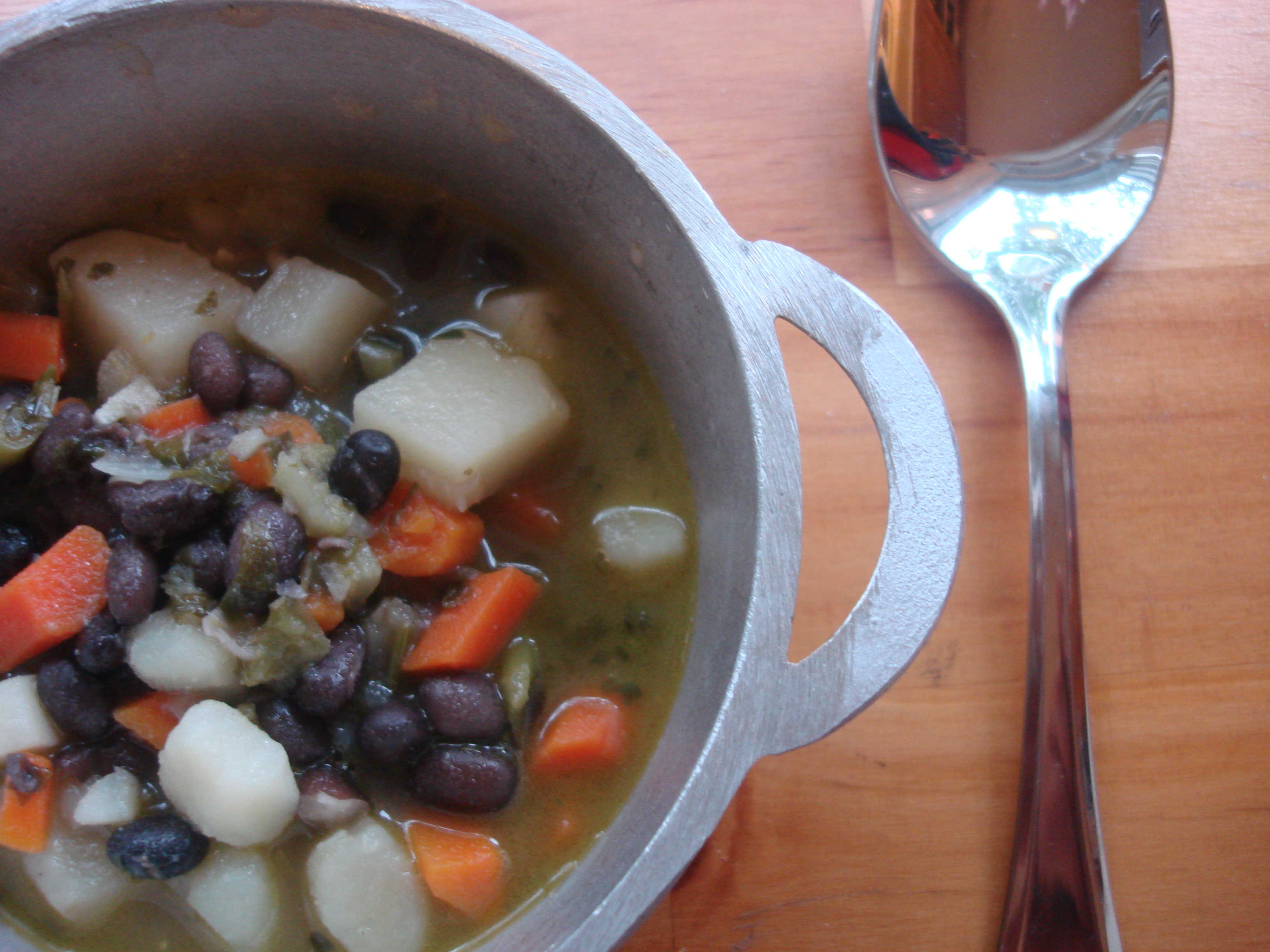
Black bean soup is the perfect blend of pragmatic and sexy. Black beans may be cheap and robust and there is no shyness to their flavor or definitive color – but they have a nutty subtlety that intrigues and keeps you coming back for more and wanting to try it new ways. They are happy in the company of the spicy as well as the subdued. Try this basic recipe first (it is broken down into easy steps, so it only looks long) and then start ad-libbing and improvising according to your tastes. Black beans are very sociable and get along with all sorts of flavors!

Black Bean Soup (with vegetarian options)

SOFRITO

2 oz salt pork in a single piece, scored – don’t cut through as you will remove it (skip if doing vegetarian soup)

2 Tbs extra virgin olive oil

1 cup yellow onion, minced

3 cloves garlic, minced

½ cup cubanelle or green bell pepper, minced (may mix or substitute with red pepper. Cubanelles are the pale green cooking pepper, sometimes called Italian cooking peppers)

6 culantro leaves, minced (if available. If fresh from the garden, 2-3 leaves should be enough. If you can’t find it, skip or add parsley)

1 Tbs cilantro, chopped (plus another Tbs chopped and reserved for garnish)

VEGETABLES

2-3 carrots, peeled and diced (about ½ cup)

2-3 stalks celery, diced (about ½ cup)

2 medium potatoes, peeled and diced (about 1 cup)

BROTH

1 quart chicken or vegetable broth

1 Tbs oregano (2 Tbs if fresh)

1 tsp cumin powder

BEANS

2 Cups black beans from dried (soaked overnight, water replaced in the morning and simmered for two hours in the afternoon) OR two 15 oz cans black beans, rinsed and drained.

Salt and pepper to taste

INSTRUCTIONS

SOFRITO

Heat 1 Tbs olive oil in a soup pot. Add salt pork and sauté until it has rendered much of the fat. Remove the salt pork and discard. Add remaining tablespoon of olive oil and warm it. One at a time, stirring to coat, add onion, garlic, peppers, culantro (recao), and cilantro. Saute at medium heat, stirring occasionally.

VEGETABLES

When the sofrito elements are translucent and limp, add the vegetables and stir to coat and cook till somewhat tender.

BROTH AND BEANS

Add broth and heat to boiling. If using soaked beans, add at this time with remaining spices and cook for 15-20 minutes, until tender. If using beans from a can, first cook broth and vegetables for 15 minutes, then add beans and cook for another five minutes.

(Optional finishing touches: Some folks, Cubans in particular, like to add a couple of teaspoons of red wine vinegar at the end to finish. You may like to serve with sliced or chopped avocado, dressed with a bit of red onion, squeeze of lime and salt. You can also serve over rice. I like to garnish with finely minced red onion, cilantro, and/or finely chopped hard-boiled egg. Sriracha is my current favorite hot sauce, but any hot pepper based hot sauce will spike this up nicely)

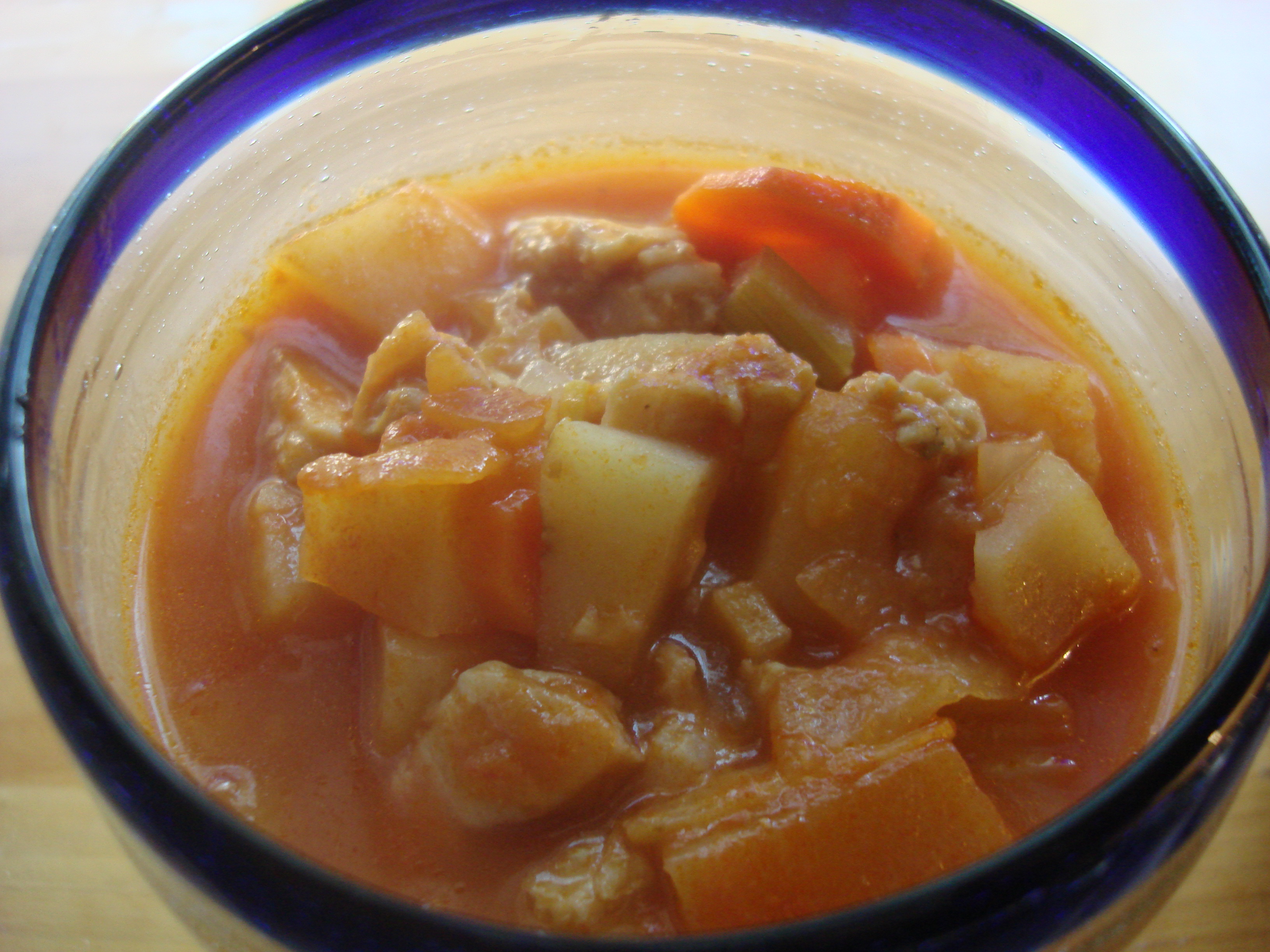
Manhattan Clam Chowder: zesty, cozy, bacon free

21 May

A Margarita glass makes for a novel soup presentation. Nota bene: The glass should be sturdy!

I make several versions of “Manhattan Clam Chowder,” none of which is particularly authentic, but then again, this is a soup named for Manhattan. Of all places in the world, this is the one where everyone belongs and everyone is unique, if not downright quirky. So consider this a mandate to scoff at tradition and do it your way.

This version doesn’t use bacon and relies heavily on vegetable gusto.

Manhattan Clam Chowder (without bacon)

2 Tbs extra virgin olive oil

1 cup onion, peeled and chopped fine

3-5 cloves garlic, peeled and chopped fine

½ cup red pepper, chopped fine

½ Cup carrot, peeled and chopped (first in quarters lengthwise, then in thin slices)

½ Cup celery stalks, peeled and sliced into small chunks

Two medium potatoes, peeled and chopped into ½ inch squares

4 cups vegetable juice (low sodium preferred)*

1 bay leaf

Four 5.5 oz cans of chopped clams, juices reserved

1 Tbs dried oregano (2 Tbs fresh, chopped)

1 Tbs dried parsley (2 Tbs fresh, chopped)

Salt and pepper to taste

Heat olive oil in a large pot at medium high until fragrant and very liquid. Stir in onions to coat, lower heat to medium and add red pepper and garlic. Cook an additional minute. Add carrots and celery and cook until beginning to get tender, about five minutes, stirring occasionally.

Add potatoes and stir to coat, then add vegetable juice, bay leaf, and reserved clam juice. Bring to a boil, then lower heat and simmer for 15 minutes. Add clams, oregano, and parsley and cook for an additional five minutes. Add salt and freshly cracked black pepper to taste. Serve with oyster crackers or saltines and spike with sriracha, Tabasco or other red pepper-based hot sauce.

*If you happen to have an additional bottle of clam juice in the pantry, you may substitute a cup of the vegetable juice with the bottled clam juice to pump up the briny flavor

myPod: Edamame (soybeans in pods)

8 May

A beloved bean

Boiling up a bag of edamame is even easier than making ice pops, so you could say this is something of a lame thing to post about, but I’ve really been meaning to share my appreciation for this useful food item for a while now. And today, Mother’s Day, when it happened to save this mom a lot of trouble over dinner, seemed like the right time.

At under $3 per bag of frozen (even organic!) edamames make for a reasonably priced appetizer or T.V. snack for two to four people. Soybeans are full of fiber and anti-oxidants and contain no animal fats (but do contain those all-important omega-3 oils). They are tasty and quick to get on the table, and shelled, can replace lima beans (which I hate) and peas (which I quite like) in many recipes.

But what I really love about them is how companionable they are. They remind me of an leisurely, chatty evening shelling pigeon peas around a hurricane lamp in the mountains of Dominican Republic when I was doing a little humanitarian work. They remind me of dining at an Asian restaurant in San Juan with my dear, departed friend, Frances Borden, in the early days of our friendship.  They are how my son and I might start a meal…popping beans right out of the pod and into our mouths (and laughing when the beans shoot across the room instead), or how we might sit around watching the news with my parents, the pile of full pods getting lower and the pile of empty pods getting higher. Farmer Steve got Leandro to try the fresh garden peas we were picking at our C.S.A. last year, because they look like edamame pods.

So get a bag and keep it in the fridge for the next time you don’t know what to do for dinner and need to buy some time, or you want something more virtuous than chips to accompany your favorite show or a movie night.

Boil up a quart or so of water and add 1 lb. frozen edamame in the pods. When the water returns to the boil, cook for three minutes, drain and serve.

Leftover beans can be added to salads (including rice and pasta salads), stir-fries and soups.